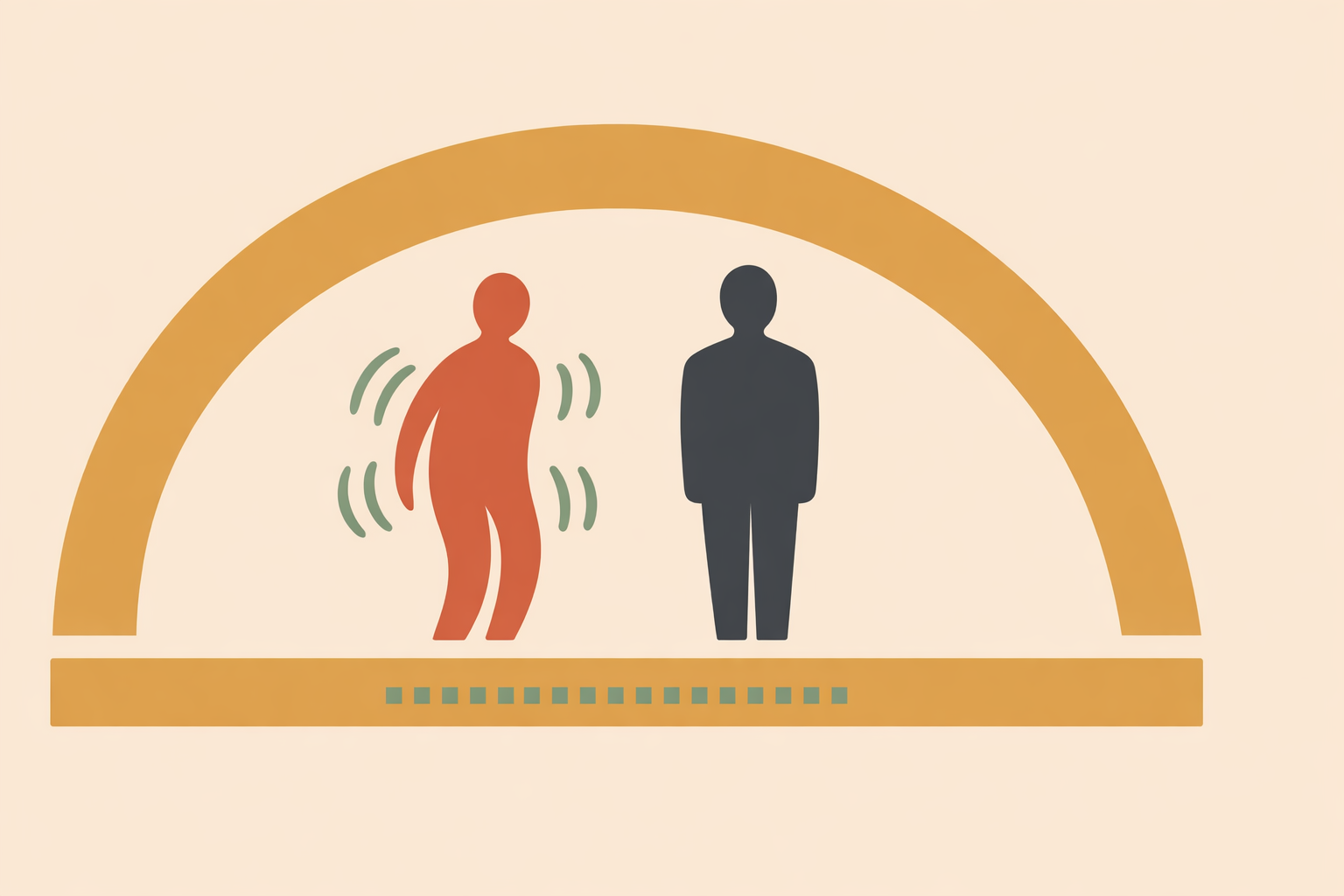
Many practitioners are trained to reduce what looks “off”: fidgeting, pacing, rocking. In dyslexia support, that can turn into asking someone to sit still, hold eye contact, and push through decoding drills. You might get brief compliance, and then the system buckles into shallow breathing, irritability, or shutdown. The issue is rarely motivation. More often, the body in front of you is being asked to learn in a way that doesn’t fit.
A steadier approach treats the body as an ally. Movement, rhythm, and sensation can organize attention before and during literacy work. In neurodiversity-affirming coaching, the aim is to build access, dignity, and learning stamina in ways that match the person.
Key Takeaway: Embodied tools can make dyslexia coaching more effective when they are used to support regulation, choice, and strengths-based learning. Start with safety and co-regulation, read sensory patterns before choosing tools, and weave rhythm, grounding, pressure, and movement into the session arc so literacy work rests on a steadier foundation.
Embodied support begins with a different frame
The first shift is simple: stop reading movement as failure. Rocking, pacing, swaying, and fidgeting are often the body’s way of organizing attention. When you work with that, literacy tasks become more reachable.
Many dyslexic and other neurodivergent people bring visual-spatial strengths alongside creativity, situational awareness, and big-picture reasoning. These strengths won’t show up the same way in every person, but they’re common enough to shape good coaching. They can be the front door to learning, not a consolation prize after struggle.
Embodiment is especially helpful for clients carrying school shame or years of masking. Returning attention to sensation, posture, breath, and movement can support steadiness and self-trust. In one study, a brief body-focused approach increased psychological safety and a greater sense of calm, which often translates into less performance pressure and more choice in the room.
Choice and consent stay central. You can invite rhythmic walking, pressure through the hands, grounding through the feet, or breath pacing, and the client decides what fits today. When it’s appropriate, it also helps to draw on someone’s own movement lineages—drumming, dance, prayerful rocking, repetitive handwork, or familiar family rhythms. Used respectfully, these aren’t decorative. Rhythm-based group work has shown social-emotional gains in children, and many traditions have long recognized rhythm as a steadying force.
In practice, the reframe sounds like this: “You are not bad at sitting still. Your system organizes through motion. Let’s build reading around that.”
Safety comes before strategy
If the body is signaling threat—tight jaw, darting eyes, shallow breath, rigid shoulders—literacy tools rarely land. Track state before adding more technique.
Give simple shared language: buzzy, flat, overloaded, numb, present, grounded. Connect the words to cues you can both observe: breath pace, muscle tone, gaze, speech rhythm, and the ability to stay with a task. Over time, this state tracking becomes a practical skill for knowing when to continue, pause, or switch tools.
Regulation is also relational. Your voice, pacing, posture, and transitions shape the room. A clear sequence, calm tone, and generous pauses often do more than a pile of strategies delivered at speed.
When a person perceives safety, social engagement and learning become more available. You don’t need to teach theory mid-session. You build conditions the body can trust.
Two simple practices work well:
- Five Minute Foothold. Invite attention to one neutral or pleasant sensation—feet on the floor, warmth in the hands, pressure from the chair—and stay with it for several breaths. This can interrupt performance spirals and restore a sense of choice.
- Coherent breath. Guide a slow, easy rhythm of roughly 4–6 breaths per minute, with a soft jaw and easy shoulders. The goal is calm focus, not intensity.
A simple script might be: “Let’s check the dashboard. Buzzy, flat, or present?” If the answer is “buzzy,” slow the pace, return to sensation, and begin when there’s a little more room in the system.
Read sensory patterns before choosing tools
Not every regulating tool helps every person. What settles one client can agitate another, so sensory patterning matters.
Look across sensory channels—visual, auditory, tactile, proprioceptive, vestibular, and interoceptive—and notice where the person seeks input, avoids it, and seems “just right.” Many people have a mixed profile across senses.
A practical rule stays consistent:
- Offer more structured input where seeking helps organize attention.
- Reduce or soften input where avoidance signals overload.
- Preview changes and preserve choice.
You’ll usually know a tool is helping when you see calmer alertness, smoother participation, and fewer spikes of dysregulation. A review of Somatic Experiencing found positive effects across well-being-related outcomes, which aligns with what many practitioners observe in steady, skillful sessions.
You’ll usually know a tool isn’t helping when breathing speeds up, irritability rises, seeking becomes frantic, shutdown appears, or stopping becomes difficult. Those are signs to pivot, not push.
To spot patterns quickly, keep a simple three-column note: seeking, avoiding, just right. Track what shows up, when it shows up, and in what context. If reading always crashes at the same point, you can support the body before the crash arrives.
Core embodied tools for dyslexia sessions
When in doubt, begin with rhythm and proprioception. They often organize attention without demanding stillness.
Heavy work and deep pressure
Proprioceptive input—wall pushes, chair pushes, isometric presses, carrying books, pushing against resistance, or a weighted lap pad—often helps people feel more unified and oriented in space. Deep pressure can also help some people re-center: a self-hug, palms pressing into a desk, or steady pressure through the forearms may be enough.
Gentle rocking and vestibular input
Rocking, swaying, bouncing lightly, or making small circles on a stool can support regulation when used gently and by choice. For some clients, micro-movement keeps attention online far better than stillness.
Grounding
Grounding restores orientation during overwhelm. Pressing feet into the floor, leaning into a wall, holding a textured object, or noticing the contact of the seat can help re-establish steadiness. An opinion paper on embodied safety highlights grounding, breath, and movement as useful somatic resources for recalibrating dysregulated states.
Rhythm
Rhythm deserves special attention. Predictable beat, repetition, and coordinated movement often help attention settle and sequencing become easier. In dyslexic children, structured balance, coordination, and rhythmic exercise has been linked to reading gains. In autistic populations, rhythm-based programs have shown social-emotional benefits, reinforcing rhythm’s value as a co-regulating support.
Breath with movement
Predictable movement paired with breath and attention can be especially steadying: walking with a long exhale, swaying while reading aloud, nasal breathing during a pause, or pacing syllables across the floor. These combinations often feel more natural than breathwork alone.
Stimming as support
Do not rush to suppress stimming. When it’s safe, it often helps focus. Instead, shape the environment so it can happen in workable ways: fidgets, rocking options, movement breaks, textured tools, or standing stations. This preserves dignity and often improves participation.
- Two-minute press and breath: 20 seconds of wall pushing followed by a slow exhale, repeated three times.
- Rock-read-recall: slow rocking for one minute, read a short section, tap fingertips, then recall key words aloud while swaying.
Build the tools into the session arc
Embodied support works best when it’s built into the shape of the session, not used only once strain appears. A predictable arc reduces threat and makes regulation feel normal.
Warm-up
- Check state: buzzy, flat, or present.
- Choose one regulating tool: rocking, wall pushes, grounding, or slow exhale.
- Orient to strengths with a visual map, large paper, symbols, color, or spatial layout.
Work phase
- Use multimodal literacy: trace sounds, step syllables, tap phonemes, move morphemes, read standing up, or map words across space.
- Use text-to-speech as an access support when stamina drops. One study found orthographic knowledge and phonemic awareness improved with text-to-speech use.
- Include short bursts of coordination or rhythm work when attention starts to fray.
Cool-down
- Return to foothold or grounding for a minute or two.
- Ask which tool helped most.
- Log what worked so the client builds self-knowledge and advocacy.
A 30-minute session might look like this:
- 00:00–03:00: state check and wall pushes
- 03:00–05:00: visual overview of the task
- 05:00–15:00: stepping syllables, tapping sounds, reading with movement
- 15:00–20:00: short sway break or pressure input
- 20:00–26:00: return to text, read aloud, use TTS preview if needed
- 26:00–30:00: grounding, reflection, and plan for next time
Short scripts help keep this collaborative:
- “Your body learns well through rhythm. Let’s use that.”
- “You can rock while you read.”
- “Which tool feels best to start with today?”
Movement can support reading more directly than many expect
Beyond general regulation, some movement-based approaches appear to support literacy outcomes more directly. That doesn’t mean every movement drill fits every learner, but it does suggest body-based work belongs closer to the center of a dyslexia plan.
A preprint on combined cognitive-motor training reported improvements in reading, writing, and motor performance, including about 15% better reading and roughly 20% better writing over eight weeks. In practice, this matches what many coaches notice: brief, repeated coordination work can prime attention and make literacy tasks more available.
This doesn’t require elaborate programming. It can look like cross-pattern movement, visual tracking paired with stepping, coordinated tapping, or rhythm drills threaded into the session a few times each week.
Help the support travel beyond the session
What works in session should be easy to repeat at home or in learning settings. Keep recommendations concrete, observable, and respectful.
Instead of abstract advice, document patterns such as:
- reads more steadily after two minutes of heavy work
- focus improves with dimmer light and reduced visual clutter
- retains more after a text-to-speech preview
- participates longer when rocking is available
This language is practical and easy for others to mirror. It also helps the client understand their own conditions for learning well.
Support the wider rhythm of daily life too. Brief movement before known pinch points, steadier sleep windows, morning light, and gentler evening transitions can all help someone arrive to literacy work less depleted.
Boundaries and good practice
Embodied tools work best when they stay simple, collaborative, and within scope. This is learning-focused support: building regulation skills, strengthening self-knowledge, and improving coaching outcomes. It’s not forcing input, overriding refusal, or turning every session into an intense emotional process.
Keep a few principles close:
- lead with consent and choice
- preview changes before introducing them
- watch the body more closely than the plan
- stop when a tool escalates distress
- honour cultural roots without borrowing what is not yours to use
The best embodied work is often modest: a slower start, a rocking stool, pressure through the palms, a clear sequence, a visual map, a few easy breaths. Small adjustments can determine whether literacy tools actually land.
Conclusion
Embodied tools belong in dyslexia coaching because learning involves the whole system. When you center safety, rhythm, sensation, and choice, the body becomes part of the learning process.
The craft is in the fit: read the sensory pattern, choose tools that match the person, and trust the small signals that tell you support is landing—softer eyes, fuller breath, steadier pacing, easier return to task.
Keep it ethical and grounded. Use consent, keep tools gentle, and collaborate with the client and family or learning team where appropriate. When movement, rhythm, and familiar cultural forms genuinely belong to the client, the work supports dignity and agency as much as it supports reading.
Train as a Dyslexia Coach
Deepen these embodied, strengths-based strategies with the Dyslexia Coach Certification.
Explore Dyslexia Coach Certification →