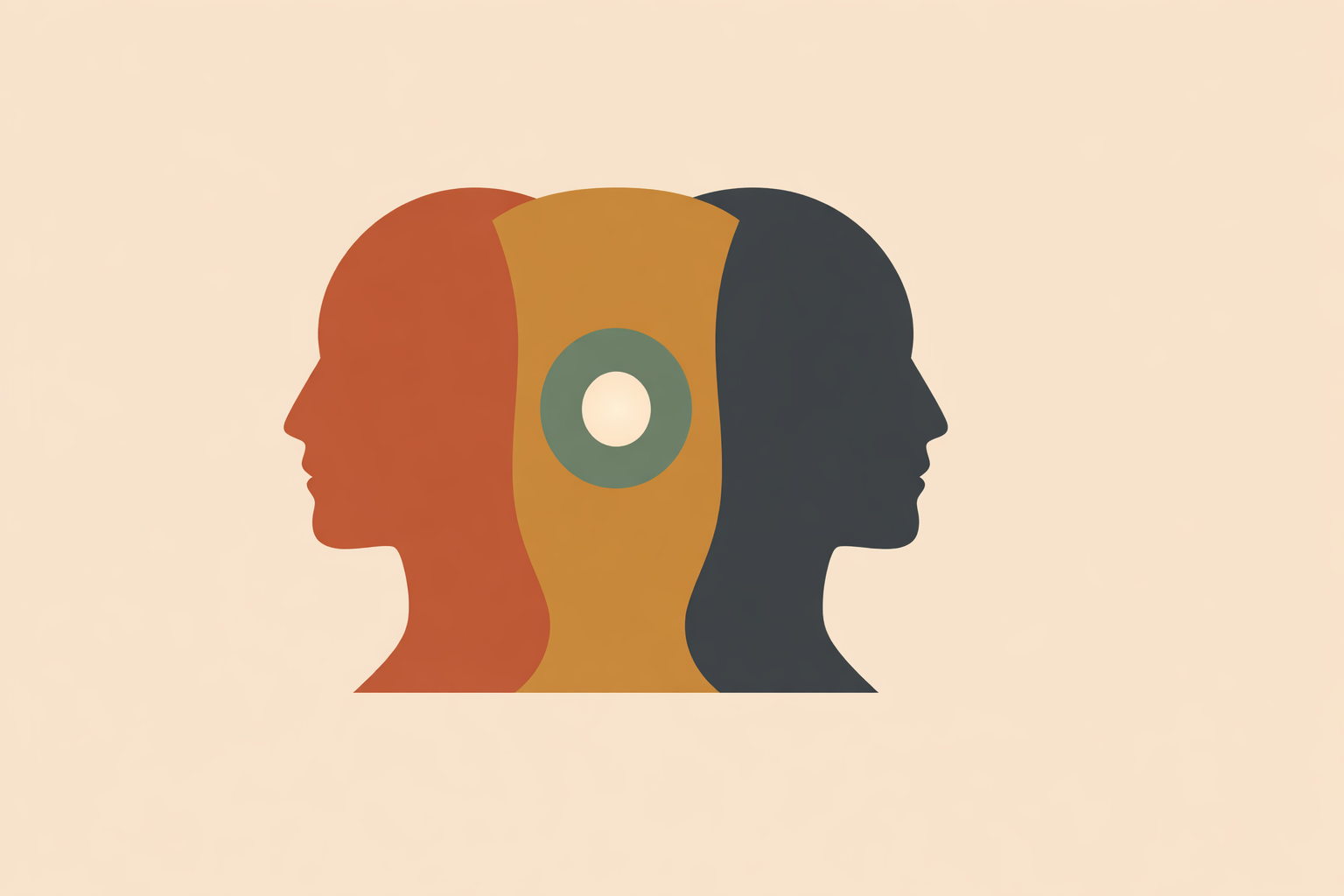
In HSP couples sessions, many practitioners instinctively try to turn down big feelings: redirecting, rationalizing, speeding up, or urging “calm down.” It can create a brief quiet moment, but the same intensity often returns, sometimes sharper and sometimes as shutdown.
What looks like “too much” is frequently the HSP nervous system delivering high-resolution social information. When that intensity gets muted, the relationship can lose important cues, and progress may stall behind fatigue, resentment, or overexplaining.
Key Takeaway: HSP emotional intensity becomes an asset when you treat it as meaningful relational data and give it structure. The most effective coaching stance is to slow it down, translate it, and support both partners in working with it skillfully.
Reframing HSP emotional intensity as a relationship asset
In sensitive couples work, intensity is often more useful when it’s welcomed as guidance. When an HSP partner feels deeply, they’re usually tracking meaning, nuance, and connection with unusual precision. With the right support, that same intensity can deepen honesty and warmth.
Sensory Processing Sensitivity is associated with deeper processing, strong emotional responsiveness, and heightened awareness of subtleties. It’s not only about getting hurt more easily; many sensitive partners also feel nourishment, beauty, and closeness more strongly, which helps explain higher highs alongside more intense lows.
Traditional and community-based perspectives often recognize the sensitive person as the one who notices the shift in tone before anyone else. They catch what’s changing in the relational “weather.” Seen this way, emotional waves aren’t noise; they’re signals worth listening to.
In practice, a steady coaching stance sounds like: “Your intensity tells us this matters. Let’s go slowly enough to understand what it’s asking for.” A tearful response to a change in holiday plans, for example, may point to predictability, ritual, belonging, or grief around disruption, rather than “overreacting.”
Using the DOES lens in real relationships
The DOES lens offers a practical way to understand how sensitivity shows up in everyday couple dynamics: depth of processing, overstimulation, emotional responsiveness, and sensitivity to subtleties.
Depth of processing means an HSP partner often tracks more layers before, during, and after an interaction. Overstimulation can show up when pace, noise, emotional heat, or too many inputs land at once. Emotional responsiveness amplifies joy, tenderness, hurt, and longing. Sensitivity to subtleties means small shifts in tone, posture, pacing, or facial expression can land quickly and deeply.
This is why something that seems minor from the outside can feel significant from the inside. A sharp comment may replay for hours, especially if there hasn’t been repair, which fits with ruminative thinking often seen alongside deep processing.
A useful in-session move is a brief DOES debrief right after a flashpoint. Ask, “Which part got loud just now?” If it’s overstimulation, the next step is straightforward: slow the pace, soften the volume, and reduce extra sensory load. That keeps the couple focused on what happened rather than collapsing into blame.
Distinguishing sensitivity from trauma and attachment activation
Clear naming matters. Sensitivity is a trait, not a flaw, and not every intense response points to old wounds. In couples work, SPS-based activation often looks like immediate overwhelm from speed, noise, interruptions, or emotional heat, followed by pausing, crying, or going quiet. These patterns align with overstimulation and low sensory thresholds.
Trauma-driven activation often has a different texture. It’s more tightly linked to reminders of past experience and may continue even after the environment becomes quieter and slower. Sensitivity and trauma can also exist together, and when they do, they can amplify each other.
A simple field test helps. Reduce stimulation for a few minutes: dim the lights, slow your speech, pause debate, and remove extra noise. If the partner’s system settles noticeably, sensitivity is likely a major contributor. If the activation holds with the same force, other layers may need attention.
After a heated moment, this quick checklist can organize your observations:
- The trigger was mainly sensory: volume, pace, interruptions, or too many inputs at once.
- The partner stabilized with a quiet break and reduced stimulation.
- They retained a clear sense of what happened rather than feeling blank or lost.
- Once grounded, they were open to repair instead of staying locked in reactivity.
Creating a workable container for emotional waves
HSP couples do best when the structure is explicit. A predictable container reduces overload and helps both partners stay present without flooding.
Because sensitive partners can tip into overwhelm quickly, session rhythm matters. Time-box charged topics, slow turn-taking, and open or close with grounding. Structured breaks with a clear return time can be especially helpful; many couples educators recommend structured timeouts so the pause doesn’t become avoidance.
The environment matters too. Softer lighting, less noise, an uncluttered space, and a warm, slower vocal cadence can make the whole conversation more workable. For many HSP couples, the room itself becomes part of the support.
A short “waves agreement” can bring this into daily life:
- Either partner can call for a pause when intensity rises too fast.
- Only one person speaks at a time.
- Both partners aim for low voices and clear, simple sentences.
- Every pause includes a clear return time.
- The conversation ends with one small next step and a brief settling practice.
This kind of structure protects enough space for feeling to become usable.
Using micro-cues and validation to steer intensity toward connection
With HSP couples, tone often lands before content. A small shift in volume, a tightened jaw, or overlapping speech can change the nervous-system climate in seconds.
Micro-cues matter because they let the couple course-correct early. When one partner learns to preview a difficult topic, soften the opening, or slow down before responding, the whole conversation can change direction. For sensitive partners, these details often decide whether they feel met or overwhelmed.
Validation is equally important. Simple phrases such as “That makes sense,” “I can hear how much this matters,” or “I want to understand before I respond” help convert intensity into connection. They don’t require agreement; they communicate care and orientation.
It also helps to coach explicit repair language:
- “I’m on your side. Can we slow this down?”
- “Let me say that more gently.”
- “I hear the care underneath what you’re saying.”
- “Can we start that sentence again?”
One practical intervention is to name body-level shifts neutrally. If you notice a flinch, a freeze, or a sudden drop in eye contact, bring it in without judgment: “I noticed a quick change just then. Let’s pause and check what landed.” Sensitive couples often make their best progress by working with process in real time.
Teaching regulation and co-regulation skills
Insight alone rarely helps in the middle of an emotional wave. HSP couples benefit from a small set of reliable regulation tools they can use quickly and consistently.
Start with sensory and body-based tools that reduce overload. When stimulation is part of the escalation cycle, changing the environment can change the conversation. Relationship guidance for neurodivergent conflict support also emphasizes reducing sensory load to make re-engagement easier.
Useful options include:
- Slowing the breath for one to three minutes.
- Lowering voices and lengthening pauses between sentences.
- Turning off background sound and reducing visual clutter.
- Stepping outside or changing rooms briefly.
- Naming what each person needs before resuming the conversation.
Time-bounded breaks are often essential. A pause of 10 to 30 minutes, paired with a firm return time, can prevent overwhelm from turning into shutdown while preserving trust in reconnection.
Traditional practices can enrich this work when offered respectfully and in context. Across cultures, breath practices, gentle movement, contemplative prayer, drumming, and time in nature have long supported emotional settling and reconnection. Modern research also suggests yoga breathing can support emotion regulation.
Help each couple choose what feels culturally respectful, personally meaningful, and easy to repeat. A simple after-conflict ritual, such as two minutes of synchronized breathing followed by one caring action for self and one for the relationship, can grow into something steady over time.
Turning big feelings into needs, boundaries, and requests
Once intensity settles, the next task is translation. Big feelings become most useful when they turn into needs, values, boundaries, and specific requests.
This matters for HSP partners because deep processing can drift into loops without a clear endpoint. A short, time-bounded reflection window supports clarity without feeding rumination. Mindfulness-based approaches have been associated with reduced rumination, which supports keeping meaning-making contained and practical.
A simple four-part map works well:
- Need: What support or condition was missing?
- Value: What mattered so much here?
- Boundary: What limit would protect well-being next time?
- Request: What specifically am I asking for?
For example:
- Need: predictability on weeknights
- Value: honoring commitments
- Boundary: no last-minute changes after a certain hour without checking in
- Request: “If you’ll be late, please text me so I can recalibrate.”
This is also where over-functioning needs attention. Many sensitive people quickly understand and accommodate the other person, then leave themselves out of the picture. In relationship guidance around high sensitivity, over-giving is a familiar pattern. A helpful rule is one-to-one: for every insight about the partner, add one act of self-support or one boundary step of your own.
Integrating sensitivity into couples coaching
When sensitivity is respected rather than managed away, emotional intensity becomes far more workable. The arc is straightforward: reframe the trait, recognize DOES patterns, distinguish sensitivity from other forms of activation, build a safer structure, support co-regulation, and translate emotional waves into clear guidance for the relationship.
This focus pays off because highly sensitive people often respond especially strongly to supportive environments. SPS theory suggests greater benefit from positive conditions, which helps explain why thoughtful neurodiversity coaching can create meaningful shifts.
From a practitioner’s perspective, the next steps stay concrete: track patterns through the DOES lens, use visible timing for charged topics, normalize sensory needs, and help couples build rituals that honor sensitivity instead of working against it. Over time, what once felt destabilizing can become a steady source of insight and tenderness.
Train as an HSP Coach
Apply these couples tools in practice with the Highly Sensitive Person (HSP) Coach course.
Explore HSP Coach →