Group programs often begin with real energy. People show up, make a commitment, and leave with a clear intention. A few weeks later, momentum can thin out. Check-ins turn into apologies, tracking starts to feel heavy, and the structure that was meant to support follow-through begins to create pressure.
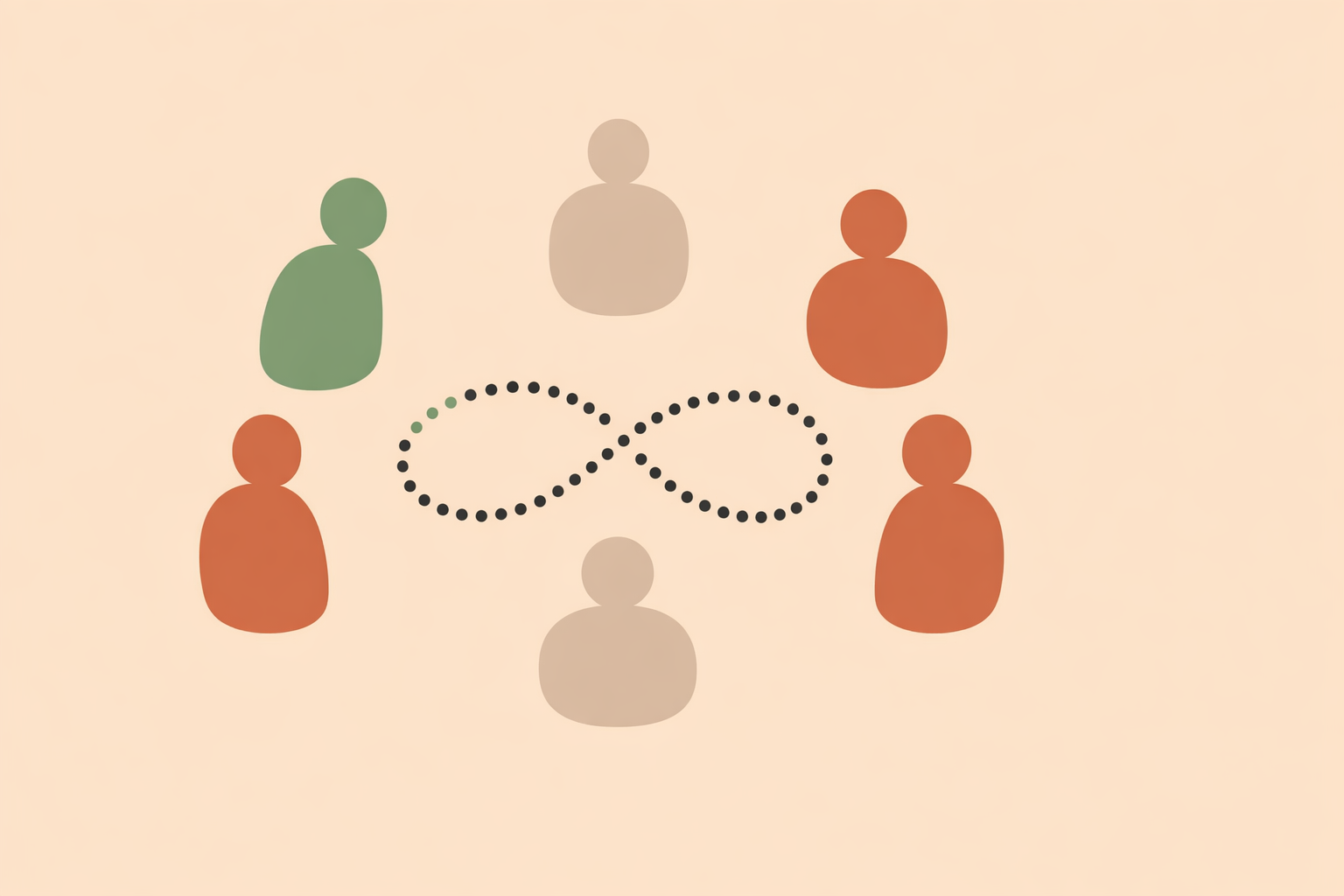
A more useful frame is to treat the group as a habit lab. With shared cues, simple rituals, and a warm community, new behaviors become easier to repeat. Instead of leaning on willpower, the group provides rhythm, repetition, and an easy way to return after wobble.
Key Takeaway: Group coaching works best when it is designed around habit formation rather than pressure-based accountability. Consistent cues, tiny repeated actions, social reinforcement, and gentle review help participants build patterns that feel more natural over time. A strong group structure also makes it easier to adapt for different energy levels, attention styles, and schedules without turning progress into shame.
What happens as a habit starts to settle
Habit formation is gradual. Over time, effortful choices become more familiar responses that require less friction to begin.
Early on, people have to remember the action, decide to do it, and work with resistance. With repetition, the pathway gets easier to access, especially when the context stays stable.
This is why experienced facilitators emphasize consistency over intensity. A small action repeated in the same setting typically goes further than an ambitious plan that regularly collapses under real life.
Many everyday habits take weeks to months of repetition to feel settled, which is one reason 8- to 12-week group formats work so well. They create enough time to repeat, adjust, and return without expecting instant transformation.
It also helps to name the reality of the process. If something still feels effortful in week three, that often means the group is right on schedule, still building familiarity through repetition.
A useful coaching line is: we are not aiming for perfection; we are building familiarity. The more often a behavior happens in a recognizable context, the easier it becomes to return to it.
A simple group habit loop you can use every week
To translate habit theory into group design, keep the structure steady: cue, behavior, reward, review.
- Cue: Begin with the same short ritual.
- Behavior: Practice one small action together.
- Reward: Mark completion in a way that feels warm and immediate.
- Review: Reflect briefly on what helped or got in the way.
The review step keeps the container responsive. Instead of asking people to push harder, it guides them to notice what made the habit easier or harder that week. In structured group programs, weekly review and self-monitoring are often part of what helps participants keep adjusting over time.
A session might look like this:
- A shared breath and phrase to open.
- Ninety seconds of the week’s micro-practice.
- A quick celebration in chat or out loud.
- Two minutes of reflection: What made this easy? What needs adjusting?
This loop is easy to repeat and flexible enough to evolve. As the sequence becomes familiar, starting takes less effort and follow-through becomes steadier.
Design tiny habits that fit real life
The smaller the habit, the more reliably it survives real life.
Durable change often begins with actions that feel almost too small: one breath, one sip of water, one shoulder roll, one line in a journal. These aren’t throwaway gestures; they’re a practical way to build consistency without overload.
Anchoring the habit to something that already happens makes it easier to remember. Instead of relying on memory, the existing routine becomes the reminder.
- After pouring morning coffee, take one sip of water.
- After sitting at your desk, roll your shoulders once.
- After plugging in your phone at night, write one line of reflection.
Environment matters too. Place what supports the habit where it can be seen, and reduce the steps between intention and action.
A useful rule is to choose the smallest useful version of the habit. If the plan feels fragile on a difficult day, it’s still too big. Shrinking the habit strengthens the chance the rhythm will hold.
Use social rewards and tracking without creating shame
Supportive reinforcement builds momentum more reliably than pressure.
In groups, timely encouragement, shared witness, and brief reflection strengthen follow-through. When completion is met with warm recognition, the action becomes easier to repeat.
Tracking helps when it stays light. A checkbox, a one-line note, or a short weekly reflection is often enough to reveal patterns without turning progress into performance.
Rigid streaks can be brittle. For many people, a broken streak quickly becomes avoidance, so it’s often wiser to track return rather than perfection.
Public commitment can still be supportive when the tone stays kind. In well-held formats, shared commitments can strengthen self-care and follow-through.
Practical options include:
- Two Wins and One Learn: participants share two things that worked and one adjustment.
- Emoji witness: everyone marks the completed practice in chat right away.
- 3-out-of-5 rhythm: if the habit happened on any three days that week, it counts as a solid week.
The deeper message is simple: missing a day isn’t the problem. Losing the willingness to return is usually the real friction point, and good group design keeps return easy.
Adapting habit support for different nervous systems and schedules
Not everyone thrives with the same structure. Skilled facilitation leaves room for different attention styles, energy levels, and life realities.
Some people do best with visual prompts, immediate starts, and very small actions. Others need more privacy, more choice, and less visibility. When someone is moving through burnout or chronic stress, softer rituals and restoring micro-actions tend to support steadier participation than productivity-heavy goals.
High stress loads and histories of overwhelm often call for pacing and consent. When pressure-based accountability backfires, non-shaming participation and flexible engagement keep the person connected to the rhythm.
Body doubling can also help: doing a task quietly alongside someone else often makes starting easier when there’s no judgment attached.
Helpful adaptations include:
- Menu habits: offer three equally valid micro-options.
- Start lines instead of deadlines: invite short co-practice sessions where people can simply arrive and begin.
- Gentle visual tracking: use markers like “touched it,” “noticed,” or “reset” rather than pass/fail categories.
- Return plans: help participants decide in advance how they will begin again after disruption.
For example, someone with an irregular schedule might choose one grounding breath when entering the car, with a backup option of one shoulder roll at the lift if the car cue isn’t available. The system stays flexible while the intention stays steady.
Why an 8- to 12-week arc works well
An 8- to 12-week group journey is often long enough for a habit to move from novelty into rhythm.
This length gives participants time to choose a habit, refine it, experience lapses, and practice returning without turning every disruption into a story of failure.
Weekly pacing also suits busy adult lives. In one workplace well-being program, weekly sessions over eight weeks were linked with improvements in resilience, self-compassion, and well-being, especially when paired with brief micro-practices between meetings.
A simple arc might look like this:
- Weeks 1–2: choose the habit, shrink it, and anchor it to a cue.
- Weeks 3–4: strengthen the reward and simplify the environment.
- Weeks 5–6: introduce flexible tracking, menu options, and buddy support.
- Weeks 7–8: review friction points and redesign what is not working.
- Weeks 9–10: prepare for disruption and create return plans.
- Weeks 11–12: move toward maintenance or gently expand the habit.
Between sessions, keep the rhythm light: one prompt a day, one shared weekly reflection, and an optional short co-practice space. The goal is to keep the cue alive between meetings without overloading anyone.
Closing reflection
When habit design is brought into a well-held circle, modern insight and traditional communal wisdom work beautifully together. Stable cues, repetition, ritual, and shared encouragement have shaped human learning for generations, and group coaching gives those elements an intentional structure.
You do not need a complicated system to begin. Choose one shared micro-habit, pair it with a simple ritual, add a warm moment of completion, and make space each week to reflect and refine. Let the group hold the rhythm until the rhythm begins to hold the group.
A few cautions belong here at the end. Not every person will respond to the same pace, visibility, or tracking style, so build in choice from the start. When the tone stays respectful and flexible, participants are far more likely to keep returning, and that steady return is where lasting change grows.
Build Neuroplasticity Coaching Skills
Apply these habit-lab principles in the Neuroplasticity Coaching Certification to support lasting behavior change.
Explore Neuroplasticity Coaching →