The real crunch often hits in the week before a label or regulatory review. Marketing wants bolder language, QA is still reconciling a marker range with a late COA, stability protocols read like placeholders, and supplier files don’t tie back to real field records or vouchers.
The dossier exists, but only as attachments that can’t answer basic lifecycle questions: what the product truly is, where each lot came from, what keeps it consistent, and how to show it stays within what the label promises.
The practical shift is straightforward: make the botanical product lifecycle the spine of the dossier from day one. When identity, sourcing, extraction, specifications, stability, evidence, labeling, and traceability are built as one connected flow, reviews move faster and the file becomes much easier to stand behind.
Key Takeaway: Strong botanical dossiers are organized around the product lifecycle, not late-stage paperwork. Start with a precise product profile and category call, then build linked modules for sourcing, identity, process controls, specifications, stability, evidence, labeling, traceability, change control, and recall readiness. The result is a dossier that reflects how the product is actually made, supported, and brought to market.
Step 1: Define the product clearly from the start
Start with a single-page product profile that every later decision can reference. When this page is clear, the rest of the dossier stays coherent.
Include the essentials: common and scientific names, plant part, preparation type, intended use, dosage form, route, users, serving level, frequency and duration, packaging, storage, target market, and proposed claims.
A workable example might read: “Lemon balm (Melissa officinalis L.), aerial parts, 1:3 hydroethanolic extract (45% v/v), preserved in organic glycerin, 1 mL twice daily for adults, up to 8 weeks; amber glass dropper, 50 mL; stored ≤25°C; EU/US markets; claim: supports calm focus.”
Decide the product’s legal category at the same time. The same herb can fall under very different rules depending on intended use, label language, and how it is presented.
Then create a simple claims matrix. For each proposed phrase, note the jurisdiction, evidence tier, source, conditions of use, and any risk of implying a stronger function than the category allows.
Close this opening page with the dossier’s purpose: to demonstrate identity, consistent production, stability, contextual safety, functional support, traceability, and honest labeling. That single statement keeps teams aligned when timelines tighten.
Step 2: Build dossier modules around the lifecycle
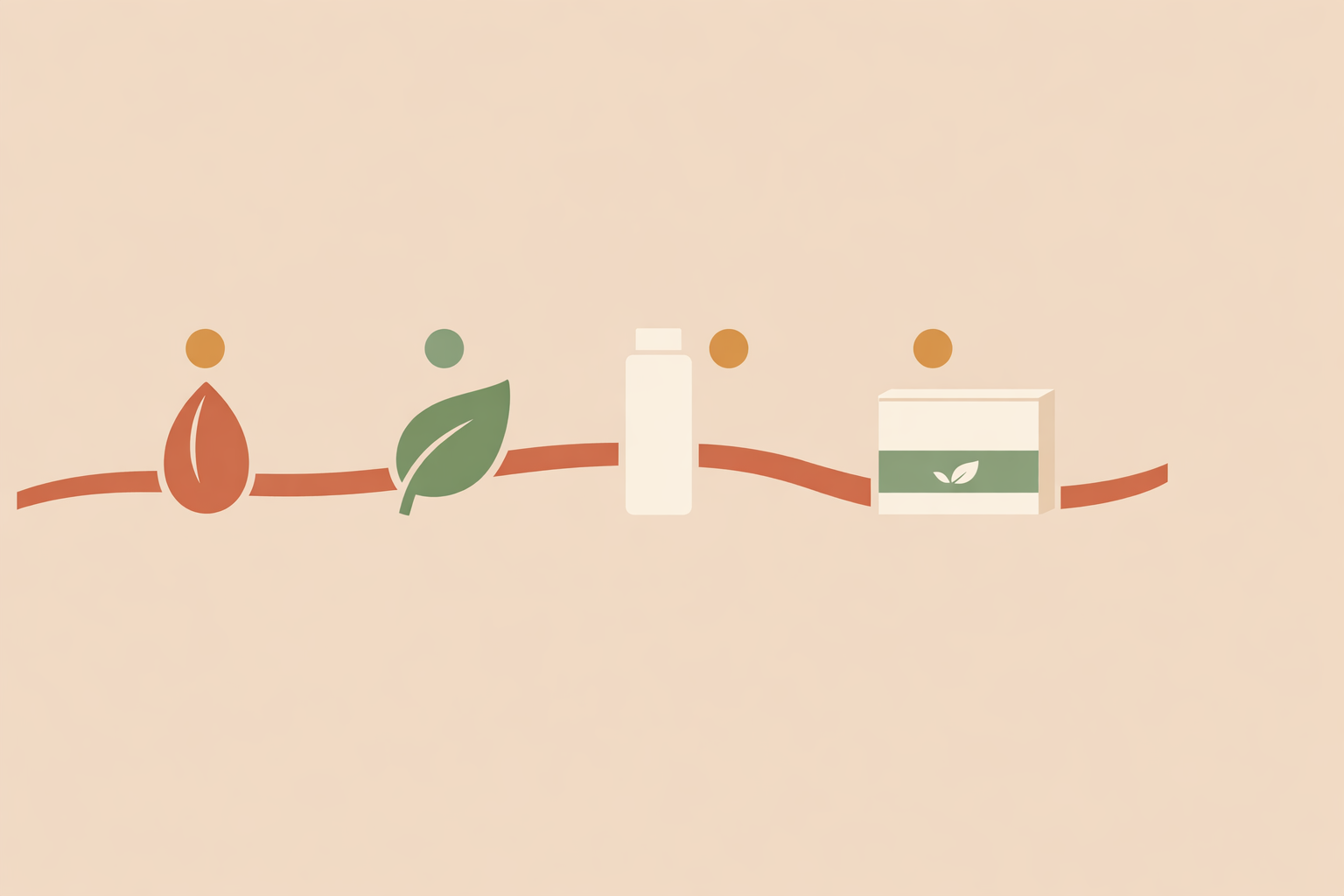
Track one batch from field to shelf. Each point in that journey should have a matching place in the dossier, so nothing gets bolted on at the end.
Useful modules usually include:
- Product definition and classification
- Sourcing and supplier qualification
- Identity
- Extraction and formulation
- Specifications and methods
- Stability
- Safety and functional-support evidence
- Labeling
- Batch documentation
- Traceability
- Complaints
- Change control
- Recall readiness
These modules must connect because raw-material controls shape everything that follows. Finished-product testing helps, but it can’t “rescue” weak inputs.
Keep a clear split between verified facts and interpretation. Facts include species, plant part, extract ratio, marker levels, contaminants, and stability results. Interpretation covers how well a traditional preparation maps to a modern format, how the evidence supports the label language, and what dose and duration imply for everyday use.
Two tools keep this system workable over time:
- Traceability matrix: a table mapping each requirement to its evidence location, owner, version, approval status, and review date.
- Decision log: a running record of options considered, criteria used, evidence reviewed, risks weighed, the final choice, and any follow-up needed.
For analytics, botanicals benefit from integrated approach methods that combine visual examination with microscopy and chemical profiling. The goal is fit-for-purpose documentation that actually supports identity and consistency.
Digital systems can organize files, cross-reference COAs, and flag gaps, but the dossier still depends on careful human review, supplier visibility, and a clean audit trail.
Step 3: Start identity at the source
Many teams collect supplier paperwork near the end. A steadier path is to start identity at the source and let it follow the plant all the way through production.
Begin with sourcing specifications you set before you approach suppliers. These often include scientific name with author, plant part, cultivar or chemotype where relevant, acceptable regions, cultivation or wild-collection method, harvest stage, processing state, moisture limit, particle size, sensory traits, marker or fingerprint expectations, contaminant limits, packaging, storage, transport, and required documentation.
Supplier qualification should reflect botanical realities, not only generic paperwork. Focus on legal identity, facility capability, experience with the herb, quality systems, subcontracting, audit history, deviation handling, traceability, testing, and change-notification practice.
Chain of custody is part of identity. Build it with field or collection records, transport and storage logs, and batch-linked receipts so the material history can be followed without guesswork.
For species confirmation, practitioner standards are strongest when they rely on layered evidence rather than one document alone. Expert examination remains a high standard in practice, especially when supported by voucher material and image records.
For botanical authentication, a three-part model is especially useful: origin and preparation history, taxonomic identity, and chemical composition.
Match the identity checks to the material form. Whole herbs lean on morphology and microscopy. Powders usually need chemical profiling as well. Extracts often rely on chromatographic fingerprints plus markers.
A concise “identity stack” for each raw lot keeps this practical. For example: “Holy basil (Ocimum tenuiflorum), leaf; origin: Nakhon Pathom, Thailand; harvest: flowering onset; drying: 40°C cabinet, 24 h; voucher: NTL-HB-2026-07; macro/micro: matches voucher; TLC: eugenol/rosmarinic acid present; heavy metals and micro within spec.”
Step 4: Connect extraction, formulation, and specifications
Once identity is solid, document how the plant is transformed while keeping consistency under control.
Particle size shows why specificity matters. Milling a herb finer can change extraction efficiency, surface area, flow properties, and moisture behavior. Terms like “fine powder” don’t support repeatability; specify a sieve or measurement method with acceptance ranges.
Document solvent choice with equal care. Water, ethanol, hydroalcoholic blends, glycerol, oils, and supercritical CO2 each create different trade-offs in selectivity, safety, equipment demands, environmental impact, cost, and category fit.
Extraction records should read like a repeatable recipe. They typically include raw-material identity, input mass, solvent identity and ratio, temperature, time, pressure, agitation, extraction cycles, filtration, concentration, drying, carrier materials, yield, marker profile, and in-process controls.
Be clear about standardization. State whether you are controlling a minimum marker, a defined range, a fixed extract ratio, a fingerprint profile, or a blend designed to deliver batch-to-batch constancy.
Finished specifications should reflect how the plant behaves in the chosen format. Common fields include:
- Identity
- Appearance and organoleptic properties
- Moisture or water activity
- Particle size
- Extract ratio
- Marker compounds
- Chromatographic fingerprint
- Microbial limits
- Mycotoxins
- Heavy metals
- Pesticide residues
- Residual solvents
- Foreign matter
- Dosage-unit uniformity
- Packaging integrity
Link the process controls back to the original product profile in one short paragraph. It keeps the dossier readable and makes it obvious that the extraction choices, specifications, and label promise are one story.
Step 5: Build stability in early
Stability belongs in formulation work, not as an afterthought. Botanicals are complex by nature, and shelf life only makes sense when it reflects how the preparation behaves over time.
Use methods that detect meaningful chemical, physical, microbiological, and performance change. Guidance expects stability methods that are fit for purpose and capable of showing how the product changes. For complex preparations, fingerprints can be as informative as single markers.
In day-to-day work, moisture and oxidation are common reasons stability slips. Let the likely failure mode guide packaging decisions.
Hygroscopic powders often do well in high-barrier pouches with desiccants. Oxidation- or light-sensitive extracts typically need oxygen-aware, light-protective containers. This aligns with humidity protection expectations for herbal materials.
Support shelf life with studies that use the actual packaging, intended storage conditions, clear time points, and pre-set acceptance criteria. Release specifications and end-of-shelf-life expectations should match.
A practical close to each stability report keeps momentum: “Evidence supports 24-month shelf life at ≤25°C with humidity control; continue confirmatory real-time work.”
Step 6: Build an evidence file that respects both tradition and current research
After identity and consistency are in place, the dossier needs to show why the product is used as the label suggests. This section is strongest when it is product-specific and honors ancestral practice alongside modern evidence.
Useful evidence tiers often include:
- Pharmacopoeial or regulatory standards
- Human evidence
- Controlled preclinical evidence
- Observational evidence
- Traditional or historical use
- Mechanistic evidence
- Expert consensus
- Preliminary laboratory findings
Traditional knowledge belongs in this stack. Record it faithfully, including preparation type and context of use, then distinguish it from modern study designs without weakening its importance as long-held practical evidence.
Choose applicability over volume. Before you carry a finding into the dossier, compare species, plant part, extraction solvent, extract ratio, marker profile, dose, route, duration, population, and formulation. A nightly water infusion in tradition does not automatically match a concentrated hydroalcoholic capsule.
Practical risk depends on dose, route, duration, and the user, not on hazard alone. Build your narrative around real-world exposure.
Lemon balm is a good example. It has a long traditional European history of use for relaxation, and that background may support gentle wording such as “supports calm focus” when the preparation, serving level, and user guidance are responsibly framed. If the dossier also includes modern human findings, note carefully where the study preparation does and does not match your own.
Keep label statements aligned with what the product actually delivers. If a quantitative claim appears, support it with appropriate analysis so release values and end-of-shelf-life values stay consistent.
Maintain a claim substantiation file with the citation trail, appraisal notes, approved wording, jurisdictional limits, conditions of use, and review date. This is one of the easiest ways to prevent language drift as campaigns evolve.
Step 7: Close the loop with traceability and change control
A strong dossier finishes the lifecycle well. Every batch should be traceable backward to its source materials and forward to where it was distributed.
Master batch records should function as executable instructions, covering approved materials, quantities, equipment, line clearance, processing sequence, in-process checks, yield calculations, reconciliation, deviations, signatures, dates, and independent review.
Executed batch records should link supplier lots, receiving tests, manufacturing records, packaging components, release decisions, distribution, complaints, and retention samples through unique lot numbers.
Traceability only matters if it works quickly under pressure. Run a simple internal exercise each quarter: if a lot has a labeling error, can the team identify affected customers and contributing raw lots within minutes?
Change control protects the dossier from gradual drift. Supplier changes, source-region changes, chemotype shifts, solvent changes, equipment updates, particle-size differences, excipient substitutions, packaging revisions, analytical method updates, and label edits should all trigger an impact review.
That review can lead to comparability work, bridging stability, method updates, revised specifications, or a tighter claim position. This keeps authenticity connected to continuity in a way a slogan never can.
Recall readiness belongs here too. Keep decision authority, contact lists, distribution records, communication templates, quarantine steps, and reconciliation procedures current and easy to access. A documented recall procedure is a clear expectation in recall procedures, and regular internal drills confirm the system works when time is tight.
Conclusion: Let the dossier follow the plant
When the dossier follows the plant from intention to shelf, it becomes a living management tool rather than a static archive. Each section answers a lifecycle question: what the product is, where it comes from, how identity and consistency are shown, what supports its proposed use, how it holds up over time, and what happens if a batch, supplier, or claim proves unsuitable.
Organizing around the lifecycle reduces friction and makes reviews far less chaotic because the file mirrors how the product is actually developed.
Keep decisions explicit. Close each major section with a clear internal call such as: supports release, supports with controls, needs more data, or blocks progression.
Consistency is the quiet promise behind every label. Strong quality systems help keep botanical products consistently produced and controlled to defined standards, and traditional plant knowledge deserves that level of care when it is brought into modern formats.
As a final caution, watch for the common stress points: mismatched identity evidence, vague process parameters, stability plans that don’t match packaging, and claim language that runs ahead of the product profile. Fixing these early is far easier than defending them later.
Choose one product currently on your bench and start there: write the profile, define the category, map the modules, and document one decision properly. The rest of the dossier tends to build naturally once that spine is in place.
Explore Botanical Product Formation
Apply this lifecycle dossier approach in the Botanical Product Formation Certification with practical, product-ready documentation workflows.
Explore Botanical Product Formation →