When a client speeds up, goes flat, or flips between the two, it’s tempting to reach for a quick “vagus hack”: a count, a hum, a posture cue. Sometimes it helps. Just as often, it misses what’s happening in that moment. A steadier path is to let brief prompts rest on state awareness, clear consent, and what the person in front of you is already showing.
Key Takeaway: Quick prompts tend to work best when they’re anchored in a shared state map and client choice, not used as one-size-fits-all fixes. Start with observation and explicit permission, then use simple orientation, breath or voice, and tiny state-matched movements in trackable doses. The aim is not forced calm, but more flexibility, more choice, and a clearer sense of what actually supports the person in front of you.
Step 1: Redefine vagal tone and state before using quick prompts
Start by widening the frame: vagal tone fits inside a broader pattern of regulation, not a shortcut to “calm.”
In broad terms, vagal tone refers to the vagus nerve’s influence on heart function, breathing, and social engagement. In research settings, it’s often estimated using HRV measures. That data can be informative, yet in real sessions your client’s steadiness, connection, and choice won’t be captured by one number.
A practical way to work is to track state shifts, like watching the weather change. The key question becomes: “What state are they in, and what would support a little more flexibility right now?”
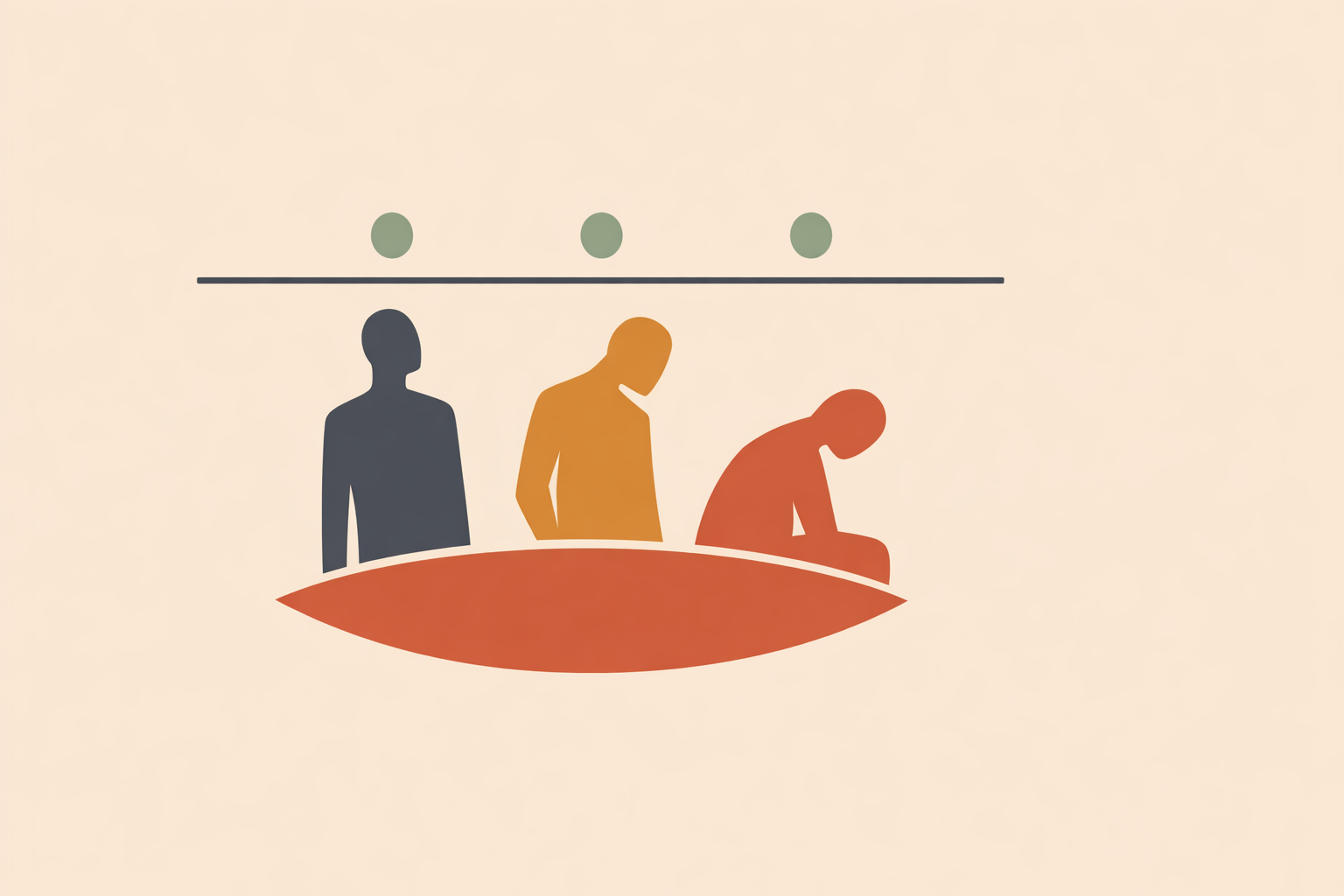
A simple state map makes quick prompts far more accurate:
- Connected/Present: oriented, engaged, and able to choose; inside a workable Window of Presence.
- Mobilized: fast energy, urgency, restlessness, jaw tension, faster speech.
- Low-energy/Withdrawn: flatness, distance, slower responses, fogginess, low initiation.
- Mixed/Shifting: conflicting signals, overwhelm, startle, indecision, stop-go energy.
This map also protects you from over-relying on packaged protocols. Even within polyvagal-informed work, reviews point to methodological limitations across studies. That’s a good reason to let observation, pacing, and practitioner judgment lead, rather than forcing a preset script.
Traditional practices have done this for centuries using rhythm, attention, voice, movement, and relationship with place. Modern language can add a useful overlay, but it doesn’t replace older, well-tested ways of supporting regulation.
In a session, that might sound like: “I’m noticing your leg bouncing and your eyes scanning quickly. My guess is there’s some mobilized energy here. Would you like to try a 60-second orientation experiment and see whether that creates a little more room?”
Step 2: Make observation and consent the first exercise
Before any technique, begin with noticing.
Observation slows the pace without taking choice away. It also helps clients recognize patterns, which builds real self-trust over time.
Try a brief sequence like this:
- “What do you notice right now — in your body, breath, or attention?”
- “Is it more, less, or about the same as a moment ago?”
- “Would you like to continue, change this, or stop?”
This is already meaningful work: self-observation, state literacy, and collaboration in one step.
Then ask permission for something small: “Would you be open to a 30-second experiment? You can keep your eyes open, change the pace, or simply observe.” That tone shift matters. The client isn’t being managed; they’re actively steering.
This level of care is especially important because breath and attention practices can affect autonomic activity. A prompt that feels supportive one day might feel too inward on another. Keep exits clear: “If this isn’t helping, we stop right away.”
If a prompt misses, repair cleanly: “I may have read that incorrectly. What was happening for you?” Then offer simple choices: “Would more structure help, or less? Do you want an external prompt instead of an internal one?”
A practical micro-script: “On a scale from 0 to 10, how workable is this moment? If we try a 45-second experiment and it’s not helping by second 10, just signal and we’ll shift.”
Prompt set 1: Orientation and glimmers in under a minute
If someone is activated, distant, or overloaded, begin outside the body.
Eyes-open orientation is often a gentle starting point because it asks less than immediate inward focus. You’re widening attention before asking for meaning.
Offer one or two prompts at a time:
- “Let your eyes move around the room at a pace that suits you.”
- “Name three shapes, colors, or textures.”
- “Find one spot that feels neutral or slightly pleasant.”
- “Notice whether looking outward changes your shoulders or breath.”
These are straightforward attention shifts. Research on ultra-brief orienting packages is still limited, but many practitioners value them as low-demand ways to interrupt narrowing and restore context.
From there, layer in glimmers: small moments of ease, beauty, humor, competence, or relief. Keep them ordinary and specific:
- “What is one detail that is not difficult right now?”
- “Where was there one percent of ease today?”
- “Point to something in your space that gives you a micro-smile.”
A simple moment might look like this: a client on video appears flat and far away. You say, “Let’s try a 45-second scan. Find one object on your desk that feels neutral or a little pleasing, and let your eyes rest there for two breaths.” They land on a mug. You notice a softer jaw and a longer exhale. That’s enough information to choose the next step.
Environment can be part of the support too. A sensory menu—light, sound, texture, movement, seating, scent—helps clients co-create conditions that suit them. Ask: “Would softer light help? Do you want more weight through a blanket or cushion? Would fresh air or less noise make this easier?”
Many traditional, land-based practices begin with orientation to place—directions, mountains, water, sky, season, ground. Used respectfully, that wider sense of place can deepen orientation without turning it into performance or borrowing from traditions carelessly.
Prompt set 2: Breath and voice for brief settling
When breath is welcome, keep it simple.
Slow-paced breathing has been shown to increase HRV. Reviews also describe maximal RSA as often occurring around 4.5 to 6.5 breaths per minute, with plenty of individual variation. In sessions, comfort and consent usually matter more than hitting an exact number.
Try prompts like:
- “Let the exhale be a little longer than the inhale.”
- “Take five slower breaths, then pause and notice.”
- “If counting helps, count. If not, just follow the rhythm.”
Some people relax with a clear structure; others tighten when breathing becomes a task. Let the client’s response guide the pacing and style.
Keep breath-free options available. If breath focus feels edgy, shift routes: “Notice the weight of your pelvis on the chair,” “Track one thing outside you and one neutral sensation inside,” or “Soften your gaze and let your tongue rest.” Use what supports the person, not what “should” work.
Voice can help too, adding rhythm and vibration with little effort:
- “On your next exhale, hum softly for a second or two.”
- “Offer a quiet ‘mmm’ and notice the vibration around the lips.”
- “If you prefer, imagine the hum silently instead.”
Across many traditions, chanting, prayer, mantra, and sacred song have long been used to gather attention and create steadiness. In a modern coaching setting, a light hum can serve that same regulating function in a simple, accessible way.
A brief example: before a difficult topic, you say, “Would you like a 90-second experiment? Two slower breaths with a soft hum on the exhale, then we check in.” Afterward, ask, “What shifted by one percent?”
Prompt set 3: Micro-movements, titration, and pendulation when intensity rises
When words stop working, very small movements often restore choice.
The guiding principle is consistent: match the movement to the state, keep the dose small, and move between activation and resource rather than pushing for a big release. In somatic language, that’s often called titration and pendulation.
A review discusses titration and pendulation as proposed mechanisms for stabilizing arousal, while also noting the research base is limited and mixed. In practice, these ideas remain useful because they build pacing, respect thresholds, and reduce overwhelm.
State-matched options:
- If mobilized: press the feet into the floor for a few seconds, then release; make a gentle two-hand stop gesture toward a wall or cushion; shake out the hands briefly; add one longer exhale.
- If withdrawn: reach two or three inches toward a real object; place a hand on the chest or upper arm; rock slowly side to side; name three sounds in the room.
- If mixed or overwhelmed: reduce input; dim light if possible; add weight through the thighs; place both soles on the ground; do one shoulder roll, then rest.
Make pacing explicit: “Let’s do three tiny rounds—10 seconds of foot press, then 20 seconds resting with your eyes on that blue book. After each round, tell me: more, less, or about the same.”
Completion impulses can be met in the same contained way. If a yawn wants to come, let it come. If the hands want to push gently, allow a brief, bounded push. Small, finished actions are often enough.
It also helps to stay precise with explanations. Claims that somatic completion works through a specific mechanism of “stuck energy” are not well established. The grounded observation is that a small completed action sometimes helps someone feel more settled, more present, or more organized.
Track what you see. A brief note like “foot press + orienting; shoulders dropped; speech slowed” becomes valuable over time, helping you and the client build a personal regulation map.
The deeper aim is adaptability: the ability to move among engagement, effort, and rest with more choice and less friction.
Conclusion: Lead with choice and build flexibility over time
Quick prompts work best when they sit inside a thoughtful sequence: observe first, get consent, start simple, and track what actually changes.
Keep it practical. Use shared state language. Start with orientation when inward focus is too much. Bring in breath or voice when they feel welcome. Add tiny movements when energy needs a pathway. Keep doses brief and responses easy to measure in the moment.
Let traditional wisdom and contemporary research sit side by side. Practices of rhythm, song, place orientation, prayer, grounding, and gentle movement have supported human well-being for a long time. Research can clarify parts of the picture, without overriding lineage, context, or lived experience.
To keep the work ethical and inclusive, offer real opt-outs, adapt for culture, neurodiversity, sensory preferences, and communication style, and repair misattunement openly. Over time, trust grows from the steady experience of noticing, choosing, and finding a workable way back in trauma and emotional healing work.
Train in Polyvagal Therapy
Deepen these state-based prompts with structured learning in the Polyvagal Therapy Certification.
Explore Polyvagal Therapy →