When sessions start to feel effortful, many practitioners lean harder on language: one more reframe, one more question, one more layer of analysis. Meanwhile, the client’s breath shortens, the shoulders rise, and the conversation loses traction. In those moments, what helps most is often better attention.
Key Takeaway: Somatic coaching works best when attention is guided through a paced, body-led sequence: settle, notice, name, shift, and return. Bodily cues such as breath, posture, and tension bring depth to the conversation, help you track what is happening in real time, and support gentle, practical change that clients can repeat in daily life.
Why somatic awareness deepens coaching sessions
Somatic awareness is the skill of noticing sensation, posture, movement, breath, and orientation as they happen, then letting those signals guide what comes next. When a client tracks breath and subtle tension, the conversation often becomes clearer and more directed.
Somatic approaches can integrate breath and posture into the client’s lived narrative, so the body becomes part of the meaning rather than background noise. Reviews of body-oriented approaches also suggest they can improve depth of processing when sensation is included alongside reflection.
This fits what traditional body-based disciplines have taught for generations: the body holds patterns, and steady practice can restore choice. Many people carry protective habits that persist long after the original stress has passed, like a guarded inhale, braced jaw, or habitual hunch.
Somatic work also gives you something immediate to work with. It can use real-time responses such as shifts in tension, breath, and posture to guide the next step. If a client’s shoulders rise while speaking about conflict, you can stay with that signal and explore it together, right there in the room.
Often, a small pause is enough: “Feel your seat on the chair. Notice your breath for two cycles.” The voice slows, the face softens, and the next insight arrives with less strain.
A simple somatic session map: settle, notice, name, shift, return
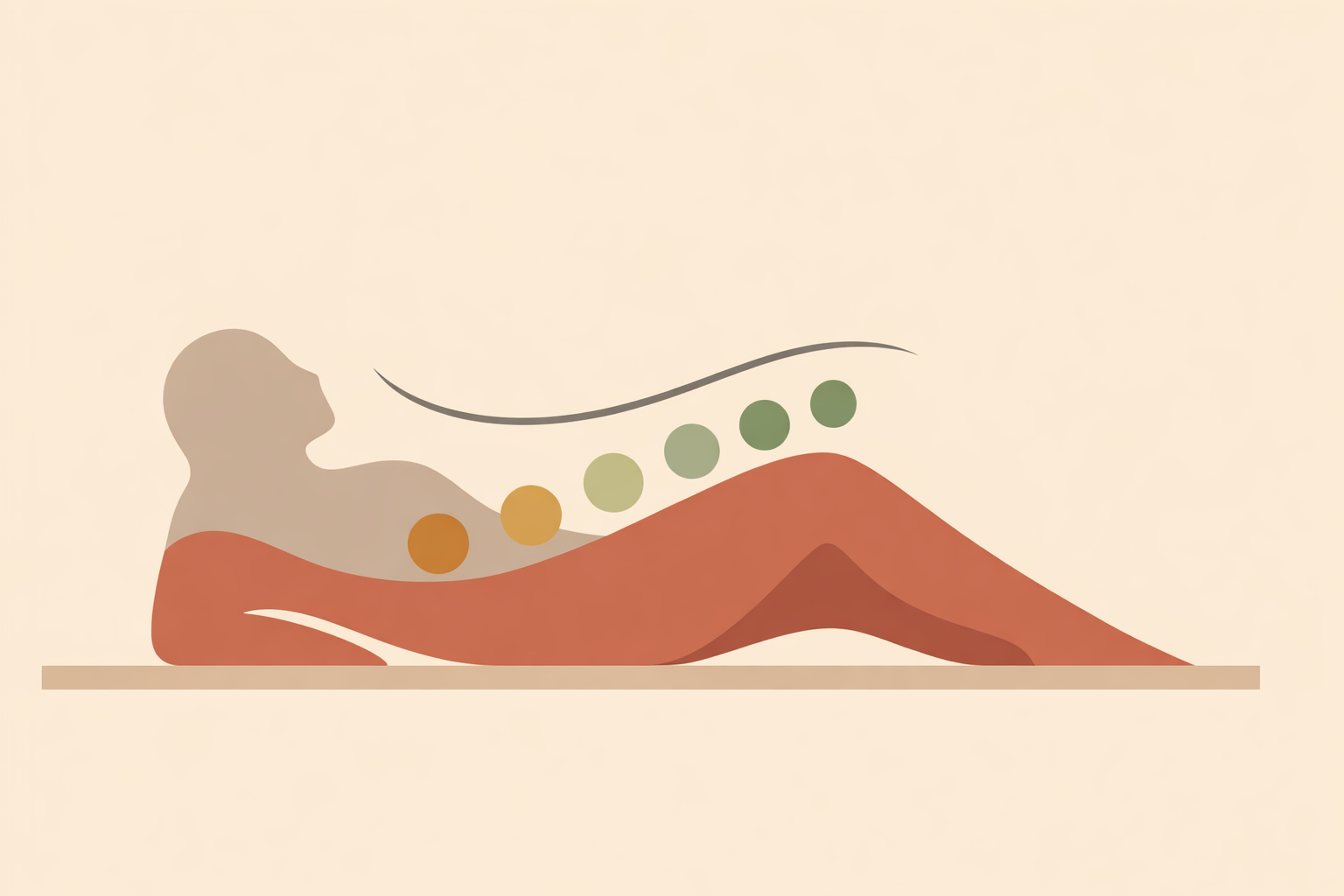
Most practitioners don’t need more techniques. They need a sequence that protects pacing and keeps the work coherent. A practical somatic flow is:
- Settle
- Notice
- Name
- Shift
- Return
This order matters. Settle before intensity. Get clarity before aiming for change. Finish with integration, so the session feels complete rather than abruptly “open.”
You can adapt this map to almost any coaching style. In a 50-minute session, a common rhythm looks like:
- 5 minutes to settle
- 10 minutes to notice
- 10 minutes to name
- 15 minutes to shift
- 5 to 8 minutes to return and integrate
The point isn’t rigidity. It’s giving attention a shape, so you don’t end up with a rush of insight that never lands in the body, or a flood of sensation with no meaning attached.
Step 1: Settle with grounding, orienting, and resourcing
Start by making the present moment feel workable. Grounding helps the client feel contact with the here and now: feet on the floor, weight on the chair, breath moving in and out.
Orienting adds another layer of steadiness. Invite the client to look around slowly and notice light, color, shapes, and distance, and to identify what feels supportive or neutral. It helps the system register that this is “now,” not an older moment replaying itself.
Then add resourcing. A resource can be small and reliable: warmth in the hands, the pressure of socks on the feet, a memory of a quiet place, or the support of the chair against the back.
Breath can support all of this when it’s approached gently. Slow, intentional movement coordinated with breath is often associated with reduced stress and a steadier internal state. Rather than forcing the breath, invite a minor adjustment: “Let the out-breath be just a little longer than the in-breath.”
A simple opening script might be:
“Let’s arrive first. Feel your feet. Feel your seat. Look around and notice one thing that feels pleasant or neutral. Now notice one place in your body that feels okay enough. We’ll keep that as a reference point.”
This kind of opening is brief and effective. It tells the client’s system: we are not rushing.
Step 2: Notice body data without rushing to fix it
Once there’s enough steadiness, shift from talking about experience to noticing experience directly. This is where interoception becomes central: awareness of internal signals such as heat, tightness, pressure, fluttering, heaviness, movement, or stillness. Interoception is closely connected with emotional awareness and self-regulation.
Keep the language descriptive rather than interpretive. Ask:
- Where is it most noticeable?
- What is the shape?
- Is it warm, cool, tight, loose, buzzing, numb?
- Does it stay the same or change?
The aim is tracking, not fixing. Clear, nonjudgmental observation often builds capacity, and many clients experience more movement once they stop forcing a result.
This is also a moment to watch your own pacing. Your posture, breath, facial tension, and tempo shape the room. When you regulate your own presence, nervous system safety and co-regulation become much easier.
Sometimes the smallest intervention is enough. Naming the quality of a sensation can soften its grip, because the client is no longer speaking from distance but from contact.
Step 3: Name the pattern and connect it to the goal
Noticing gives you pieces. Naming turns those pieces into something workable.
Help the client separate sensation, feeling, and story. For example:
- Sensation: tight, hot, collapsed, buzzing
- Feeling: fear, irritation, sadness
- Story: “I’ll get this wrong” or “I have to prove myself”
This distinction keeps the experience from collapsing into one fused reaction, and it gives you more precision in what to support.
Somatic patterns like collapse, bracing, or held breath can remain active well beyond the original strain. Body-oriented trauma reviews describe enduring patterns of muscular tension, postural collapse, and breath restriction, which practitioners often recognize as situation-linked habits.
Then connect the pattern to the client’s objective. If the goal is “speak calmly in meetings,” and the pattern is “breath rises, shoulders round, voice speeds up when questioned,” you now have a clear pathway for practice in trauma and emotional healing.
Keep your language collaborative:
- “I’m noticing a bit of bracing in your jaw. Does that fit?”
- “Would you call this heavy, flat, or tired?”
- “What happens in your body as you imagine tomorrow’s conversation?”
When clients choose the words themselves, they also gain ownership of the pattern.
Step 4: Shift gently with titration, pendulation, and micro-movement
Once a pattern is clear, invite change in small doses. Big, forceful interventions often create more strain than support. Smaller shifts are easier to absorb and repeat.
In somatic practice, this gradual approach is often called titration. Trauma-informed body-based approaches commonly use titrated exposure to avoid overwhelm and support steadier integration.
Pendulation is another useful principle: moving attention briefly between activation and a neutral or pleasant anchor. It teaches the system flexibility, so it doesn’t get stuck in one state.
Movement can help here as well. Light shaking, swaying, humming, progressive tension and release, or a gentle self-hold can create more ease. Accessible somatic exercises are often reported to relieve tension and support well-being when used gently and consistently.
A simple mini-protocol might look like this:
- Notice the pattern: “There’s the shoulder brace.”
- Stay with it briefly.
- Return to a resource: feet on the floor, the support of the chair, a longer exhale.
- Add one micro-shift: soften the jaw 5%, let the shoulders drop slightly, lengthen the spine a little.
- Check what changed.
Offer choice throughout: breath, movement, touch, imagery, or simply attention. The client sets the pace; you keep the process steady and respectful.
Step 5: Return, integrate, and close cleanly
Good somatic work doesn’t end at the peak of discovery. It ends with return, so the session lands in a grounded, usable way.
Re-orient to the room. Feel the feet and seat again. Notice the walls, light, colors, and distance. Let the breath settle. This clear return phase helps clients leave with steadiness.
Close with one small, repeatable practice. Somatic self-care models often emphasize repeatable skills that support integration between sessions. Keep it specific and realistic.
For example:
- Two slower exhales before answering a difficult question
- A 10-second pause to feel both feet before entering a meeting
- One hand on the ribs for two breaths during a moment of stress
Rehearse the practice once before ending. The client leaves with insight and a body-based action they already know how to do.
How to work in an evidence-informed, tradition-respecting way
Somatic practice thrives at the meeting point of lived experience, traditional knowledge, and emerging research. Evidence-informed practice is often described as integrating client values, practitioner experience, and research. That blend fits embodied work well.
Traditional systems built their credibility through careful observation over many generations. That kind of knowledge deserves respect, especially in practices rooted in breath, posture, rhythm, and mindful movement.
At the same time, integrity means staying thoughtful about what you claim, tracking what actually supports the person in front of you, and being willing to refine your approach as the wider evidence base evolves.
Respecting origins is part of that integrity. When drawing from traditional movement or breath-based disciplines, name the lineage, credit the roots, and avoid stripping practices from their cultural context.
Closing perspective
The body offers both a map and a pace. When you settle first, notice carefully, name patterns clearly, shift gently, and return fully, sessions feel more coherent and more useful. Consistent, respectful practice is what builds resilience over time.
Small steps are often the most sustainable: a brief pause, a 10-second scan, a softer jaw, a steadier exhale. Used consistently, these modest practices can reshape how people meet pressure, make choices, and carry themselves through daily life, and they sit at the heart of somatic coaching.
Train in Somatic Coach Certification
Build on this paced somatic session map with structured practice in the Somatic Coach Certification.
Explore Somatic Coach Certification →