Group programs often treat “quiet” as one simple category and respond with familiar fixes: more think time, smaller breakouts, fewer round‑robins. Yet in real cohorts, some people shut down mid-call while others stay quiet by choice and feel perfectly fine. When both patterns get labeled “introversion,” capacity is misread, and the very people who want to contribute can end up depleted.
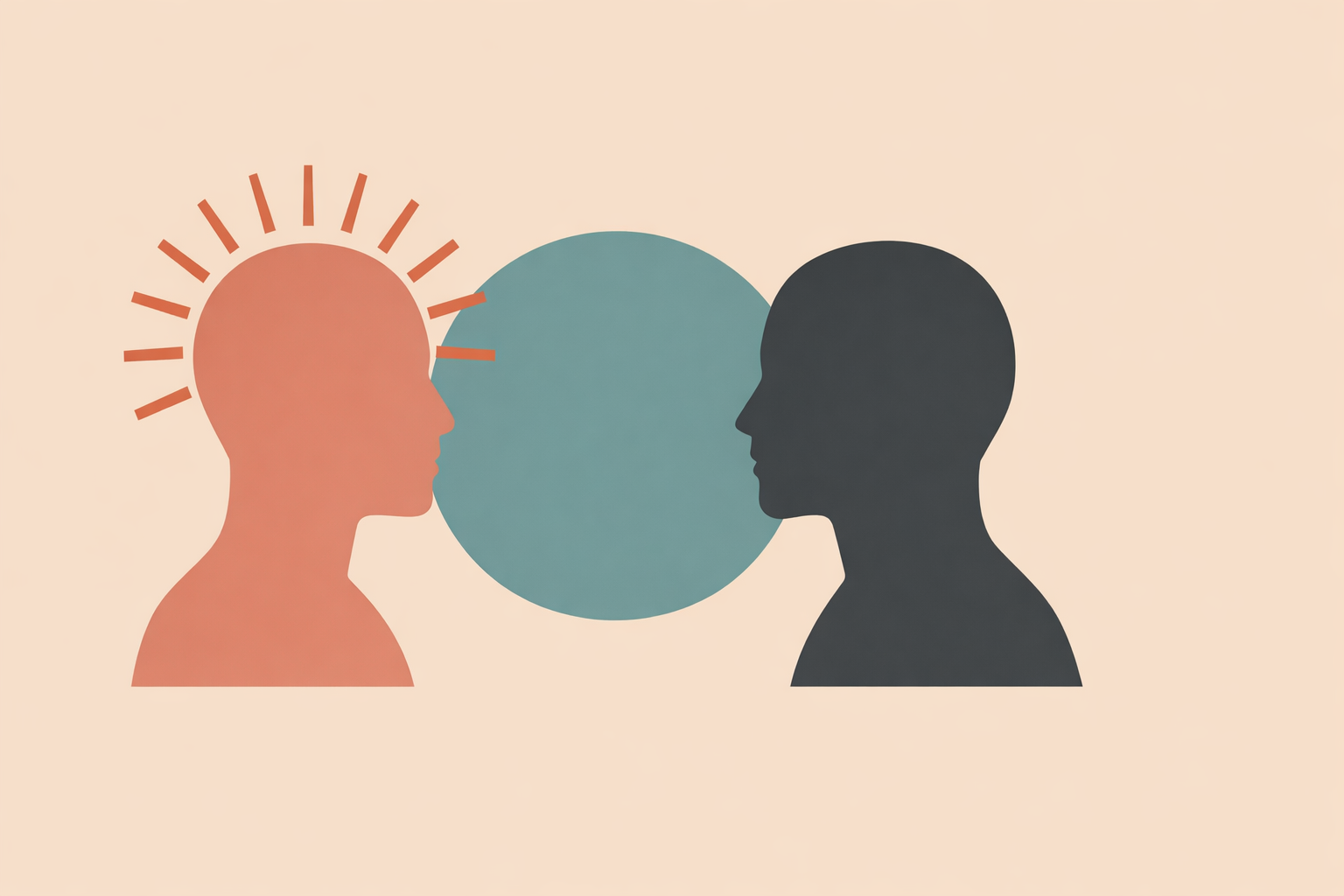
A more useful distinction guides better facilitation: high sensitivity reflects a particular sensory and emotional processing style, while introversion reflects how someone uses social energy. In live groups, they show up differently. When you can tell overload from social tiredness, you can lead with steadiness, warmth, and precision.
Key Takeaway: Confusing high sensitivity with introversion distorts group coaching. Introvert-friendly adjustments help, but they do not fully address the sensory load, emotional intensity, and pacing that shape HSP overwhelm. The most reliable approach is to lower unnecessary input, build in choice and recovery, and read quiet behavior more carefully in the moment.
Why introvert-friendly tweaks are not always enough
When the only lever you pull is “less social pressure,” you can miss what’s actually overwhelming the sensitive system. SPS includes reflection, but it also includes stronger responses across situations, especially under strain.
A room can become too much because of brightness, visual clutter, overlapping audio, heavy emotional tone, or relentless pace. A smaller breakout doesn’t automatically reduce any of that.
More effective shifts often look like:
- Shorter teaching segments with clear pauses
- One communication channel at a time (instead of slides, chat, and speaking competing)
- Explicit permission to listen, type, step away briefly, or pass
- Simpler visuals, less background noise, and gentler transitions
Lowering environmental load is especially supportive. Practical guidance on sensory differences often emphasizes quieter spaces, reduced visual clutter, and softer lighting. In group settings, these changes usually help sensitive participants without diminishing the experience for everyone else.
Two different blueprints: SPS and introversion
It helps to think in terms of underlying blueprints, not surface behavior.
SPS is a normal, adaptive temperament with costs and benefits. It’s often described as deep processing, sensitivity to subtleties, strong emotional resonance, and a tendency toward overstimulation when demands stack up.
Introversion sits in a different domain: energy use, social preference, and a more contemplative pace. An introvert may speak less because they prefer to observe and think first. An HSP may speak less because there is too much happening internally and externally at once.
The same session can land very differently:
- For the HSP: layered input stacks quickly, emotional tone carries weight, and small changes in pace or pressure can shift everything.
- For the introvert: the central need is often conserving energy, responding thoughtfully, and avoiding unnecessary social demand.
There’s overlap. Some people are both introverted and highly sensitive. But they aren’t identical patterns, and group leadership improves when you stop treating them as interchangeable.
How overload and depletion look in live groups
Once you start tracking overload versus depletion, room-reading gets much easier.
HSP overload often builds fast and cumulatively, while introvert depletion tends to be steadier and tied to social battery. Sensitivity research supports SPS as involving ease of overstimulation.
In live groups, overload can look like fogginess, irritability, narrowed focus, shallower breathing, or an abrupt loss of words after too many layers of input. Emotional tone can amplify this, especially with high emotional reactivity under strain.
Introvert fatigue often has a calmer texture: slower responding, quiet observation, lower output, and a clear preference to keep listening without distress. That matches the more slow, accurate response style often associated with introversion.
A simple question helps in the moment: Is this too intense, or just tiring?
If it’s too intense, reduce input. If it’s tiring, reduce social demand.
Two common clusters show up in practice:
- Likely overload: blanking, tension, irritability, sudden withdrawal after emotional or sensory build-up, difficulty tracking
- Likely depletion: calm quietness, steady note-taking, preference to observe, lower desire to speak without signs of strain
Quick regulation moves that help sensitive participants stay present
When the room feels hot, the first move usually isn’t more discussion. It’s helping the nervous system settle.
A short downshift can change the whole tone. Slow breathing practices are associated with autonomic changes that support settling and reorientation.
In a live group, that can be as simple as:
- Three to six slower breaths with a longer exhale
- Looking around and noticing the space you’re in
- Feeling both feet on the floor
- Reducing visual demand by turning off self-view or briefly closing the eyes
Then narrow the inputs. Reduce simultaneous demands, keep shares shorter, and offer clean choices: listen only, type in chat, or pass.
This sequence works because it meets a sensitive system where it is: settle first, simplify second, invite choice third.
If you want a short script, try this: “Let’s pause for a few slower exhales. Feel your feet. You’re welcome to keep cameras off, listen only, or type instead of speaking.”
How to design an HSP-aware group container
The strongest support begins before the session starts. Good container design reduces how much recovery people need later.
HSP-aware groups tend to work best with smaller numbers, slower pacing, clear transitions, and built-in recovery time. These choices come straight out of seasoned facilitation, and they also align with what’s known about sensitivity and environmental load.
Reducing sensory demand can support attention across the whole group. Educational guidance for sensitive learners highlights reducing visual and noise distractions, adjusting lighting, and simplifying the environment.
In group spaces, that often translates to:
- Fewer slides and less on-screen motion
- No background music unless the group actively wants it
- Emotional intensity in waves, not one long build
- Obvious transitions so people aren’t bracing for constant shifts
- Short breaks before the group looks tired
Make participation pathways explicit. “Speak, type, or pass” gives people clear doors to walk through. When options are named early, everyone spends less energy managing uncertainty.
Posting prompts in advance, building in quiet reflection, and making “permission to pass” a true norm support both introverts and HSPs without forcing anyone to explain themselves.
Live facilitation through an HSP-aware lens
In the moment, small choices determine whether a sensitive participant stays engaged or starts to pull away.
A reliable principle is to alternate activation and settling. Sensitivity research suggests that less intense environments support sensitive people, while environmental monitoring can make sustained intensity more taxing.
So instead of long, continuous teaching or heavy processing, let the session breathe:
- Teach briefly
- Pause for reflection
- Invite one small share
- Settle again
Choice also matters, especially when inviting participation. Vague invitations can increase pressure. Clear options reduce it.
For example:
- “I’ll come to you after two more shares.”
- “You can answer in one sentence, in chat, or not at all.”
- “We’ll keep this round brief.”
This kind of structure often supports HSPs more than a general push toward openness. Introverts sometimes appreciate gentle encouragement, while sensitive participants consistently do better when expectations and opt-out rights are unmistakable.
Sensitivity as an asset in group work
When high sensitivity is understood well, it reads as attunement that benefits from wise pacing.
SPS is widely framed as a normal trait, with potential strengths in pattern recognition, caution, and social awareness. Research summaries connect sensitivity to an evolutionary strategy of environmental monitoring and vigilance.
That matches what many practitioners see: sensitive participants often notice subtle shifts early. They may be the first to sense when pace is rushing, when a share lands heavily, or when the group is nearing its limit.
Traditional gathering wisdom has long made room for this perceptiveness through rhythm: effort and rest, speaking and silence, intensity and settling. Modern groups don’t need to copy any sacred form to learn from that human pattern.
Respectful ways to apply that wisdom include:
- Naming pattern-spotting as a valued contribution
- Using simple opening and closing rituals that are inclusive and non-performative
- Creating clear cycles of activation and recovery
- Treating stepping back as discernment rather than failure
What to change in your next cohort
One practical shift changes everything: stop asking only how to include quieter people, and start asking what kind of quiet you’re seeing.
- Name the difference: too much input and social tiredness are not the same thing.
- Lower load by default: simplify visuals, reduce noise, slow the pace, and use predictable breaks.
- Build clear options: speaking, typing, listening, and passing should all be legitimate forms of participation.
- Regulate before pushing: if the room feels strained, settle first and then continue.
- Use waves, not constant intensity: alternate focus, sharing, and recovery.
- Honor sensitivity as useful: many HSPs track nuance that strengthens the whole group when the container is skillful enough to hold it.
When you design for sensitive systems while respecting introvert energy, people stop bracing. The space becomes easier to trust, participation becomes more genuine, and the group’s attention sharpens.
Explore HSP Coach Skills
Go deeper into pacing, sensory load, and group facilitation with the Highly Sensitive Person HSP Coach course.
Explore the HSP Coach →