Quiet clients are easy to oversimplify. In early conversations, many practitioners hear “exhausted after team days,” “prefers the corner seat,” or “pauses before answering,” then reach for a single label. When quiet gets treated as one trait, plans miss the real lever for change. A coach may suggest more solitude when the real issue is sensory overload, or cut stimulation when the client is actually nourished by people and only strained by pace, noise, or constant switching. Accurate differentiation matters here.
Key Takeaway: Effective coaching distinguishes social energy from sensory processing sensitivity so support fits the person rather than the label. When you separate social preference from sensory load, intake becomes clearer, sessions become easier to pace, and lifestyle experiments become more precise and sustainable.
Social energy and sensory sensitivity are different lenses
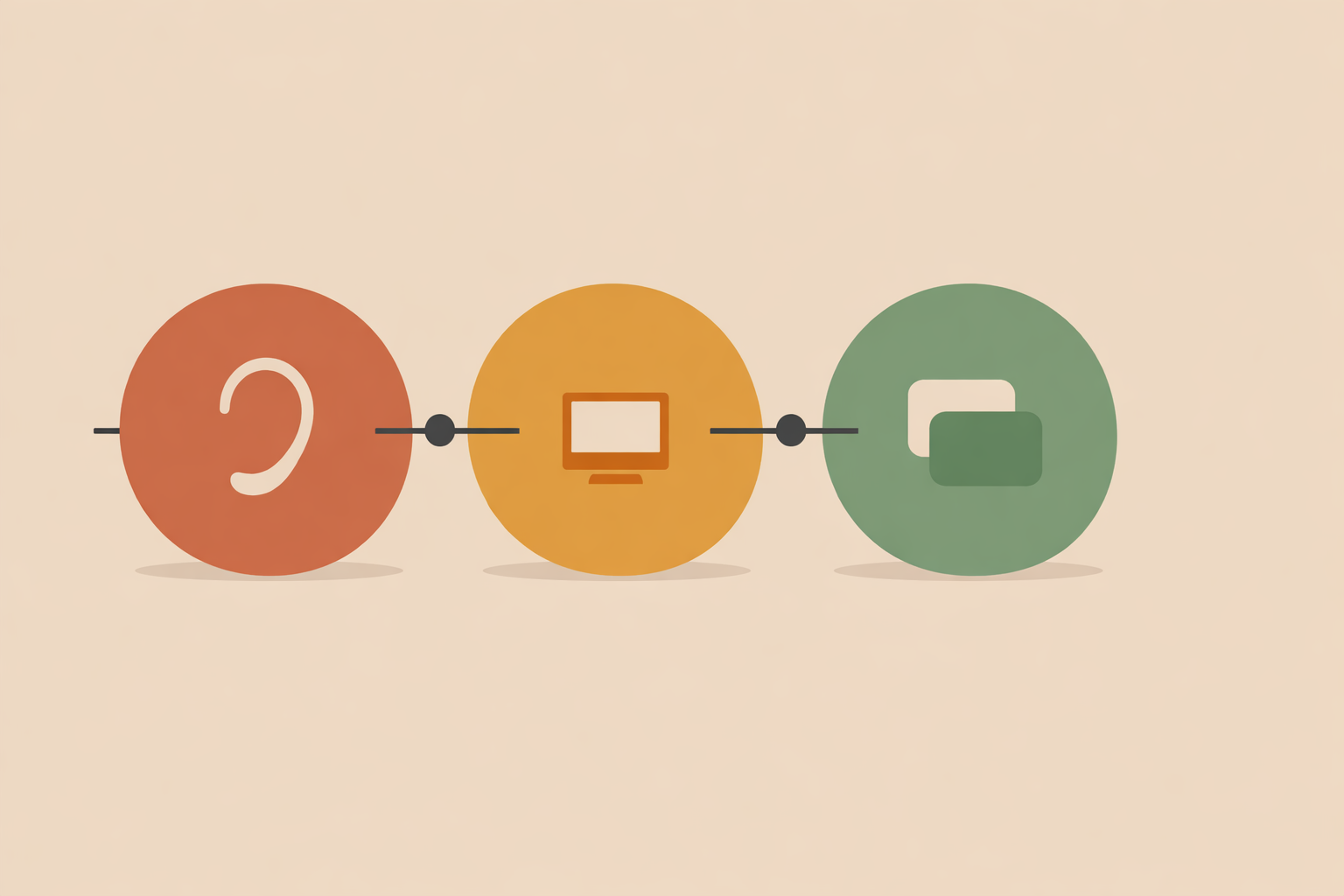
Two lenses help most: social preference and sensory processing. Some clients lean strongly toward one; many live at the intersection. Holding both lenses keeps you from solving the wrong problem.
Introversion is about social energy
Introversion is about how a person restores energy. Many introverted clients think best on their own, prefer depth over breadth, and enter social spaces deliberately rather than continuously. In coaching, it often sounds like: “I create better ideas alone, then bring them to the group once they’re formed.”
This pattern doesn’t automatically mean someone is highly sensitive. It can be as straightforward as a preference for spaciousness and lower social demand.
Sensory processing sensitivity is about depth and intensity of input
Sensory processing sensitivity describes how deeply someone processes inner and outer input. It can include noticing subtleties, picking up emotional atmosphere, reflecting before acting, and getting overloaded when inputs stack up. Reviews describe sensory-processing sensitivity as distinct from related traits, even when there’s overlap.
In day-to-day practice, many sensitive systems respond to cumulative input rather than one dramatic trigger. The tipping point is often the pileup: bright lights, urgency, open tabs, interruptions, tension in the room, and no time to integrate.
Sensitivity also carries real strengths. With supportive conditions, that responsiveness can show up as richer perception, attunement, creativity, meaningful connection, and a stronger lift from what nourishes.
Many traditional communities have long recognized those who notice the subtle and shaped roles, rhythms, or conditions that respected that gift. That kind of cultural memory is valuable guidance for modern coaching: sensitivity is a pattern to understand and support well.
How to assess without over-labeling
The most useful intake doesn’t start with “Are you an introvert or an HSP?” It starts with patterns across real situations.
Try questions like:
- “Do you choose quiet because you enjoy it, or because stimulation becomes too much?”
- “After a good social experience, do you feel pleasantly tired or frazzled?”
- “What tips you over more quickly: noise, multitasking, emotional tone, timing, conflict, brightness, or uncertainty?”
- “What kinds of settings help you think clearly and stay connected to yourself?”
These separate preference from capacity. One client may dislike large groups yet feel fine in a busy workspace. Another may love collaboration and still unravel under fluorescent lighting, constant messages, and back-to-back demands.
It also helps to map social energy and sensory load side by side, especially in neurodiversity coaching.
- Social energy: preferred group size, recovery after interaction, solo versus collaborative thinking, style of communication
- Sensory load: noise, brightness, emotional intensity, complexity, time pressure, interruptions, transitions, digital input
Even one clean note can guide everything that follows: “Client enjoys people, but loses clarity when multiple demands land at once.” That’s far more actionable than a broad label.
What changes in live sessions
Once you can distinguish social preference from sensory load, sessions get easier to shape. You can protect depth while keeping the client well-resourced and oriented.
Pace matters
Sensitive clients often do best with deliberate pacing. This isn’t about being precious or overly cautious. It’s about noticing when the speed of questions, emotional depth, and complexity starts outrunning the client’s integration.
Helpful prompts include:
- “Would you like a moment before answering?”
- “Is this a good point to pause and sort what feels most important?”
- “Do you want to stay with this thread, or narrow it down?”
When pace is named openly, many clients become clearer fast. A short pause, a quick written note, or returning to one key thread often restores coherence.
Right-size stimulation rather than removing life from the plan
A common mistake is assuming the answer is always less: less contact, less activity, less challenge. A steadier approach is to right-size stimulation: reduce unnecessary overload while keeping what brings meaning and momentum. Like adjusting a dimmer switch, you’re aiming for “enough” rather than “none.”
That might look like:
- keeping a meaningful social commitment while reducing setup chaos
- protecting one focused work block while staying engaged in collaboration
- spacing emotionally heavy conversations instead of avoiding them entirely
- changing lighting, timing, or transitions rather than withdrawing from the whole environment
As clients track signals with a coach, thresholds become easier to spot. Over time, they learn the difference between healthy stretch and accumulating overload.
Choice-based body awareness can support focus
Body-based options can be supportive when they’re offered with clarity and choice. The aim is to widen access to steadiness, not to impose a technique.
Useful options may include:
- softening the jaw
- lengthening the exhale
- changing posture
- lowering the gaze
- standing for a minute
- taking a brief pause before continuing
Offer them lightly: “Would a short pause or posture shift help, or would you rather keep going as we are?” That protects agency and keeps the work collaborative.
Ethical foundations stay the same
Greater precision doesn’t change the basics. Strong practice still rests on clear boundaries, informed choice, transparency, cultural respect, and client leadership.
Emotional safety tends to grow when the relationship includes clear boundaries, plain-language agreements, permission to pause, and explicit respect for no. A trauma-sensitive stance centers choice and consent rather than assumption, especially when suggesting body-based or spiritual practices.
This matters because sensitivity is easy to overinterpret. Use it as a lens, not a verdict. It doesn’t explain everything, and it should never be used to shrink the client’s possibilities.
Cultural care matters too. When drawing on traditional practices or ancestral frameworks, name roots where appropriate, adapt humbly, and avoid turning living traditions into aesthetic tools detached from context.
Useful experiments for introverts and highly sensitive clients
Support becomes practical when it turns into small, testable adjustments. Short experiments usually land better than sweeping rules.
You might explore:
- reducing notifications for part of the day
- buffering meetings with a short transition break
- adjusting lighting in work or reflection spaces
- limiting back-to-back emotionally intense conversations
- choosing one meaningful social contact over several scattered ones
- planning recovery after high-input events instead of waiting for collapse
For introverted clients, this often means protecting depth and reducing unnecessary social drain. For highly sensitive clients, it often means managing cumulative input while keeping what’s nourishing. For many people, it’s both.
Week-long trials work well because they reveal patterns without turning into identity statements. The goal is noticing what creates steadier energy, clearer thinking, better connection, and easier recovery.
A reflection prompt that tends to unlock insight: “What made this week 10% kinder on your system without cutting you off from what matters?”
Better questions lead to better support
Clarifying introversion and sensory sensitivity isn’t about finding the perfect label. It’s about asking better questions and shaping support to fit the person in front of you.
When social preference and sensory load are separated, coaching gets cleaner: intake sharpens, session rhythm steadies, and experiments become easier to sustain.
Clients also gain permission to be complex. They can be socially nourished and easily overstimulated, love depth and need spaciousness, enjoy people and notice everything, and still thrive.
As a final note, keep expectations grounded in real life: capacity shifts with sleep, stress, seasons, and workload. Stay flexible, keep consent front and center, and revisit the map in HSP coaching as the client’s world changes.
Train as an HSP Coach
Apply these distinctions in practice with the Highly Sensitive Person Coach course.
Explore the HSP Coach →