When interoceptive differences show up in coaching—missed meals, late hydration, restless nights, or someone who can’t explain a rising edge—the usual response is to push harder on awareness or emotion labeling. That approach rarely lasts. The challenge is usually fit, not effort.
Body signals can be faint in one area and intense in another, drop away during deep focus, or get scrambled by sensory load. When support matches that reality, insight turns into steadier day-to-day choices.
Key Takeaway: Interoception coaching works best as a repeatable, environment-supported routine tied to daily decisions rather than abstract introspection. Start by mapping each person’s pattern, build short check-ins around predictable moments, turn sensations into simple actions, and then connect that growing awareness to practical self-advocacy in everyday life.
Interoception in Everyday Autistic Life
Interoception is the sensing and interpreting of the body’s internal cues. In daily life, that includes hunger, thirst, bathroom needs, temperature comfort, rest, tension, or pain. When cues are faint or noisy, ordinary routines get harder: meals are missed, the day ends in overload, or sleep is disrupted because warmth was noticed too late.
Interoception works best as a practical life skill. The aim is to notice cues earlier and connect them to supports the person genuinely wants and will use.
These cues shape planning, attention, emotional pacing, and decision-making. Even small gains often ripple into communication, executive function, and overall well-being, especially when the work stays grounded in real contexts.
A simple coaching note might read: thirst noticed late afternoon; bathroom urgency noticed clearly; warmth cues unclear at night. From there, the next steps are straightforward: lunchtime water prompts and a temperature check before bed. A small map can create a lot of clarity.
Step 1: Map the Person’s Interoceptive Profile
Before exercises, map patterns. Interoception is rarely uniform. Someone may miss thirst completely yet feel temperature shifts intensely. Another person may notice sensations clearly but struggle to interpret what they mean.
Separate noticing from interpreting. A person might feel fluttering in the stomach but read it as dread rather than hunger. Both layers matter, and they often change at different speeds.
Expect a spiky profile. Hunger, thirst, sleepiness, bathroom urgency, pain, and temperature often behave differently, so mapping them separately tends to be more useful than making one broad judgment about “body awareness.”
Attentional style matters. During deep, narrow focus, body cues can fade into the background. After heavy social effort, fatigue can make signals harder to register. Scheduled pauses usually outperform encouragement to “try harder.”
Keep the process collaborative and concrete. A simple one-page inventory can include:
- the cue: thirst, tension, warmth, hunger
- how it usually shows up: dry mouth late, buzzing legs, flushed face
- common context: after meetings, during study, before bed
- useful actions: water nearby, quieter space, lighter layers, planned snack
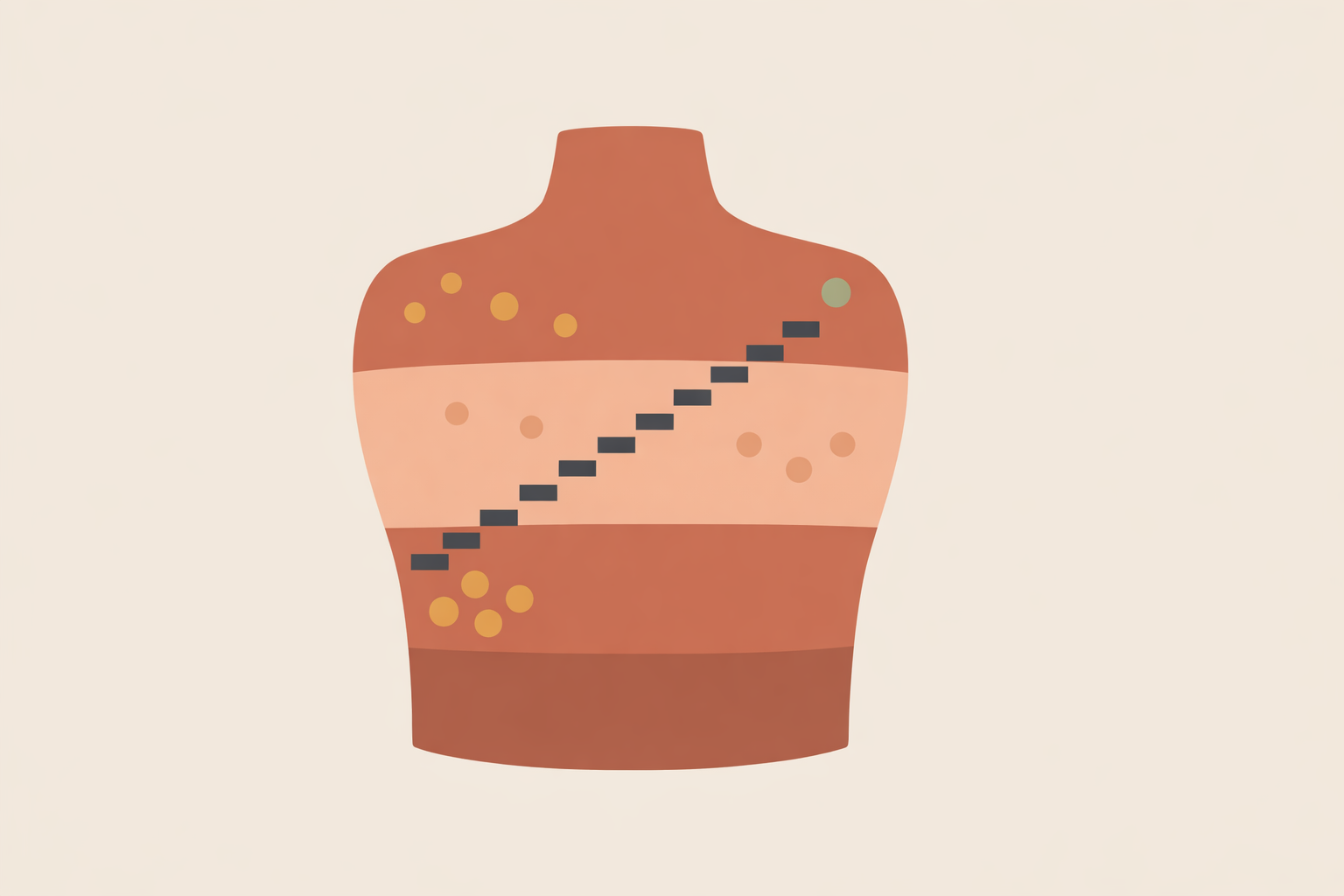
A starter grid can be enough: Hunger—don’t notice until stomach aches. Thirst—noticed when lips feel sticky. Temperature—realized too late at night. Pain—hard to label during work. From there, tomorrow’s first anchors are already visible.
Step 2: Set Predictable Daily Check-In Anchors
Once the profile is clear, choose two or three predictable moments each day and keep them steady. For most people, consistency beats frequent random prompts.
Short practices done 2–3 times per day over several weeks build familiarity without pressure. That’s a good fit for interoception because progress comes through repetition and recognition.
Stable anchors work partly because habits strengthen with predictable timing. When check-ins happen in the same context—after lunch, before leaving the house, at bedtime—there’s less decision fatigue.
Anchor check-ins to needs that can be acted on right away:
- upon waking: temperature, thirst, bathroom
- before or after meals: hunger, thirst, energy
- during transitions: tension, overwhelm, movement needs
- before bed: warmth, pain, restlessness, muscle tightness
A simple wake-to-bed rhythm might be: morning temperature check and a sip of water, post-lunch thirst and bathroom scan, then a bedtime check for warmth, tension, or pain. Three short moments are often enough.
Step 3: Teach a Pause-Scan-Decide Routine
At each anchor, use the same small sequence: pause, scan, decide. Repetition makes the routine familiar, and familiarity lowers effort.
Start with sensation before meaning. Many autistic people find it easier to answer “What is your body doing right now?” than “How do you feel?” Physical descriptions are often more accessible: dry mouth, tight chest, buzzing legs, heavy eyes, warm face.
Then add context: what changed just before this? That builds pattern recognition without demanding the “perfect label.”
Keep the decision step practical and low-friction. Actions can be simple:
- drink water
- eat a prepared snack
- use the bathroom
- stretch calves or shoulders
- step into a quieter space
- change layers or lighting
- take a short movement break
External supports can make follow-through easier. Body maps, short checklists, and choice cards reduce the pressure to translate every sensation into emotion language, which can help when alexithymia is part of the picture.
- Coach script: Pause for one breath. Scan head, chest, belly, hands. Decide on one next step: water, snack, stretch, bathroom, or quieter space.
- Example note: Buzzing legs before maths; chair stretch helped most days.
Step 4: Add External Supports and Sensory Adjustments
Interoception routines last longer when they’re built into the environment. Relying on motivation alone is fragile. Habits become more durable when supported by external supports that still work on distracted or stressful days.
Visual supports and schedules increase predictability when verbal processing is overloaded. Timers, body-check cards, written prompts, and simple routines reduce the amount of inner translation required.
A basic sensory audit also helps. Check:
- noise peaks
- lighting glare
- temperature swings
- scratchy or restrictive textures
- interruption patterns
Often, what looks like poor body awareness is the body’s signal being drowned out by the environment. Soften the surroundings, and cues become easier to notice.
Across many traditions, people have used breath, posture, and rhythm to sense and shift inner states. In coaching, that can look like one or two gentle, optional choices matched to the person: a slower exhale, rocking, humming, stretching, or resting into supportive pressure.
One workplace setup that often works well: a hydration reminder at 11:30 and 3:00, a small body-map card below the keyboard, warmer lamp light, less harsh background noise, and a one-line break script on a sticky note: Taking five, back at 2:10.
Step 5: Adapt for Faint or Intense Cues
Not all interoceptive differences need the same response. Some people have faint cues, while others have intense, fast-rising cues. Support should match the profile.
For faint cues, dependable prompts and clear scripts usually work better than repeated encouragement to notice more. The aim is earlier, easier action.
Useful supports for faint cues include:
- set meal and drink prompts
- pre-packed water or snacks
- body check cards with one next action
- simple routines linked to transitions
For intense cues, the priority is steadiness. Reduce sensory strain, slow the pace, and use neutral language. When sensations are already strong, longer scans can backfire.
Useful supports for intense cues include:
- short quiet pauses rather than longer scans
- warm or softer lighting
- fewer choices at once
- one-card options such as headphones, hallway walk, water, or layer change
Choice boards, body maps, and short checklists help across both profiles because they reduce the need for elaborate translation before taking action.
Scale back when needed. If the routine leads to shutdown, rising anxiety, or reduced ability to self-advocate, simplify the steps and increase accommodations. More intensity is not always better.
- Faint-cue example: lunch anchor with a body-scan card and a prepared 300 ml water bottle.
- Intense-cue example: 90 seconds in a quiet corner with softer light and a pick-one card for headphones, hoodie, or short walk.
Step 6: Turn Body Awareness Into Self-Advocacy
Once someone can notice a cue and respond in low-demand settings, the next step is carrying that clarity into shared spaces. This is where interoception becomes self-advocacy.
Keep requests short and functional. One-line scripts are often enough:
- I need five minutes.
- Cooler air helps my focus.
- Written steps work best for me.
- I will answer after I read the agenda.
Reduced masking is not a drop in expectations; it signals a move toward more honest, useful support. Over time, inner awareness and practical requests reinforce each other.
Match the communication mode to the person. Spoken requests, written notes, symbol cards, email templates, and AAC are all valid. What matters is that the request is usable, respectful, and genuinely theirs.
Linking requests to values can make them easier to hold. For example: because I value creative focus, I use headphones during open-office time.
- Wallet card: When I look away, I am processing; a checklist helps.
- Email template: I do best with dimmer lighting during long meetings. Could we use the lamp instead of overhead lights next time?
Weaving Interoception Into Ongoing Coaching
The overall rhythm stays simple: map the person’s profile, choose daily anchors, teach a pause-scan-decide routine, add sensory and visual supports, adapt for faint or intense cues, and turn growing awareness into practical self-advocacy.
What makes this effective is steady repetition, not dramatic breakthroughs. Habits tend to strengthen through consistent repetition, and over time that steadiness can create more ease by freeing attention for home, school, work, and community life.
At its best, this approach brings traditional body-awareness wisdom together with modern neurodiversity-affirming coaching and practical autism coaching. Keep it person-led, concrete, and collaborative. In that shape, interoception becomes less of a hidden barrier and more of a daily ally.
Train in Autism Coaching
Build interoception-support strategies into real coaching practice with the Autism Coach Certification.
Explore Autism Coach Certification →