Most dyspraxia coaching starts with coordination drills, sequencing supports, and graded practice. Those tools can work well in calm, predictable moments, then fall apart in everyday life. A client might manage a task smoothly one day and struggle the next because hunger, tension, or fatigue stayed under the radar until the load was already too high. The real gap is often earlier signal detection, not effort or intelligence.
Interoception supports that missing layer. Alongside movement and planning work, clients can learn to notice, name, and respond to internal cues sooner. That creates steadier participation in real contexts, where sensory load, energy, and demands shift hour by hour.
Key Takeaway: Sustainable dyspraxia coaching works best when interoceptive awareness is developed alongside coordination practice. A simple 3-step sequence helps: notice internal cues with brief body-checks, map those cues to patterns in energy and daily demands, and respond with clear cue–action plans, task redesign, and environment adjustments. Used consistently, this approach supports steadier participation, kinder pacing, and stronger self-advocacy.
Step 1: Notice internal cues before they become overwhelming
Start small and keep the demand low. If someone usually notices hunger or fatigue only at the point of overwhelm, asking for deep inward attention can feel like pressure and trigger shutdown.
A steadier entry point is a short, repeatable body-check. Interoception education often teaches people to notice body signals, connect them with meaning, and choose a response. In coaching, that translates into quick moments of noticing that are easy to repeat.
Useful prompts include:
- Jaw: loose or tight?
- Shoulders: light or heavy?
- Belly: settled, fluttery, empty, full?
- Legs: steady, restless, tired?
These check-ins work best at transitions: before leaving the house, before homework, before meals, or before a demanding task. A 30–60 second pause is usually enough.
Consistency beats intensity. Many school-based resources recommend short sessions repeated across the day, and that matches what many coaches see in practice.
Simple options include:
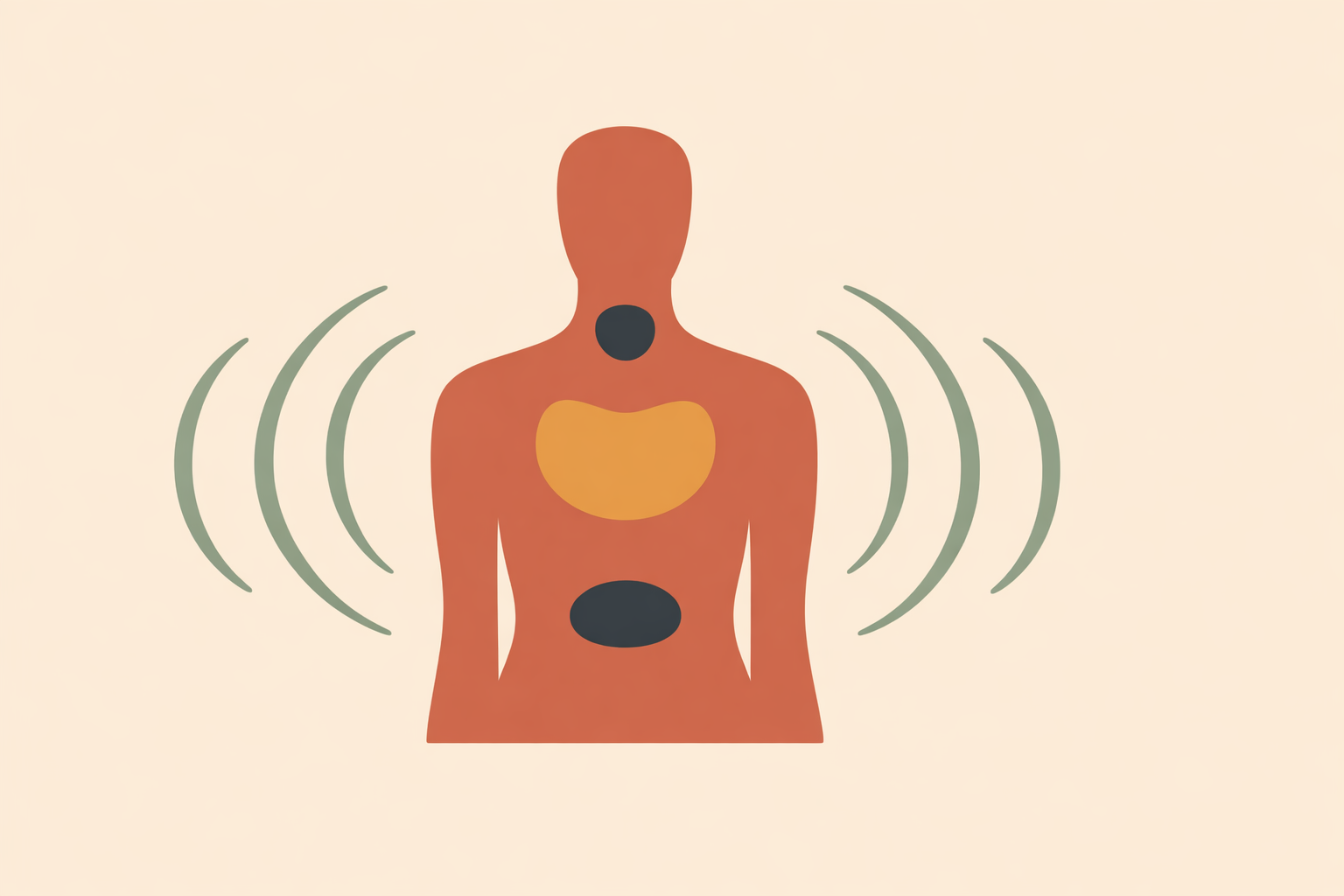
- Three-breath check: notice chest, shoulders, then belly.
- Four-point scan: jaw, shoulders, belly, legs.
- Hand anchor: one hand on chest, one on belly, and notice which area feels louder.
When the practice stays brief, predictable, and pressure-free, many clients report their first clear clue within a week.
Step 2: Map sensations to energy, emotion, and daily patterns
Noticing is the doorway. Mapping is what turns a sensation into usable information a client can trust.
A practical map has three parts:
- Where is it?
- How strong is it?
- What does it usually signal?
Examples:
- Tight jaw + noisy room = rising overload
- Heavy legs + foggy head = low energy
- Fluttery belly before group work = social strain
This follows the familiar sequence of notice, link, act. Clients notice the signal, link it to a pattern, then use that pattern to guide a choice.
As mapping becomes consistent, clients rely less on guesswork. Performance problems feel less random, because the inner state and the outer demand start to make sense together.
Two mapping drills that work well:
- Energy curve: sketch energy levels across the day and note one recurring body cue near each dip or spike.
- Body-pattern cards: write a few recurring pairings such as “tight shoulders before transitions” or “empty, shaky feeling when lunch is late.”
If language is hard, use colors, symbols, or emojis. The goal is pattern recognition, not polished self-description.
Step 3: Turn body cues into practical responses
Awareness becomes powerful when it leads to action. Once a client can notice and map a cue, attach a response while they still have room to choose.
One helpful format is the cue–action pair:
- If my shoulders hit 6 out of 10, then I take a 2-minute reset.
- If my belly feels empty and buzzy, then I pause for food or water.
- If my jaw tightens in a noisy room, then I reduce sound and simplify the task.
Research on implementation intentions suggests if–then plans support steadier follow-through under pressure. In coaching terms, they reduce on-the-spot improvising when someone is already overloaded.
This is especially relevant because missed internal signals can make someone more prone to sudden crashes and abrupt spikes in distress. Earlier responses are usually kinder and more workable.
Helpful response options include:
- Micro-breaks
- Shorter work blocks
- Visual simplification
- Reduced noise or lighting changes
- Task micro-stepping
- Pre-planned food, water, or rest cues
This step also strengthens self-advocacy. When clients recognize their cues, they can ask clearly for what supports them: a short break, a quieter setup, simpler steps, or a different pace.
How to use the 3-step plan in coaching sessions
Keep the rhythm light and repeatable. Interoception work lands best when it is woven into the normal flow of sessions, not treated as a separate “big” practice.
A simple structure:
- Opening: 30–60 second body-check
- Review: one pattern noticed during the week
- Practice: test one noticing or mapping prompt
- Design: build one cue–action response
- Close: choose two short check-ins for the week
In school settings, interoception programs have been linked to improvements in behaviour and belonging over a term. Shorter programs have also shown meaningful progress within seven weeks, which fits the coaching reality that small, frequent practices add up.
A common coaching pattern looks like:
- Weeks 1–2: resistance, uncertainty, or blankness
- Weeks 3–5: first reliable cues begin to stand out
- Weeks 6–8: cue–action pairings start to help
- Week 9 onward: steadier pacing and clearer self-advocacy
This is a practitioner trend, not a rule. Some clients click quickly; others need more time and more gentleness.
For home or school routines, keep the dose compact:
- Two brief checks on weekdays
- One slightly longer check-in on weekends
- Transition prompts before meals, homework, or bed
Older teens and adults often prefer executive-friendly supports such as phone reminders, calendar blocks, or smartwatch prompts. When the cue fits naturally into daily life, it sticks, especially in daily routines.
Scope, pacing, and ethical practice
Interoception work should feel invitational, not forced. For some people, inner attention feels unfamiliar or unsafe, and choice matters more than technique.
Keep practices:
- short
- predictable
- optional
- grounded in daily function
If direct body focus feels like too much, begin with movement, posture, temperature, or external supports. Visual scales, colors, and symbols can also reduce pressure when verbal labeling is hard.
This is especially important for clients who struggle to identify feelings, or who learned to disconnect from body cues to cope. A coach’s job is to support noticing and everyday adaptation, not to push for deep emotional excavation.
Helpful guardrails include:
- Offer options: seated or standing, eyes open or closed, movement-based or still.
- Stop early if distress rises.
- Focus on practical patterns and daily adjustments.
- Use supported decision-making around pace and routine.
- Pause and signpost onward if the material moves beyond coaching scope.
A useful reframe is simple: the signal is not the problem. The problem is the mismatch between the signal and what the environment or routine is asking for.
Interoception helps dyspraxic clients respond earlier and with more self-trust
When clients learn to notice, map, and respond to internal cues, daily life often feels less abrupt. Hunger gets answered sooner. Tight shoulders become a prompt to pause before frustration climbs. Fatigue turns into pacing, rather than a late-day crash.
This is why interoception deserves a steady place in dyspraxia coaching. Coordination practice remains vital, and interoception makes it easier to use those skills in real life where conditions keep changing.
Traditional body-listening practices have long pointed in this direction. Contemporary interoception frameworks make the process easier to teach: notice what is happening, link it to meaning, and act while there is still choice. The aim is not perfect self-awareness; it is earlier, kinder decision-making and growing self-trust within neurodiversity support.
Train in Dyspraxia Support Coaching
Build practical interoception-informed coaching skills in the Dyspraxia Support Coach Certification.
Explore Dyspraxia Support Coach Certification →