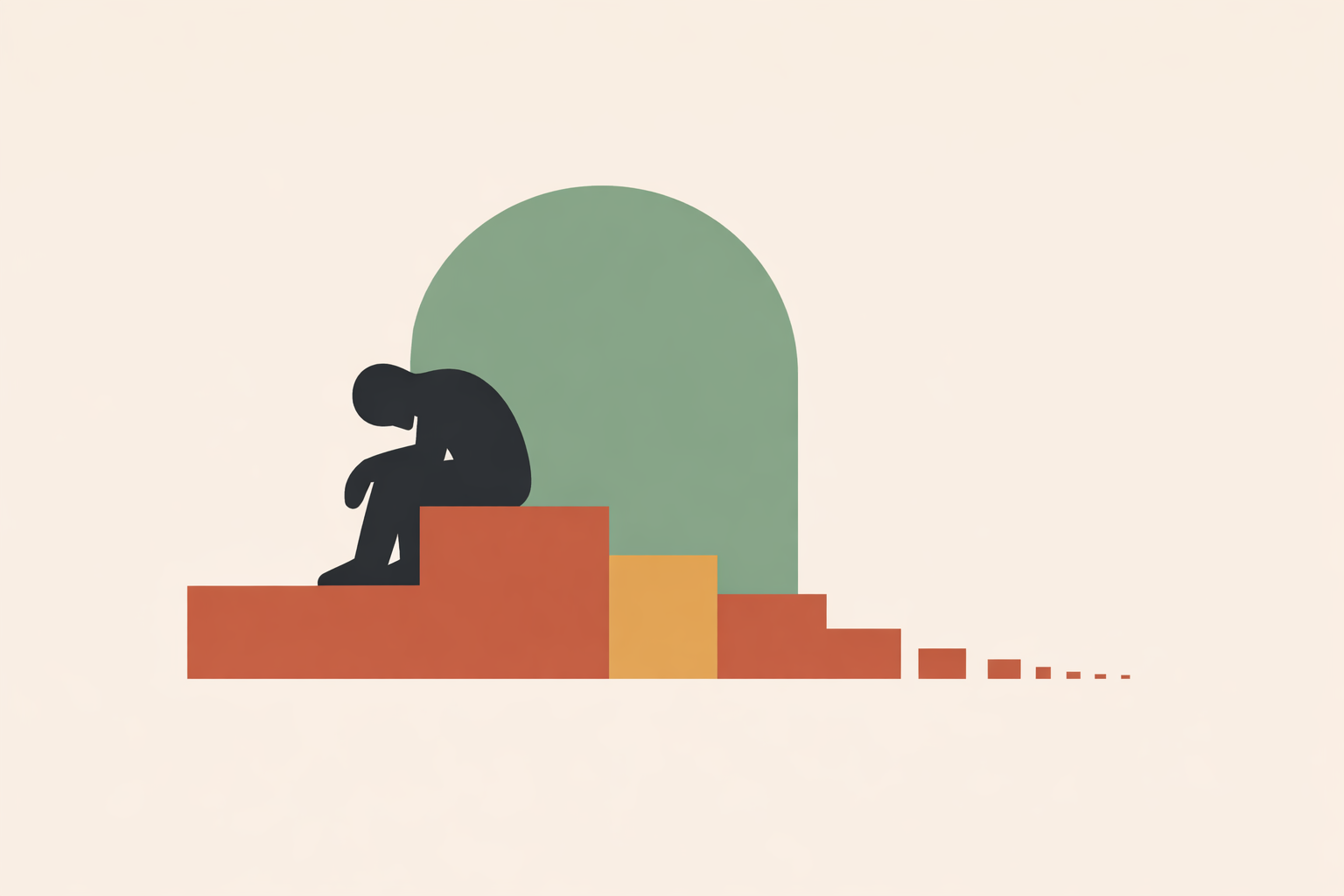
Practitioners see this pattern often: a capable, late-identified client who “held it together for years” is suddenly missing basics. Their calendar once ran on crisis energy; now they cannot start a five-minute task. Two meetings flatten the rest of the day. Words disappear mid-sentence under load. Standard coaching moves like tighter routines or stronger accountability do not help and can leave the client even more depleted.
A more useful question is: what has changed about their available capacity? Often, late identification becomes visible at the point of neurodivergent burnout, a deep loss of capacity shaped by chronic mismatch, masking, and too little recovery. Seen this way, collapse is information, not failure.
Key Takeaway: Late identification often becomes visible during neurodivergent burnout. Read collapse as capacity data, not failure. A neurodiversity-affirming response starts with stabilization, reduced pressure, better environmental fit, and practical support that matches what the person can genuinely access right now.
Why late-identified clients often arrive already depleted
What looks sudden is usually years in the making. Many late-identified adults reach support only when their usual scaffolding stops working. They have often relied on overpreparing, masking, urgency, borrowed structure from school or work, and recovery squeezed into evenings and weekends.
As life gets fuller and recovery shrinks, capacity erodes until the drop feels abrupt. Burnout is closely linked with chronic stress, cumulative load, and a mismatch between demands and support. In sessions, the same theme comes up again and again: the person still has intelligence, skill, and insight, but can’t access them reliably under current conditions.
Late identification also commonly unfolds through a repeating loop: non-affirming expectations, few accommodations, increased effort, less recovery, then eventually hitting a wall. That loop is well understood through lived experience and long practice, and it explains why someone who looked “fine” for years can feel shocked by a steep change in function.
Recognition matters too. Many people sensed they were different long before they had useful language for it, and prolonged masking plus late recognition is associated with poorer mental health outcomes such as lower authenticity, lower self-esteem, and more anxiety or depression.
Tipping points are often obvious in hindsight: a promotion, leaving structured education, changes in work patterns, caregiving, grief, parenting, or any transition that raises demand while reducing recovery. These moments do not create neurodivergence. They expose where the old compensation system can no longer carry the load.
- Useful session prompt: “If the last five years were a battery meter, what drained it most?”
- Follow with: “What genuinely recharged it, even a little?”
What neurodivergent burnout is and is not
Neurodivergent burnout is a deeper loss of available capacity that often changes what a person can access from one day to the next.
Autistic-led work offers some of the clearest published descriptions, characterizing autistic burnout by chronic exhaustion, loss of function, and reduced sensory tolerance. That cluster helps practitioners separate burnout from a busy week, ordinary fatigue, or workplace burnout alone.
Practitioners also see related patterns across other neurotypes, even when the texture differs. An ADHD client may describe urgency-fueled surges followed by depletion and initiation breakdown. A dyslexic client may describe steady exhaustion from reading-heavy environments, constant error-monitoring, and pressure to perform at speed. These are strong, repeatable observations in real practice, even where the formal research is still catching up.
A simple comparison can sharpen your listening:
- Is: “I cannot do tasks I used to do reliably.” Isn’t: “I’m tired, but a quiet weekend usually sorts it out.”
- Is: “Noise, light, or interruptions I once tolerated now overwhelm me.” Isn’t: “I just prefer calm spaces.”
- Is: “My words disappear or my planning collapses under load.” Isn’t: “I’m merely uninterested in this project.”
For coaching, the distinction is practical. Burnout narrows access, so the plan has to match what the person can sustainably do right now.
Masking, mismatch, and the long slide toward collapse
Masking is a major reason support needs can stay hidden for years. It can include suppressing visible traits, copying social scripts, overpreparing, rehearsing conversations, hiding sensory distress, or forcing a style of participation that looks acceptable from the outside.
Research connects masking with late diagnosis and shows how modifying or suppressing traits can keep needs invisible. That invisibility can look like success, but it often carries a private cost.
Many adults describe heavy masking as draining, and sustained masking is associated with exhaustion and strain. In practice, this matters because energy spent on appearing “fine” is no longer available for regulation, focus, connection, and daily tasks.
Masking can also delay self-understanding. Some clients only recognize how much effort it takes when that effort stops working, and reviews of masking identify burnout harms as one outcome of long-term adaptation.
Environment matters just as much. Open-plan offices, constant interruptions, rapid-fire meetings, speed-focused policies, and heavy social expectations all increase load. Burnout research consistently points to ability mismatch without enough support, which is why an environment-first lens is often the most respectful starting place.
Some people also fall into “dual masking”: hiding both their neurodivergent traits and the fact that they are no longer coping. Qualitative work describes dual masking as a pattern that can intensify strain and delay recognition further.
- Practical exercise: create a simple masking map.
- List the spaces where the client feels pressure to pass.
- For each one, identify one condition that lowers the tax: less noise, camera-off, more written communication, more preparation time, dimmer light, or fewer transitions.
When compensation fails, hidden differences become visible
Compensation can be both brilliant and fragile. It may look like elaborate planners, deadline-driven bursts, memorized scripts, weekend recovery, or constant overpreparation. For a while, these strategies can hide how much everyday functioning costs.
When compensation fails, the drop is often broad. Planning becomes harder, communication gets effortful, daily rhythms wobble, and sensory tolerance narrows. Autistic burnout descriptions include reduced functioning across daily life, which helps explain why the change can feel so destabilizing.
This is often the moment late identification becomes possible in coaching. The client is not developing new needs out of nowhere; existing needs are becoming impossible to hide or override.
Transitions bring many compensation systems to their limit: new roles, less structure, parenting demands, work changes, grief, and hormonal shifts. Practitioners recognize this pattern quickly because it repeats across contexts and communities.
A supportive reframe is simple: support needs are becoming visible, not newly created. That language reduces shame and makes room for better choices around pace, environment, and expectations.
- Before: “I’m managing because I overprepare and run on urgency.”
- During: “Everything that used to hold me up is failing at once.”
- After: “Now I can finally see what support I have actually needed.”
Shared mechanisms, different neurotypes
No single burnout story fits everyone. Still, certain mechanisms recur: chronic over-demand, compensatory effort, inadequate recovery, shame, functional decline, and environments that require constant adaptation.
The research base is strongest for autistic burnout, where the defining cluster of exhaustion cluster (exhaustion, reduced function, increased sensory sensitivity) is well described. Across other neurotypes, evidence is still developing, while practice consistently shows overlapping patterns expressed through different pressure points.
For autistic clients, sensory overload and social adaptation may dominate. For ADHD clients, urgency dependence, inconsistent initiation, and crash cycles can lead the story. For dyslexic clients, literacy-heavy environments can create a quieter but persistent drain through constant effort and monitoring.
The value of these distinctions is practical. You can recognize the shared mechanism while tailoring support to the person in front of you.
- Autistic client: reduce sensory load first, then simplify planning.
- ADHD client: reduce pressure and rebuild initiation with lighter scaffolding.
- Dyslexic client: review reading and writing demands, pace, and communication format.
When capacity is compromised, support needs to become more precise and less demanding.
How burnout shows up in session
When a previously high-capacity client starts missing basics, treat it as information. Burnout often shows up as inconsistent access to skills that were once reliable. Planning, sequencing, working memory, and task switching can all deteriorate together, and autistic burnout work links burnout with executive decline, even though each person’s pattern will vary.
Sensory load is often part of the picture, whether or not the client names it first. Burnout descriptions also include sensory sensitivity and lower tolerance to stimulus. In day-to-day life, that can mean noise, flicker, visual clutter, smell, touch, crowds, or interruptions quietly draining capacity long before someone appears outwardly overwhelmed.
Many clients also report time slipping, meals missed during hyperfocus, or ordinary tasks becoming strangely unreachable. Even when every detail isn’t neatly captured in formal literature, these experiences are common enough in coaching conversations to explore with care and respect.
One useful way to work is with a capacity map:
- Energy: 0 to 10
- Overwhelm: 0 to 10
- Sensory load: 0 to 10
- One body cue
- One environmental factor
- One adjustment that would make today more doable
This keeps the focus on current access rather than distant goals, and it helps clients build language for their changing limits.
Responding ethically: stabilization before optimization
When burnout is driving the pattern, the most helpful response is usually to reduce pressure first. That often means shorter sessions, less frequent sessions, softer expectations, simpler goals, and fewer moving parts. This is capacity-matching, and it protects progress.
During active burnout, high-pressure accountability, rigid routines, and demanding experiments often backfire. When a client misses tasks, the next step is usually a lighter plan and better fit, not more push.
Start with stabilization: rest-focused goals, practical support for essential daily rhythms, sensory adjustments, reduced cognitive load, and permission to pause outcome-heavy targets for a while. Then add structure carefully, only where it genuinely supports the person.
Bottom-up support is often especially useful here: movement, posture, temperature, rhythm, sensory comfort, nourishment, quiet, and pacing. Light planning can sit on top of that foundation. When the body and environment are in constant friction, more effort rarely restores access.
Keep monitoring simple. During burnout, a minimal check-in usually beats an elaborate tracker:
- Energy today
- Overwhelm today
- What is draining me most?
- What would reduce friction by 10%?
It can also help to restore rhythm. Many traditional ways of living honored cycles of effort and rest rather than demanding the same pace every day. That cyclical wisdom still serves modern coaching and neurodiversity and learning differences: heavier days, lighter days, true recovery, and less pressure to perform at one fixed level all week long.
Finally, stay within scope and keep language dignifying. Notice patterns in functioning, support self-understanding, and help the client reduce mismatch and build sustainability. If their experience becomes difficult to interpret, newly intense, or beyond what coaching can safely hold, encourage broader support in a clear and respectful way.
Conclusion
Neurodivergent burnout often explains why late-identified clients arrive in collapse rather than at the first sign of difference. Burnout does not create neurodivergence. It reveals the cost of carrying too much through adaptation, masking, and mismatch for too long.
For practitioners, the response is practical and humane. Read collapse as information. Stabilize before optimizing. Adjust environment before demanding more effort. Use simple capacity-based tools. Respect cycles. Reduce masking pressure where possible. Support the client in building a life that matches real energy rather than borrowed expectations, a principle central to neurodiversity coach certification.
A brief caution belongs here at the end: burnout can overlap with many other factors, and coaching has limits. When the picture feels unsafe, confusing, or too heavy for coaching alone, it’s wise to help the client connect with appropriate additional support. The goal remains steady sustainability, not maximum output.
Explore Neurodiversity Coach Certification
Build capacity-matching, neurodiversity-affirming coaching skills in the Neurodiversity Coach Certification.
Explore Neurodiversity Coach →