


You’ve got a discovery call with a first-time manager at 8 a.m., and a VP at noon. Your site says you offer both leadership and executive coaching, yet those two conversations rarely point to the same outcome. One person wants smoother meetings, clearer feedback, and better delegation. The other wants stakeholder alignment, strategic influence, and a stronger leadership cadence across functions. When the offer blurs those differences, discovery calls get vague, proposals lose shape, and expectations slip.
Key Takeaway: The clearest way to choose between leadership coaching and executive coaching is to look at three things: who you support, the scale of impact you want to shape, and the kind of change you help create. Leadership coaching usually serves leaders across management levels and often supports visible team-level shifts. Executive coaching is a more specialized lane for senior decision-makers and usually works at a wider organizational scale, with deeper attention to pressure, patterns, and complex influence.
Leadership coaching vs executive coaching: who do you support?
Start with the person in front of you, not the label.
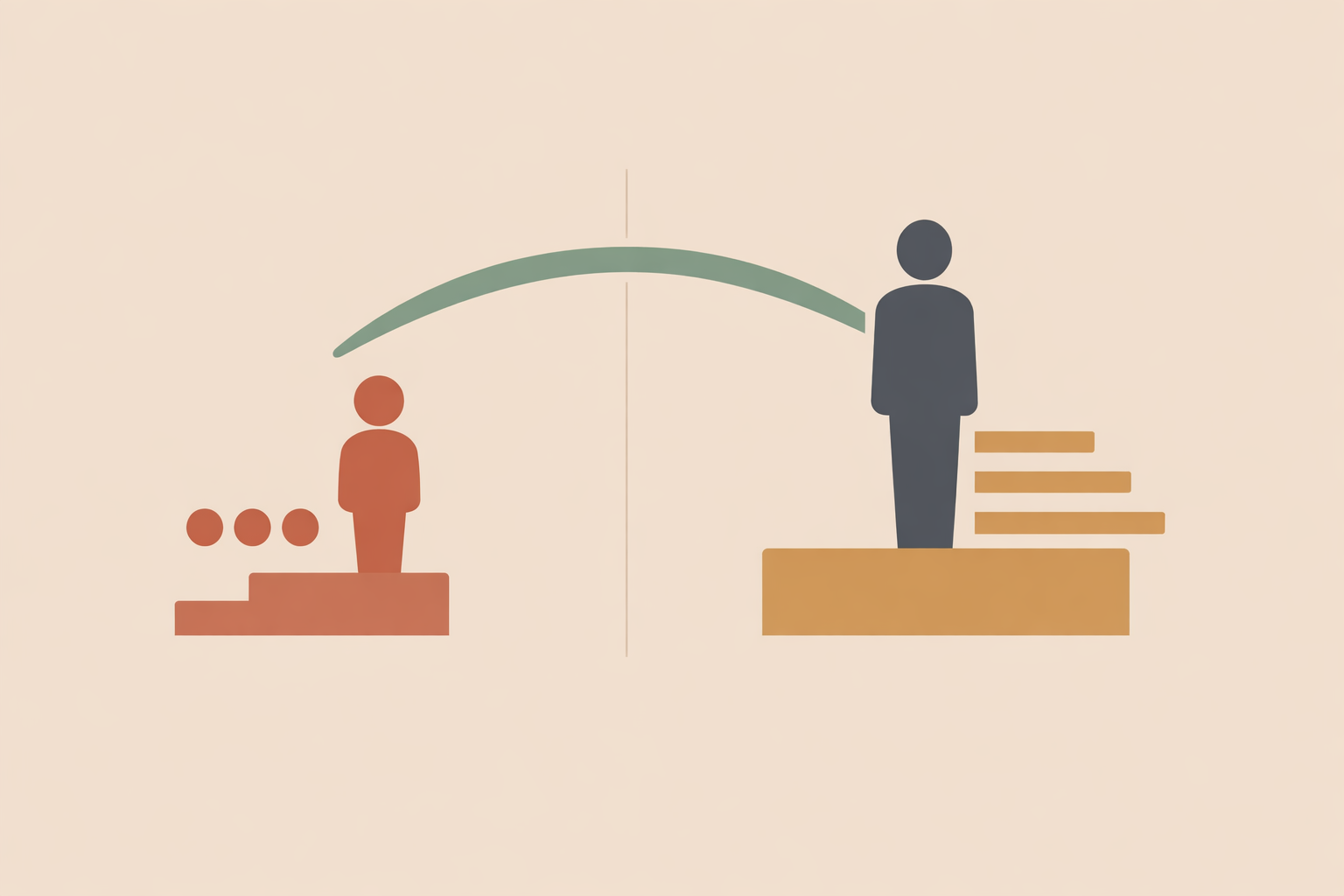
Leadership coaching typically supports leaders at any level, from new supervisors to experienced managers who want more confidence, clearer communication, and stronger people skills. Executive coaching usually focuses on senior leaders—directors, VPs, and C-suite—whose decisions shape the wider organization.
That shift in seniority changes the whole engagement. A newer manager is often working on the visible craft of leading: setting expectations, giving feedback, delegating well, and running meetings that actually move work forward. Senior leaders still care about those fundamentals, but their day is more defined by strategic direction, decision quality, cross-functional influence, and alignment among powerful stakeholders.
A quick sorting lens for discovery calls:
- Leadership coaching: “I lead a team and want to get better at the day-to-day craft of leadership.”
- Executive coaching: “I influence multiple teams or business units and need to lead with more clarity, range, and strategic steadiness.”
A question that clarifies things fast: “Which decisions are yours alone, and how far do the consequences travel?” If the impact stays close to one team, leadership coaching is often the fit. If it reaches functions, departments, or the whole organization, you’re likely in executive territory.
Choose the scale of change you want to shape
Once you’re clear on who you support, decide what kind of impact you most want your work to create.
Leadership coaching often builds practical skills you can see quickly inside a team: cleaner communication habits, steadier feedback rhythms, better meeting design, and more thoughtful growth plans. The results tend to show up on the near horizon.
Executive coaching more often centers on organizational strategy, cross-functional influence, political navigation, and stakeholder alignment. The ripple effect usually travels farther, even when it takes longer to fully land.
A useful shorthand:
- Leadership coaching often means individual growth with team-level results.
- Executive coaching often means individual growth with organization-wide results.
Neither lane is “better.” They’re different arenas, with different time horizons and different definitions of success.
- Team-level plan: reduce meeting drag, increase feedback consistency, delegate stretch work more intentionally.
- Executive-level plan: sharpen strategic priorities, improve cross-functional decision flow, strengthen alignment across senior stakeholders.
If you love seeing week-to-week shifts in how a team runs, leadership coaching often feels deeply rewarding. If you’re drawn to systems, layered influence, and long-range organizational movement, executive coaching may suit you better.
Are you building skills or shifting patterns under pressure?
This is where the two paths usually separate more clearly in real practice.
Leadership coaching commonly focuses on team management, communication, delegation, and conflict resolution. The work often looks like capability-building: what to say, how to structure a tough conversation, how to run a meeting, how to lead with consistency.
Executive coaching also builds skills, yet it more often works with deeper patterns, self-awareness, and decision-making under real pressure. Many practitioners hold that knowledge and behavior are not the same thing. A leader can understand an approach intellectually and still revert to old habits when the stakes rise.
That’s one reason executive coaching often calls for longer commitment. The aim is to notice what shows up in tense moments, then build enough awareness and flexibility to choose a different response in real time.
Leadership coaching can still be profoundly transformative. It often starts with clear, observable moves such as:
- How do you give feedback without delay?
- How do you delegate without micromanaging?
- How do you run a meeting so people leave clear and committed?
Executive coaching tends to carry parallel, heavier questions:
- What happens internally when challenge, ambiguity, or scrutiny rises?
- Which assumptions drive your decisions at scale?
- How do you stay open and effective when the room gets political or tense?
If you enjoy hands-on skill rehearsal, leadership coaching is often a great fit. If you’re most energized helping senior leaders shift entrenched patterns in high-stakes settings, transformational coaching work will likely feel like home.
What sessions look like in practice
Both pathways share the same coaching roots: presence, reflective inquiry, accountability, and respect for the client’s capacity to find their own way. The main difference is how the engagement is framed.
Leadership coaching sessions are often narrower and more immediate. You might focus on one challenge or one habit, then turn it into a concrete experiment for the next week or two.
Common leadership coaching themes include:
- feedback conversations
- delegation habits
- meeting structure
- team trust and clarity
- new-manager confidence
Executive coaching sessions are often broader and more layered. They may include external inputs like stakeholder interviews, formal assessments, or 360 feedback to create a fuller picture of how the leader currently operates.
Executive engagements also more commonly start with organizational sponsorship, so goals, expectations, and confidentiality boundaries often need clear agreement early on.
In simple terms:
- Leadership coaching session: “What would your team notice by Friday if this shift really landed?”
- Executive coaching session: “What are the wider consequences of this decision, and what are you not seeing yet?”
The stance can stay warm, curious, and facilitative in both. What changes is the depth of context surrounding the client and the scale of responsibility they’re carrying.
How to build a culturally grounded niche
Once you can name the difference between leadership and executive coaching, the next step is choosing a lane that feels true to your story and to the people you want to support.
In many Spanish-speaking contexts, leadership is often held as a social and ethical role, not only a workplace function. That wider view can shape a grounded coaching identity, especially if your understanding of leadership comes from community life, family systems, collective responsibility, or intergenerational wisdom. In traditional practice, the “how” of leading matters as much as the “what,” because character and responsibility are lived in relationship.
Many coaching frameworks also emphasize self-awareness, values, and congruence as foundations for visible change. That perspective applies whether you support emerging managers or senior decision-makers.
A common tilt shows up in practice:
- Leadership coaching often leans toward personal development and relational skill.
- Executive coaching often leans toward structures, resources, strategic choices, and influence at scale.
You can use that distinction without getting rigid. It’s a way to name your center of gravity.
Try this short exercise:
- List three people, traditions, or community experiences that shaped your understanding of leadership.
- Name the values that run through them.
- Translate those values into a coaching promise you can stand behind.
For example:
- “I help emerging leaders build clarity, courage, and steadier team communication.”
- “I support senior leaders navigating complexity with more alignment, discernment, and range.”
Keep the work respectful. Credit the wisdom traditions that shaped you, and avoid borrowing rituals or cultural forms that are not yours to use. A niche gets stronger when it’s ethically grounded.
Leadership coaching vs executive coaching: a fast way to choose
For a quick decision, ask yourself three questions:
- Do I want to support leaders across management levels, or mostly senior decision-makers?
- Do I want to shape team-level shifts, or wider organizational outcomes?
- Am I more drawn to practical skill-building, or to deeper pattern work under pressure?
Leadership coaching is broadly accessible across management levels and often supports people building the day-to-day craft of leading. Executive coaching is a more specialized lane for senior leaders carrying wider responsibility and more complex stakes.
You don’t need the perfect choice forever. You need a clear starting point. Pick the lane that matches your strengths, your values, and the conversations you most want to have, then let real client work refine the rest.
Choose clearly. Name your first offers. Let practice sharpen your voice through life coaching certification.
Explore Life Coaching Certification
Use Life Coaching Certification to sharpen how you scope, structure, and deliver coaching engagements.
Explore Life Coaching →










