Midway through a sleep session, a client opens their health app: erratic blood pressure readings, late meals, skipped workouts. “If I fix my sleep, will this improve too?” That question sits right at the edge of powerful coaching. Sleep clearly shapes energy, appetite, mood, and everyday physical functioning, but your role is still behavior change, not disease management.
Key Takeaway: Sleep becomes a strong, scope-safe leverage point when you coach rhythms and habits rather than conditions. The most useful approach is to explain the sleep–body connection in plain language, highlight realistic early wins, map the reinforcing loop between sleep, movement, food timing, and stress, and keep clear boundaries around issues that need outside support.
Why the Sleep–Body Connection Matters in Coaching
Clients rarely seek sleep support for sleep alone. They want steadier mornings, fewer cravings, clearer focus, and the sense that the body truly resets overnight. That instinct is well grounded: better sleep quality and duration are associated with lower hypertension risk and more favorable blood pressure patterns over time.
Hours matter, but quality often matters more in day-to-day life. In survey findings, restorative sleep strongly predicted next-day physical and emotional functioning even after accounting for duration. Coaching-wise, that’s freeing: many clients do best when they focus on steadier, deeper, more continuous sleep rather than chasing a perfect number.
Traditional systems have treated sleep as a foundation of vitality for centuries. Whether it’s framed as rhythm, restoration, or replenishing core reserves, the message is consistent: the night supports renewal, and daytime well-being reflects how well that renewal took place.
That’s why sleep can become a persuasive focus in sessions, as long as the language stays disciplined. A clear frame is: better sleep supports steadier energy, appetite regulation, movement consistency, and cardiovascular balance over time. Your work shapes the conditions that help those shifts unfold.
In practice: If a client asks, “Will sleeping better fix my blood pressure?” try: “Better sleep can support steadier readings over time as part of your overall plan. Let’s focus on the routines we can shape.”
Frame Sleep as a Daily Rhythm, Not a Problem Identity
The most empowering shift is also the safest one: treat sleep as a rhythm. Light, timing, food, stress, movement, and evening habits all influence how the night unfolds. When clients see sleep as a pattern they can work with, change feels possible.
This keeps the conversation practical. Instead of “What is wrong with my sleep?” clients can move toward “What helps my body settle, stay settled, and wake restored?” That question points directly to doable experiments.
Script you can use: “We’re going to work with patterns: when you get light, how your evenings flow, what happens before bed, and what helps your body unwind. Small shifts here often support better mornings and steadier days.”
Explain Nighttime Physiology in Plain Language
Follow-through rises when clients understand the “why,” but it only takes a few clear lines to get there.
For deep sleep: “This is when the body does some of its heaviest rebuilding work.” Slow-wave sleep is linked with growth hormone secretion and is considered important for restoration and anabolic processes.
For sleep stages: “Your body cycles through phases at night, and those shifts support repair and internal balance.” Normal cycling helps cardiovascular regulation and immune function.
For immunity: “When sleep stays short, resilience drops.” Short sleep is associated with reduced activity of natural killer cells and greater susceptibility to common infections.
For appetite: “Short nights often make hunger louder and satisfaction quieter.” Sleep restriction can decrease leptin and increase ghrelin, which helps explain stronger cravings for quick-energy foods.
For metabolic steadiness: “Poor sleep makes energy regulation less smooth.” Insufficient sleep is associated with impaired tolerance for glucose and reduced insulin sensitivity.
Modern phrasing aside, these points echo traditional observations: the night is active restoration, and the daytime body tells the story.
Use Early Wins to Build Motivation
Clients usually don’t need months to notice change. In the first few weeks, improved timing and continuity often show up as steadier energy, fewer attention lapses, and less fog.
That matches recovery-sleep research showing improved sleepiness and fatigue after short periods of restoring sleep. It also shows up in body comfort: a few nights of restriction can increase pain and lower pain thresholds, while better sleep tends to make everyday discomfort easier to handle.
With structured coaching, many clients also notice improvements in how long it takes to fall asleep, how often they wake, and how restored they feel in the morning over several weeks. Structured insomnia-focused support has been shown to improve efficiency, sleep onset, and total sleep time.
What to track in the first two weeks:
- Morning energy by 10 a.m.
- Afternoon fog or yawning
- Mistakes while driving, typing, or working
- Body ease on waking
- Mental sharpness by noon
These markers are specific enough to motivate effort without overpromising.
Coach the Sleep–Movement–Food–Stress Loop
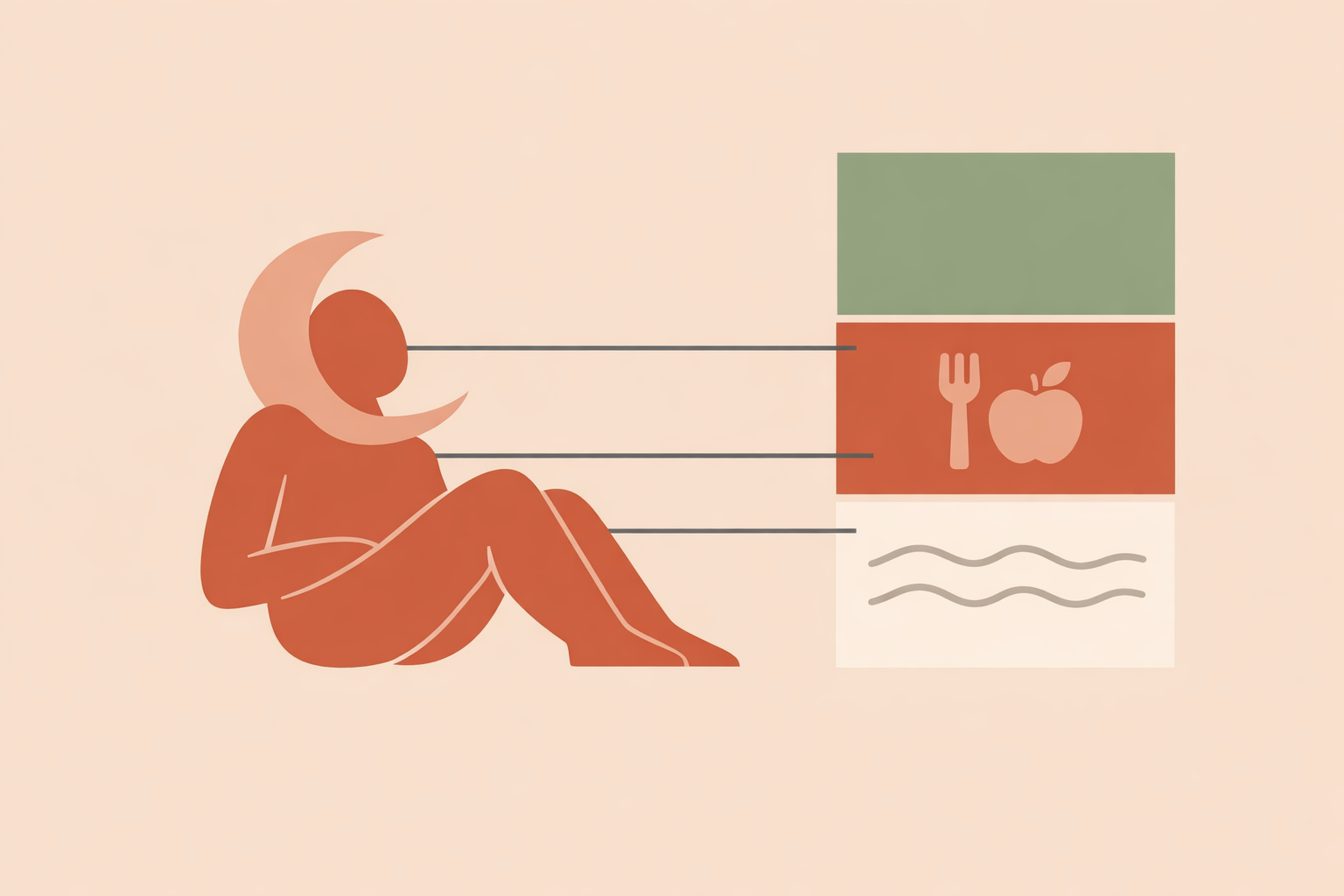
Sleep rarely shifts in isolation. One of the strongest coaching moves is to show the loop: better sleep supports better choices the next day, and better daytime choices set up the next night.
Movement is a clear example. Adults with short sleep and low activity show higher odds of hypertension and metabolic disruption, including insulin resistance. Higher activity also appears to attenuate risks linked to short sleep. Sleep and movement reinforce each other, so small gains in either side often help the whole system.
Food timing is another strong lever. Late, heavy evening meals commonly leave people feeling warm, alert, full, or unsettled at bedtime. Earlier, lighter evening eating often supports a calmer landing into sleep and steadier next-morning energy.
Stress matters too. Worry and anticipation keep the system activated, and hyperarousal linked to cognitive factors is a core mechanism in ongoing insomnia. When evening activation comes down, sleep usually becomes easier to enter and maintain.
Traditional evening rituals understood this logic: reduce stimulation, soften the pace, simplify food, dim the light, and help the body transition.
Micro-plan example:
- Get outside for 10–15 minutes in the morning.
- Take a short walk earlier in the day rather than pushing activity too late.
- Finish the main evening meal earlier and keep it moderate.
- Dim screens and lights at a consistent time.
- Use one short settling practice before bed.
- Keep wake time within a steady window.
Use Relaxation and Mind–Body Practices Wisely
When clients feel tired but wired, relaxation beats effort. The goal is to reduce arousal so sleep can arrive more naturally.
Mind–body practices such as yoga, tai chi, and qigong can improve sleep as people experience it, and sometimes in objective measures too. Brief relaxation approaches are also common in structured sleep support because they can shorten latency by lowering physiological arousal.
Consistency matters more than complexity. Ten to twenty minutes of a simple, repeated wind-down often outperforms an elaborate routine that’s hard to sustain.
Simple options:
- Body scan
- Guided imagery
- Gentle stretching
- Breath counting
- Quiet chanting or prayer, where culturally appropriate
When drawing from traditional practices, keep the tone respectful. Credit roots where relevant, avoid borrowing symbols or language you do not understand, and adapt only what you can hold with integrity.
Keep Boundaries Clear Around Physical Health Concerns
The sleep–body link is strong, which is exactly why boundaries matter. Broad sleep guidance notes that insufficient or disturbed sleep is linked to cardiovascular disease, diabetes, obesity, low mood, and reduced quality of life.
Your role is to support routine change, rhythm, accountability, and self-awareness. You are not there to interpret readings, adjust supplements or medications around conditions, or tell someone what a body metric means.
Useful boundary phrases:
- “I can help you build routines that support better sleep.”
- “For decisions about blood pressure, glucose, or medications, please stay in contact with your existing support team.”
- “We’ll focus on the daily inputs that help your body settle and restore.”
Referral moments to take seriously:
- Loud snoring with pauses, gasping, or worsening breathing issues at night
- Fainting, chest discomfort, severe morning headaches, or unexplained weight loss
- Questions about prescriptions or abrupt changes in physical status
Clear boundaries strengthen your work and help clients trust the process.
A Practical Session Arc You Can Use
A strong sleep session stays simple and sequenced.
1. Start with patterns. Review bedtime, wake time, night wakings, morning energy, and afternoon clarity over the last week.
2. Name the body goal. Ask: “What would be the first sign in your body that better sleep is helping?”
3. Offer one simple explanation. For example: “When sleep gets more continuous, people often feel steadier in energy, appetite, and focus.”
4. Add one calming practice. A few minutes of breathing, body scan, or imagery is often enough to begin.
5. Choose two night levers and one day lever.
- Night lever: dim screens earlier
- Night lever: keep lights-out time more consistent
- Day lever: get outdoor light and gentle movement in the morning
6. Track only a few markers.
- Bedtime and wake time
- Night wakings
- Morning ease
- Noon clarity
- One real-life functioning marker, such as fewer everyday errors
7. Set expectations. Early shifts may show up in energy, alertness, and body ease first. Deeper changes often build through consistency.
Let Sleep Stay Simple, Respectful, and Effective
Sleep is one of the most practical places to begin when clients want broad changes in how they feel. Restoring regular, adequate sleep is associated with improved mood, less fatigue, and clearer daytime functioning after periods of sleep loss. Over time, steadier sleep is also associated with more stable cardiovascular patterns and more resilient day-to-day well-being.
The clearest stance is to coach rhythms, explain the body in everyday language, build momentum through early wins, and keep boundaries firm around metrics and conditions. If a client’s symptoms are intense, rapidly changing, or suggest a sleep disorder, it’s wise to pause your plan and encourage them to seek appropriate outside support while you continue to reinforce the basics that keep nights steadier. For coaches building broader longevity and biohacking skills, sleep often remains one of the most practical foundations to keep simple and scope-safe.
Explore Sleep Coach Certification
Build confident, scope-safe sleep coaching skills with the Sleep Coach Certification.
Explore Sleep Coach →