Facial MLD can easily turn into a collection of pleasant strokes without a clear logic underneath. When that happens, drainage feels inconsistent: the midface stalls at the jaw, under-eye de-puffing fades quickly, and the whole session takes more effort than it should. The issue is rarely commitment or technique variety. More often, it is a missing map.
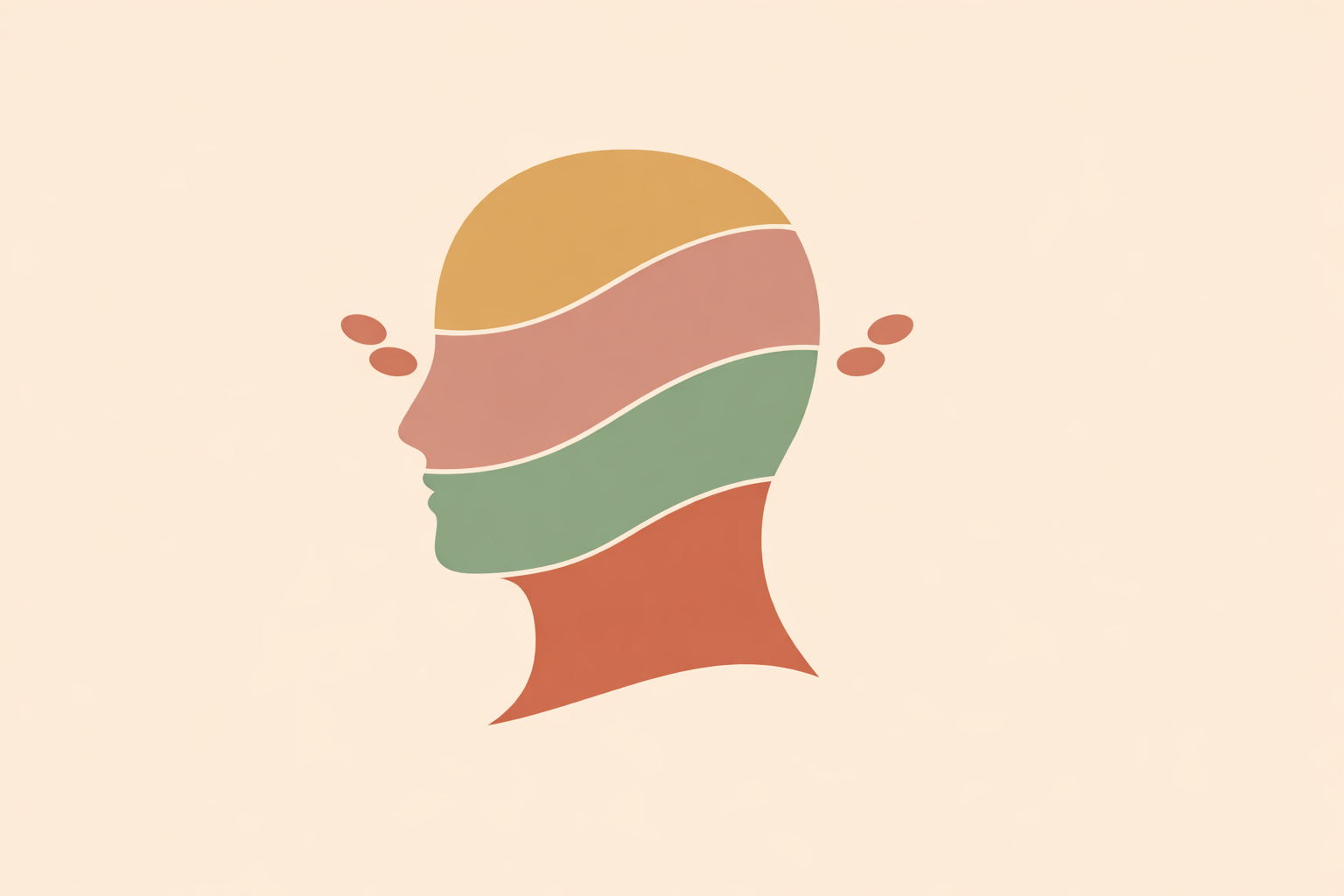
The work becomes more coherent when each facial region is paired with a clear exit pathway. Instead of isolated moves, you create one continuous stream: collarbones and neck first, then lower face, midface, eyes, and forehead, always returning to the same exits. With light, rhythmic touch and a clear sequence, facial MLD feels more deliberate, more elegant, and easier to repeat.
Key Takeaway: Seamless facial MLD depends on pairing each facial zone with its exit pathway and working central-to-peripheral with light rhythm. When the collarbones and neck are prepared first, the lower face can link into submandibular flow, the cheeks and eyes can move laterally toward the ears, and the forehead can return through the preauricular area and down the neck. This creates a repeatable sequence that supports visible de-puffing without unnecessary pressure or irritation.
Preparing the body before facial MLD
Before the first facial stroke, set the body up to receive the work. Gentle breathing, comfortable positioning, and a calm pace make everything that follows smoother. Many protocols begin with deep breathing before any neck or face work.
Keep the setup simple:
- semi-reclined or comfortably supported
- neck cushioned so the throat and jaw can soften
- warm environment, but not hot
- steady, unhurried rhythm
When the neck is well supported, people stop “holding” through the jaw and upper chest. That shift alone can change the whole feel of a session, especially for clients who arrive tense.
A slow tempo matters, too. Around one movement cycle per second is a widely taught rhythm because it keeps the touch consistent and easy for the nervous system to follow.
You do not need a long explanation. “Take a few slow breaths and let the collarbones soften” is often enough to set the tone.
Open the collarbones and neck first
Facial MLD works best when the exits are prepared before you ask facial fluid to move. Starting with the collarbones and neck gives the rest of the session somewhere to land. In head-and-neck self-management guidance, the sequence begins with breathing and neck work before facial movements, reflecting the importance of these pathways for lymph drainage.
Use the collarbones and neck as your home base: begin there, return there, and finish there.
A practical opening looks like this:
- Place fingertips in the supraclavicular hollows and make 5 to 10 feather-light pumps.
- Stroke gently along the side of the neck with almost no pressure.
- Circle softly beneath the jaw, then flush back down the neck.
- Repeat each move several times rather than pressing more firmly.
This “clear the destination first” habit makes the facial easier to read. It also helps clients understand why the touch stays so light: the goal is organized flow, not force.
Lower face pairings: chin, jawline, and mouth
Once the neck is open, the lower face usually responds quickly. The chin and jaw link naturally into the submandibular area, and anatomy references describe submandibular nodes as receiving lymph from the cheeks, lips, gums, and anterior face.
So rather than “sculpting” along the jaw and stopping there, connect the work under the jaw and then send it down the neck.
Try this grounded mini-sequence:
- Sweep slowly along the mandible toward the ear.
- Circle beneath the jaw.
- Flush down the side of the neck to the collarbone.
- For the mouth area, work from center outward, then link into the same under-jaw pathway.
This is where many practitioners feel the difference between a massage-style facial and a drainage-focused facial. A clearer jawline can show up, but it typically comes from reduced fluid retention rather than intensity, and the change is usually temporary.
Prioritize repetition over pressure. A few well-organized rounds tend to outperform one heavy pass.
Midface and eye pairings: cheeks, under-eye, and temples
The midface rewards restraint. When sessions feel “busy,” it is often because the eye area is being worked with too much pressure, too many strokes, or too much friction. A cleaner approach is one feather-light circuit that links under-eye, cheek, temple, ear, neck, and collarbone.
Under-eye and eyelid work is commonly paired with the temple and upper cheek, then directed laterally toward the ears and down the neck. Keeping that circuit intact helps results look cleaner and the sequence feel grounded.
A simple periorbital circuit might include:
- tiny under-eye semicircles from inner corner toward the temple
- one light glide across the upper eyelid in small segments
- small temple circles
- a sweep to the ear and down the neck
- cheek scoops toward the ear, followed again by the neck flush
This region needs the lightest hand of the whole facial. For most people, “barely there” is the right sensation around the eyes.
When this circuit is consistent, clients often notice fresher-looking eyes and less heaviness through the upper cheek. The shift comes from direction and rhythm, much like lymphatic facial massage more broadly.
Forehead and brow: complete the upper-face loop
The forehead should complete the pathway you have already established. Guide from center toward the preauricular area, then down the neck, then back to the collarbones. TeachMeAnatomy notes that pre-auricular nodes collect lymph from superficial areas of the face and temporal region, which supports this familiar direction of travel.
A clean closure can be very simple:
- light glides across the forehead from center toward the temple
- soft brow work from inner to outer edge
- tiny circles at the temple
- a sweep to the ear, then down the neck
Many practitioners leave the upper face until later because it feels better once the lower exits are already open. By the time you reach the forehead, the return route is obvious.
Done well, this final loop gives the session a satisfying sense of completion. The upper face “empties” into the same exits you opened at the start.
Using tools and temperature without breaking the sequence
Tools can fit beautifully into facial MLD when they follow the same drainage map as your hands. The moment a tool pulls attention away from direction, rhythm, and lightness, the flow starts to fragment.
If you use rollers, gua sha, chilled globes, or masks, keep a few principles in place:
- follow the same exits you established manually
- keep pressure lower than clients usually expect
- avoid drag, scraping, and excess friction
- return to the neck and collarbones regularly
Cooling or low-heat add-ons tend to pair more naturally with facial MLD than strong heat. Steam and high heat can amplify redness and swelling, especially around the eyes, while cooling options usually support softness and ease.
A simple add-on flow might look like this:
- complete the manual sequence first
- apply a cool mask for a few minutes
- finish with brief collarbone pumps and neck strokes
If you bring in gua sha or a roller, keep the mindset “paintbrush.” Light contact preserves the delicacy that makes drainage work feel effective.
Safety, boundaries, and honest expectations
Facial MLD should always begin with a clear screen. Most sessions are straightforward, but unexplained swelling deserves extra care. A contraindications guide for manual lymph drainage highlights serious concerns such as infection, thrombosis, and cardiac edema, underscoring why evaluation matters when swelling is unclear or potentially serious.
Within a coaching or holistic practice, keep it simple: if swelling is new, unusual, or not easily explained, pause and refer the person to an appropriate licensed professional.
Also hold back when the skin barrier is compromised. Open skin, recent strong peels, potent retinoid use, or sunburn can make the face reactive to even gentle touch.
A short screening checklist can help:
- Any current fever, infection, or unexplained swelling?
- Any significant recent changes in overall health that affect swelling or fluid balance?
- Any open skin, strong recent exfoliation, or sunburn on the face or neck?
- Does the area feel unusually hot, tender, or irritated today?
Set expectations clearly. In generally well clients, visible changes are mostly fluid shifts. They can be noticeable and satisfying, but they are not usually permanent, which is why short, regular sessions often create more perceived clarity than occasional long ones.
Clients tend to appreciate direct language: the goal is support, de-puffing, comfort, and a sense of lightness.
Turning face pairings into a signature session
When facial MLD is built around pairings, the session becomes easy to trust. You settle the body, open the collarbones and neck, guide the lower face into the submandibular pathway, create a delicate midface-and-eye circuit, complete the forehead through the preauricular route, and close again through the neck.
From there, refinement comes from clarity and repeatability. Write out your map, decide your repetition count, and teach a short home sequence once the client understands the pathways. A consistent 3-to-10-minute self-sequence is often enough to maintain that “lighter” feeling between sessions, and it can sit naturally within facial sculpting practice.
Over time, this is what makes the work feel professional: coherent structure, a light hand, and a clear beginning-to-end flow. Clients notice less puffiness and softer features, and practitioners feel more ease and confidence in their sequencing.
Master Facial Sculpting Skills
Build on these drainage pathways with the Facial Sculpting Therapist Certification.
Explore Facial Sculpting Therapist Certification →