At shows, the default move when a horse steps off the trailer tight or comes out of schooling edgy is to do more bodywork. In practice, that often backfires. Deeper holds, broader sweeps, and chasing big releases minutes before a class can leave a horse over-soft, less organized, or simply less present. The real constraint is the environment: travel, noise, compressed timelines, and the charged atmosphere of the ring all shape what a horse can comfortably integrate on the day.
Key Takeaway: On show days, Masterson work is best kept light, short, and familiar. A simple baseline check helps you decide whether to proceed, go gentler, or wait. Before a class, a brief routine around the poll, neck, shoulder, and withers can support calm organization without inviting bigger shifts. Later, when the grounds quiet down, you can expand into a slightly fuller decompression flow while still staying soft, responsive, and well within the horse’s comfort.
Step 1: Ground yourself and choose the right moment
Before you touch the horse, settle your own system. If your hands are rushed and your breathing is tight, the horse will register that immediately. Show days reward steadiness more than intensity.
- Soften your knees and feel both feet on the ground.
- Lengthen your exhale and let your shoulders drop.
- Rub your hands together and pause for three slow breaths.
- Let go of the urge to fix something quickly.
Timing is part of good horsemanship. Horses can be unsettled after hauling, and research on transport distress supports what many handlers observe firsthand. That’s why it often helps to avoid jumping into bodywork the moment a horse steps off the trailer. A brief check-in later, closer to ride time, is usually more useful, while broader work fits better in the evening.
Keep the intention straightforward: offer comfortable contact, observe, and follow the horse’s response.
Step 2: Read the horse’s baseline before you begin
Start with your eyes, not your hands. A quick baseline tells you whether today feels like a green light, a yellow light, or a clear no.
From the shoulder, take in breathing, eye softness, ear position, head carriage, tail activity, weight shifts, and how the horse is meeting the environment. A soft eye, steady breath, and balanced stance usually mean the horse can take in gentle contact even in a busy setting.
Stronger tension signals deserve respect. Signs like pinned ears, repeated tail swishing with tightness, or obvious bracing through the topline suggest the horse is already using a lot of effort to cope. Facial signals can add context too; reviews of equine stress indicators include wide eyes among common signs. Look for patterns across the whole body rather than judging any single cue.
A useful rule of thumb is simple:
- Green light: steady breath, soft eye, balanced stance, quiet attention.
- Yellow light: mild scanning, fixed jaw, repeated shifting, guarded posture.
- Red light: strong agitation, repeated moving off, marked irregular movement, or obvious overwhelm.
If the horse is already working hard to stay regulated, waiting can be the most skillful choice.
Step 3: Ask for consent and stay below the brace
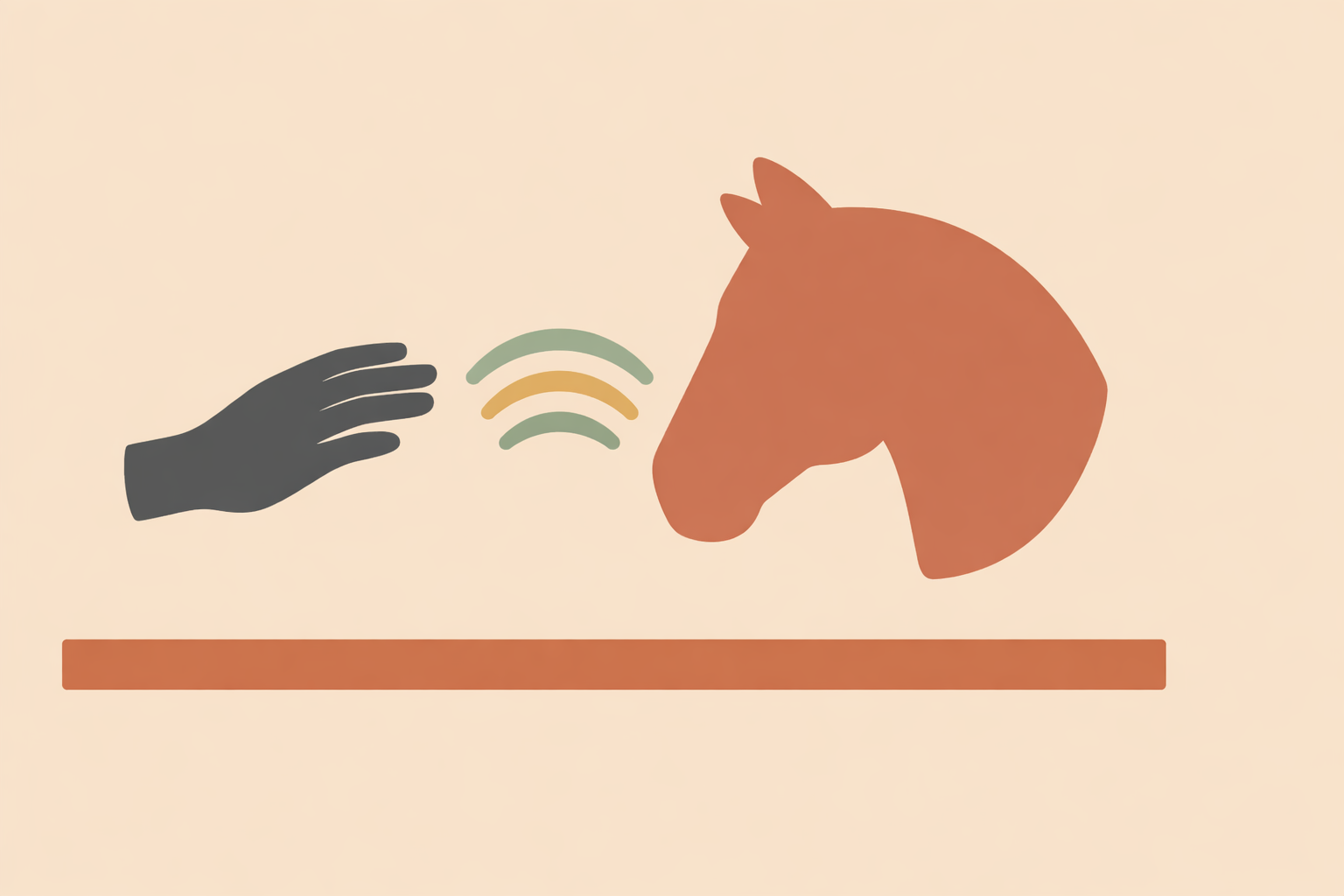
When the baseline looks workable, approach indirectly at the shoulder and let the horse notice you. Pause before contact. If the breath stays easy and the eye remains soft, place your fingers with the lightness of a moth landing.
This is where Masterson work shines. You search lightly, notice the first change, stay only as long as the horse remains comfortable, then release. Keeping your touch below the bracing response gives you clearer information and helps the horse stay organized on a high-input day.
A simple pressure scale many practitioners use is easy to remember:
- Egg: almost no pressure
- Grape: still very light
- Lemon and lime: generally more than you need on a show day
Default to egg pressure. Green-light responses include blinking, a softening muzzle, a slightly lower neck, or a quiet exhale. Yellow-light responses might be a small head raise, one step away, or mild facial tightening. If you see repeated moving off, tail wringing, pinned ears, or threatening gestures, stop and reassess.
Keep micro-sequences truly micro. One soft contact near the poll, a few easy breaths if the horse stays with you, then release. If nothing changes within a few seconds, lift away and move on. Respect is part of the method.
Step 4: A short pre-class routine for calm, organized movement
Before a class, keep your sequence conservative and familiar. Support ease and coordination without stirring up bigger shifts right before performance.
A simple 2-5 minute pattern can work well:
- Poll-atlas: From the shoulder, bring feather-light contact to the poll-atlas junction. Follow the horse rather than positioning the head.
- Neck-shoulder-withers: Trace a slow, searching line along the base of the neck into the shoulder and withers. Stay only where the horse softens.
- Tiny withers wiggle: With flat hands, invite a barely-there lateral movement through the withers, then stop before it becomes effortful.
Done well, this feels almost unremarkable. Many horses answer with a deeper breath, a steadier eye, or a clearer sense of where they are in space. That’s plenty for right before you head to the ring.
If the horse braces, shortens the neck, or becomes more vigilant, reduce pressure or end the sequence. Short and skillful beats long and habitual.
Step 5: Use the evening for gentle decompression
When the showgrounds quiet down, you usually get a better window for slightly fuller work. Evening bodywork doesn’t need to be deep to be effective; soft, familiar contact often helps the day settle out of the system.
A calm evening sequence might include:
- Slow strokes along the Bladder Meridian as a map for attentive, no-force contact
- Tiny back rocking with flat palms
- Simple limb invitations, offered without pulling or holding
Start at the topline and move slowly enough that the horse can track each pass. Meridian-based frameworks can be a valuable guide for focus and flow, especially when they help you listen more carefully, but the horse’s real-time feedback still sets the boundary.
With gentle rocking, keep the movement so small it feels like a suggestion. If the horse rebalances, wait. If the breath stays even and the eye remains soft, continue briefly; if not, end there.
For limb work, ask for very little. Stroke down, invite a light lift, offer a tiny circle only if it stays easy, then set the foot down softly. Comfort and communication matter more than range.
Many horses welcome this quieter end-of-day contact. Over time, sessions like these often make them more expressive and easier to read.
Listening deeper: green lights, yellow lights, and stop signs
One of the most valuable show-day skills is resisting the urge to over-interpret a single signal. Licking, chewing, yawning, sighing, or shaking can show up with softening, but the same behavior can also appear with fatigue or stress. The whole-horse picture is more reliable than any one moment.
Use a simple traffic-light lens:
- Green: blinking or soft eyes, neutral or lowered head, steady breathing, quiet standing
- Yellow: scanning, mild head raise, facial tightening, one step away, brief brace
- Red: repeated moving off, pinned ears, tail swishing with tension, threats to bite or kick, unusual sweating, sudden gait changes, or clear overwhelm
When in doubt, do less. Bodywork supports comfort, trust, and better listening within the boundaries of the moment. On show days, those boundaries can be narrow, and honoring them protects both the horse and the integrity of the work.
Bringing it all together in your show-day routine
Keep the rhythm simple. Before a class, think baseline, clear consent, feather-light contact, and familiar areas. In the evening, when the atmosphere is quieter, expand gently into a little more decompression without making the session a major event.
Notes help more than people expect. Jot down the class context, time of day, what you touched, how brief the work was, and what the horse showed afterward. Over a few shows, you’ll build a practical map of thresholds, preferences, and patterns.
Many horses become more communicative with this style of interactive bodywork because their signals are consistently noticed and respected. Show days reward steadiness. Let the horse lead, keep your touch honest, and work within what the day can support—one breath, one blink, one softening at a time, whether you’re building toward animal wellness more broadly or refining hands-on skills through animal massage certification.
Explore Animal Massage Certification
Build confident, horse-led touch skills with the Animal Massage Certification to support calm, organized movement under pressure.
Explore Animal Massage →