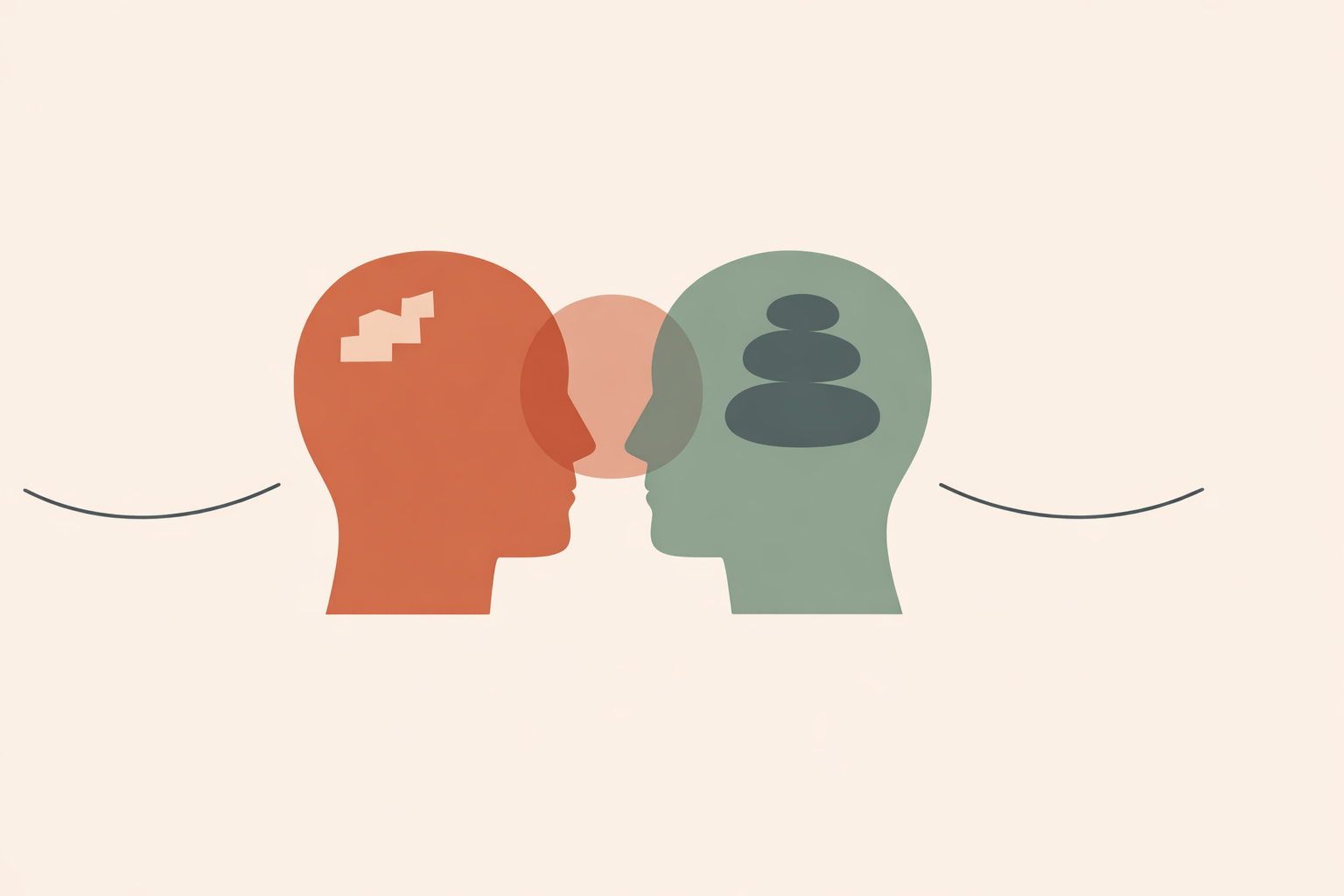
Many planning systems assume attention can be switched on, redirected, and wrapped up neatly on demand. In autism coaching, that assumption often breaks down. An interruption can scatter good intentions, transitions can cost more than the next task, and sensory overload can undo even a thoughtful schedule.
Planning becomes far more workable when it follows monotropic attention instead of fighting it. When attention gathers strongly around a few channels, support works best when it protects focus, softens transitions, and respects energy limits. That’s how plans stay usable on ordinary days, not only on the best ones.
Key Takeaway: Effective autism coaching works better when plans follow monotropic attention instead of forcing constant switching. In practice, that means mapping attention magnets and drains, treating transitions as tasks in their own right, turning goals into micro-steps, reducing sensory friction, preloading communication scripts, budgeting energy with burnout awareness, and reviewing plans for fit rather than compliance.
Planning Move 1: Map Attention Magnets, Drains, and Hard-to-Leave Zones
Start by noticing where attention naturally goes. A monotropic lens describes autistic attention as concentrating in a few strong channels at a time, with a relatively narrow tunnel. Plans hold better when they match these patterns rather than constantly pushing against them.
Many people recognize this as a “deep dive” style: intense focus that can fuel learning and creativity, with interruptions that feel surprisingly costly.
A quick attention audit is usually enough:
- Easy to enter: activities, places, topics, or formats attention drops into quickly
- Hard to enter: tasks that create friction at the start
- Hard to leave: activities that absorb time and make stopping difficult
Once the map is visible, use deep interests as anchors. Rather than “finish the boring task, then earn the preferred one,” adjust the task so it fits how attention already moves. Change the environment, theme, soundtrack, format, or sequence to lower the entry cost.
For one client who loved trains, task stages became stations: Board, Depart, Cruise, Arrive. The metaphor added structure without pressure, and finishing became more realistic.
Keep the map whole-person. Someone can excel at pattern recognition and still find phone calls exhausting. The aim is not to normalize attention, but to organize support around its real shape.
Planning Move 2: Treat Transitions as Tasks
For many autistic people, transitions aren’t a tiny bridge between activities; they are a real demand. Research on autistic attention describes difficulty with set-shifting, and in day-to-day coaching it often means the switch itself needs a plan.
Even when the next task is manageable, leaving one attentional tunnel and entering another can be the hardest part.
Transition supports that consistently help include:
- Advance notice: name the shift before it happens
- Closure rituals: save the file, write the next step, clear the desk, close tabs
- Landing zones: a brief quiet pause between one context and the next
- Preparation cues: visual prompts, countdowns, or routine markers that warn rather than jolt
Many practitioners find visual countdowns and calendars feel gentler than loud alarms because they prepare without startling. Buffered transition time helps too; a small gap between meetings can make starting smoother and reduce shutdown afterward.
Traditional cultures have long used songs, gestures, prayers, and short rituals to mark a change of state. That wisdom adapts well when used respectfully: a repeated phrase while closing a task, a steady breath pattern before leaving the house, or a small pause before entering a new environment.
Planning Move 3: Turn Goals Into Micro-Steps
Vague goals often fail because the starting point is still too big. When initiation is hard, goals need translating into very small, clear actions.
Begin with a value, then keep shrinking the first action until it feels startable.
- Value: “I want more steadiness with money so I can travel each year.”
- First action: open the banking app
- Next action: tap transactions
- Next action: screenshot the last five entries
It also helps to separate phases that use different kinds of effort:
- planning
- gathering
- starting
- doing
- checking
- closing
When someone stalls, locate the exact point where things get sticky. That’s the spot to redesign, not a moment for self-judgment.
Long, crowded to-do lists often recreate overload. Short, concrete sequences reduce ambiguity and make it easier to stop and restart later.
Planning Move 4: Make the Plan Sensory-Accessible
Sensory conditions aren’t background details. They often decide whether attention is available at all. Research on autistic burnout includes sensory overload alongside disruptions to planning, initiation, sequencing, working memory, and sustained attention. When the sensory environment gets too demanding, the plan frequently collapses with it.
A short sensory audit fits into almost any coaching conversation. Explore:
- sound
- light
- temperature
- smell
- texture
- movement
- visual clutter
- digital notifications
- crowding
- food and drink textures
Unnecessary input can function like an added attention tax. Reducing that load can make planning workable without changing the goal.
Sensory sensitivity is also highly individual. Plans work best when they’re specific, not built on a generic “sensory profile.”
Small adjustments often make a big difference, especially in sensory-aware coaching:
- captions on by default
- written follow-up after meetings
- quiet seating options
- predictable room layouts
- fewer notifications
- permission to step away
- access to fidgets, movement, or other regulating supports
Protect stimming as part of regulation and self-organization. If an adaptation is needed, collaborate on one rather than suppressing the behavior outright.
Planning Move 5: Script Communication and Self-Advocacy
Self-advocacy gets much easier when language is prepared in advance. On low-energy days, even finding words for a basic preference can be hard, so ready-made scripts remove friction at the moment it matters.
A script library might include:
- “I process best with written instructions. Could you send that by email?”
- “I need a few minutes before I respond.”
- “Could we move somewhere quieter?”
- “I’m better with camera off today.”
- “I can listen, but I may not reply straight away.”
Communication passports can help too: a one-page profile with preferred contact methods, sensory considerations, pacing needs, and pause signals. It can travel ahead of the person and reduce the burden of repeated explanation.
This is also a chance to widen the definition of communication. Speech is only one mode. Writing, text, gesture, typed chat, and AAC are all valid ways of participating.
When scripts are respected, authenticity often increases. People tend to contribute more clearly when they don’t have to translate needs into socially acceptable language in real time.
Planning Move 6: Budget Energy and Burnout Risk
If a plan ignores energy, it won’t last. Autistic burnout is widely understood as building from cumulative stress and strain, especially when demands keep outpacing available support. Research also describes skill loss during burnout, which helps explain why previously routine tasks can suddenly feel out of reach.
Burnout reports commonly include executive difficulties. Planning, initiation, sequencing, working memory, and sustained attention can all become less reliable, so a plan that fit last month may no longer match today’s capacity.
Energy accounting helps make this visible. Map demand across:
- sensory
- social
- cognitive
- emotional
- physical
- transition-related
Then sketch the week in broad strokes. Simple color-coding (low/medium/high demand) makes overload patterns easy to spot early, so you can move, buffer, or reduce before the week begins.
Masking is another major energy drain for many autistic people. Research links masking with cumulative stress, and burnout literature also connects it with identity disruption and delayed support-seeking. Good planning accounts for the hidden effort of suppressing stims, managing eye contact, rehearsing responses, or performing social ease.
Low-demand day plans are often more supportive than “push through” plans. They might include one essential task, easier food, reduced communication, camera-off participation, quiet time after obligations, and clear permission to cancel non-essential demands, especially when supporting autistic burnout.
Planning Move 7: Review for Fit, Not Compliance
A good review improves the plan instead of judging the person. The guiding question is: “What did this design make easier or harder?”
Short after-action reviews work well:
- Helped: what lowered friction?
- Blocked: where did the plan jam?
- Changed: what shifted in energy, environment, or identity needs?
- Remove: what can be dropped?
- Next: what is the smallest useful experiment now?
Let the person choose meaningful measures of progress. That might be less exhaustion, smoother starts, better recovery, stronger self-advocacy, or more access to valued parts of life. Faster output isn’t always the right metric.
Support needs change over time. Some supports fade as confidence grows, while others remain important. That’s normal adaptation, not failure.
When review stays collaborative, the plan evolves with the person instead of becoming another standard to “pass.”
Planning With Monotropic Attention
These seven moves work best as a set: map attention honestly, plan transitions as real work, make the first step smaller, reduce sensory friction, prepare words in advance, budget energy with care, and review for fit.
Used this way, monotropism becomes a practical guide for building plans that respect focus, support well-being, and stay usable through changing energy and context in neurodiversity coaching.
Traditional wisdom around rhythm, rest, ritual, and community can be deeply supportive here when used with cultural respect and the person’s full consent. Each plan should still stay grounded in lived experience, adjusting as real life changes.
Planning with monotropic attention is not a workaround for a flawed person. It is a more accurate and respectful way to support autistic people in the shape of their real lives, including in autism coaching.
Explore Autism Coach Certification
Deepen these monotropic planning strategies with practical coaching skills in the Autism Coach Certification.
Explore Autism Coach →