When a class drifts, a client tightens, or a meeting turns sharp, most professionals reach for better wording, tighter structure, or more explanation. Often the real shift began earlier in the body. State shapes cognition: attention narrows, memory gets patchy, tone changes, and choices start coming from urgency or collapse rather than clarity.
A more helpful response is usually smaller. Notice state lightly, then adjust the next thirty seconds. When you can tell whether the system feels connected, revved, or flat, you can choose a better pace, a cleaner ask, and a more supportive next step.
This is a practical, humane skill. Sense where you are, use one small lever, and continue from there.
Key Takeaway: Effective learning, coaching, and leadership often improve when you track nervous system state first, then match a small action to what the body can do now. A simple three-state map helps you notice whether you feel connected, urgent, or flat; breath, muscle tone, and social cues make that map easier to read; and brief shifts through breath, movement, touch, and orienting can help bring cognition back online.
Why light-touch state tracking changes daily life
Before you read a tense email or answer a difficult question, your body has usually already organized a response. You might notice a tight chest, quicker thoughts, or tunnel vision. That’s why state tracking is so useful: it helps you catch the shift early enough to choose your next move with more care.
State affects what you can access. It’s generally easier to remember a name when you’re settled than when anxiety is running the show. It’s also easier to hold a boundary when your system isn’t flooded.
Many traditional systems have always planned around energy and rhythm, not just tasks. Modern work on daily cycles points to better outcomes when activity matches natural fluctuations in alertness and attention.
Try this today: before a tricky task, pause and ask, “What state am I in?” Name it once, then choose one small adjustment.
- Before replying to a tense message: pause, exhale slowly twice, then reread.
- At the start of a meeting: invite one word for the room’s state—focused, foggy, edgy, steady.
- Before a boundary-setting conversation: notice your breath first, then speak.
A simple three-state map you can feel in your body
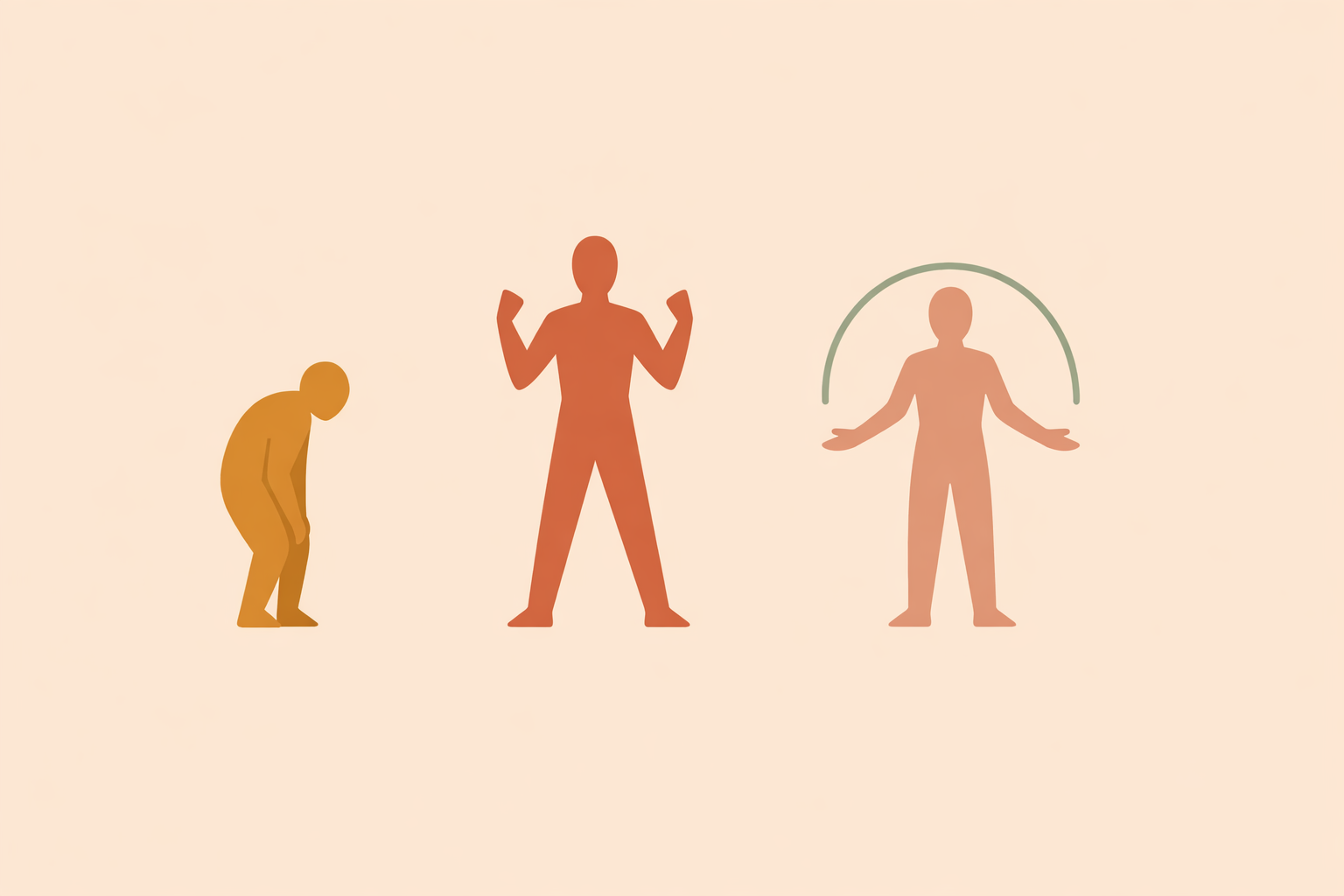
You don’t need complex language to work with state. For most people, three buckets are enough: safe and social, revved up, or shut down. Once you know what to look for, these patterns become easy to recognize in everyday moments.
In a connected state, there’s more presence, warmth, and flexibility. In a revved state, energy rises toward action: thoughts speed up, attention narrows, and urgency takes the lead. In a shut-down state, energy drops: people often feel heavy, distant, dim, or hard to engage.
Use direct questions that stay practical and non-judgmental:
- Do I feel safe and connected?
- Do I feel urgent or keyed up?
- Do I feel flat or distant?
The goal is information for the next moment, not a label you carry around all day.
Picture a teacher noticing her voice getting tight and fast during a challenging class. She names “keyed up,” presses her feet into the floor, slows two exhales, then invites everyone to stand, stretch, and look around the room. Ninety seconds later, the room feels more workable. The map doesn’t solve everything; it improves the next step.
What is happening under the hood
You don’t need a deep theory lesson to trust what you feel, but context helps. Nervous system state is how the body organizes attention, energy, action, and connection in real time. It scans cues and shifts your readiness for what comes next.
That’s why state can change fast. A sharp tone, a loud sound, a familiar face, a steady breath, or a moment of orienting can all move the system. When enough safety returns, shoulders drop and thinking becomes more available.
This is also why traditional grounding practices have lasted. Breath, posture, rhythm, gaze, and touch are direct ways of communicating with the body’s organizing patterns.
How to read state without overcomplicating it
Beginners often try to track everything at once, and it quickly turns into strain. Start with one or two channels and keep returning to them: breath, muscle tone, and social orientation.
Breath is one of the clearest signals. Under stress, breathing often becomes quicker and shallower. More settled states often bring slower, steadier breathing and steadier heart-rate variability.
Social cues add important information. When connection returns, eye contact, tone, and curiosity often return with it. Muscle tone is another honest channel: clenched jaw, tight belly, lifted shoulders, or a collapsed posture often shows up before the words do.
A quick scan is usually enough. About 30 seconds of noticing breath, posture, tension, temperature, and contact with the floor can give a useful read. Choose plain words: present, edgy, foggy, tight, distant.
Kindness matters as much as accuracy. Non-judgmental observation tends to reduce rumination and self-criticism, which makes the practice easier to sustain.
- Breath: Is it low and easy, high and choppy, or faint?
- Muscles: What is gripping? Jaw, hands, belly, shoulders?
- Orientation: Do I want to connect, hide, push, or disappear?
Gentle ways to shift state
Once you can read state, the next move is matching, not forcing. Small shifts work best when they fit what the body is ready for.
Breath is often the simplest entry point. A few minutes of paced breathing with slightly longer exhales can support higher HRV and steadier attention. Many people do well with in for four and out for six. If you feel flat or distant, an even pace may feel more supportive than very long exhales.
Movement helps because it gives the system a safe way to change gear. Slow rhythmic movement tends to reduce arousal and settle anxiety better than sitting very still. If you feel shut down, gentle upright movement often works well: stand, reach, walk to the doorway, or add a bit more verticality. Across the board, brief movement breaks support attention better than staying seated without pause.
Touch can also support settling. A hand on the heart and another on the belly for about thirty seconds may encourage parasympathetic engagement and a felt sense of steadiness.
If you feel foggy or heavy, muscle work is often surprisingly effective. Muscle relaxation can reduce fatigue and improve concentration without adding more activation.
Then there are “glimmers”: small cues of safety or pleasure that help the body soften. A warm cup in your hands, sunlight on your forearms, a familiar scent, a kind face, a bird call, a patch of sky. Traditional lineages have long used these simple sensory anchors because the body responds to them quickly.
- Revved up: lengthen the exhale, soften the jaw, slow the pace.
- Flat or distant: sit upright, look toward the horizon, add a little movement.
- Scattered: place both feet on the floor and orient to the room.
Common mistakes in reading state
A frequent mistake is confusing stillness with calm. Low movement and a soft voice can look settled, yet sometimes they signal a freeze or shut-down pattern. Look for responsiveness and curiosity, not stillness alone.
Another trap is glorifying overdrive. Many high performers function in chronic sympathetic drive, and it can look productive for a while. Over time, the costs often show up as burnout risk and reduced sensitivity to body cues.
It’s also easy to turn regulation into another performance task. Over-monitoring can feed rumination or anxiety when every sensation becomes a problem to solve. Keep it brief: notice, name, choose one response, continue.
- Green: oriented, responsive, curious.
- Yellow: tight breath, urgency, irritability, scattered focus.
- Red: foggy, flat, overwhelmed, hard to track.
If you notice yellow, insert a short reset. If you notice red, simplify: orient to the room, feel the ground, reduce demand. Stay within the scope of coaching and learning support, and if someone’s responses move beyond that container, pause and help them connect with appropriate support.
Why state matters for learning, decisions, and communication
State shapes more than mood. State colors cognitive performance, influencing perception, attention, memory, language, and decision-making.
Learning tends to go best in an alert, connected range. Memory encoding is often strongest with moderate activation and enough safety, while high stress can reduce working memory and comprehension.
Decision-making follows a similar pattern. Higher HRV is associated with steadier executive control and more consistent choices than states of hyperarousal or collapse.
Small grounding actions can bring attention back. Short grounding practices like feeling your feet on the floor or orienting to the room can reset focus without derailing momentum.
Bringing state awareness into coaching, teaching, and leadership
State awareness works best when it’s woven into what you already do. A short arrival pause, a mid-session reset, or a quick check before a nuanced decision can change the quality of everything that follows.
In teaching, begin with orientation: feet on the floor, one easy breath, eyes around the room. In coaching, pause when speech speeds up, shoulders curl inward, or attention scatters. In leadership, check state before conversations that require restraint, collaboration, or precision.
- Learning: start with three breaths and a quick orient to the room.
- Coaching: ask, “What is your state right now in one word?”
- Leadership: before a difficult conversation, check breath, pace, and jaw.
Culture matters as well. Environments that support psychological safety tend to show steadier motivation and lower burnout. In that same spirit, light-touch state tracking supports resilience and steadier relationships over time.
Regulation is also relational. In many rooms, one grounded person helps others settle. Research on co-regulation suggests steadiness is contagious through tone, pacing, facial expression, and social engagement.
A kinder way to work with state
State tracking is a respectful way to work with the body you already have. Notice what’s here, choose one small support, and move forward without force.
To start, pick one cue to track this week: breath, shoulders, jaw, pace, or gaze. Pair it with one response you can actually do in real life: a longer exhale, a hand on the chest, a brief walk, or a quick look around the room. Repetition builds skill, and for practitioners developing brain health coaching skills, that kind of repetition is part of the craft.
Over time, it becomes a craft. You learn when to settle, when to mobilize gently, when to pause, and when to reduce demand. If you’re practicing in group settings, keep it simple, consent-based, and culturally respectful, and remember that supportive neuroscience coaching tools are not a substitute for specialized care when someone needs more help than the setting can hold.
Train as a Neuroscience Coach
Build practical state-tracking and regulation skills in the Neuroscience Coach Certification.
Explore Neuroscience Coach Certification →