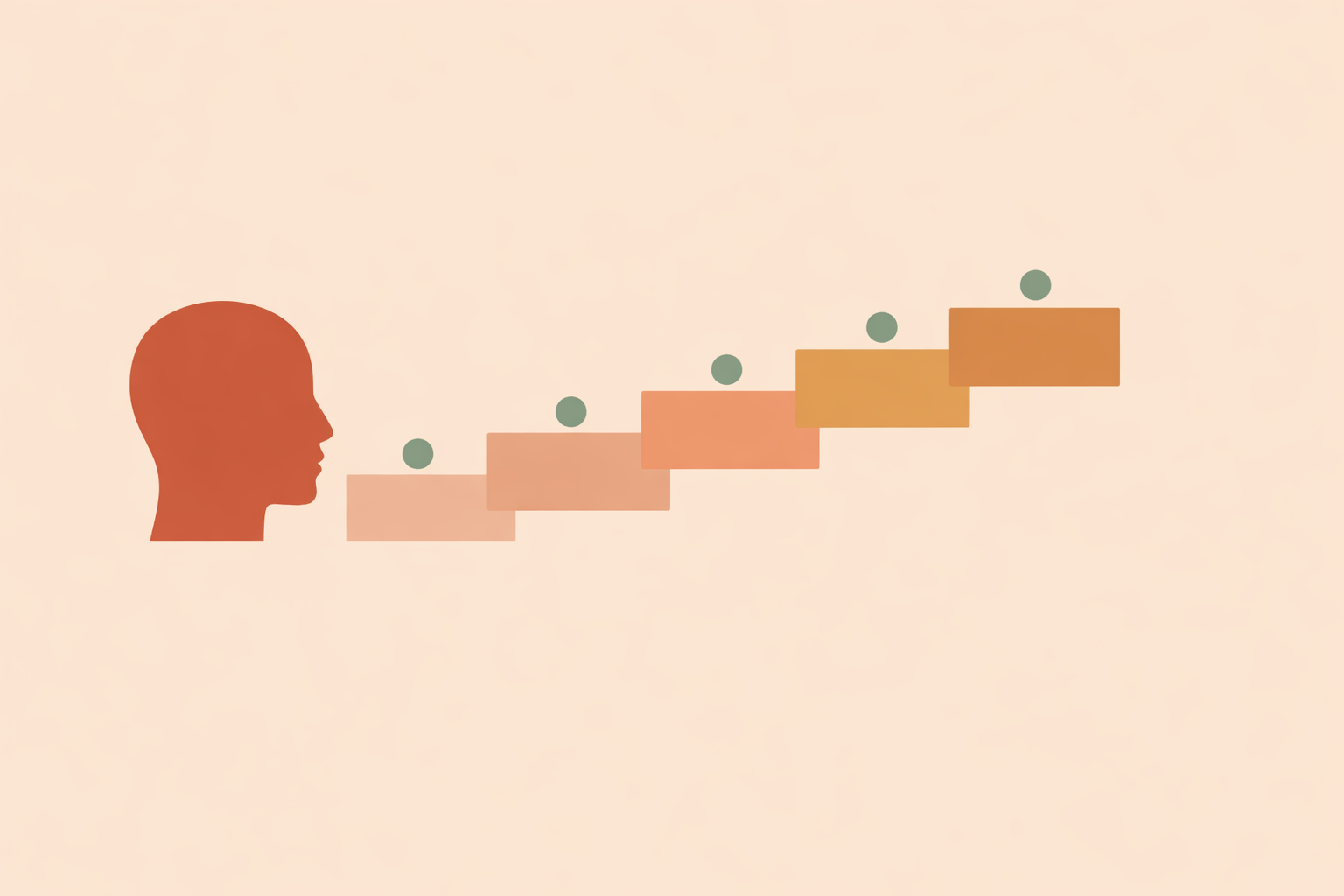
“Calm down” is a familiar reflex. It may quiet a moment, yet it can also narrow expression or push someone toward going blank. In practice, many facilitators notice the same pattern: outward agitation drops, but understanding does not deepen. A steadier aim is more capacity to stay present with feeling under pressure.
Key Takeaway: Calm is better understood as a flexible capacity, not the absence of emotion. Creative practice can help build that capacity through simple, repeatable structures: orient, make, observe, reflect, and close. Used well, this kind of work supports attention, self-awareness, and more choice in how a person responds.
What Brain Research Suggests About Creativity and Emotional Regulation
Modern research can add language for what traditional arts-based practices have demonstrated for centuries: when hands, attention, and meaning move together, people often settle into themselves.
A review found preliminary evidence that creative-arts engagement can involve the mPFC and the amygdala, which relate to attention, meaning-making, and emotional significance. That aligns with what many practitioners observe: making something helps a person organize inner experience rather than get stuck inside it.
Over time, repeated arts engagement has been associated with neural differences across frontal and sensory regions and connectivity patterns. Regular practice appears to matter.
There is also evidence that visual expression can activate reward pathways. This helps explain why even brief making can leave someone feeling more curious, soothed, or quietly energized.
The practical takeaway stays straightforward: don’t chase a breakthrough. Build a few gentle shifts in attention—orient to the room, engage a material, pause to observe, then reflect in plain language.
Why Externalizing Experience Creates Space
Something changes when an inner state becomes visible. A feeling that seemed total can become shape, color, rhythm, or words on a page, and that alone can make it easier to witness.
Many practitioners know this moment well: “I am anger” becomes “I am noticing anger.” Putting experience onto paper can create distance, containment, and perspective.
This is one reason art-based work supports people when words feel out of reach. Visual externalization can create distance from difficult material and make reflection more possible.
Prompts that connect sensation and image are especially useful. Map tension as lines, give heaviness a color, or draw worry as weather. These aren’t interpretation tricks; they help body signals and emotion meet in a form the person can observe.
After making, keep reflection spacious. Ask: What feels true here? What feels unfinished? If this shape had a little more room, what would change?
A Simple Session Arc That Supports Steadiness
Creative calm grows best inside a structure that feels predictable without being rigid. A clear arc reduces uncertainty and gives the work a sense of containment.
A reliable flow is:
- Arrive
- Orient
- Create
- Observe
- Reflect
- Close
Arrival helps the person land. Orientation gathers attention around the room, the body, and the available materials. Making gives energy a channel. Observation creates a pause. Reflection lets meaning emerge. Closing prevents the session from ending abruptly.
- Arrive: Notice three colors in the room. Feel your feet. Exhale a little longer than you inhale.
- Orient: Briefly introduce the materials and invite a choice.
- Create: Offer a low-pressure prompt with permission to pause or change direction.
- Observe: Sit with the image quietly for a moment.
- Reflect: Ask what they noticed in body, mood, or attention.
- Close: Add a title, a date, or one small next step.
The power of this arc is that it’s repeatable. Over time, repetition itself becomes supportive.
Materials and Prompts That Invite Calm Without Performance
For this kind of work, the best materials are often the least intimidating. The goal is enough sensory engagement, and enough freedom, for someone to stay with the process.
Repetitive movements such as coloring, stitching, or spiral marks often anchor attention. Still, some people find repetition irritating or confining, so offer options rather than a single “correct” approach.
Research on coloring, doodling, and free drawing found mPFC activation during visual expression, which supports a practical choice: begin with simple mark-making instead of demanding projects.
Useful materials might include:
- Soft options: watercolor, oil pastels, tissue collage
- Structured options: graphite, colored pencils, fine-liners
- Tactile options: clay, textured paper, natural fibers
- Word-based options: short poems, sentence stems, simple lists
Keep prompts short and choice-based:
- Choose two colors that mean quiet to you and make slow marks for three minutes.
- Make a small clay form that feels steady in your palm.
- Write three lines beginning with “Right now...” and circle one helpful word.
- Draw the shape of your energy without trying to make it pretty.
Keep color symbolism open. A color may carry personal, family, or cultural meaning that only the maker can name. Use it to invite their language, not as a code to decode.
Adapting the Work for Different People and Contexts
Calm is personal, and so is creativity. The same prompt can feel freeing for one person and awkward for another, which is why adaptation matters more than formula.
Older adults often prefer slower pacing, larger tools, and high-contrast paper. Many teens value privacy and control over what gets shared. With children, shorter playful activities tend to work best, and drawings shouldn’t be treated as literal reports of events.
For neurodivergent clients, explicit sensory choices, predictable structure, and permission to engage without eye contact or lots of talking can make the work more accessible. Co-create a sensory plan with clear opt-outs.
Cultural responsiveness matters just as much. Symbols, colors, rhythm, silence, ancestry, and even the word “calm” can carry different meanings across communities. Ask rather than assume, and invite people to define what steadiness feels like for them.
In groups, creative work can support belonging and it can also stir comparison. Private space, clear consent around sharing, and frequent reminders that there is no “right pace” help protect the room.
Working Ethically: Support, Not Overclaiming
Creative practice can offer meaningful support for reflection, self-contact, and emotional steadiness. It should be framed with care, not as a cure-all.
Practitioner integrity keeps the work grounded. Track what actually shifts: less overwhelm, clearer words for what someone feels, or one small next step they can carry into daily life.
Documentation can stay simple:
- The prompt and approximate duration
- The materials chosen
- The person’s own words about the experience
- Preferences or opt-outs: Observable shifts, such as slower breathing or more settled pacing
- One practical next step
A brief note might read: arrived unsettled; oriented through color naming; made slow blue and brown watercolor washes for ten minutes; afterward reported a looser chest and chose the title “Tide In”; plans to repeat one minute of line-making before a stressful part of the day.
This kind of record keeps the focus on lived change rather than big promises.
Closing Reflection
Across cultures, people have long used song, weaving, painting, carving, rhythm, and storytelling to steady themselves and reconnect with meaning. Contemporary research is beginning to describe what communities and practitioners have observed for a long time: creative engagement helps organize attention, feeling, and reflection in ways that support well-being.
The strength of this work lies in its simplicity. A few breaths. A material that feels approachable. Marks on a page. A pause to notice. A question that opens rather than pushes.
Keep the arc steady, honor culture and choice, and be honest about what the work can and cannot do. Then creative practice becomes a grounded way to help people return to themselves, even in difficult moments.
Explore Therapeutic Arts Certification
Deepen these creative calm practices with structured training in the Therapeutic Arts Certification.
Explore Therapeutic Arts →