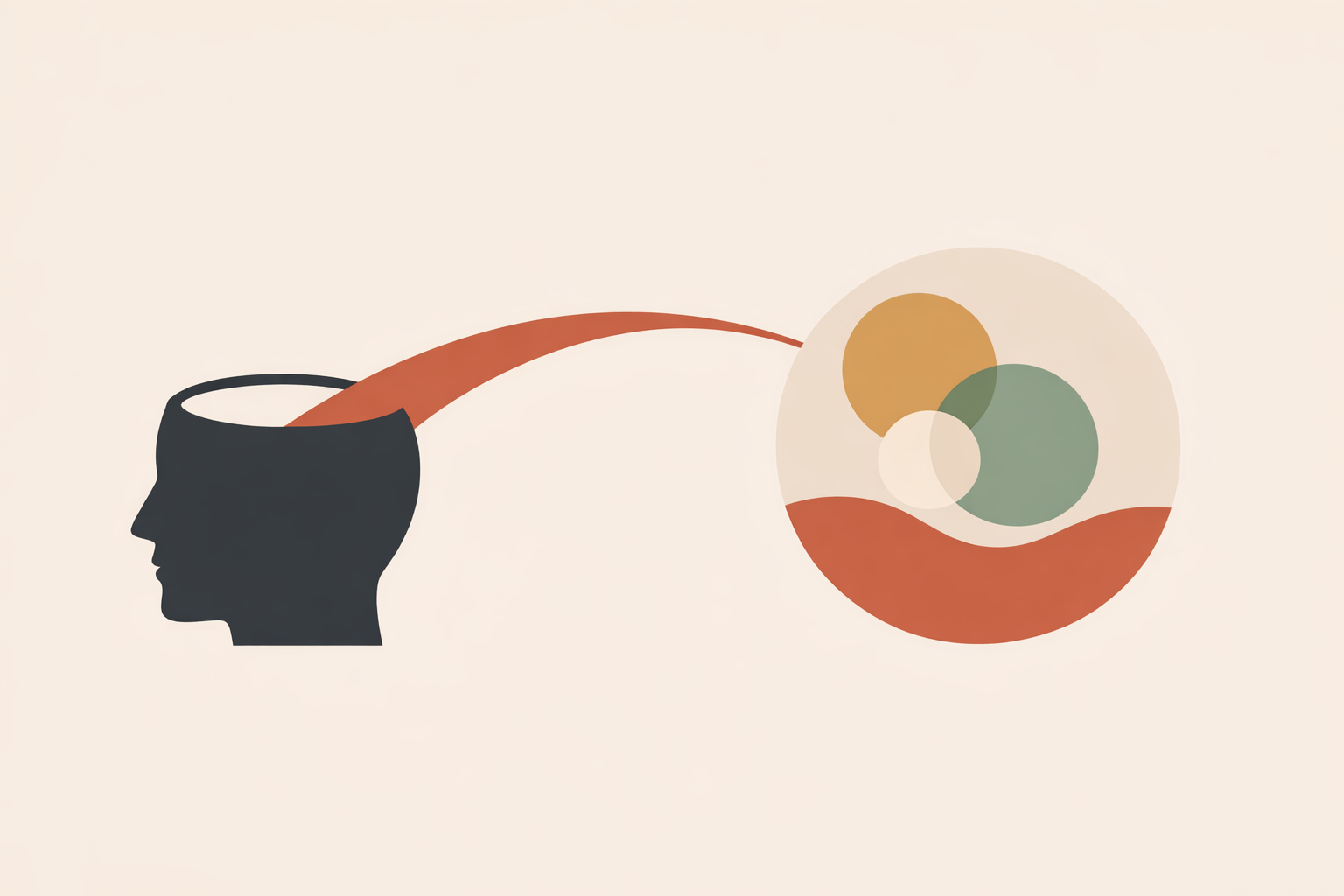
Integration practitioners are often told that clear neuroscience builds trust. So when someone returns from a profound journey and says they can’t explain it, many of us reach for DMN diagrams and receptor language. Sometimes that helps. Just as often, it flattens the moment. The pressure to sound rigorous can pull the conversation away from what is actually needed: steadiness, meaning-making, and a workable path back into daily life.
Used well, science can be a lantern rather than a spotlight. It can name patterns without overruling lived experience. It can support reflection without turning the session into a performance. In integration work, that usually means starting with set, setting, and the qualities of altered states before offering any brain-based explanation.
Key Takeaway: Effective integration uses neuroscience as one lens while centering client meaning, safety, and scope. The most supportive approach is usually simple: begin with set, setting, and altered-state basics; use plain language for questions about the brain; treat afterglow and plasticity as openings for practice rather than promises; and return again and again to the person’s own symbols, values, and next steps.
From decoder to guide
The most grounded role in integration is a thoughtful guide, not an expert interpreter. Education still belongs in the work, but it serves reflection rather than claiming authority over the experience.
A brief scope statement sets the tone early: “My role is reflective and educational support. I am here to help you explore what happened, what it means to you, and what support might help next.”
It also helps to name the limits of any model. Research can offer useful patterns across groups, but it will never capture the full truth of one person’s inner life. That’s especially relevant in psychedelic conversations, where public discussion often slides into oversimplification.
Try language that keeps the door open: “Here is one model. Let’s see whether it fits your experience.” That allows neuroscience to support the session without taking it over.
Start with set, setting, and altered states
If you want a reliable starting point for debriefing, begin with set, setting, and altered-state basics before moving to brain maps. Contemporary models of psychedelic support place strong emphasis on set/setting and on integration after the experience.
For traditional practitioners, that emphasis will feel familiar. Across many lineages, preparation, intention, community, and environment have long been treated as primary influences on the journey. Modern writing on psychedelic support also acknowledges shamanic roots when discussing set and setting.
Set is the inner climate: mindset, expectations, emotional tone, intention, and preparation. Setting is the outer field: the place, the people, the soundscape, the sense of safety, and the wider relational context. A person’s mindset/environment strongly shapes what they notice, feel, and remember.
It also helps to normalize what altered states can involve. These experiences commonly bring shifts in perception/attention, along with changes in time-sense, body sensation, memory, and meaning-making. Naming this early reduces shame and makes room for curiosity.
Useful prompts here are often very simple:
- What was your intention going in?
- What felt supportive in the environment?
- What felt unsafe, unsettling, or unfinished?
- What did your body seem to need afterward?
Explaining the DMN in plain language
When someone asks, “What happened to my sense of self?”, you can respond without overstating what’s known. A grounded explanation can start here: classic psychedelics appear to involve changes beyond receptor binding, including shifts in excitation/learning processes.
At the network level, psychedelic states are commonly associated with reduced coordination in the default mode network (DMN). They’re also associated with increased communication between systems that are usually more separate, sometimes described as wider cross-talk.
In session, that can sound like: “Some of the systems involved in maintaining your usual self-story may loosen for a while, and parts of the brain that don’t usually communicate as much may connect more.”
It’s still wise to avoid saying “the DMN is the ego.” A cleaner framing is that the DMN is often discussed in relation to self-related thought and autobiographical processing.
Then bring it back to lived meaning: Which familiar identity softened? Which one came forward? What now feels less true, and what feels worth practicing?
Neuroplasticity, afterglow, and the reset myth
“Brain reset” language is tempting because it sounds hopeful and clean. Integration usually goes better with a steadier frame: change can be possible, and it still needs support, repetition, and context.
Neuroplasticity is the nervous system changing through experience, repetition, and relationship. In research, psychedelics show plasticity-related effects quite consistently in cellular and animal work, while human evidence remains more indirect.
In practice, increased plasticity does not automatically turn into lasting benefit. The link between a psychedelic experience, plasticity, and long-term benefit is still unresolved.
A client-friendly way to say this is: “This may be a window in which familiar patterns feel more editable. What lasts will still depend on practice, relationships, environment, and your choices.”
The same grounded tone helps with afterglow. Some people report a period after the experience where they feel more open, clear, connected, or motivated. Reviews describe an afterglow period, though responses vary.
Afterglow can support gentle change, but it isn’t a demand to reinvent your life overnight. It also calls for discernment with high-stakes decisions. Treat the window as an invitation to practice, and let time test what’s durable in psychedelic integration coaching.
- State: What was present during or soon after the journey?
- Pattern: What seems to repeat in ordinary life?
- Practice: What small action could help that insight take root?
Let meaning lead
When a person brings symbolic material, let meaning lead before explanation. If someone speaks about an ancestor, a river, an animal, a song, or a landscape, there’s rarely any need to rush into neuroscience.
Traditional ways of working have long understood that image, ritual, story, and relationship carry their own intelligence. In coaching practice, that means asking questions that deepen contact and can sit naturally within spirituality and ritual: What did the image ask of you? What part of your life does it touch? What feels changed now that you have returned?
It can also help to explore imagery through nonverbal modalities such as drawing, movement, or writing. For many people, meaning unfolds more naturally through making than through explanation.
If the person wants a scientific lens, offer it lightly and briefly, then return the focus to their life. Science can describe a pattern; it doesn’t decide the personal, cultural, or spiritual significance of what happened.
When neuroscience is not the answer
Sometimes the kindest move is to stop explaining and start grounding. If someone is overwhelmed, disoriented, shut down, or unable to stay present, more interpretation usually adds pressure.
Use direct, observable language. You might say: “Let’s pause the analysis.” “Notice your feet on the floor.” “Would it help to sit back, look around, or take a slower breath?”
A short grounding menu can be useful:
- Name five things you can see.
- Notice the pressure of your feet against the ground.
- Place a hand on the ribs or heart and lengthen the exhale.
- Pause the story and orient to the room.
- Choose whether to continue, slow down, or stop.
There are also times when support needs to move beyond integration coaching. If confusion persists, day-to-day functioning drops sharply, or disturbing perceptual changes continue, it’s appropriate to shift from meaning-making to safety-focused support.
A clear boundary can still be caring: “This is beyond what I can responsibly support in coaching. Let’s focus on the next appropriate support.” That protects trust while keeping the person’s well-being at the center.
A gentler way to use neuroscience
The strongest integration conversations rarely depend on having the most dazzling explanation. They depend on steadiness, humility, and timing.
Neuroscience can be genuinely useful. It can normalize features of altered states, offer language for patterns in self-experience, and reinforce how much context shapes change. It works best when it stays in proportion.
So let science illuminate without overruling. Start with set, setting, and the person in front of you. Use brain language sparingly and clearly. Treat afterglow and plasticity as openings for practice. When symbols arise, let them speak before you translate.
In the end, integration is less about decoding an experience than helping someone live in better relationship with what it asked of them through psychedelic integration coaching. That is usually where the real work begins.
Train in Integration Coaching
Deepen your integration skills with the Psychedelic Integration Coaching Certification for meaning-centered, safety-first support.
Explore the Certification →