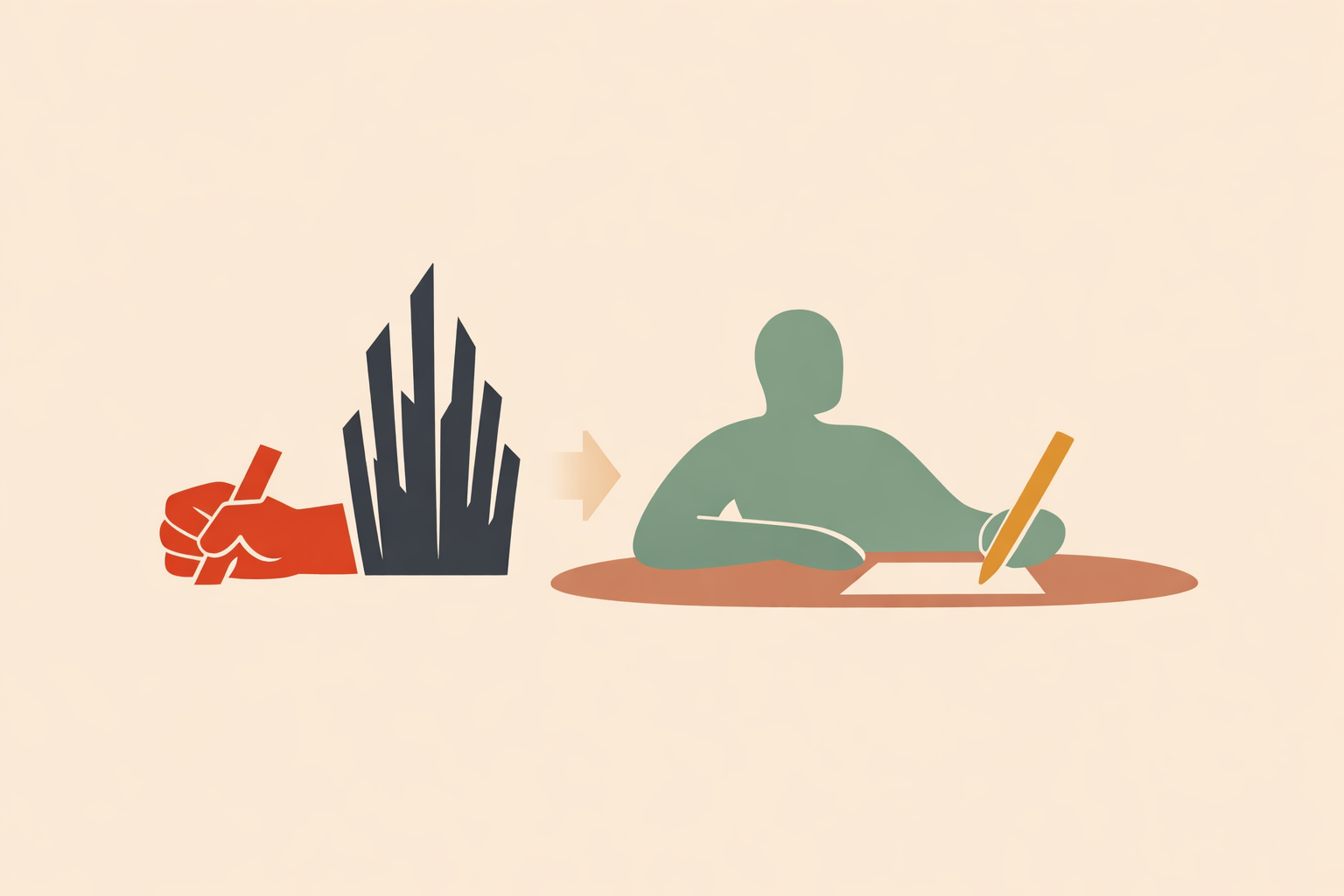
Most dysgraphia support still starts with neater handwriting, tighter grips, and more practice. In real sessions, that approach often hits a wall. The grip tightens, shoulders creep up, the page dents, and output slows even when the ideas are strong.
A more helpful starting point is to reduce motor load so ideas can move with less friction. In coaching practice, that means body-based support, thoughtful setup, flexible ways to express ideas, and predictable routines that protect dignity. When the body’s job becomes smaller, many writers capture more of what they mean with less strain.
Key Takeaway: Effective dysgraphia support reduces motor load by working with the body, environment, and modalities. The article first reframes dysgraphia as a coordination style and sets a neurodiversity‑affirming, scope‑safe stance; then shows how to spot writing strain in bodies (grip, posture, emotions) before it shows on the page; lays out brief, proximal‑first warm‑ups and breath to lower same‑day tension; builds ergonomic “nests” with posture, page tilt, and tool choice; blends handwriting, typing, and speech‑to‑text via simple two‑tool workflows; adds rituals and scripts that reduce shame and create predictable exits; and closes with tracking methods that log comfort, idea capture, and sustainable habits. Practitioners can assemble repeatable, body‑kind writing plans clients will actually use.
How to spot writing strain in the body
Writing strain usually shows up in the body before it shows on the page. Someone may look fine for a minute, then begin pressing harder, shaking out the hand, holding the breath, or stopping abruptly.
Many people with dysgraphia report hand pain, cramping, early fatigue, or the feeling that their hand can’t keep pace with their thoughts.
Longer tasks add thinking demand on top of physical demand, raising cognitive load alongside body tension. Relief usually comes from addressing both, together.
- Grip and pressure: overgripping, paper dents, cramped fingers, frequent hand shaking
- Posture: leaning heavily on one arm, shoulders creeping up, wrist hooking, feet dangling
- Pacing: a sharp drop in output after a strong start
- Emotional signals: refusal, perfectionistic erasing, irritability, hiding written work
A useful prompt is: “Where do you feel writing in your body?” Answers like shoulders, jaw, wrist, or eyes often give you more direction than the handwriting sample alone.
When expression options widen through art, mapping, or quick audio notes, many writers become more willing to try body-based support. Engagement often improves when multiple means of expression are welcomed.
Body-based warm-ups for same-day ease
Short warm-ups can change a session quickly. Two to five minutes of whole-body preparation often softens overgripping, reduces cramping, and steadies breathing before writing begins.
Fluent handwriting draws on whole-body organization, including bilateral coordination, core stability, eye-hand organization, and fine-motor control.
A simple sequence is usually enough:
- Seated marching with opposite hand tapping opposite thigh
- Wall push-ups with relaxed ribs and soft shoulders
- Slow shoulder rolls forward and back
- Large air-writing with the whole arm
- Gentle finger-to-thumb taps or desk “piano” taps
Cross-lateral movement is a familiar feature in many traditional body-prep routines for focus and coordination. It’s often helpful when a writer looks scattered, collapsed in posture, or locked into a tight grip.
Breath support can help too. Two rounds of 4-2-6 paced breathing often reduces bracing, and paced breathing is linked with lower muscle tension.
Another reliable pattern is a micro-burst cycle: a brief writing interval followed by a brief movement reset. This protects stamina, and brief breaks reduce fatigue in repetitive hand tasks.
Ergonomic writing setups that reduce effort
Before changing the pencil, change the setup. A supportive writing “nest” lowers demand on the hand by improving alignment through the whole body.
Start with posture:
- Feet flat on the floor or supported by a footrest
- Hips and knees comfortably bent
- Shoulders relaxed rather than lifted toward the ears
- Forearms supported as needed
- Page positioned to match the writing hand
These adjustments can make a difference fast. During intensive writing tasks, posture-focused instruction improves comfort and function.
A gentle incline also helps some writers. For those who hook the wrist or collapse over the page, an inclined surface supports a more comfortable hand position.
Once the base is steady, tool choice matters:
- Short pencils or thicker barrels can reduce overgripping
- Soft-lead pencils and gel pens often require less pressure
- Textured or raised-line paper can improve spacing and line awareness
For some students, raised-line paper improves functional handwriting output by adding tactile guidance.
In everyday practice, small combinations add up: gel pen, slight page tilt, and foot support can make homework or note-taking feel far more manageable. Comfort is the target, and a functional grasp that supports steady output matters more than an idealized pencil hold.
Using mixed writing modalities to protect idea flow
When communication is the goal, modality matters. Many writers thrive when handwriting is one option among several, rather than the only route available.
Blending handwriting, keyboarding, dictation, and mapping reduces motor load while protecting idea generation, and combining handwriting and dictation supports written communication for students with writing difficulties.
A practical coaching rule is to choose two tools before starting, a flexible move that also fits executive function-aware writing support. For example:
- Plan with a mind map
- Draft by voice
- Revise at the keyboard
This kind of sequence reduces the chances of losing ideas during the hardest mechanical stage. Many tools also reduce frustration, and speech-to-text and note-taking supports lower barriers around writing.
Keyboarding can be a turning point when handwriting takes so much effort that planning disappears. For school-age writers, word processors are associated with more complete and coherent writing.
For teens and adults, dictation and mind-mapping often feel far less exhausting than handwriting-heavy workflows. Introducing these options early tends to build steadier habits over time, especially across neurodiversity and learning differences.
Rituals that reduce bracing and shame around writing
The best setup won’t help much if the writer is already braced for embarrassment. Predictable rituals and respectful language can make writing feel safer, and that shift often changes the body’s response immediately.
Many practitioners find that predictable openings, clear time limits, and genuine choices reduce guarding around writing, especially when earlier experiences linked writing with pressure or humiliation.
A simple pre-writing ritual might include:
- Two rounds of slow breathing
- A short body shake-out
- A clear preview of how long the task will last
- A choice between two starting formats
- A pre-agreed switch to dictation if tension rises
Predictable home routines matter too. Protecting sleep, meals, and movement, while keeping adult responses steady, often reduces homework refusal and conflict.
Language matters just as much as routine. Useful phrases include:
- “Let’s make writing easier on your body.”
- “Your ideas come first.”
- “We can switch tools if your hand tightens.”
For teens and adults, a brief self-compassion reflection can loosen shame and support re-engagement. Self-compassion interventions are associated with reduced shame around demanding tasks.
Tracking progress in comfort, stamina, and expression
Progress in dysgraphia often shows up first as more stamina, more ease, and better idea capture, long before letter formation looks “beautiful.” Measuring what matters changes motivation for everyone involved.
Useful markers include:
- Minutes of comfortable writing before fatigue
- Amount of idea capture across handwriting, typing, and voice
- Grip pressure and visible body tension
- Willingness to begin writing tasks
- Ease of switching tools without distress
A simple writing log works well. Rate body tension, idea flow, and tool fit on a 1–10 scale, then add one short note about what helped.
Visible tracking improves follow-through. In behavior-change work, checklists support adherence and reduce all-or-nothing thinking.
Keep handwriting practice short and well structured. Short practice sessions tend to outperform longer drills for skill-building.
This is why many practitioners use daily on-paper sessions under five minutes, paired with keyboarding, mapping, or dictation as needed. Over time, layered supports build sustainable writing habits that clients actually keep using.
A kinder long-term approach to dysgraphia support
Dysgraphia can be a lifelong handwriting difference, and people can still become highly effective communicators with the right tools, expectations, and environments. The work is to build a writing life the body can sustain.
That usually means noticing strain early, using short warm-ups, improving setup, expanding expression options, and protecting dignity throughout the process. Multi-component approaches often improve writing outcomes more than single-strategy instruction alone.
In practice, progress can look ordinary: fewer clenched shoulders, less avoidance, steadier output, clearer thinking on the page. Those shifts matter.
As with any coaching plan, personalization and consent come first, especially when pain, high distress, or persistent fatigue shows up. When support is body-kind, flexible, and consistent, writing becomes less of a struggle and more of a workable way to share ideas, which is central to dysgraphia support practice.
Train in Dysgraphia Support
Apply these strategies with confidence in the Dysgraphia Support Coach Certification.
Explore Dysgraphia Support →