Most equine-assisted programs run on a schedule. The horse is expected to be ready when the client arrives, and the team is expected to keep things moving. Yet some of the most important information in any session shows up before the “work” even starts: a horse turns away, tightens through the body, scans the environment, or chooses the herd over contact.
When we proceed anyway, we risk teaching over-compliance, increasing danger, and losing the relational learning the session is meant to support. When we treat the horse’s response as meaningful communication, we protect trust and keep the work grounded in partnership.
Relational equine practice starts there. It asks facilitators to treat the horse’s willingness, boundaries, and day-to-day experience as central to every decision, from pairing and pacing to workload and session design.
Key Takeaway: Relational equine practice works best when the horse’s signals genuinely shape what happens next. That means noticing opt-in and opt-out cues, building conditions that support ease, matching horses and clients thoughtfully, and using schedules that preserve willingness over time rather than extracting compliance in the moment.
Why Honoring “No” Matters
When a horse signals discomfort and the team pushes ahead, the cost is relational and practical. Safety can shift quickly when early communication is ignored. A field study linked certain equine behaviors during sessions with danger indicators and recommended stepping in when those behaviors appear.
Honoring “no” also protects the quality of the work. If the horse is bracing, avoiding, or shutting down, the interaction becomes less honest. Clients may complete the exercise, but they’re meeting compliance rather than clear relational feedback, and the learning gets muddy.
Over time, repeatedly overriding signals teaches the horse that communication doesn’t change outcomes. Many facilitators recognize this as the start of over-compliance or shutdown, where the horse looks “easy” but has stopped offering real participation.
What Safety Looks Like for Horses
Before a horse can participate willingly, the horse has to feel reasonably safe. That sense of safety is shaped by daily life just as much as by what happens in a session.
Many practitioners return to a plain, dependable framework: friends, forage, and freedom. Horses tend to do better with social contact, regular access to forage, and enough movement and choice to stay behaviorally settled.
This wider context matters because session behavior doesn’t happen in isolation. Limited turnout, inconsistent herd contact, or a crowded workload can show up as tension that gets mislabeled as a “behavior issue,” when it’s really a reflection of unmet needs.
In sessions, facilitators often track broad state shifts, such as:
- Startle or flight readiness
- High muscle tone and body bracing
- Scanning and vigilance
- Rest, softness, and social curiosity
- Playfulness or exploratory behavior
These patterns help distinguish a horse who is coping from a horse who is genuinely available for connection.
Reading Equine Communication and Consent
Consent in equine work is practical and observable. It shows up through approach, distance, posture, expression, and follow-through.
A willing horse often looks curious, organized, and able to stay in connection without being held there. Uncertainty may show up as hesitation, stepping away, tightening through the jaw or tail, or split attention. A horse who is done may freeze, avoid, leave, or go so flat that the absence of protest gets mistaken for calm.
A simple traffic-light model can make these signals easier to teach and remember:
- Green: soft eyes, easy blinking, relaxed muzzle, curiosity, approach and stay
- Yellow: head lifts, tail tightens, ear flicks away, stepping back, increased scanning
- Red: pinned ears, hard eye, repeated avoidance, planted feet, abrupt leaving, shutdown
The facilitator’s job is to respond well to the signal, not debate it.
Yellow cues call for pacing changes: slow down, increase distance, reduce demand, or offer a different choice. Qualitative research in equine-assisted services has described horses staying engaged over time when their participation is respected consistently.
Facilitator Presence Shapes the Session
Horses read bodies before words. They notice pace, breath, orientation, tension, intention, and the quality of attention in the space.
Facilitator presence is part of session design. A rushed body, fixed gaze, or direct approach can raise tension before any exercise begins. A more settled presence gives the horse room to organize and choose.
Many practitioners use a brief grounding ritual before first contact, a core skill in animal wellness work. A short check-in can include:
- Noticing the pace of your breath
- Softening effort in the jaw, shoulders, and hands
- Approaching on a curve rather than head-on
- Letting the gaze rest near the shoulder instead of locking onto the face
- Allowing a few quiet seconds before asking anything
These adjustments often change the tone of the interaction and model a core principle for clients: relationship begins with self-awareness, not force.
Matching Horses and Clients Thoughtfully
Not every horse is right for every person, and not every person is ready for every horse. Good matching protects both sides of the partnership.
A reactive horse paired repeatedly with an impulsive or dysregulated client may end up practicing startle and defense rather than connection. Likewise, some clients reenact inconsistent or coercive relational patterns during grooming, leading, or approach. Without facilitator guidance, the horse may answer with avoidance, tension, or shutdown.
Thoughtful pairing means tracking temperament and patterns such as:
- Energy level and recovery speed
- Sensitivity to touch, voice, or sudden movement
- Preferred distance and style of contact
- History with novelty, groups, or specific types of people
- Client pacing, sensory profile, and current regulation capacity
Often the wisest match is the horse most likely to stay clear, honest, and unoverwhelmed in that specific interaction.
Designing Workloads That Preserve Willingness
Relational practice shows up in the schedule. A horse can’t keep offering genuine participation if every session depends on extracting one more yes.
Workload matters, and so do the conditions around it. When horses’ needs are respected and workloads remain moderate, measures such as behavior and heart-rate variability during sessions can look similar to rest or ordinary riding conditions.
This aligns with long-standing practitioner experience: horses stay more available when the overall rhythm of work feels manageable, predictable, and fair.
Workload practices that support willingness include:
- Keeping the number of sessions per horse modest
- Avoiding back-to-back demand-heavy interactions
- Building decompression breaks into each session
- Allowing liberty-based or lower-demand options
- Protecting regular off days and herd time
- Making opt-out consequential, not symbolic
If a horse says no at minute 20, that no should change the session. Otherwise, consent becomes theater.
When a Horse Opts Out: What to Do in Real Time
Honoring refusal doesn’t derail the day. It works best when the team is ready to pivot without punishing the horse or confusing the client.
In the moment, a response can be straightforward:
- Pause immediately
- Name what you see without dramatizing it
- Increase distance or remove demand
- Offer another format, another horse, or observation instead of direct interaction
- Record the moment so patterns can be tracked over time
A facilitator might say, “He’s letting us know this is not a yes right now. Let’s give him space and see what opens from there.” That keeps the horse’s communication meaningful and turns the moment into part of the learning.
It also supports safety. When humans respond early, escalation is less likely than when subtle warnings are ignored. Respectful practice is not softer than control-based handling; it is often clearer and more grounded.
Keeping Relational Ethics Alive in Everyday Practice
Relational ethics is sustained by routine, not slogans. Teams need shared language, consistent observation, and the willingness to keep adjusting.
This can be as simple as a weekly debrief, a whiteboard of horse preferences, or brief notes after each session tracking approach, tension, recovery, and willingness. Over time, these observations become some of the most valuable program intelligence you have.
Questions worth returning to include:
- Which horses are seeking contact, and with whom?
- Who is opting out more often than usual?
- Which pairings consistently lead to tension?
- Where are we mistaking compliance for willingness?
- What changes in environment or schedule would make participation easier?
This kind of reflection keeps practice honest and helps teams avoid drifting back into convenience-based decisions that look efficient in the short term but erode trust over time.
Conclusion
When horses are treated as conscious partners, the work changes at every level. Sessions become less about managing behavior and more about listening well. Pairings become more thoughtful. Schedules become more humane. And the horse’s yes starts to mean something because the no means something too.
That is the heart of relational equine practice: a steady commitment to letting the horse’s experience shape the work in real, visible ways. As with any approach, it asks for skilled observation, team consistency, and a willingness to adapt when conditions change. When those pieces are in place, the learning becomes cleaner, partnerships get stronger, and the field of equine therapy for mental health becomes more worthy of the horses within it.
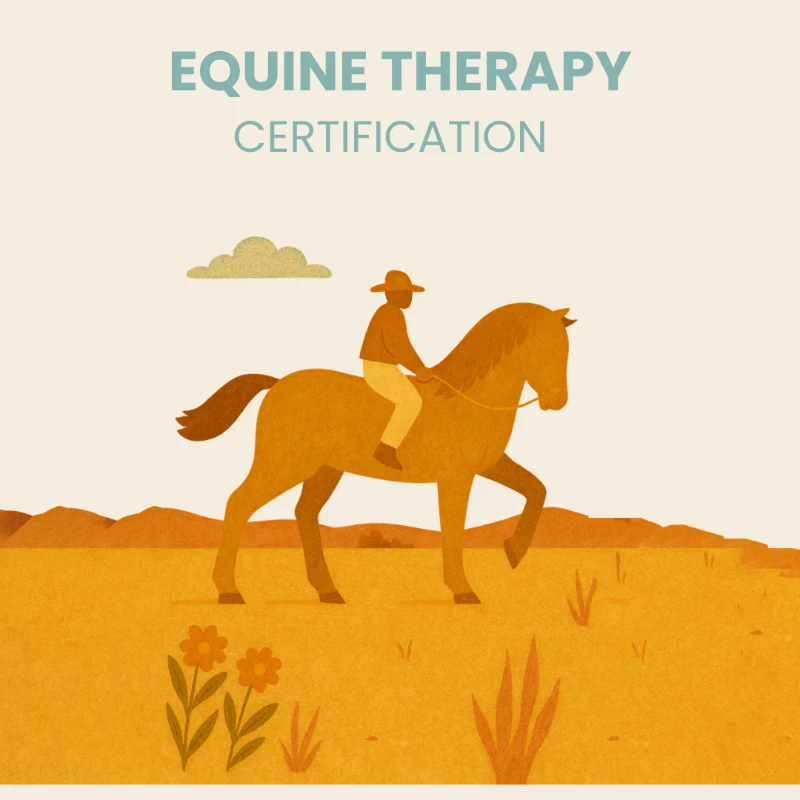
Explore Equine Therapy Certification
Build consent-based, welfare-centered sessions with the Equine Therapy Certification.
Explore Equine Therapy →