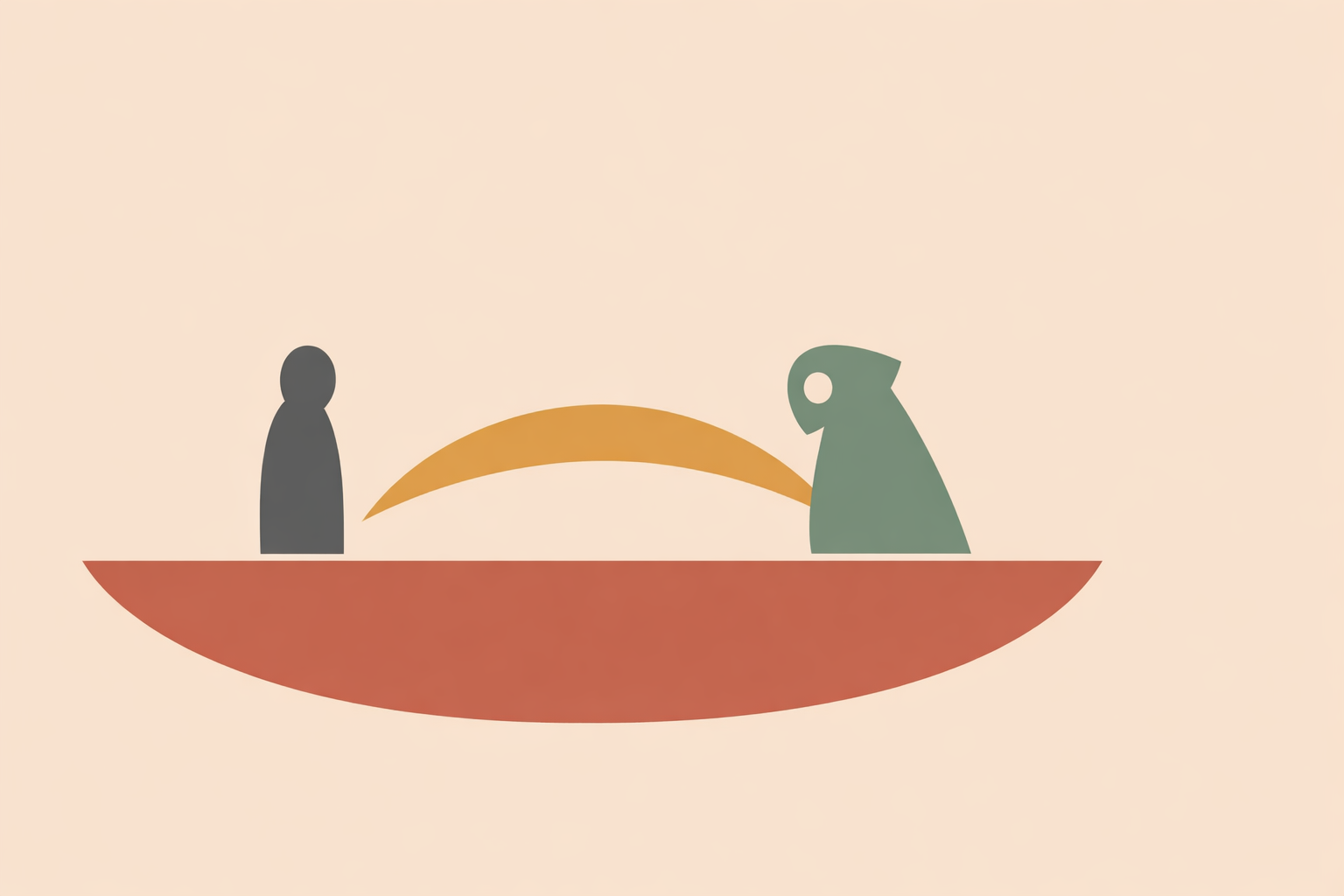
In interspecies work, it’s easy to feel pushed toward translation. Clients ask what the owl “said.” Social feeds reward close-up clips. New AI demos can make it tempting to believe every call is waiting to be decoded. Under that pressure, intuition gets packaged as literal sentences, and steady fieldcraft can slide into pursuit: stepping closer, replaying sounds, staying longer than the moment invites.
That rarely leads to deeper listening. More often, it increases disturbance, muddies interpretation, and weakens trust in the work.
There is a steadier path. Credible shamanic animal communication with wild allies is relationship-first, ethics-forward, and carefully documented. Telepathy can be held as a personal, experiential pathway. Behavior and habitat remain the ground truth. Bioacoustics and AI can support listening without becoming authorities. The aim stays practical: let the practice improve human choices for animals and landscapes, rather than turning wildlife into a stage for dramatic “messages.”
Key Takeaway: Shamanic animal communication with wild allies is strongest when it prioritizes relationship, ethics, and disciplined listening over literal translation. A grounded practice pairs observation with felt sense, treats non-interference as the ethical baseline, uses bioacoustics and AI as listening aids rather than authorities, respects each species’ sensory world, and applies clear discernment so projection does not lead the session. The measure of a good session is not how intense the impression feels, but whether your behavior becomes more respectful, more precise, and more supportive of the wider living community.
Ethics and non-interference come first
When relationship is the center, non-interference becomes the baseline. Wild-ally practice isn’t about securing contact at any cost; it’s about protecting autonomy, habitat, and ease of movement before satisfying human curiosity.
Visible consent matters more than inner excitement. Behaviors such as alarm calls, withdrawal, a fixed stare, freezing, tail-flagging, or disrupted feeding all point to the same truth: you are too close, too loud, or too present. The ethical response is to increase distance or end the sit.
Picture a barred owl roosting in afternoon shade. The impulse is to step closer, send a greeting, take a clip, or wait for something mystical to happen. The cleaner choice is to step back at the first posture change, soften your presence, and leave without asking the owl to accommodate you.
Helpful field rules:
- Do not pursue: no following, baiting, calling, replaying sounds, or trying to secure a response.
- Let observation be enough: sometimes the most respectful session is silent presence at a distance.
- Do not confuse reaction with permission: a response does not equal a desire for engagement.
- Protect cultural integrity: do not borrow ceremonies, titles, or cultural forms that are not yours to use.
Clear language with clients supports this standard and ethical boundaries: “We won’t call, feed, or close distance for this session. If the animal changes posture or stops feeding because of us, we step back or leave.” That phrasing turns intuition into responsibility.
Bioacoustics and AI can support listening
Modern tools can widen perception without replacing discernment. A recorder, hydrophone, or passive sound station helps you notice patterns that live hearing misses, especially at dawn, dusk, underwater, or across longer spans of time.
Used well, they can mean less disturbance than repeated close approach. Autonomous recorders, underwater microphones, and environmental arrays allow monitoring with minimal human presence.
AI also has a place, kept in proportion. Current systems can group similar calls across very large audio archives, which can reveal recurring patterns, seasonal shifts, or activity windows a human listener could miss. That is valuable support. Meaning and intention still require context, lived relationship, and careful language.
A practical discipline is to pair one observational note with one intuitive note after a short passive recording. For example: “05:42—seven chirp-buzz calls moving east to west. Intuitive: tension along the boundary, like a stretched cord.” The record stays honest while still honoring subtle perception.
Sensory humility deepens intuitive work
A common misstep in wild communication is assuming other beings perceive as humans do. Sensory humility corrects that. Each species lives in its own world of emphasis, timing, and signal.
Many animals rely more on odor, vibration, air pressure, or faint sound than on visual drama. When intuition arrives as a bright internal image, it’s worth checking whether that image belongs to the species, or to a human mind translating too quickly.
Contemplative discipline helps here. Let impressions arrive as texture, rhythm, spacing, and atmosphere. Some practitioners describe this as multisensory transmission: posture, distance, sound, scent, substrate, and mood arriving together as one field of meaning.
It also helps to keep clean boundaries around the stories told about subtle channels. Some species are sensitive to magnetic or electromagnetic cues in navigation. That doesn’t establish human-to-animal messaging through those fields. Keeping that distinction clear supports both spiritual integrity and practical credibility within science-based practice.
Try a simple exercise with a familiar wild neighbor over several visits:
- On one visit, attend mainly to body lines and path choices.
- On the next, soften visual focus and notice wind, odor, and distance.
- On the third, listen for tiny changes in sound, ground vibration, and pauses.
Then record the intuitive impression in those terms rather than as human dialogue. The notes tend to be less dramatic, and more faithful.
Discernment keeps intuition honest
Intuition is welcome in this work. Discernment is what keeps it grounded, useful, and trustworthy.
A reliable method is to separate what you observed from what you inferred and from what you felt intuitively. A simple four-part note can do that:
- Observed: what happened plainly and externally.
- Possible meaning: one or two grounded interpretations.
- Intuitive impression: the symbol, sensation, or inner image.
- Confidence and alternatives: how certain you are, and what else may explain it.
For example: “Doe steps onto trail and freezes, head high. Possible meaning: assessing scent and sound before crossing. Intuitive: a vertical ribbon of alertness. Confidence: low; could also be responding to hikers behind me.” That record leaves room for spirit and revision.
Emotional intensity is another cue. Awe, grief, fear, or a rescue impulse can signal a higher chance of projection. When emotion spikes, slow down, write more, and interpret less. Strong feeling does not automatically mean clear perception.
Language is part of discernment too. Helpful phrases include:
- “I observed …”
- “One possible explanation is …”
- “I can’t determine intent from this alone.”
- “My intuitive impression is personal and unverified.”
This wording doesn’t weaken the work. It makes your boundaries visible, which supports trust.
What respectful wild-ally sessions look like in practice
A good session is measured less by how dramatic the impression feels and more by how respectfully you behave. In mature practice, the session changes the human more than the animal.
Before you go
- Set a simple intention: listen well and do no harm.
- Check seasonal sensitivities such as nesting, denning, migration, or rearing young.
- Choose optics over proximity.
- If you record, use passive methods rather than playback.
On site
- Choose a respectful vantage point and settle yourself before you begin.
- If the animal reacts to your presence, you are too close.
- Wildlife agencies define disturbance in terms of human presence changing movement, use of space, or behavior.
- For larger mammals, keep generous space. In many protected areas, guidance for bears and wolves is 100 yards, with even more care around young and in sensitive seasons.
Listening process
- Write the observational note before the intuitive one.
- Invite impressions in sensory terms such as pressure, scent, rhythm, direction, or texture.
- Mark confidence and alternatives every time.
- If emotion surges, pause interpretation and return to plain noticing.
Aftercare and reciprocity
- Avoid sharing nest, den, or roost locations publicly.
- Let your session lead to a practical give-back: habitat care, quieter behavior, local stewardship, or community education.
- Use soundscape journaling to note recurring calls, silences, time-of-day shifts, and changes in behavior after human activity or other disturbances.
Consider a simple composite example. A fox family denned near a bike path begins drawing crowds. Rather than seeking a close spiritual encounter, you choose a pre-dawn sit from a distance, with no lights and no calls. You observe two kits playing and one adult positioning upwind. Your intuitive note stays modest: “Alertness braided into the air near the bins.” The useful outcome isn’t a quote from the foxes. It’s organizing a cleanup and encouraging neighbors to secure trash, giving the family a quieter edge to live along.
Closing perspective on shamanic animal communication
The real turning point isn’t a gadget, a dramatic impression, or a claim of proof. It’s a posture. Strong wild-ally practice braids spiritual listening with ecological awareness, clear boundaries, and behavior that animals don’t have to work around.
In practice, that means more patience, more distance, and better records. It also means resisting the urge to turn every encounter into a message for humans. Tender forms of practice, including post-mortem communication, can be honored as personal meaning-making rather than presented as certainty for others.
At its best, this path benefits animals by guiding humans toward wiser choices for the wider household of life. That’s where shamanic practice becomes credible: in how respectfully it shapes the way you listen, speak, and act.
Hold the work this way and wild beings remain fully themselves. That, more than any translation, is what makes the relationship worth keeping.
Explore Animal Communication Certification
Build ethical, observation-based communication skills in the Animal Communication Certification.
Explore Animal Communication →