Most practitioners already teach breathwork and grounding. In session, people often settle well enough. Then real life resumes: an inbox ping, a tightening jaw, a rush of urgency, and the old pattern returns.
The issue is rarely willingness. More often, people need a repeatable way to shift attention and respond differently under pressure.
Self-hypnosis fills that gap when it’s taught as a practical skill rather than something mysterious. In its simplest form, it combines focused attention, believable suggestions, and a clear return to ordinary awareness. That gives clients something they can use between sessions, in the moments that actually test them.
Key Takeaway: Self-hypnosis is most useful when taught as a structured, portable skill people can practice on their own. A simple three-session progression works well: first map one real stress pattern and teach a gentle induction; then add an anchor, imagery, and rehearsal for a specific trigger; finally, co-create a short script and a realistic routine. The aim is not dramatic trance but steadier choice, better self-awareness, and more carryover into daily life.
Why self-hypnosis belongs in stress support
Self-hypnosis earns its place in holistic work because it trains attention on purpose. When someone can enter a focused state deliberately, they can redirect attention, settle their stress response, and rehearse a wiser next step while the pressure is still manageable.
From a traditional perspective, this territory is familiar. Many ancestral systems have long shaped shifts in awareness through rhythm, breath, repetition, prayerful language, and guided imagery. The words change across cultures; the human capacity is the same.
Seen that way, self-hypnosis simply gives structure to skills many practitioners already value: focusing awareness, easing unnecessary tension, choosing helpful inner language, and returning fully to the present afterward.
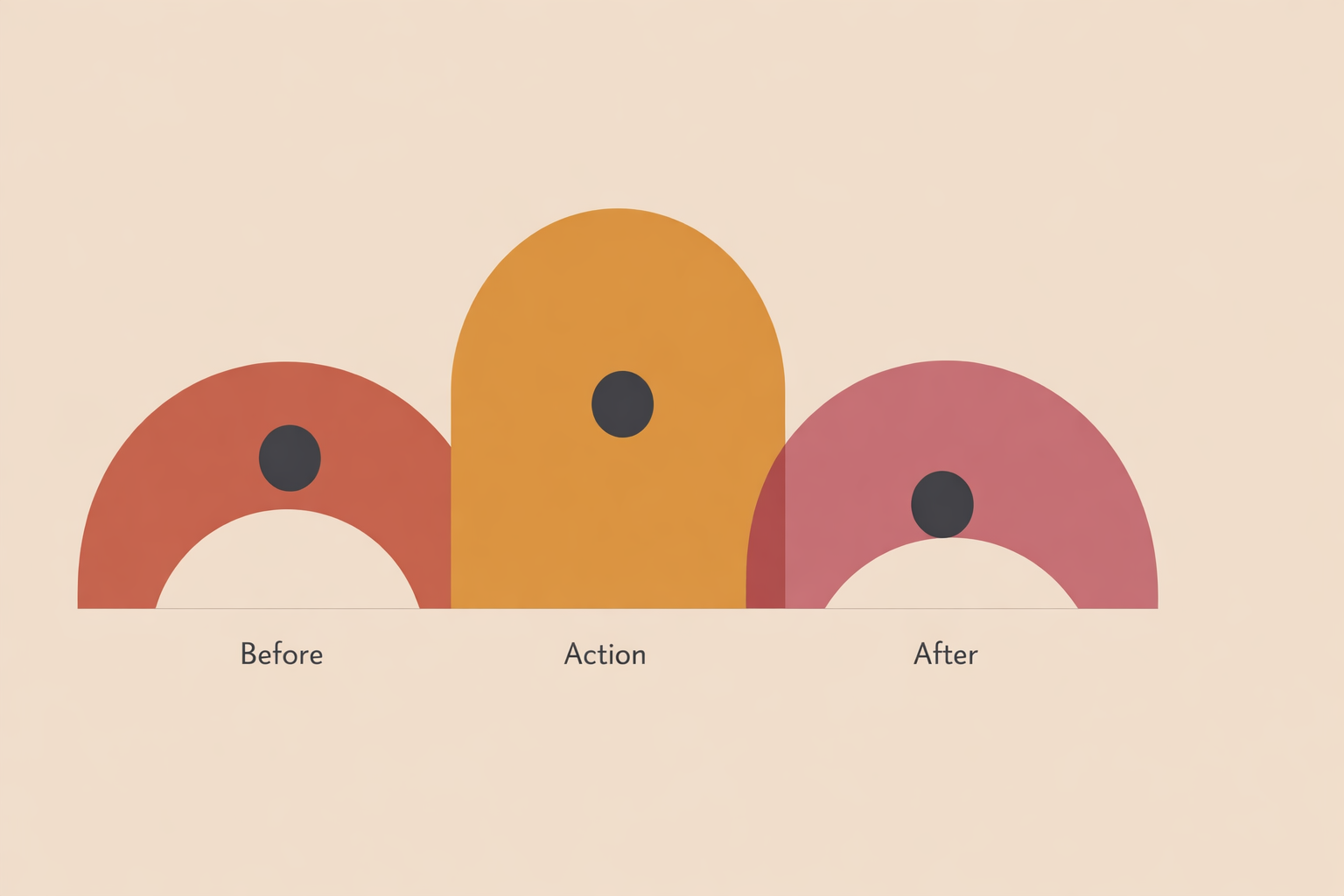
In everyday life, the payoff can be refreshingly small and realistic. A person notices the first “tell,” uses an anchor, takes one fuller breath, and chooses one clear action instead of reacting automatically. That’s often enough to change the next few minutes.
Start with one real stress pattern
Before any trance work, make the stress pattern visible. That keeps the practice grounded and gives the client something concrete to change.
Choose one recurring situation and map it in plain language:
- What is the trigger?
- What meaning appears first?
- What changes in the body?
- What happens automatically next?
- What response would better match the person’s values?
A simple example:
- Trigger: inbox notification
- First meaning: “I’m behind”
- Body sign: jaw tightens, chest feels hot
- Automatic response: rush to reply, skip lunch
- Preferred response: pause, prioritize, answer clearly after one breath
Then set a baseline. A 0–10 rating for overall stress this week, and another for that specific trigger, is usually enough. Keep it reflective rather than heavy; you’re creating a reference point.
Identify the earliest “tell,” too. For one person it’s a throat catch. For another it’s raised shoulders or a clenched belly. That first sign becomes the cue to practice.
Before moving on, agree simple conditions for home practice: quiet space, supported posture, minimal interruptions, and no driving or other hazardous activity during practice.
Session 1: teach a gentle first experience
The first session should feel light, clear, and unforced. The goal is a first experience of focused absorption and a clean return to ordinary awareness.
It helps to normalize the experience using everyday absorbed states: getting lost in a page, listening to rain, or arriving somewhere familiar with only partial memory of the journey. From there, explain that self-hypnosis is participatory. People remain involved throughout.
A simple frame works well: find a comfortable position, soften the gaze or close the eyes if that feels right, and treat suggestions as invitations rather than commands.
For induction, keep it uncomplicated:
- Let the breath settle into an easy rhythm.
- Move attention gently through the body.
- Notice the forehead, jaw, shoulders, hands, belly, hips, legs, and feet.
- If an area does not soften, simply notice it without pushing.
Then narrow attention to one steady point: the air at the nostrils, the weight of the hands, or the contact of the feet with the floor. Offer a few process-based phrases that fit the stress map:
- “I notice pressure sooner.”
- “One breath opens a little more choice.”
- “My next step can be clear and kind.”
Close carefully. Reorientation matters just as much as induction:
- Notice the room again.
- Feel the support underneath the body.
- Deepen the breath.
- Move fingers and toes.
- Open the eyes when ready.
For home practice, keep expectations modest. A brief daily routine is enough at the beginning. Ask for a short practice and one line of reflection afterward, such as “shoulders softened by the third breath” or “mind wandered, then came back.”
Session 2: add anchors and imagery
Once the first experience feels familiar, link it to a real-life trigger. This is where self-hypnosis becomes portable.
Return to the stress map, choose one predictable situation, and add two elements: a physical anchor and a believable piece of imagery.
An anchor can be very simple:
- thumb and finger touching
- palm on the chest
- feeling both feet on the floor
The important point is repetition. Over time, an anchor becomes more reliable through practice, and repeated sessions help the skill settle.
Choose imagery that fits the person, not a stereotype. Some people like a safe place. Others respond better to a steady porch at dawn, a quiet path, a favorite chair, a remembered song, or the felt sense of standing upright and resourced. Keep it sensory and believable.
Inside a light trance, rehearse a short sequence:
- Notice the trigger arriving.
- Spot the first body sign.
- Use the anchor.
- Take one easy breath.
- Feel the feet or the support beneath the body.
- Choose one useful action.
Keep suggestions flexible. A phrase like “I can make room for discomfort and still respond with care” is often more workable than a rigid promise to stay calm no matter what. The aim is more choice.
For the week ahead, tie practice to real life: when the trigger appears, use the anchor and take one breath before acting. A two-word note afterward is enough to keep learning honest.
Session 3: co-create a short script and routine
By the third session, most clients have enough familiarity to practice more independently. Now the work gets simpler: co-create a short script in the person’s own voice and shape it into a routine they can sustain.
A good script is brief, believable, and specific. It can follow this basic structure:
- Permission: “I choose a few minutes to focus, and I can stop anytime.”
- Settling: “My breath finds an easy rhythm.”
- Focus: “Attention rests on the feeling of breathing.”
- Deepening: “Background sounds can fade behind my focus.”
- Stress cue: “When the email ping comes, I notice my jaw sooner.”
- Response: “Thumb to finger, one breath, feet supported.”
- Near-future rehearsal: “I see myself pausing before I reply.”
- Return: “Awareness widens, eyes open, energy comes back.”
Tune every line until it feels true. If “shoulders soften” feels exaggerated, change it to “shoulders soften a notch.” If imagery doesn’t land, use posture, sensation, or a few plain words instead. The script should sound like the client, not like borrowed language.
Then turn it into a realistic rhythm. A simple routine might include:
- one sentence of intention
- a brief settling phase
- two or three realistic suggestions
- one short rehearsal of a likely stress moment
- a full reorientation
- one line of reflection
Keep it modest enough to last. Many people do better with something brief and repeatable than with an ambitious plan they abandon. At-home practice has been associated with lower perceived stress over time, which fits what traditional skill-building has always taught: small, regular repetitions change the nervous system’s habits.
A micro-plan often works well:
- weekday mornings: 5–10 minutes in the same chair
- midweek: one 60-second anchor rehearsal
- end of week: two-sentence reflection on what changed
If they miss a day, the practice resumes the next day. Familiarity grows through repetition, not through perfection.
Safety, ethics, and scope
Self-hypnosis is best taught inside clear boundaries. That means transparent communication, respect for autonomy, and an honest understanding of what the practice is for.
Start with informed choice. Explain what the exercise involves, what it may feel like, and that the person can pause or stop at any time. Ethical guidance consistently emphasizes respect for autonomy and clear consent.
It’s also wise to check suitability. If someone describes active crisis, overwhelming inner material, or concerns beyond everyday stress support, pause and encourage them to seek appropriately qualified support. Some public guidance notes hypnosis may be unsuitable for some people.
During practice, keep language non-coercive and straightforward. If discomfort appears, stop the exercise and reorient fully: open the eyes, name visible objects, feel the feet, move the body, and return to the room. Possible adverse reactions are uncommon but worth naming clearly.
Common obstacles are usually simple to work with:
- “I don’t feel hypnotized.” Response: focus on one small change rather than depth.
- “I can’t relax.” Response: relax less; attend more.
- Suggestions feel vague. Response: make them concrete and situational.
- Imagery does not click. Response: switch to posture, sensation, or a physical anchor.
- Eyes closed feels uncomfortable. Response: keep a soft open gaze.
- The ending feels abrupt. Response: build in a longer reorientation.
Brief notes after practice help, too. A short record of what happened keeps the work grounded in lived experience and gives you something real to review together.
Teaching self-hypnosis as an ongoing skill
A three-session arc is often enough to give clients a usable foundation: map one stress pattern, learn a gentle induction, connect it to anchors and imagery, and shape it into a short personal routine. The result is portability.
That matters because stress rarely arrives in ideal conditions. It shows up in meetings, messages, parenting, commuting, and the few quiet minutes before sleep. A compact self-hypnosis practice gives people something they can carry into those moments.
Adapt the framework to the person and the cultural context with care. If someone resonates with rhythm, prayerful language, or traditional imagery, those elements can be woven in respectfully. If they prefer plain language and minimal ritual, keep it spare. Either way, the heart of the practice stays the same: focused attention, believable suggestions, and enough repetition for the skill to become familiar.
Teach it kindly, keep it grounded, and let the practice deepen at its own pace. For practitioners building broader hypnotherapy and NLP skills, the day-to-day tone still stays practical: small steps, practiced often, create lasting change.
Train in Professional Hypnotherapy
Build practical self-hypnosis skills further with the Professional Hypnotherapy Certification.
Explore Professional Hypnotherapy →