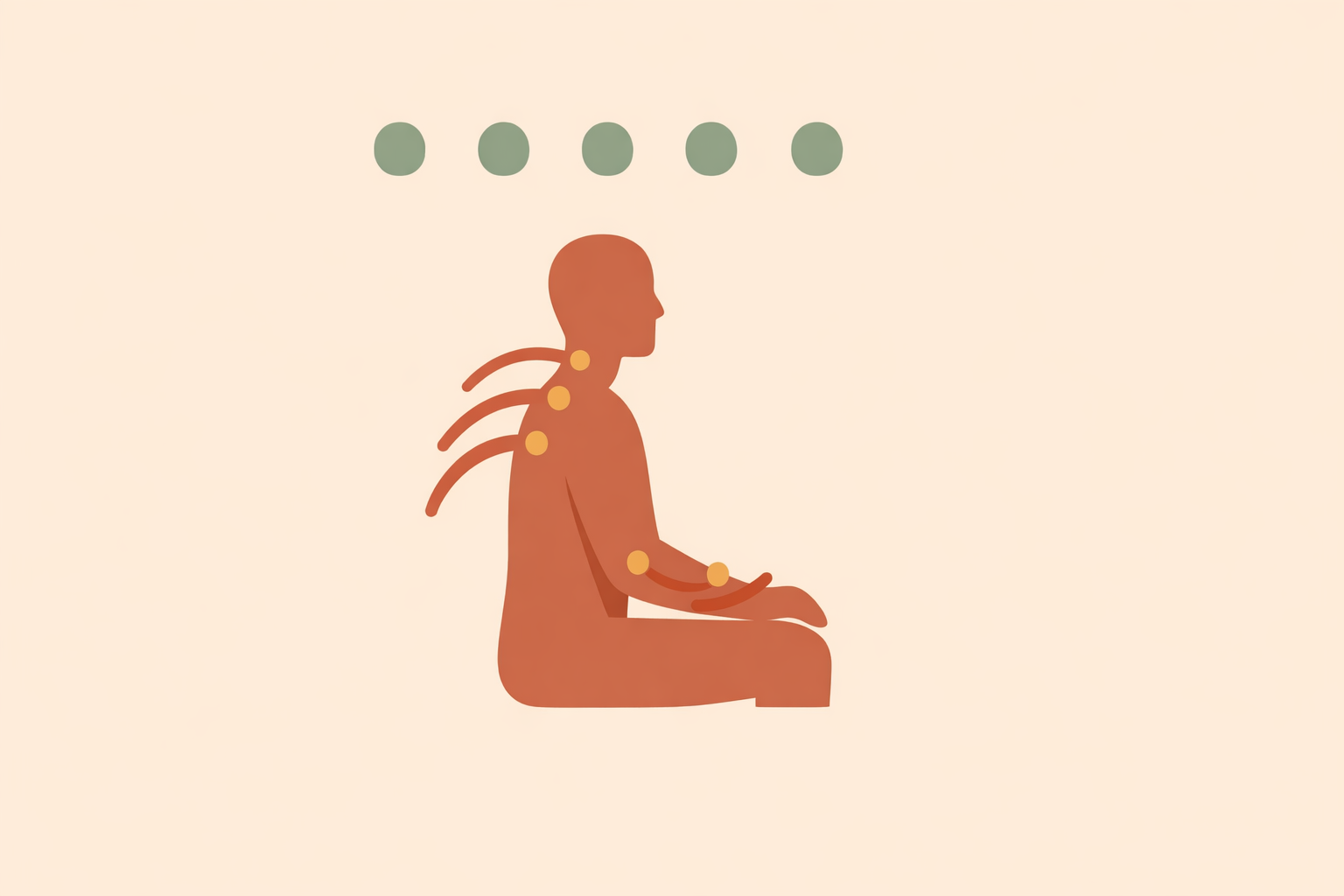
Desk-based practitioners and office teams often reach late morning with the same pattern: the neck feels compressed, the forearms feel tight, and attention narrows. A long stretch after work or an occasional bodywork session can feel supportive, but it doesn’t do much for what builds up between calls, screens, and keystrokes. What works better is a rhythm you can keep: brief Tui Na resets woven into the day, so Qi and Blood keep moving while you work.
The most sustainable approach stays simple. Instead of waiting for tension to peak, use a handful of light touch-and-movement sequences in small windows across the day. Even 8 minutes spread out can be enough to noticeably improve how you feel. The emphasis is consistency, comfortable pressure, and a cadence that fits real working life.
Key Takeaway: Desk-friendly Tui Na works best as a series of short micro-breaks rather than one catch-up session later in the day. A simple 5–15 minute rhythm spread across login, mid-morning, after lunch, mid-afternoon, and wrap-up can help ease accumulated tension, support posture awareness, and make self-care realistic enough to keep.
A Simple 8-Minute Tui Na Day Rhythm
Start with this realistic rhythm tomorrow. Total time: about 8 minutes across the day.
- On login (60–90 seconds): Tap the scalp with loose fingertips, sweep the forehead, then circle the temples three times while softening the jaw. Quietly note your starting point: “Neck 4/10 tight.”
- Mid-morning (2 minutes): Press and release Jian Jing (GB21) for 5 slow breaths per side, then roll the shoulders forward and back 6 times. Let the collarbones widen.
- After lunch (2 minutes): Rub from the index finger up the outer forearm to the elbow along the Large Intestine line, 6 strokes per side. Finish by opening and closing the hands 10 times.
- Mid-afternoon (90 seconds): Make gentle seated hip circles, 6 each way, then palm-rub the lower back until warm.
- Wrap-up (90 seconds): Roll the foot on a ball or water bottle, then press He Gu (LI4) for 3 breaths per side to help the day settle downward.
What You May Notice Right Away and Over Time
Right after the routine, many people notice warmth, more space through the neck and shoulders, and easier breathing. Short movement breaks are also linked with less discomfort during desk work.
With a few weeks of steady practice, the shift often feels deeper. Many people notice better ease in upright sitting, fewer surprise tight spots, and a calmer baseline as tissues and habits adapt. At that point, the routine tends to feel less like an interruption and more like everyday support.
Keep the Feedback Loop Light
You don’t need a tracking system. A quick weekly check keeps things clear.
- On Monday, rate neck and upper-back ease from 0 to 10.
- Check again on Friday.
- Add one sentence: “Most helpful move this week: forearm line after lunch.”
This keeps the routine personal, practical, and easy to refine.
How to Make the Habit Stick
The easiest routines are anchored to things you already do.
- Rename calendar alerts: “Qi check” every 90 minutes.
- While tea steeps: do temple circles.
- After each meeting: do shoulder rolls and one point press.
- Use short internal cues: “Soften jaw,” “Breathe into the back ribs,” “Down through the feet.”
When prompts live inside your existing schedule, the practice becomes part of your environment rather than another task to remember.
Support the Routine with Qi Gong and Chinese Dietetics
Tui Na often works best when external techniques and internal practices reinforce each other. If you’d like, add 1–3 minutes of gentle Qi Gong or explore broader Traditional & Eastern Medicine: standing shake-outs, spinal waves, or a soft chest-opening sequence. There is also added support reported when Tui Na is paired with simple movement rather than used alone.
You can also support the day with traditional food-based choices: warm lunches, room-temperature water during work hours, and a lighter evening meal. In Chinese dietetics, these habits are commonly used to support smoother digestion, steadier energy, and a less burdened feeling by night.
Safety Boundaries for Self-Massage at Your Desk
Two boundaries keep this practice grounded and effective: stay comfortably within your range, and avoid working directly into irritated areas.
- Keep pressure comfortable, ideally around 5/10 pressure: It should never feel sharp or make you brace or hold your breath.
- Avoid direct pressure on bruised areas: inflamed areas, or varicose areas.
- Pause if tingling or numbness: persists during or after the practice.
Tui Na is about listening clearly enough to work with the body, not forcing it.
A Practical Traditional Chinese Self-Care Rhythm
With time, these seven moves can become a shared language between your hands, your posture, and your attention. You start noticing where things collect, what releases quickly, and which moments of the day most need support. That’s what makes this approach so workable: it’s rooted in tradition and flexible enough for modern desks, modern schedules, and a wider Traditional & Eastern Medicine self-care rhythm.
Practised consistently, it becomes quiet, meaningful daily support—respectful of lineage and realistic for busy lives, while gradually reshaping how your workday feels from the inside.
Build TCM Foundations
Connect your daily Tui Na rhythm to core theory with Traditional Chinese Medicine Foundations.
Explore TCM Foundations →