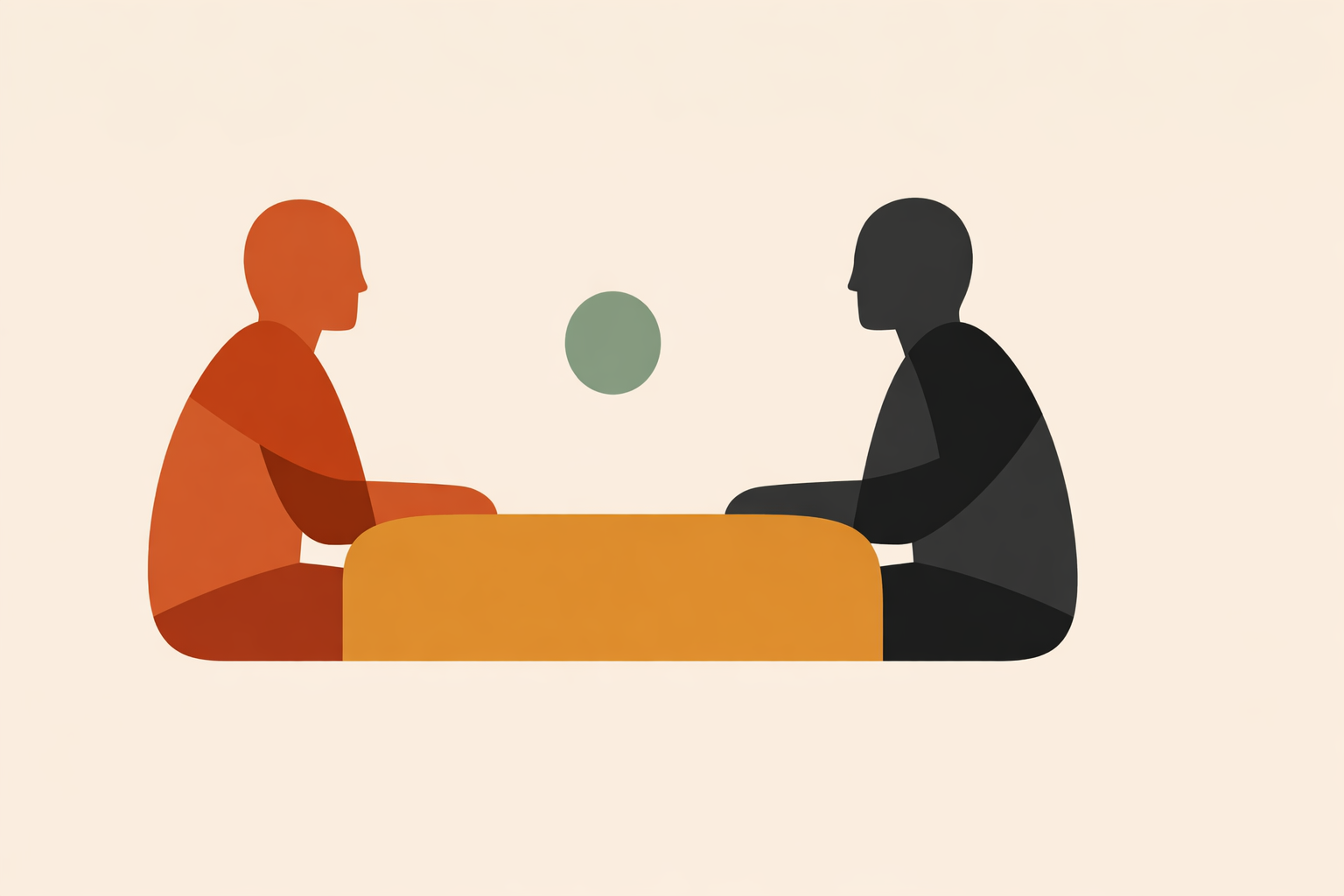
Many art life coaches let a parent stay in the room for reassurance, comfort, or simple convenience. It can feel easier in the moment. Yet the atmosphere often changes quickly: the young person looks to the parent before making a choice, the art starts to feel performative, and the closing conversation drifts toward evaluation instead of reflection. A small accommodation can quietly reshape power, privacy, and purpose.
Parent presence works best as a deliberate ethical choice, not a default courtesy. When you design it with care, you can welcome family support without losing the young person’s voice.
Key Takeaway: Parent presence changes the creative and ethical terrain, so it needs clear design. Decide whose session it is, set roles and boundaries in writing, explain confidentiality in plain language, match the parent’s role to the goal, protect privacy during art-making, handle artwork and journals carefully, and share only proportionate updates. This keeps family inclusion supportive while safeguarding the young person’s autonomy.
Step 1: Decide Whose Session It Is
Before materials come out, decide who the work is for. Is the client the young person, the parent, the family unit, or a blend? When that stays vague, boundaries and expectations tend to wobble later.
Put the agreement in writing in plain language. A brief contract is often enough, as long as it’s clear. Consider including:
- who the client is
- the session goal
- whether the parent is in or out of the room
- what confidentiality means here
- how updates will be shared
- how artwork, journals, and photos are handled
- what happens if a safety concern arises
With minors, requirements vary across countries and custody arrangements. Custody issues and local rules can affect authorization, disclosure, and privacy decisions.
It also helps to separate guardian authorization from the young person’s willing participation. With minors, consent and assent are not the same thing. A parent may authorize participation, while the young person still needs real room to agree, decline, pause, or request private time within appropriate limits.
A visible one-page agreement can work especially well with younger clients. Simple icons for listening, privacy, photos, breaks, and sharing choices make boundaries concrete.
- Useful line: “Ava is the client today. Dad is here in a support role. Ava can ask for private time, pause an activity, or choose what gets shared at the end.”
Step 2: Explain Confidentiality in Plain Language
Confidentiality should feel understandable, not intimidating. The goal is to support trust without promising total secrecy.
Young people engage more openly when the boundaries are clear. When those boundaries are skipped or fuzzy, many start self-editing, negotiating, or performing.
Keep the explanation straightforward: most of what is shared stays private, but some information may need to be passed on if someone’s well-being or safety is at serious risk. It helps to outline:
- what stays private
- what may be shared in summary form
- what must be shared if safety is involved
- who information could be shared with if needed
You can say: “Most of what you say and make stays here. If I become seriously concerned about your safety or someone else’s, I may need to share some information with the right person. If that happens, I’ll explain what I can.”
When possible, let the young person shape end-of-session sharing. Choice protects honesty, even when parents stay involved overall.
- Offer a closing option: summary only, selected piece, or no sharing today.
- Let the young person choose whether to share a title, a theme, or nothing from the artwork itself.
- Keep the agreement consistent so trust can build over time.
Step 3: Give the Parent a Specific Role
If a parent stays, define their role rather than letting it float. Vague presence often turns into hovering, monitoring, or subtle steering.
The right role depends on the goal and the young person’s developmental stage. Guidance supports shaping participation and information-sharing to fit developmental level and circumstance.
Possible roles include:
- quiet observer
- materials helper
- supportive listener at the close only
- co-creator for a relational activity
- participant in the opening and closing, but not the making
Be precise about what each role means. “Quiet observer” can include no commentary, no interpreting, no photos, and no directing. If the goal is relational, co-creating can be deeply supportive. If the focus is identity exploration, grief, or boundaries, privacy is often the better container.
Role cards can keep things practical and kind. A short prompt for the parent may be all that’s needed: observe quietly, notice effort rather than outcome, and save reflections for the final minutes.
- Useful script: “Noah asked for you to stay because it helps him settle. During the art-making, your role is to watch quietly and let him lead. We’ll bring you in at the end for one supportive reflection.”
Step 4: Protect the Young Person’s Voice While They Create
The most important boundary work often happens during the making itself. This is where a young person either feels free enough to explore or starts editing themselves.
Watch for small signs that the space is tightening:
- covering the page
- changing an image right after a parent comment
- asking repeatedly whether the work is “good”
- waiting for approval before choosing colors or symbols
When you notice it, return agency to the young person with open, non-directive language:
- “You decide what this image means.”
- “You can share as much or as little as you want.”
- “You can keep this part private.”
- “Let’s hear your view first.”
If parent presence can’t change, build small pockets of privacy inside the session. A folded journal page, a “show/don’t show” tray, headphones for a guided reflection, or a parallel task for the parent can preserve autonomy without conflict.
Across many cultures and lineages, creative practice has long served as a respectful way to express what’s hard to say out loud. Privacy protects the conditions that let meaning emerge in its own time, especially in creative and expressive therapies.
Step 5: Handle Artwork, Journals, and Notes With Care
Creative work needs thoughtful handling. A parent’s authorization for participation does not automatically mean open access to everything a young person makes or writes.
Professional guidance distinguishes general participation updates from private process material, depending on applicable law. In that sense, parental authorization does not grant blanket access to all private materials.
That applies to drawings, journals, collage pages, audio reflections, and photos of artwork. Decide early:
- who keeps the artwork
- whether it can be photographed
- whether it can be displayed or used for teaching
- how digital files are stored
- who may view it later
Journaling often needs the strongest privacy. Unless the young person chooses to share a passage, it’s usually best handled as private process material, especially when writing is raw, emotional, or unfinished.
Many adolescents prefer that parents don’t receive detailed accounts of their inner experience. One study found that parents generally knew the young people were attending, but often did not know session details.
A simple policy helps everyone relax: artwork belongs to the creator, and sharing requires their permission unless a serious safety concern shifts the boundary.
- Useful policy line: “We do not photograph, share, or display your work unless you agree, except where a serious safety concern requires limited sharing.”
Step 6: Update Parents Without Handing Over the Inner World
Parents usually need some sense of how things are going. Young people need to know that support does not mean full exposure. You can hold both.
Share progress in terms of goals, themes, and next steps rather than giving a detailed account of every image, symbol, or disclosure. This keeps parents included without turning the space into surveillance.
Useful updates might include:
- today’s focus
- what skill or theme was explored
- what seemed supportive
- what could help at home
- what the next session will build on
For example:
- Today’s focus: noticing early signs of overwhelm
- What helped: slow mark-making and color-based grounding
- Helpful support at home: ten quiet minutes after school
- Next step: building a personal calm card
This approach keeps updates practical while protecting the symbolic and emotional depth of the work itself.
Step 7: When Consent, Culture, and Safety Pull in Different Directions
Sometimes the real challenge is less about whether a parent should be present and more about what to do when values collide. A parent may insist on access. A young person may refuse. Cultural expectations may lean toward family transparency. A piece of art may raise concern.
In these moments, a steady process helps:
- Return to the original agreement.
- Clarify what the young person wants.
- Consider the family’s cultural context without assuming one right model of support.
- Check your legal and ethical responsibilities.
- Choose the least intrusive step that still protects well-being.
If a serious safety concern emerges, act calmly and proportionately. Share only what is necessary through the appropriate channel, and avoid exposing more of the young person’s inner material than the situation requires.
You can say: “Your journal is private. I can share today’s focus and what would help at home. If something comes up that makes me seriously concerned about safety, I’ll explain what needs to be shared and why.”
This protects trust while keeping the door open for family collaboration.
Closing Perspective
Working with young people and parents in the same orbit calls for steadiness rather than rigidity. Family presence can be supportive when the space is designed clearly enough that support doesn’t become pressure.
The essentials stay consistent: decide whose session it is, set roles in writing, explain confidentiality plainly, match parent participation to the goal, protect the young person’s voice during the making, handle creative work with care, and share updates that inform without exposing. Done well, the space remains respectful for families and genuinely empowering for the young person, so creativity can do what it has always done in traditional practice and in art life coaching: give form to inner experience and help it move forward.
Explore Art Life Coach Certification
Deepen your boundaries and confidentiality skills with the Art Life Coach Certification.
Explore Art Life Coach →