Teen sessions often begin with forms, signatures, and a quiet nod. All the while, the teen is deciding whether this space feels safe enough to be real—or whether it’s easier to agree and keep things moving.
In the arena, horses need steadiness and clear signals, and so do young people. Assent can appear and disappear mid-activity: a step toward the horse, then a freeze or step back.
In equine-assisted work with teens, consent is best understood as a spoken, revisitable, embodied agreement. Paperwork can support that agreement, but it never replaces it.
When consent is made practical in real time, teens are more likely to stay engaged, feel respected, and build genuine confidence alongside the horse.
Key Takeaway: Teen consent in equine-assisted work is most effective when it’s practical, embodied, and revisited throughout the session. Clear previews, repeatable check-ins, honest safety language, meaningful choices, and respect for both teen and horse boundaries help autonomy stay real as emotions and pacing shift.
Explain the session in words teens can actually feel
Teens usually settle more easily when they know what the session will look like. Start with a concrete preview: many equine-assisted sessions begin on the ground, and riding may or may not happen.
You might say: “Today could include watching the herd, grooming, leading, or learning how horses show comfort and discomfort.” When the plan is clear, a teen can make real choices instead of guessing what they’re agreeing to.
It also helps to explain why horses—directly and respectfully. Building trust with a large, sensitive animal can be deeply empowering for teens. In one qualitative program report, adolescents described how horse work helped them build confidence and find their voice.
Many practitioners also notice that teens leave feeling steadier and more able to communicate. Youth equine program research has reported better communication after structured horse-based participation, which fits what many facilitators observe over time.
Equine-assisted programs also commonly see shifts in self-worth and social awareness. One adolescent study found higher self-esteem alongside stronger perceived social support after participation.
And it’s worth naming the edges with kindness and honesty: this work is relational, experiential, and developmental. It’s not a quick fix, and it’s not a crisis resource. Being straight with teens tends to build trust—not reduce it.
Wyatt Webb puts it simply: equine work is “a way to become more self-aware… emotion and cognition, undefined and unexplored, drive every decision you make.”
- What we do: groom, lead, observe, breathe, notice.
- Why horses: they respond clearly, and they ask for honesty.
- What this space is: a place to practice awareness, boundaries, and confidence.
Talk about safety and horse boundaries without overpowering choice
Teens don’t need safety language watered down. They need it delivered calmly, clearly, and with dignity. Horses are large, fast, sensitive animals—barn rules matter. Choice does too.
Clear structure usually supports autonomy because it makes the environment predictable. Closed-toe shoes, quiet movement, and asking permission before entering certain spaces make more sense when framed as shared responsibility rather than control.
Just as importantly, teach the teen how to read the horse. Basic cues like ear position, tail swishing, tension, and moving away are widely recognized as meaningful safety signals in handling.
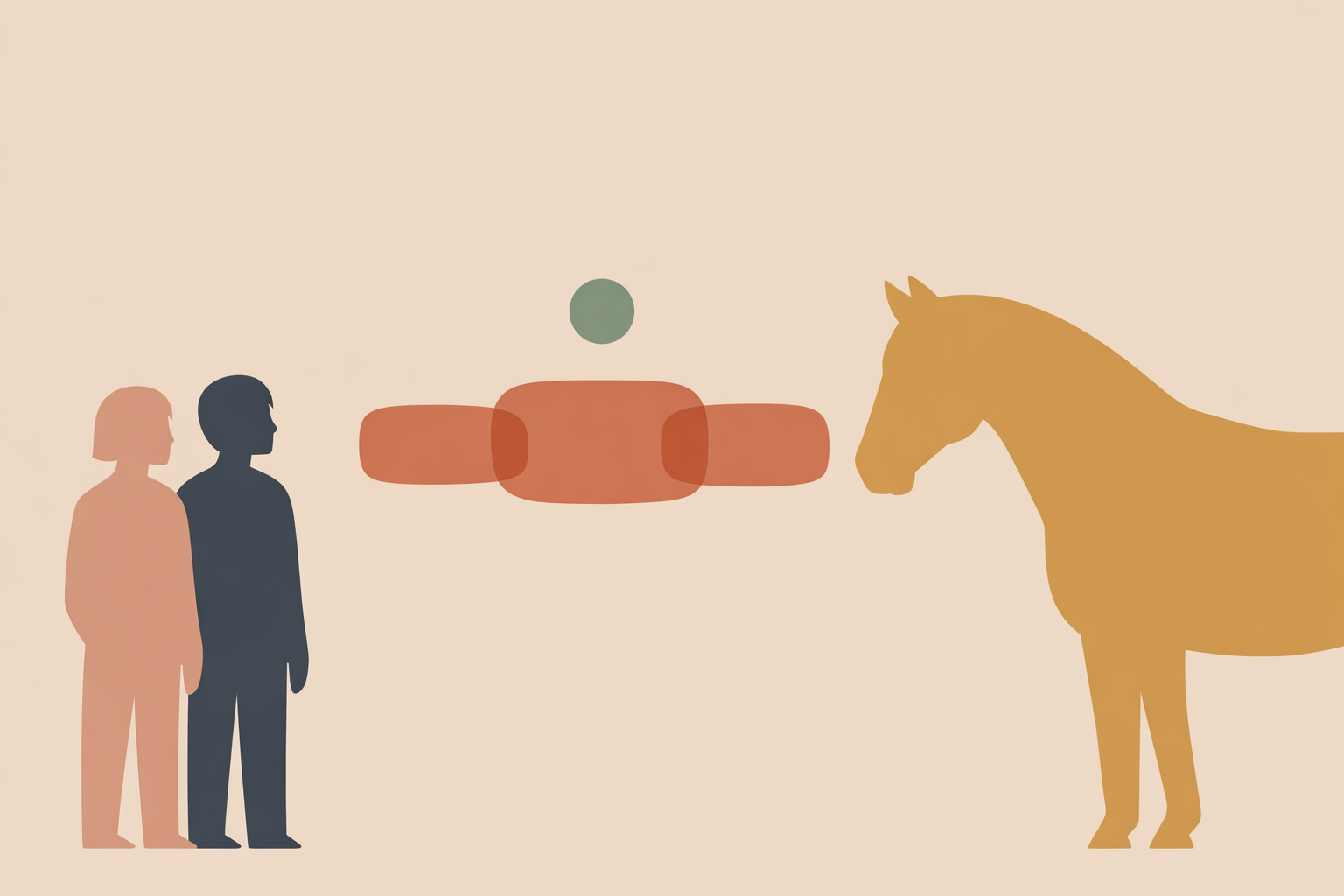
When a teen truly understands that the horse can also say “no,” boundaries stop feeling like punishment and start feeling relational. Put simply: we listen to both bodies. When the human slows down, the horse often softens—and that felt lesson tends to stick.
Keep pairing safety with options:
- “You can say slower, farther, pause, or not today.”
- “We listen to your body and the horse’s body.”
- “Rules keep everyone safer; choices keep participation real.”
Be clear about privacy, limits, and caregiver communication
Teens often open up more when privacy is explained plainly, including what stays private and what may be shared. Adolescent guidance consistently notes that explaining limits can help young people feel safer speaking honestly.
Use simple language: “What you share here is private. If I become seriously concerned about safety, I may need to involve other adults. If that happens, I want to involve you in how we say it.”
That clarity matters as much as warmth. Teens settle in faster when they know where the edges are.
With caregivers, a practical balance usually works best: share logistics, attendance, and broad goals while keeping personal details private. This is less about secrecy and more about protecting a workable space for honest reflection.
- “Caregivers usually get logistics and broad updates.”
- “Personal details stay with you unless there is a real safety concern.”
- “If something needs to be shared, we talk about the words first.”
Make consent physical: touch, distance, and riding choice
In equine-assisted sessions, consent isn’t only verbal. It lives in the body: how close someone stands, whether touch is welcome, and whether riding is wanted at all.
Preview touch before it happens. If hands-on guidance might be needed, say so early and ask first—surprise is what erodes trust. For example: “If I need to steady your leg or adjust something, I’ll ask first. You can say no, and we’ll try another way.”
It also helps to say clearly from the start that riding is optional. Teens can do meaningful work without ever mounting. The EAGALA model describes a non-riding approach centered on on-the-ground interaction.
That one statement can unlock genuine participation. Some teens want to watch first. Some prefer grooming. Some are ready to lead but not ride. Some may never want to ride and still do rich work with the horse.
Distance options are especially useful:
- watch from outside the fence
- stand nearby without touching
- offer one brief touch
- move into grooming or leading
These graded choices keep consent alive rather than forcing an all-or-nothing yes.
Adapt consent for trauma, neurodiversity, and different communication styles
Real consent is flexible. It meets the nervous system in front of you rather than expecting every teen to show readiness the same way.
For autistic and neurodivergent teens, simple supports can make consent far more accessible: a quiet corner, time to observe, choices around texture and gear, and a visual schedule showing what’s next. In horse-based work with autistic youth, predictable structure has been associated with reduced anxiety and stronger engagement.
Refusal also needs to be genuinely available. Pediatric guidance on assent emphasizes that respect dissent where feasible, including when a child shows it nonverbally.
So a head shake, a step back, a palm-out gesture, silence, looking away, or an AAC-based response may all be meaningful communication—and should be treated that way.
For teens who mask, freeze, or people-please, a wider choice set often works better than a direct yes-or-no. “Yes / no / not today / maybe later” lowers pressure and makes “no” easier to reach.
It can also help to practice refusal language with alternatives. Research on adolescent skills training suggests refusal skills can strengthen with practice—another reason to rehearse short, usable phrases in the barn where it feels real.
- “No thanks, let’s groom instead.”
- “Not today, but I can watch.”
- “I want farther away first.”
Use repeatable consent rituals throughout the session
Consent holds best when it’s brief, visible, and repeated. Instead of one big conversation at the start, use small check-ins at natural transition points.
That might look like this:
- Arrival: “Do you want to watch, groom, or just meet the horse from a distance today?”
- Before approaching: “Closer, same distance, or pause?”
- Before touch: “Okay if I help here?”
- Before a new activity: “Do you want more of this, less, or something different?”
- Before riding: “Do you want to ride, stay on the ground, or decide later?”
- Closing: “What, if anything, feels okay to share with your caregiver?”
These rituals protect autonomy and teach a repeatable experience of boundary-setting. Over time, many teens begin to notice their body sooner, use clearer language, and trust that “no” will be heard.
Honoring teen autonomy in equine-assisted spaces is often linked with stronger agency and healthier coping. In a qualitative adolescent program, participants described a stronger sense of self and new coping strategies through their work with horses.
Make consent part of your horsemanship
Consent with teens isn’t separate from horsemanship—it’s part of it. When you explain the work clearly, pair safety with real choice, respect the horse’s signals, and keep checking in as the session changes, the whole space becomes steadier.
That steadiness is often where confidence grows. Teens learn, in a felt and practical way, that their pace can be honored without losing connection—to you, to the horse, or to themselves.
Keep the process simple: explain, offer choice, notice body language, revisit, and adapt. Let consent be as alive as the session itself.
Strengthen Equine Therapy Consent
Build consent-led, safety-aware sessions in Equine Therapy Practitioner that respect teen and horse boundaries.
Explore Equine Therapy Practitioner →