


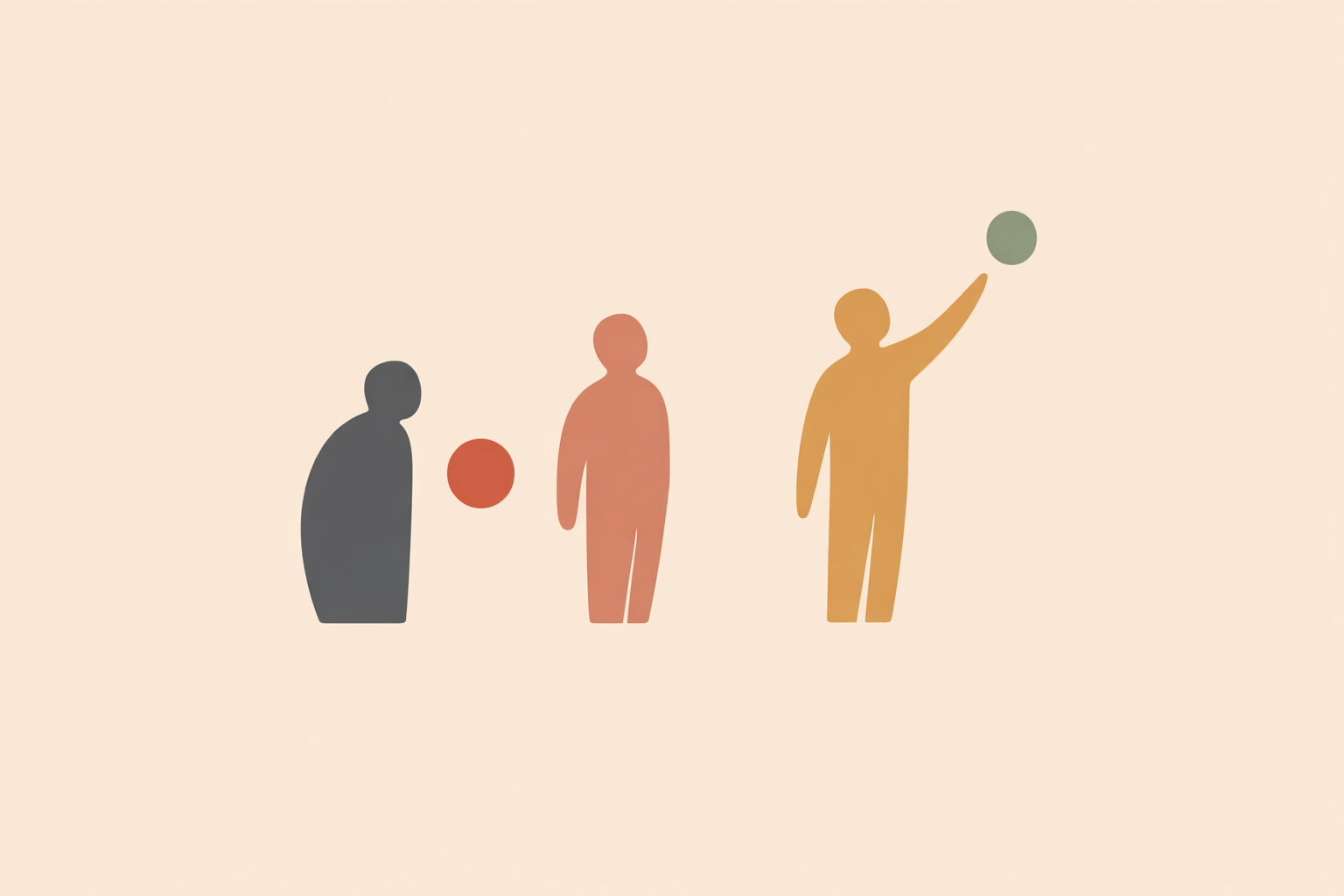
When a session suddenly tilts—your client fixates on your tone, loses the thread, or snaps into a quick defense—the reflex is to explain more or push for clarity on the spot. Usually that adds strain to a mind already juggling stress, working memory, and perspective-taking. The moment escalates while everyone feels they’re “trying.”
What helps most in that window is a compact ritual you can run in seconds: slow the pace, make meaning explicit, and agree on one simple next step. Done well, it protects dignity, restores understanding, and keeps the work grounded in coaching, education, and well-being support.
You don’t need a dramatic intervention. You need a steady rhythm that reduces overload and gives both people something clear to hold onto.
Key Takeaway: Social cognition stalls are best handled with a repeatable three-move repair ritual that lowers load, surfaces meaning, and produces one memorable next step. First, slow the moment so cognition can catch up: spot overload, create a brief non-blaming pause, reassure safety, reduce load, and avoid stacked questions or labels. Next, make hidden meaning visible with observation–interpretation–emotion–request, ask directly for the other person’s view, and account for cultural and neurodiversity differences. Finally, turn clarity into action through one small step, four implementation questions, external supports, simple rituals, and firmer boundaries when needed.
Move 1: Slow the moment so understanding can catch up
When a conversation goes sideways, the first job isn’t persuasion. It’s regulation. Slow things down enough for thinking to come back online for both of you.
Social cognition is the mental process of reading context—tone, intention, and “what’s happening here?” Under pressure, that process gets noisier. Research on acute stress links stress with reduced working memory and cognitive flexibility, which fits what you see in real life: people lose the thread, go reactive, and struggle to shift perspective.
When overload rises, extra explanation rarely helps. Long speeches, rapid-fire questions, sarcasm, and emotionally loaded labels increase demand and prolong the stall. In tense moments, fewer words usually land better.
What a stall can look like in real time
- Arousal-driven stall: the person becomes highly sensitive to tone, threat, or implied criticism, and settles once the interaction feels safer.
- Executive-load stall: the person loses track, answers too fast, or can’t sort the discussion until it’s simplified.
From the outside, both can look like resistance. More often, the pace has outrun the person’s processing capacity.
A brief pause helps because it creates processing room. In conversation, pause judgments vary by speaker and situation, which is why speed alone is a poor yardstick for social competence. Traditional listening practices have honored this for centuries: one voice at a time, a breath between speakers, and silence before decisions.
How to create a regulating pause without sounding punitive
Keep it short, visible, and non-blaming. You’re not withdrawing. You’re steadying the exchange.
- “Let’s slow this down for ten seconds so I can really hear you.”
- “I want to understand. Give me one main point, and I’ll reflect it back.”
- “I’m here with you. I want to get this right.”
You can also lower load with a small physical reset: one breath, one note on paper, or asking for the single most important point first.
Example: in a tense planning conversation, someone keeps repeating, “That’s not what I meant.” Instead of explaining again, you pause and say, “Give me ten seconds. I’m going to write what I think I heard.” Then you reflect one line: “Your main point is that each task needs one clear owner.” Often, the nervous system settles enough to continue.
Avoid the moves that add heat: stacked questions, sarcasm, “Why are you so defensive?” or “Calm down.” Those lines rarely create clarity.
Once the moment is slower, you can move from reaction to meaning.
Move 2: Make hidden meaning visible
Many practitioners bring warmth and empathy, yet stay vague about impact. Repair gets easier when both people can see what happened, what meaning was made, and what’s being asked next.
A reliable structure is observation–interpretation–emotion–request.
- Observation: what happened that a camera could have recorded.
- Interpretation: the meaning you made from it.
- Emotion: how that meaning landed in you.
- Request: a clear, doable ask for next time.
This works because people are often less accurate than they assume when guessing intent. A practical correction is to ask directly for the other person’s view rather than building the whole conversation on inference.
It can sound like:
“When the email reply was just ‘K.’ (observation), I told myself you were annoyed and done with the project (interpretation). I felt tense and rushed (emotion). Next time, could you add one short line so I know where we stand? (request)”
Now the other person can confirm or correct: “I was commuting and in a rush—not annoyed. Next time I’ll write, ‘Got it, more later.’” You’re no longer arguing about tone; you’re verifying meaning.
Culture and neurodiversity change how behavior reads
Eye contact, pause length, directness, gesture, humor, and expressiveness don’t carry one universal meaning. Communication norms vary across cultures, and neurodiversity also shapes how people signal attention, respect, and comfort.
Ethical work asks, “What does this behavior mean for this person?”
Example: a teenager looks away while speaking. Rather than labeling it, you might say: “I notice you look away when you’re thinking. I’ve been telling myself this topic may feel uncomfortable. I want to go at a pace that works for you. What would help?” The answer might be straightforward: “Looking away helps me focus. Can we do one question at a time?”
As meaning becomes visible, defensiveness often eases because the conversation stops guessing and starts confirming.
Useful lines to keep ready
- “Here’s what I saw.”
- “The meaning I made was ___. Did I get that right?”
- “I felt ___, and I’m asking for ___ next time.”
- “What did you mean from your side?”
Move 3: Agree on one simple next step
Insight is valuable, but it’s easy to lose once emotions fade. When understanding improves, turn it into one small, specific action that both people can remember.
Vague aims like “communicate better” are hard to practice. Planning research supports tying goals to concrete actions and cues; specific behaviors are easier to follow through on than broad intentions.
A quick planning check is four questions:
- When will we do this?
- What cue will remind us?
- What could make it difficult?
- What is our backup plan?
Example: after a tense team exchange, two colleagues agree on one new step: “Before replying, we each reflect the other person’s main point in one sentence.” Then they make it real:
- When: during the Wednesday check-in.
- Cue: an agenda line that says “One-Sentence Reflect.”
- Difficulty: rushing.
- Backup plan: a short message template: “I hear your main point as ___. Did I get that right?”
External structure supports follow-through because it lowers the load on memory and attention. written prompts and other supports do a lot of quiet work in the background.
Many practitioners also ritualize the step: a cue phrase like “Yellow Light,” a repeatable closing sentence, or a shared recap after a hard moment. Traditional systems have long used simple, repeatable gestures and phrases to mark transitions and anchor memory. The principle is the same: make the pattern easy to recognize and repeat.
Keep the step visibly small:
- “One example, then one question.”
- “Two bullets, not a paragraph.”
- “One breath before reply.”
Small steps compound through repetition. In habit research, repeated practice is associated with lasting behavioral change.
Alongside repair, keep boundaries clear. Some dynamics require firmer lines, better documentation, or choosing not to continue the exchange in the same way. These tools support collaboration; they are not an obligation to stay in harmful patterns.
Conclusion: A simple repair ritual for tense conversations
When a conversation wobbles, think rhythm rather than rescue:
- Slow the moment.
- Name what happened and the meaning made from it.
- Agree on one small next step.
This keeps your work grounded in supportive observation rather than judgment. It helps you notice overload early, reduce friction, and guide the interaction back toward understanding without overreaching your role.
It also encourages a more mature reading of behavior. Social competence can’t be judged reliably by eye contact alone or by verbal speed and confidence. Cultural norms, masking, and neurodiversity can all make outward behavior a misleading shortcut. Curiosity is usually the better guide.
These three moves are simple, but they’re not shallow. They echo old communal wisdom: pause before reacting, speak meaning plainly, and mark agreements in a way people can actually carry into the next moment.
With time, that steady rhythm often turns a stall into something workable: a moment to breathe, speak truth kindly, and choose one promise both people can remember, with support from neuroscience and brain health approaches when that broader lens fits your work.
Explore Neuropsychology Certification
Deepen your repair skills with brain-based insight in the Neuropsychology Certification.
Explore Neuropsychology Certification →










