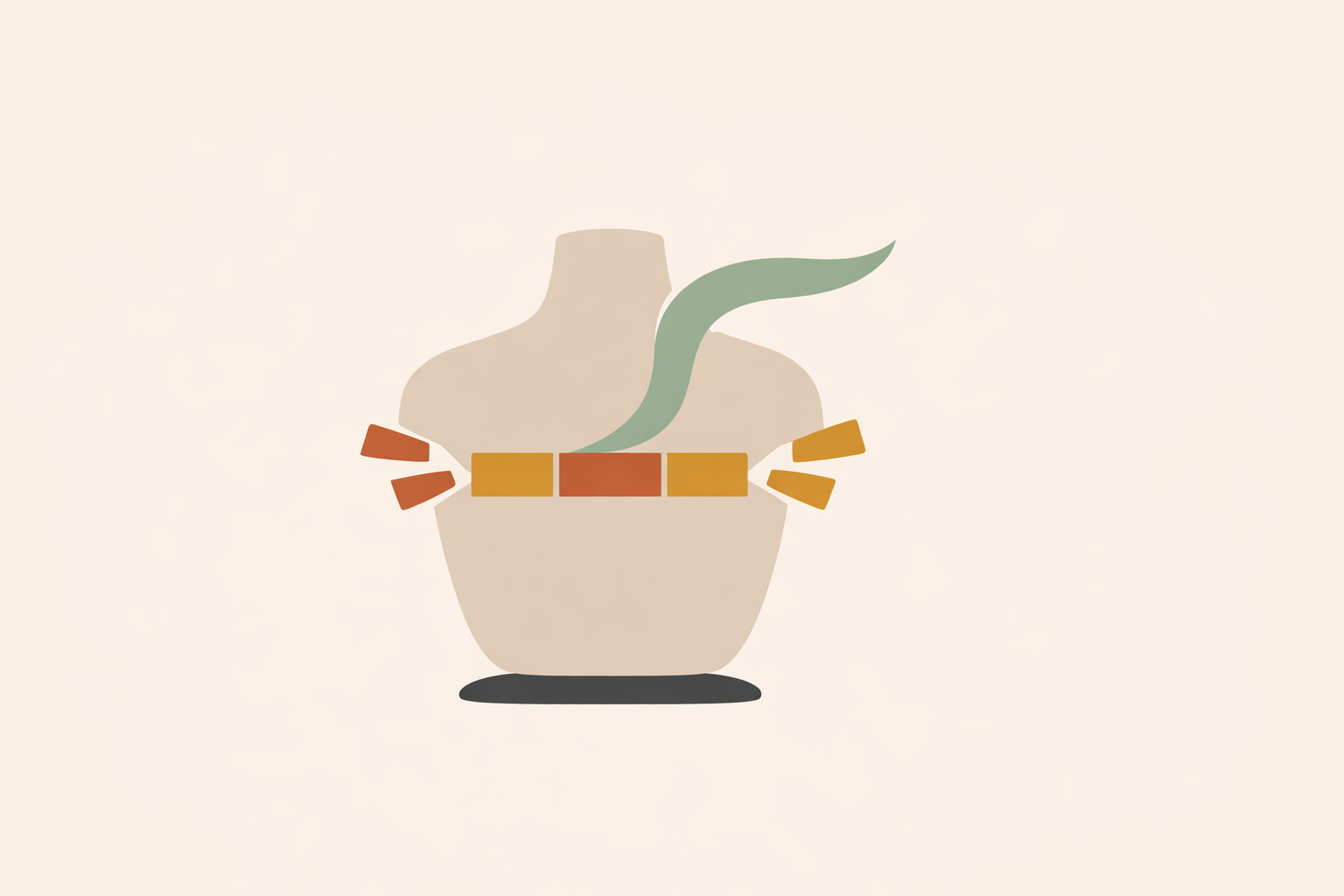
Qi stagnation is one of the clearest Traditional Chinese Medicine (TCM) patterns to explain, because many people recognize it as soon as they hear it. Energy is present, but it isn’t moving smoothly. Rather than feeling depleted, someone often feels pent up: tight through the chest or ribs, prone to sighing, emotionally bottled, or uncomfortable in ways that worsen with stress and ease with movement.
Key Takeaway: Qi stagnation is best understood as energy that is there but not flowing well. In practice, it often shows up as tightness, fullness, irritability, variable digestive tension, and a sense of being emotionally or physically “stuck.” A clear explanation, paired with simple supportive practices like movement, breath, touch, and steadier rhythm, helps people relate the pattern to lived experience without overcomplicating it.
How Qi stagnation often feels in the body
Qi stagnation tends to be very recognizable in the body. Common experiences include a band-like feeling around the ribs, a full or tight chest, pressure in the upper abdomen, a lump-in-the-throat sensation, or discomfort that moves rather than staying fixed.
Frequent sighing fits strongly here. Traditional observation sees sighing as the body’s spontaneous attempt to free constrained chest Qi and create space.
Another hallmark is how changeable it can be. Discomfort often comes and goes, flares with stress, and improves once there’s some release.
Many practitioners also notice how quickly the rib-sides respond to gentle attention. Pressing or softly rolling the rib-sides often feels relieving, and Tui Na–style self-massage of the rib-sides or chest is used for the same reason: to restore a sense of openness where things commonly feel congested.
The emotional side of Qi stagnation
Qi stagnation isn’t only physical. Emotionally, it often feels like suppressed momentum: frustration, irritability, mood swings, resentment, inner pressure, or a “stuck” low mood can all fit the pattern.
In TCM, emotions and Qi movement reflect one another. When life pressure builds and expression narrows, Qi commonly loses its smoothness. When Qi feels constrained, emotions can also feel harder to process, so the pattern often loops.
Modern reviews echo parts of this picture, including positive correlations between qi stagnation and qi deficiency, and an association between qi-stagnation constitution and depressed mood. Traditional pattern language already captures the lived reality: “stuckness” is often emotional and physical at the same time.
A useful way to explore it with someone is to ask: where does pressure build, and what helps it discharge? Often the answers are practical and specific, like tightness before meetings, jaw tension on the commute, irritability after feeling overcontrolled, or relief after movement, tears, a walk, or an honest conversation.
Why Liver Qi stagnation is such a central pattern
When TCM talks about stagnation, it often returns to the Liver system. Traditionally, the Liver is associated with the smooth coursing of Qi. When pressure, frustration, or internal constraint disrupts that smoothness, the pattern is often described as Liver Qi stagnation.
This also explains why the chest, rib-sides, and upper abdomen show up so often. These are common places where people feel “compression” when life gets too tight, and it’s why emotional strain and physical tension are frequently discussed together.
Traditional teaching has long linked stress-related disruption of Liver smoothing with digestive unease. Contemporary discussion reflects this as well, noting that emotional stress can interfere with Liver function in the TCM sense and contribute to emotional and physical signs. In everyday terms, this can look like appetite changes under pressure, a tight chest that makes eating less comfortable, or an unsettled upper abdomen when someone is holding too much together.
Seen this way, the pattern holds together: pressure rises, movement narrows, the ribs and chest tighten, digestion becomes more variable, and the mood becomes more irritable or constrained.
Qi stagnation vs. Qi deficiency
This distinction helps beginners tremendously: Qi stagnation and Qi deficiency are different patterns.
Qi stagnation means there is energy, but it’s not moving well. Qi deficiency means there isn’t much in the tank to begin with.
- Qi stagnation: tightness, fullness, distending discomfort, irritability, frequent sighing, feeling better after stretching, walking, or emotional release.
- Qi deficiency: tiredness, low drive, softness rather than pressure, low resilience, and a stronger need for rest than movement.
People also commonly show a combined picture: low reserves, plus constraint. Tension sits on top of tiredness, and everyday stress lands harder than it used to. TCM-oriented research has also described correlated patterns between qi stagnation and qi deficiency, matching what many practitioners observe.
A practical clue is response to movement. Feeling clearer after a brisk 10-minute walk often points toward Qi stagnation. If movement quickly wipes someone out and they need to recover, Qi deficiency is more likely. It’s a guide, not a rule.
Everyday examples people recognize quickly
Qi stagnation becomes easiest to grasp when it’s connected to ordinary life.
Work stress is a classic example. Someone spends hours containing themselves through messages, deadlines, or interpersonal strain, and gradually develops a held-breath feeling in the chest, neck, and upper abdomen. By evening they feel wound up, but not truly energized.
Digestive tension under pressure is another. In TCM, stress-related Liver smoothing disruption can contribute to appetite changes, reflux, or looser stools as signs of stagnant Qi. Many practitioners recognize the pattern quickly: when life becomes compressed, the middle feels less free.
Cycle-related change is also familiar. In people who menstruate, premenstrual breast tenderness, rib-side distension, a heavier or more irritable mood, and discomfort that eases once bleeding begins often reflect a pressure-then-release pattern associated with Liver Qi stagnation.
Heavy, greasy, very rich, or very late meals can add to the sense of blocked flow too. Traditional guidance often pairs emotional pressure with dietary heaviness because both contribute to internal congestion.
Simple ways to support stuck Qi
The most helpful supports are usually simple and repeatable. The aim is to invite movement, space, and rhythm back into the day.
- Move first. A short walk, side bends, shoulder opening, or gentle spinal rotation often shifts the feeling quickly. Qigong is widely used for the same reason: rhythmic movement that softens tension and encourages flow.
- Use the breath to create room. Longer, unforced exhales can help when the chest feels compressed. Three slow rounds is often enough to feel a change.
- Allow sighing instead of suppressing it. A deliberate sigh can support what the body is already trying to do.
- Add touch. Rib-side circles, sweeping across the chest, or gentle self-massage through the upper abdomen can restore a sense of movement.
- Keep meals lighter and steadier. When someone already feels congested, extra heaviness usually adds to the stuckness.
- Build regular daily rhythm. Consistent movement, breath, and structure help the body feel less “trapped,” which reduces stagnation over time and fits well with simple daily TCM habits.
The “Four Gates” acupressure pairing of LI4 and LV3 is also commonly taught to move Qi and ease stress-related tightness, especially in Liver patterns. As a general precaution, pregnant people are usually advised to avoid LI4.
Small shifts done regularly tend to help more than occasional dramatic effort. When someone catches the first signs of pressure and responds early, flow usually returns faster.
How to talk about Qi stagnation clearly and responsibly
A grounded explanation doesn’t need to be vague, dramatic, or overcomplicated. You can say:
“In TCM, Qi stagnation means energy is there, but it is not moving smoothly. People often feel this as tightness in the chest or ribs, frequent sighing, moodiness, digestive tension, or a general sense of being wound up. It is a pattern of imbalance, not a fixed identity, and it often responds well to movement, breath, touch, and steadier rhythm.”
That last point is worth emphasizing. Qi stagnation describes a state of constrained flow, and states can change. With practice, noticing what builds pressure and what brings release becomes one of the most valuable skills for working with this pattern and within Traditional & Eastern Medicine.
Study TCM Foundations
Connect patterns like qi stagnation to core theory in Traditional Chinese Medicine Foundations.
Explore TCM Foundations →