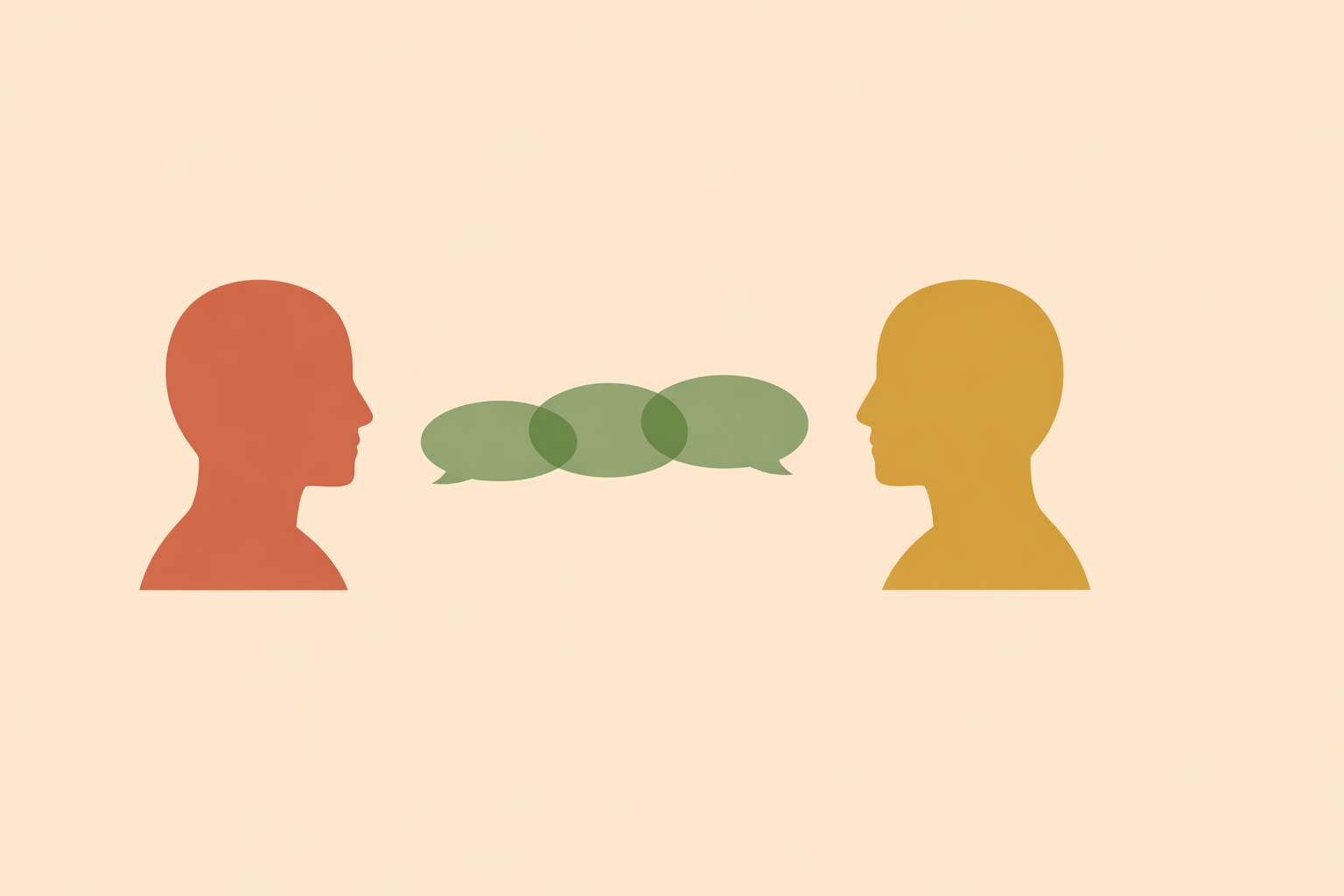
When verbal instructions start to slip, many practitioners instinctively add more words or ask, “Do you understand?” In busy, noisy, multi-speaker settings, that often adds pressure instead of clarity. People nod to keep pace, key steps get missed, and everyone ends up circling back.
The issue is rarely effort. More often, listening demand has outrun capacity. A better response is precise, steady language that lowers load, protects dignity, and improves how information is delivered.
This five-phrase sequence is built for exactly that. It helps you slow the stream, check what actually landed, match the format to the person, take pressure off memory, and support self-advocacy when real life gets loud or fast.
Key Takeaway: When verbal instructions slip, a five-phrase sequence can lower listening load and improve follow-through. First, name the load and slow the pace with short, chunked steps. Second, replace yes/no checks with a collaborative recap. Third, treat format as adjustable and ask how information lands best. Fourth, move plans out of memory and into simple written or visual supports. Fifth, prepare self-advocacy language for noisy or fast situations so clarity can travel beyond the session.
2. “Tell me what you caught so far, and we’ll fill in the gaps together.”
“Do you understand?” usually invites a polite yes, not a workable picture of what actually landed. A collaborative check-back is kinder and more accurate.
Use: “Tell me what you caught so far, and we’ll fill in the gaps together.” That one line protects dignity and makes repair a normal part of communication.
This aligns with common communication-support guidance: verify instructions, ask for repetition, and work from shorter chunks rather than trying to hold everything at once. The aim is usable clarity, not a memory test.
- Validate: “There was a lot in that.”
- Clarify: “Here are the two key pieces.”
- Offer support: “Want me to write it, or shall we do just the next step?”
If they return one part correctly, begin there and build forward. In groups, ask one person to summarize, then capture it where everyone can see it. Once it’s visible, the plan doesn’t depend on who caught which words.
3. “The format is the problem, not you—how do you prefer to receive information?”
After you’ve checked what landed, move to fit. Spoken language is only one channel, and it’s not always the best one.
Many people with auditory processing differences do better when spoken input is paired with visuals, writing, or demonstration. Support guidance commonly recommends written supports alongside spoken information, so the person has something stable to refer back to.
Try: “The format is the problem, not you. How do you prefer to receive information?” Then offer options: short notes, a quick diagram, or a demo.
Useful prompts include:
- “Do you want to see it, hear it, or do it?”
- “Would bullets help more than a paragraph?”
- “Should I sketch this while we talk?”
When someone names a preference, stick with it. Consistency builds trust, and clear delivery often settles the whole interaction.
4. “Let’s get this out of your head and into a simple written or visual plan.”
Once the format fits, make the plan visible. Externalizing steps reduces memory strain and gives everyone a shared reference point.
This is traditional human wisdom in action. Across cultures and generations, people have paired speech with gesture, marks, symbols, and shared routines when something matters and needs to be remembered. In coaching work, that might be a checklist, a sketch, a simple flow, or a captioned transcript.
Many people with listening challenges rely on captions, transcripts, or notes to reinforce spoken content. Support recommendations also include written instructions and other visual supports that keep the message available after the moment has passed.
- Create a short checklist while you speak.
- Use verbs at the start of each line: “Email,” “Book,” “Draft,” “Review.”
- Sketch a simple flow such as “Now → Next → Later.”
- Turn on captions or transcripts in meetings when possible.
- Capture decisions in a shared note before the conversation ends.
If you’re demonstrating a task, keep your language brief and point as you go. Seeing the steps while doing them often supports follow-through better than a long explanation.
At home, the same principle works beautifully: a simple routine chart, a five-step sketch by the door, or a shared morning checklist can ease repeated friction.
5. “In noisy or fast situations, it’s okay to ask: ‘Can we pause or put this in writing?’”
In a session you can shape the environment. Outside it, people have to navigate open offices, family dinners, classrooms, and crowded calls. That’s where self-advocacy makes the support portable.
Coach clear, respectful language for moments when auditory demand rises. Practical guidance often includes choosing quieter spaces, reducing noise, and getting key details recorded. Mayo Clinic advises important information in writing and reducing noise where possible.
- Noise or overlap: “One at a time helps me track this. Can we go in order?”
- Pace: “I want to get this right. Can you say that more slowly?”
- Format: “Can we pause and put the key steps in writing?”
These phrases work because they’re specific and non-confrontational. They don’t ask for sympathy; they ask for conditions that support success.
You can also help with simple planning: schedule important conversations in quieter rooms, choose calmer times of day, and reduce background noise when follow-through matters.
For children and teens, keep scripts short and repeatable: “Slower, please.” “Can you repeat that?” “Can we write that down?” In groups, an agreed hand signal for “slow down” or “write it” can help without interrupting the flow.
What progress often looks like
When these phrases become habitual, progress shows up in everyday function. Conversations need fewer re-explanations, handoffs get smoother, and end-of-day fatigue often softens.
Asking for clarity starts to feel normal. The aim is not to force one “right” way of processing; it’s to create conditions where the person can participate, respond, and follow through with more ease.
Closing perspective
Used in order, the sequence stays steady and practical: name the load and slow the pace; check what landed and repair together; find the best format; move the plan into view; then carry that clarity into daily life through simple self-advocacy.
Over time, this becomes more than a script. It becomes a respectful stance toward how listening changes with context, and a craft of adjusting delivery instead of pushing harder within neurodiversity and learning differences support.
Keep your scope grounded in communication support, environmental adjustments, and coaching around routines, clarity, and follow-through. If someone wants formal auditory assessment or assistive technology guidance, use appropriate local referral pathways and collaborate clearly with relevant specialists.
Like any good coaching craft, this approach deepens through repetition and real-world practice. The more consistently you notice overload and respond with clarity, the more naturally supportive communication becomes part of everyday life, including in auditory processing coaching and broader neurodiversity coaching.
Master Auditory Processing Coaching
Build these communication supports into practice with the Auditory Processing Disorder Coach Certification.
Explore APD Certification →