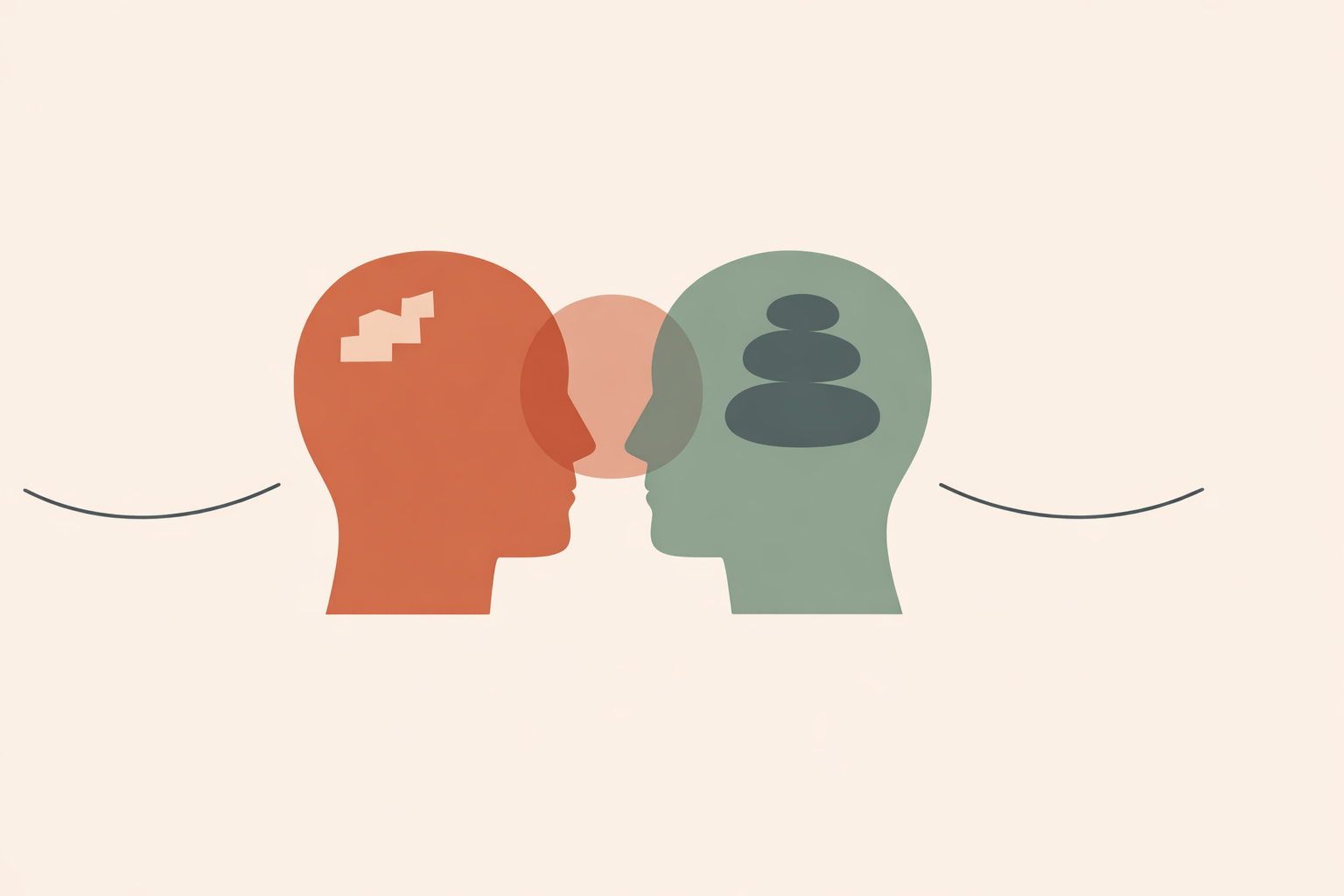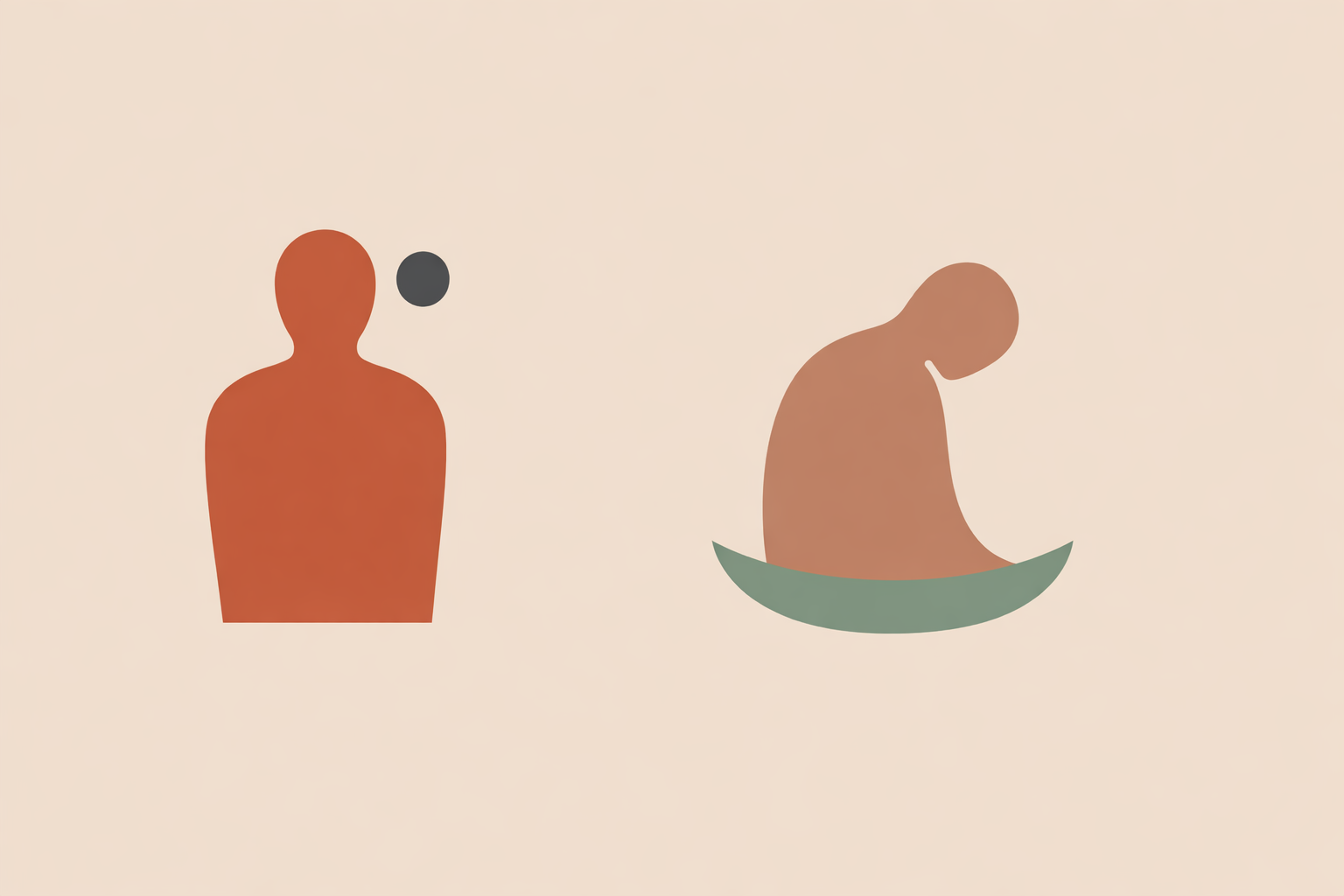
The pattern is familiar in practice: someone holds it together all day, gets through meetings, replies politely, looks capable from the outside, and then gets home and drops. Speech goes offline. Dinner becomes toast in silence. Evening plans disappear.
It’s easy for others (and sometimes the client themselves) to label this as weak boundaries or “just being tired.” More often, it reflects the hidden cost of masking in environments that demand constant social calibration, sensory endurance, and self-monitoring. When that cost stays invisible, evenings get set up to fail, and people end up blaming themselves for depletion they didn’t choose.
Key Takeaway: Evening collapses after a “successful” workday often reflect masking-related depletion rather than ordinary tiredness. Useful support starts by making the hidden load visible, then reducing demand at the source and protecting recovery with low-pressure transitions.
When the Workday Looks Fine but the Evening Falls Apart
A client can appear steady at 4 p.m. and still be wiped out by 7 p.m. That doesn’t mean the day was manageable. It can mean they spent the day paying the social and sensory cost of appearing manageable.
Masking often includes suppressing natural movement, rehearsing speech, forcing eye contact, monitoring tone, hiding confusion, and pushing through sensory discomfort. These strategies are frequently adaptive, especially where belonging, income, or safety feel at stake.
The crash is more than “feeling tired.” Work on autistic burnout describes sensory overload, withdrawal, reduced functioning, shutdown, and long recovery windows as part of the picture.
Ordinary fatigue tends to lift with rest. Masking-related depletion tends to linger, and many people need low light, minimal conversation, fewer decisions, and a real reduction in demand before they come back online.
Once the pattern is named clearly, the focus shifts from “fix the evening” to “protect capacity across the day.”
The Hidden Demands Behind a “Successful” Day
What drains capacity is rarely the task list alone. It’s doing the task while filtering noise, predicting other people, switching context, managing uncertainty, and performing the “right” version of yourself at the same time.
When expectations are inflexible, the cost of masking rises fast. Research on autistic burnout highlights workplace barriers, limited social support, sensory strain, and masking itself as common contributors.
This framing matters in practice. If a person crashes every evening, it’s often a signal that the environment is asking for too much adaptation, too consistently.
It helps to turn vague overwhelm into clear “cost categories” the client can recognize:
- sensory load
- social performance
- task-switching
- uncertainty
- movement suppression
- communication strain
A team check-in, for example, may carry noise, interruption, eye-contact pressure, fast transitions, and unclear expectations. Naming the bundle is often the moment a client stops questioning their character and starts understanding their capacity.
How to Map the Cost in Coaching Practice
Clients don’t need a complicated system. They need a simple way to notice the patterns already shaping their week.
A short energy-and-masking log over seven days is usually enough. Ask the client to note:
- time of day
- activity
- social demand
- sensory demand
- switching demand
- uncertainty
- masking used
- energy before and after
- what recovery was needed
This often turns “I’m just exhausted” into something workable. A commute may be the real breaking point, or a “small” meeting may take more out of them than a long block of solo work.
Pair the log with a core-needs map: predictability, movement, communication style, sensory ease, recovery time, belonging, and pacing. Together, they show not only what is hard, but why it is hard.
A capacity-recovery log can add clarity by tracking what “recovery” actually looks like:
- How long until baseline returned?
- Could they speak normally, or only minimally?
- How much sound or social contact was tolerable?
- What was the next morning like?
That kind of observation tends to produce better coaching decisions than broad labels alone.
After-Work Recovery Should Reduce Demand, Not Add More Tasks
The first job of the evening isn’t productivity. It’s downshifting.
Burnout recovery research points to reduced demands, sensory avoidance, rest, and unmasking as common early sources of relief. This matches what practitioners see repeatedly: recovery starts when the person no longer has to keep performing.
A decompression window after work makes a real difference. The exact length varies, but the principle stays consistent: build a predictable transition with fewer inputs, fewer decisions, and less social expectation.
A useful sequence is:
- meet basic needs first
- lower sensory input
- pause all nonessential conversation
- add optional gentle movement or low-demand connection only if it helps
This doesn’t need to look polished. It needs to be kind to the body and realistic for the person’s life.
Examples include changing clothes immediately, sitting in low light, eating something simple, taking a quiet walk, showering, or being near others without needing to talk. Research on lived experience also describes recovery through sensory reduction, withdrawal, rest, and low-demand activities that feel socially adjacent without being socially effortful.
Traditional evening rhythms can support this beautifully when they’re meaningful to the client: warm tea before conversation, a candle and a few quiet minutes, slow movement, or a simple shared meal. These rituals don’t need grand claims behind them to be useful; their strength is predictability and low demand.
Reduce the Load at the Source
Evening support helps, but it shouldn’t carry the whole burden. Once the pattern is visible, the next question is where capacity can be protected during the day.
This is best done through small experiments. One or two adjustments are enough to learn what changes the curve.
- ask for written follow-ups after meetings
- protect one focus block a day
- reduce unnecessary meetings
- make agendas clearer in advance
- use quieter workspaces or sound buffering where possible
- build in movement or sensory breaks before the crash point
Selective unmasking can also save meaningful energy. Reduced eye contact, more written communication, natural posture, headphones, or brief movement breaks can protect capacity without creating extra strain. The aim is choice, not performing “authenticity” as a new standard.
That choice must stay grounded in context. Masking often responds to real stigma and real consequences, so good coaching respects the client’s own risk assessment and supports safer, lighter options in their actual environment.
Make Sessions Themselves Low-Masking
It’s surprisingly easy to recreate the same pressures a client is trying to recover from. A session can become another place where they monitor your face, search for the right words, and push to sound coherent.
Better support often begins by lowering performance demand inside the session, which is central to neurodiversity coaching.
Multimodal communication helps many clients conserve energy. Invite typing, voice notes, diagrams, gestures, written reflection, or shared documents. Sending an agenda ahead of time and a brief summary afterward can also reduce executive load and make follow-through easier.
For clients with alexithymia, concrete prompts are often more useful than “How do you feel?” Research on alexithymia in autistic people links it with difficulty identifying and describing emotions, and suggests focusing on bodily sensations can be more accessible.
In practice, questions like these tend to work better:
- What is happening in your body right now?
- What are you wanting to do—hide, move, leave, go quiet?
- What happened to your energy after that interaction?
- What do you need more or less of?
A consent-based regulation menu can help too: lower lighting, camera off, no eye contact, pauses before answering, movement breaks, pressure tools, or quiet mapping time. The point is to create space where the client spends less energy performing and gains more access to real reflection.
Stay Grounded When Depletion Is Severe
Masking-related depletion can be intense. Research and lived accounts describe a mix of exhaustion, withdrawal, sensory overwhelm, executive difficulty, and disruption to daily life rather than a single neat pattern.
Hold this with care. Not every hard week is the same, and people use different language for what they’re experiencing. The work is to notice patterns, support capacity, and respond ethically.
If someone is close to burnout, keep the work practical and scope-appropriate, much like broader support for autistic adults in coaching:
- reduce unnecessary demands
- protect recovery
- increase predictability
- support clearer communication of needs
- avoid pushing insight work when the person needs stabilization first
If they share immediate safety concerns or severe deterioration, follow your safeguarding process and help them access appropriate urgent support. Taking distress seriously is part of good practice.
Many people only begin to understand their neurotype after a period of profound depletion. That recognition can be clarifying, but it doesn’t need to be rushed. Stay with what is observable: they’re spending too much, recovering too slowly, and they need more sustainable rhythms.
Start With One Small Experiment
Useful change usually starts with one respectful experiment, not a total overhaul.
For the coming week, invite the client to choose:
- one necessary demand to keep
- one negotiable demand to do differently
- one avoidable demand to pause
- one support that reduces cost
- one recovery action to use before shutdown
Another strong prompt is a two-column page:
- What others see
- What it costs internally
That comparison often brings immediate clarity. It validates effort, reveals invisible labor, and highlights the most practical leverage points.
The goal is steadier access to strengths with less depletion. In autistic burnout research, masking was the most commonly reported reason for burnout. In practice, this steers the plan toward noticing the cost, reducing the load, and building daily rhythms that let the person return to themselves.
Repeated gently and consistently, small changes can make life after work feel possible again, and that kind of practice-based work sits squarely within a neurodiversity coach certification.
Train in Neurodiversity Coaching
Build practical, low-masking support skills with the Neurodiversity Coach Certification.
Explore Neurodiversity Coach Certification →