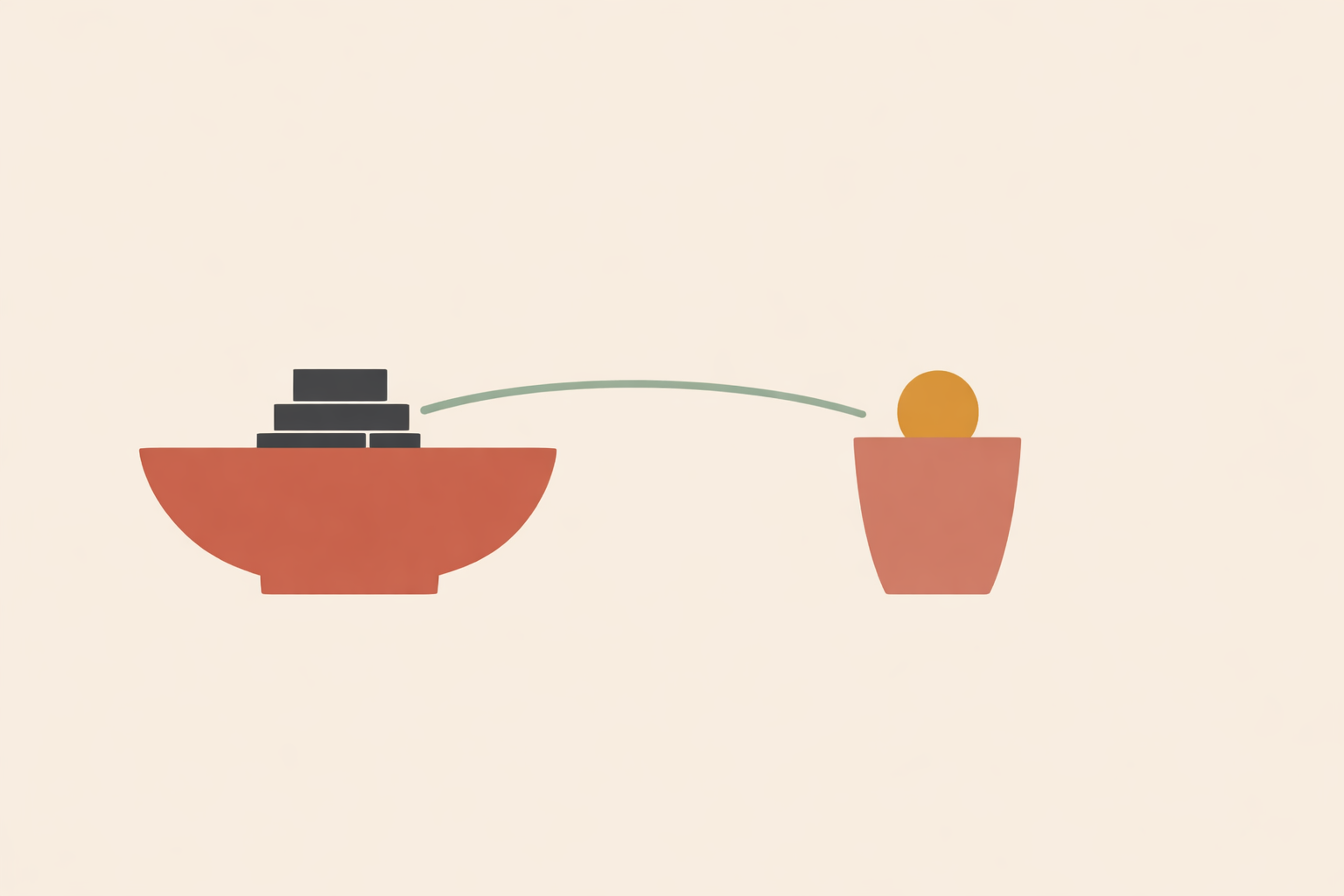
When clients “forget” assignments, it’s tempting to repeat the instruction, dial up motivation, or add another tracking tool. Then the same apology shows up next session. Often, the issue is bandwidth, not buy-in. In real life—busy schedules, big emotions, shifting priorities—working memory is already juggling a lot. If a session is designed as though capacity were unlimited, even good ideas may never settle firmly enough to be used later.
Key Takeaway: Follow-through improves when sessions are designed around the limits of working memory rather than around assumptions about motivation. In practice, that means simplifying language, reducing conversational load, using brief recaps, and building small external supports that help people carry insight into daily life.
When clients “forget,” think capacity before motivation
A familiar scene: you suggest three observations for the week, one breathing cue before meetings, and a message if anything gets stuck. The client nods, seems engaged, and returns saying, “I forgot.” It’s easy to interpret that as resistance, but it’s often plain overload.
In a session, a client may be trying to hold your words while also managing feelings, weighing options, reading social nuance, and imagining how to apply the idea later. When that mental workspace gets crowded, an instruction can slip even when the client genuinely cares.
A more useful question becomes: “How do I make this easier to carry?” One practical shift is to reduce the plan to a single, memorable cue. For example: “Let’s use one cue: when your shoulders rise, take one slow exhale. I’ll send you that in two lines.” Then ask for a brief recap in the client’s own words.
Short-term memory vs working memory
Short-term memory holds information briefly. Working memory holds information and uses it at the same time. Coaching conversations regularly require the second one, because clients aren’t only remembering ideas; they’re sorting, planning, reframing, and choosing.
A person can hold a short list in mind for a moment. But as soon as they start connecting it to a real situation or deciding what to do first, working memory is doing the heavy lifting. That’s where the process can become effortful, even for highly capable people.
This also explains why someone can fully understand an idea in a calm session and then lose access to it in a noisy hallway, during family stress, or halfway through a demanding workday. Context shapes capacity.
One useful in-session sequence is to separate holding from using:
- First: “Let’s keep one phrase in mind: longer exhale.”
- Then: “Now where will you use that tomorrow?”
The first step stays light. The second step turns it into a real-world plan.
What changes when working memory is active
You can usually hear the shift when working memory is active. A client stops repeating your wording and starts transforming it. They compare two responses, walk through a difficult moment, or build a simple plan.
Many high-value coaching moves rely on that active workspace. Reappraisal, decision-making, and if-then planning all require someone to keep a situation in mind while shaping a response they can actually use.
For example, a client who says, “If I get a critical email, then I will wait ten minutes and draft a neutral reply,” is linking a trigger to a chosen response in a form that can travel into daily life.
A strong prompt here is specific and grounded: “Take the phrase ‘name, then breathe.’ Now apply it to Thursday’s meeting. Where will you pause, and what words will you use?” Specificity lowers strain and makes the plan easier to retrieve later.
Reduce cognitive load in the conversation itself
Sometimes the main barrier isn’t the exercise; it’s how it was delivered. Fast speech, stacked questions, heavy abstraction, and vague action steps can overload working memory. Rich conversation has real value, but too many moving parts can cause the core message to disappear.
When sessions reduce unnecessary load, clients are more likely to retain what matters and act on it later.
Three adjustments help immediately:
- Give one main message at a time.
- Group ideas into two or three meaningful categories.
- Pause for a brief recap before moving on.
Grouping helps because it reduces how many separate elements someone has to carry at once. In practice, a triad such as “notice, regulate, act” is easier to hold than a long string of instructions.
A simple focus block might look like this:
- Set one aim: “Today we’re noticing the first sign of stress.”
- Offer one compact pairing: “Jaw tight → longer exhale.”
- Ask for a recap: “Say that in your own words for Thursday morning.”
- Externalize it: write or send the two-line plan before changing topic.
The recap matters because it turns listening into retrieval. A brief teach-back is linked with better recall. In real sessions, one clear sentence from the client often anchors memory more effectively than several more minutes of explanation.
Why capacity changes from day to day
Working-memory capacity shifts with state and context. Strong emotion, shifting priorities, noisy environments, hunger, fatigue, pain, and substance use can all shrink what a person can reliably hold and use in the moment.
This is why “I understood it in session, but I didn’t do it later” is so common. The plan made sense under one set of conditions, then daily life demanded it under another.
State-sensitive planning keeps support realistic. On a depleted day, one cue and one step is plenty. In bright, noisy environments, visual anchors or a pocket prompt can carry the plan better than memory alone. When someone is emotionally flooded, the first task is reducing complexity.
A helpful check-in can be direct: “Is anything shrinking your bandwidth today—sleep, food, pain, strong feelings, or a busy environment? Let’s shape the plan around that.” This isn’t lowering standards; it’s designing intelligently for the conditions the client is actually living in.
Working-memory-friendly tools from tradition and practice
Traditional practices have long respected the limits of inner attention and the value of external supports. Prayer beads, counting stones, knot cords, repeated phrases, call-and-response storytelling, and seasonal rituals all function as memory aids and attentional anchors.
These supports still translate beautifully today, alongside planners, lock-screen notes, visible checklists, and short written prompts. The shared principle is simple: don’t ask memory to do all the carrying on its own.
In practice, the strongest supports are usually small:
- a bead or stone in the pocket
- a one-line card on the desk
- a lock-screen phrase
- a checklist by the door
- a brief recap spoken aloud at the end of a session
Teach-back and other “small supports” also improve follow-through. Reviews suggest better adherence when people restate and apply guidance rather than only hearing it once.
Here is a simple three-part structure you can use right away:
- One-cue practice: Choose one signal and one response. For example: “Shoulders rise → slow exhale.”
- Teach-back close: Ask, “What’s the plan in your own words, and where will you keep it?”
- Spaced return: Revisit the same phrase briefly once or twice during the week through a note, calendar reminder, or message.
Pairing traditional external supports with modern reminders often strengthens follow-through because the person isn’t forced to rely on willpower or recall at exactly the hardest moment.
Design for support, not strain
A capacity-sensitive approach begins with respect. Instead of judging what someone “should” remember, shape pacing, wording, and supports around the moment in front of you. Simplify early, externalize quickly, and check understanding through brief retrieval rather than long explanation.
This fits a wider view of how people learn: attention, memory, and intention are shaped by context, rhythm, environment, and meaning, which is why neuroscience and brain health can offer such a useful lens. Good practice works with that reality while keeping the process light enough to use.
It also helps guide where to focus effort. Broad gains from generic working-memory training show modest benefits, so practical, context-specific supports often deliver more day-to-day impact.
Seen this way, a pause, a blank stare, or a forgotten assignment isn’t a character flaw. It’s feedback. It tells you the plan needs to become lighter, clearer, or more anchored in the client’s real world.
From beads to checklists, from one-sentence recaps to focus and memory supports like spaced nudges, small supports can make a large difference. The guiding question stays steady: what support does this moment need?
Explore Cognitive Neuroscience Certification
Connect working memory insights to practice with the Cognitive Neuroscience Certification.
Explore Cognitive Neuroscience →