Many yoga teachers fall into command-and-count teaching: eyes closed, five breaths here, move on my cue. It keeps a room synchronized, but it can miss what unsettled students need most: agency. You can feel it when someone arrives jittery or flat and the scripted pace tightens them further. The real question becomes how to help each person settle enough to receive the practice.
Choice-based teaching offers a clear answer. Within an Ashtanga-informed structure, you can keep the class coherent while replacing pressure with options. Students orient to the room and their own contact points, move with breath as an invitation rather than a demand, and close in a way that helps them recognize what steadier feels like.
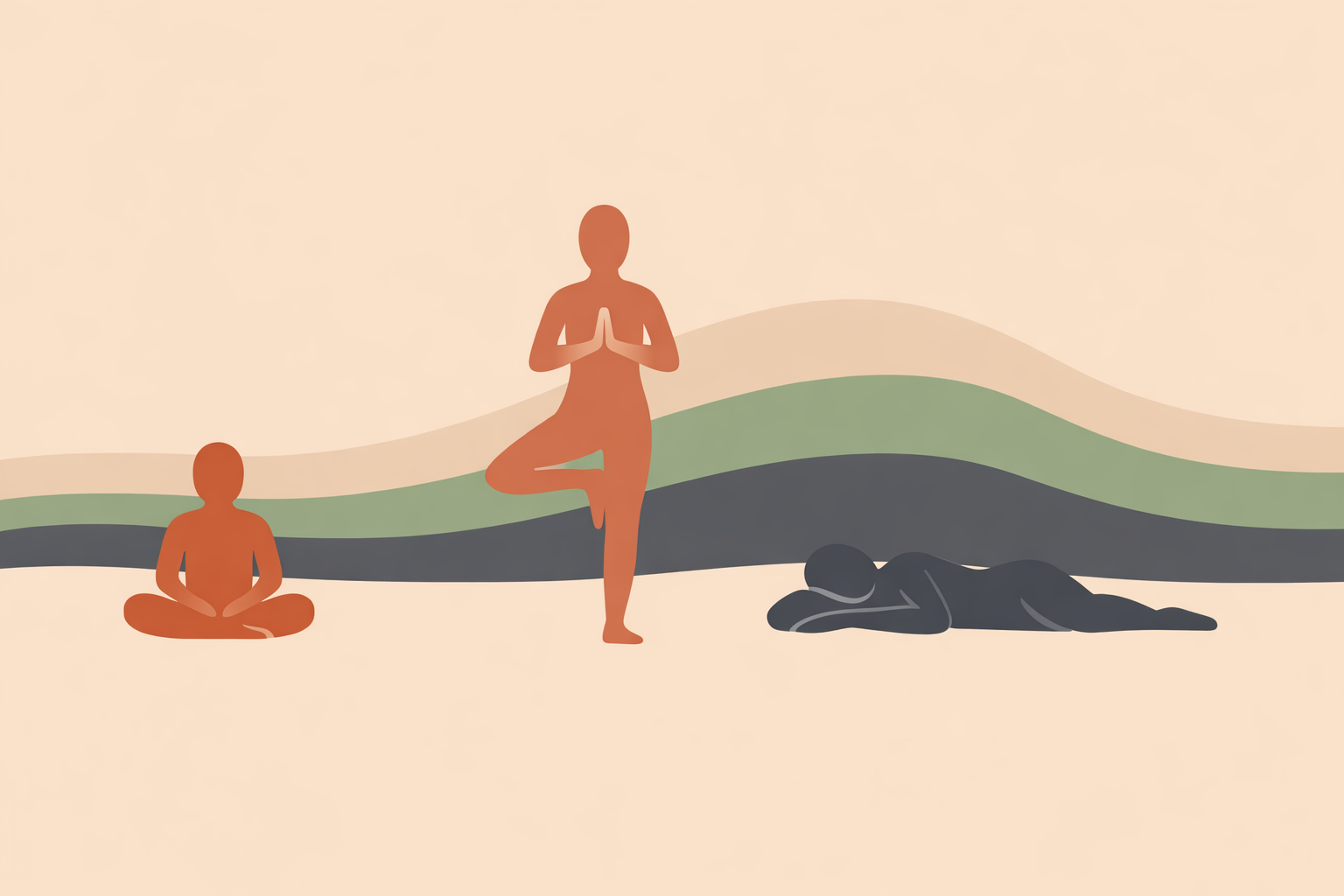
Key Takeaway: Nervous-system regulation in yoga grows more reliably from choice-led cues within a clear structure than from force. A simple three-part arc works well: arrive by orienting the senses and offering gaze and breath options; move with gentle, adaptable vinyasa and unforced breathing; then integrate with rest, attention, and a bridge into daily life. The thread through all three is consent, agency, and steadying the student from the inside out.
Step 2: Move and Breathe Without Forcing the Pace
Once attention has settled, layer movement with breath. Teach breath as a guidepost, not a requirement. The structure stays clear, and the body gets to respond honestly.
A gentle Ashtanga-informed sequence might include:
- Half Sun A: Smooth, familiar transitions with soft knees and simple drishti options.
- Low lunge flow: A steady step back and forward with room for a padded knee, smaller range, or a pause.
- Standing balance: Tree with several foothold options, including toes down.
- Gentle backline opening: Sphinx, baby cobra, or cat-cow depending on the day.
Use language that keeps students in relationship with their own experience. “You might lengthen the exhale on the way down.” “Try two slower breaths here, or keep your breath natural.” “If this feels like too much, make the shape smaller.”
This pace is more than “nice.” Yoga that combines slower, coordinated movement with unforced breathing has been associated with reduced heart rate during and after practice. In class, that often looks like less rushing, a softer jaw, and a steadier gaze.
Breath speed plays a role too. Breathing around six breaths per minute is associated with increased heart-rate variability and stronger parasympathetic activity. Rather than making that a target, offer a felt suggestion: “Let the exhale take its time if that feels supportive.”
Likewise, resonance-style breathing has been linked with reduced perceived stress alongside shifts toward parasympathetic regulation. The teaching move stays the same: suggest; don’t push.
If stronger breath instruction makes someone feel buzzy, strained, or disconnected, guide them back out right away. “Return to your natural breath.” “Keep the breath easy.” “You can pause and feel your feet.” Clear, plain cues are often the most supportive.
Three micro-skills can make this middle section more regulating:
- The 3-breath gate: Before leaving a shape, pause for up to three easy breaths. If steadiness grows, continue. If not, simplify.
- Sliding-scale pace: Offer mellow and medium as two equally welcome speeds, much like adjusting pace and overall load. Let students change lanes at any time.
- Quiet bandhas: Invite a whisper of lower-belly or pelvic-floor support, then release it. Keep it exploratory, never gripped.
As breath slows, many students feel a balancing effect across the autonomic system. They don’t need the theory first. They need the experience: digestible movement, available breath, and pacing that builds confidence.
Short practices count as well. The same review noted acute stress shifts across one-off yoga, meditation, and breathing sessions, which matches what teachers often see when the pacing is kind and steady.
Step 3: Integrate the Practice So Students Can Recognize Steadiness
Without a closing arc, quieter effects can pass by unnoticed. Integration helps students register what changed, even if it’s subtle: “This is what steadier feels like.”
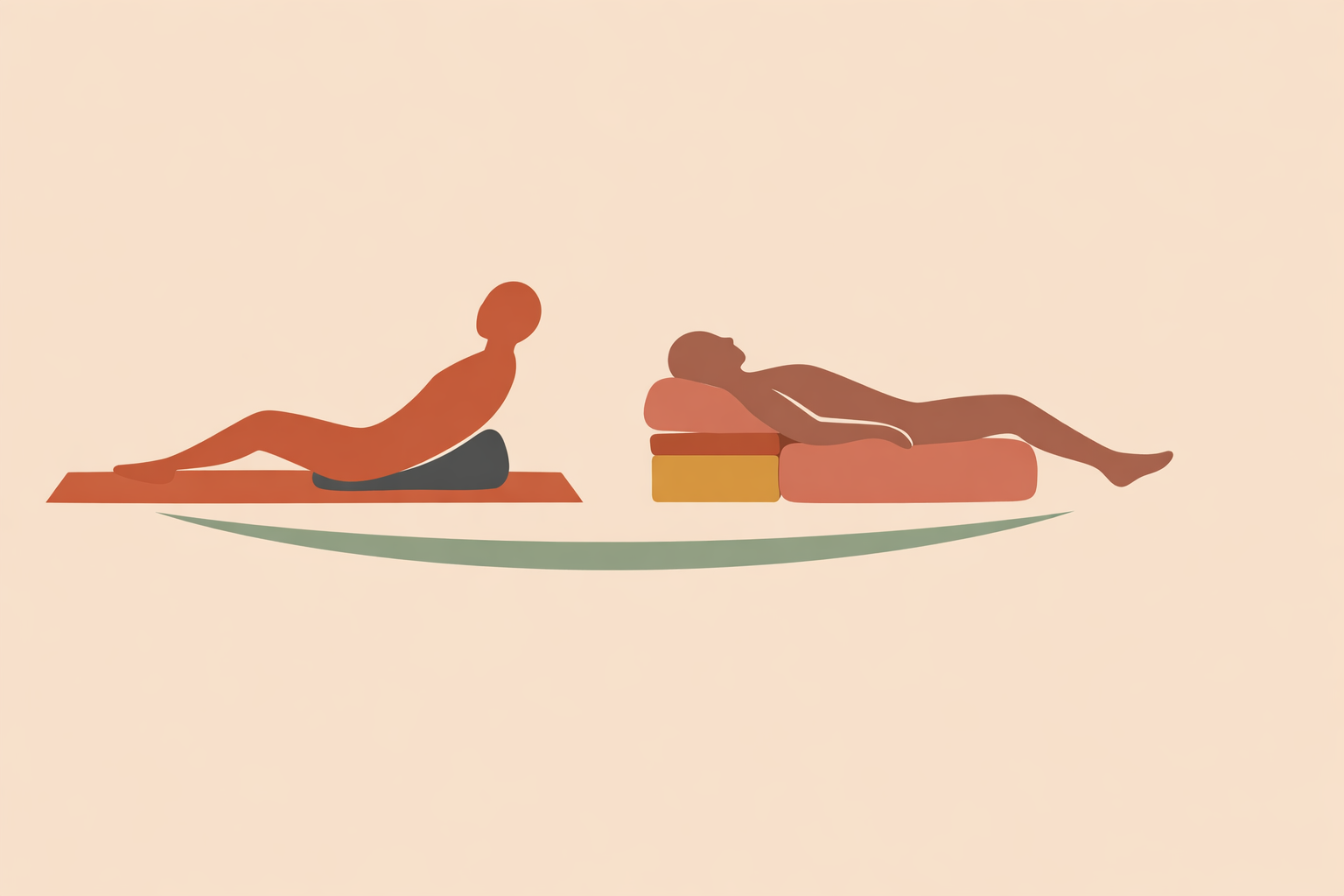
Rather than treating the close as one correct posture, offer a continuum of support:
- Supported forward fold: Leaning into a bolster, chair, or thighs.
- Supine twist: With padding between or under the legs as needed.
- Constructive rest: Knees bent, feet wide, knees resting inward.
- Flexible savasana: Lying down, knees bent, seated, or back against a wall.
What matters is not a perfect shape but a shape the student can actually receive.
Pair the posture with a simple attention practice. Breath-following works well: “Feel the breath at the nostrils or ribs, and return gently when the mind wanders.” Contact-point tracking is equally effective: “Notice the heels, hips, ribs, shoulders, or skull meeting support. Stay with one point, then another.”
These accessible practices are not small in effect. Research on single-session yoga and related practices has shown stress-related benefits, and traditional teachings have long centered breath awareness, simple attention, and resting consciousness as core parts of practice.
Before class ends, help students carry the experience into ordinary life:
- One-line check-in: “What helped you feel steadier today?”
- Micro-practice: “Later, choose a soft gaze, feel one contact point, and lengthen one exhale.”
That reflection turns a class experience into a usable skill. Over time, orientation, breath choice, and simple focus can help students interrupt habitual stress responses and meet daily life with more space.
Teaching Regulation Through Choice, Not Force
The throughline is simple: steadiness grows through kindness. Arrive by orienting the senses. Move with breath as a suggestion. Close with rest and attention so students can recognize the shift for themselves.
Modern research supports what traditional lineages and everyday teaching have demonstrated for generations: practices that blend postures, breathing, relaxation, and meditation may support autonomic regulation and vagal tone. The wisest teaching keeps the structure steady and the experience personal.
Consent runs through the whole class. Offer choices in gaze, speed, and load. If you use hands-on support, ask clearly and make declining easy. A student’s self-observation matters more than getting everyone to look the same.
For teachers, this approach deepens through personal practice and broader study in traditional and eastern medicine. Notice what genuinely helps you settle: a soft drishti on a busy day, a slower exhale when thoughts race, a quieter pace when effort starts to harden. Those lived details become your best cues.
Used consistently, this three-part arc can reshape the feel of a room. Students build more choice around breath, more confidence in movement, and a steadier relationship with stress. In the conclusion, it’s worth remembering that bodies and histories vary, so options matter: they let traditional practice meet real life with skill and respect.
Advance Yoga Teacher Training
Apply choice-based, regulating cueing in your teaching with the Yoga Teacher Training course.
Explore Yoga Teacher Training →