Desk-bound students are often told to “fix their posture,” then expected to undo a week of sitting with one long class and a few deep stretches. In practice, that rarely lasts. The more useful approach is simpler: give the spine regular variety, pair movement with breath, and make the practice easy enough to repeat.
For desk-heavy lives, yoga fits naturally here. It brings rhythm, attention, and movement in several directions instead of more stillness layered onto an already static day. When classes stay mid-range, adaptable, and grounded in real work routines, students often feel more comfortable, more alert, and more able to self-adjust as the day unfolds.
Key Takeaway: Desk-worker spine support tends to improve most when yoga emphasizes breath-led, mid-range movement, frequent variation, and realistic consistency. Rather than chasing dramatic stretches, teachers can help students build steadier movement habits that translate directly to the workday.
How Yoga Reintroduces Healthy Movement Variety
Prolonged sitting tends to compress some areas while leaving others under-used. A spine-aware practice restores balance by revisiting flexion, extension, rotation, and lateral bending at a pace students can tolerate and trust.
Frequent mid-range motion usually works better than chasing one “big stretch.” It interrupts stagnation without triggering the body’s protective bracing.
Traditional yoga lineages have long treated posture, breath, gaze, and subtle engagement as one integrated tool. For desk workers, that integration is often what keeps practice steady and self-respecting, especially within broader traditional and eastern medicine approaches.
For teachers, the cue is straightforward: less heroics, more consistency.
A Simple Five-Minute Desk Yoga Flow
A short sequence done regularly often serves desk workers better than one ambitious weekly effort. This five-minute flow is easy to teach, easy to remember, and easy to repeat during the workday:
- 6 slow rounds of seated or all-fours cat-cow, matching breath to movement
- 2 lateral bends each side, staying comfortably mid-range
- 2 gentle seated twists each side, keeping the pelvis steady
- 3 hip hinges with hands on a desk or a strap for support
Keep the cues light and clear:
- Move with breath
- Stay curious
- Choose steadiness over depth
- Stop before strain
These brief practices often become a turning point because they fit real schedules. A two-minute reset at 11:00 a.m. and again mid-afternoon is often more sustainable than waiting until evening to feel better.
Designing a Desk-Worker-Friendly Class
Most desk workers do not need a more intense class. They need a more intelligent one.
Gentle pacing and mid-range movement tend to create better day-to-day carryover than deep peak poses. Workplace movement programs using moderate, non-extreme exercise have shown reduced complaints in office workers.
Props and chair options help, too. They lower the barrier to participation and make movement variety feel safer and more accessible. A block under the hands, a strap for a hinge, or a chair-supported lunge can change the whole tone of a posture.
Between classes, micro-sequences keep the benefits “alive” in the workday. Try a simple spine snack:
- Chair cat-cow x 5 breaths
- Desk-supported gentle extension x 3 breaths
- Seated twist x 2 each side
These small check-ins help yoga become a habit that meets people where they are.
Common Desk-Worker Patterns Yoga Can Support
Some patterns show up again and again in computer-based roles: forward-head posture, rounded shoulders with thoracic stiffness, and low-back ache from long static sitting. Office workers commonly report neck, shoulder, and low back complaints, so these themes naturally shape good class design.
Yoga supports these patterns best when it is taught with options, breath pacing, and respect for natural spinal curves. Research on yoga for back discomfort suggests meaningful reductions in pain and disability, and a yoga program for neck discomfort reported pain relief alongside better function.
In real teaching, a spine-aware vinyasa approach often becomes an anchor: students keep moving, keep noticing, and adjust earlier, before the day’s tension fully accumulates.
Helpful Cueing for Neck, Shoulders, and Upper Back
Desk workers often respond best to cues that create space and ease across the upper body. Think:
- Widen across the collarbones
- Keep the shoulders easy
- Broaden the upper back
- Let the neck stay soft
These themes align well with what office-based movement approaches tend to reinforce, and yoga and stretching interventions for office workers have shown reduced pain and improved physical function over time.
Clear, repeatable language is usually enough. When students can remember the cue, they can use it at the desk.
Spine Safety and Sensible Range Choices
Ahimsa in class design starts with dosage. Most desk workers do best with mid-range dynamic motion and shorter holds that build strength, confidence, and ease, which is central to good yoga teacher training.
Two teaching principles are especially useful:
- Keep the spine long while hinging at the hips
- Avoid combining large twisting and extending actions at the same time
For students with low bone density, extra care around loaded or repeated spinal flexion matters. One paper linked yoga flexion practices with vertebral compression fractures in vulnerable spines, so neutral spine, hip hinging, and gentle extension are usually wiser choices.
For hypermobility, reduce range, limit prolonged end-range holds, and emphasize strength and control over sensation.
Red Flags and Scope in Community Classes
Most desk-related stiffness sits comfortably within a well-taught yoga setting. A few signs do not.
Pause class-based support and encourage prompt outside evaluation if someone experiences:
- new or worsening neurological changes
- severe night pain that does not ease with rest
- sudden bowel or bladder changes
- sharp, electric pain radiating down a limb
These situations sit outside normal class scope. The kindest response is calm, clear referral rather than trying to work around them on the mat.
An Ashtanga-Informed Class Arc for Desk Workers
An Ashtanga lens can work beautifully for desk workers when range, speed, and load are scaled appropriately. Keep the essentials: breath, gaze, steady sequencing, and subtle internal organization.
A simple 45-minute arc might look like this:
- Arrival and breath: 3-4 minutes
- Spinal warm-up: 6-8 minutes
- Chair- or wall-supported sun-salutation scaffold: 8-10 minutes
- Standing mid-range work: 8-10 minutes
- Floor integration: 6-8 minutes
- Closing rest and breath: 5-8 minutes
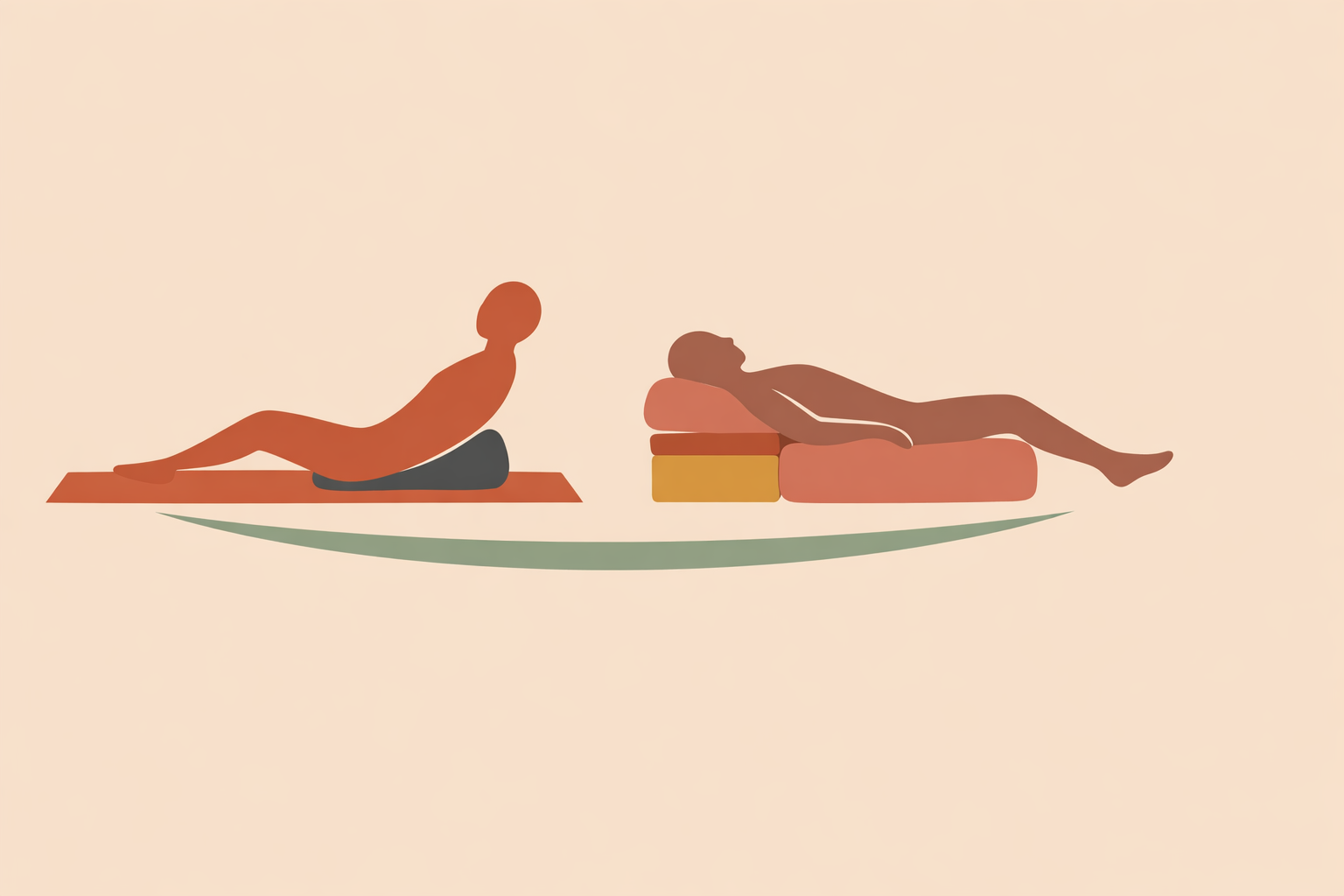
In the warm-up, cat-cow, thoracic circles, and scapular glides set the tone. In standing work, shorter stances, supported crescents, lateral bends, and neutral twists help students feel organized rather than overextended. On the floor, bridge, gentle locust variations, and supported figure-four shapes often land well.
The through-line is steady breath, soft neck, light bandha awareness, and no need to perform.
Consistency, Adherence, and Real-World Delivery
The primary driver of outcomes is usually not format alone. It is whether people keep practicing.
Predictable scheduling and tiny, clear homework make that easier. In a workplace trial, better outcomes were linked to adherence, echoing what experienced teachers see every day: steady practice changes more than occasional intensity.
Time pressure and inconsistent routines are the big obstacles, so offerings should fit real life:
- 1 live 30-minute class each week
- 2 five-minute movement breaks or video prompts
- simple reminders at consistent times
- easy home practices that do not require a full setup
Yoga also lands better when the work environment supports movement. Pairing practice with an adjustable, neutral workstation and frequent movement breaks can improve outcomes; workplace research found better neck outcomes when exercise was added to workplace ergonomics.
Closing Perspective
For desk workers, yoga works best as a steady companion to modern work: a way to reintroduce breath, movement variety, attention, and self-trust throughout the day.
When classes are mid-range, adaptable, and repeatable, students gain more than momentary release. They notice sooner, adjust sooner, and bring the practice back to the desk in small, practical ways.
As always, teach with care: prioritize sensible ranges, offer options, and refer out when red flags appear. With that foundation, this work becomes powerful through consistency and respect for the body’s pace.
Teach Smarter Desk Yoga
Build on these desk-worker strategies with Yoga Teacher Training to cue breath-led, spine-safe classes confidently.
Explore Yoga Teacher Training →