Vagus-nerve “hacks,” rigid morning routines, and chasing HRV scores can promise a quick switch into calm, yet they rarely hold up in real client life. Practitioners see the pattern: ambitious protocols fade, wearables create more confusion than clarity, and people start to feel they’re failing at self-regulation.
What helps more is a simpler, steadier approach. Treat “vagal tone” as practical capacity rather than a single number, use HRV as one window rather than the whole picture, and build rituals clients can actually repeat on ordinary days. Quick state shifts are often available; deeper change usually grows through repetition, relationship, and context.
Key Takeaway: Improving “vagal tone” in practice is less about chasing hacks and more about building tiny, repeatable rituals anchored in state mapping. Slow rhythmic breathing is usually the clearest starting point, with humming, orienting, grounding, sensory support, movement, and co-regulation added according to fit. Sustainable change comes from brief practices, habit cues, gentle pacing, and respectful tracking—not perfection.
What “vagal tone” means in everyday practice
In day-to-day coaching, “vagal tone” is often used as shorthand for parasympathetic capacity—the felt ability to return to steadiness, connection, and choice after stress. It’s a useful term when it stays grounded in lived experience, not reduced to a lab-style label.
Tools like HRV and RSA can add information, but they don’t measure safety or connection directly. They reflect changing heart rhythms shaped by breathing pattern, posture, sleep, age, fitness, and even how and when someone measures. A single score is data, not a verdict.
Polyvagal Theory can be a strong working map for noticing patterns of mobilization, settling, contact, and withdrawal. It’s most helpful when held as a flexible framework that supports language and choice in the moment, while continuing to evolve through wider discussion.
One distinction keeps the work practical: state versus trait. A state shift is what changes over a few minutes of breathing, humming, or orienting. Trait capacity develops more slowly through repetition, relationships, and life conditions. The first is often quick to access; the second unfolds over time.
Why tiny rituals usually work better than big routines
Clients often begin with a heroic plan: cold showers, long pranayama, journaling, strict timing. Then life happens, and the plan disappears. That’s usually a design issue, not a character issue.
Tiny, rhythm-friendly rituals tend to work better because they’re easier to repeat, easier to restart after missing, and easier to adapt on uneven days. This aligns well with the value of repeated cues when building routines.
A sustainable ritual is usually:
- Brief enough to repeat (often 30 seconds to five minutes).
- Flexible enough to do seated or standing, eyes open, and even in public.
- Observable enough to notice whether it felt settling, neutral, or stirring.
“Try two minutes and stop while it still feels easy” often supports consistency better than a demanding daily target. The aim is simple: create something the person will return to.
Context matters, too. Structural stressors such as unsafe housing, discrimination, and overwork aren’t solved by a humming practice or a few easy breaths. Rituals can support steadiness and choice, but they should never be used to shrink someone’s real-world experience.
Start with state mapping before adding techniques
Before adding any ritual, start by helping clients notice where they are right now. Many practitioners use a “Window of Presence”: the zone where a person can sense, choose, and respond rather than react. The label matters less than the effect—recognition without shame.
Polyvagal language like ventral, sympathetic, and dorsal can be useful when held lightly. The same goes for “neuroception,” the body’s fast sensing of safety or danger before conscious thought catches up. These ideas tend to work best when translated into everyday words the client actually uses.
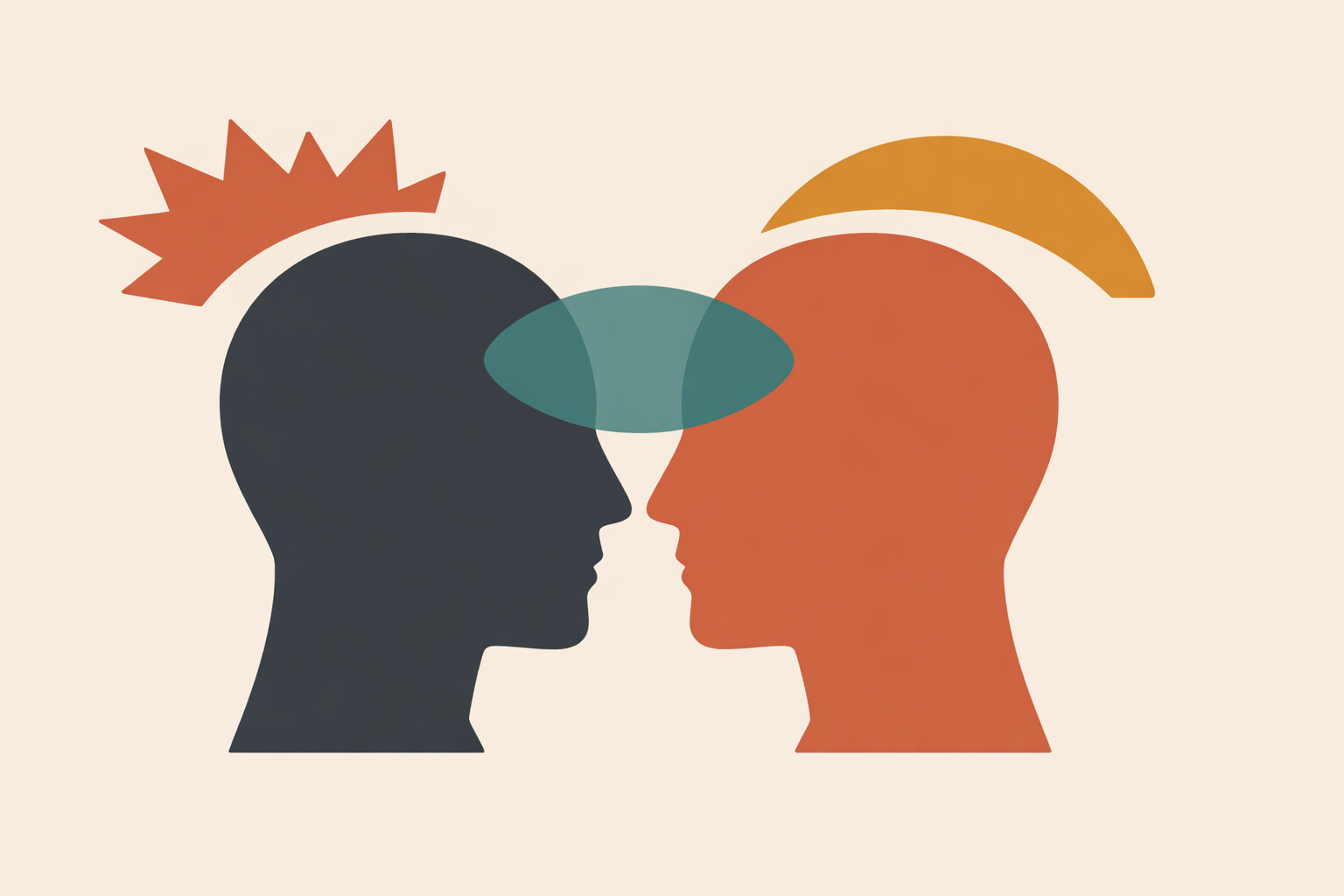
The social side of regulation belongs here as well. Facial expression, voice, timing, and listening offer moment-to-moment clues about whether someone is settling, bracing, disconnecting, or coming back into contact.
Simple prompts often do more than elaborate explanations:
- “What do you notice in your feet, seat, or hands?”
- “Do you feel more settled, more alert, more distant, or about the same?”
- “Are you closer to contact right now, or closer to pulling away?”
Once the client can name their state, the next step usually becomes obvious. The process stays client-owned, practical, and kind.
Begin with slow rhythmic breathing
If one practice deserves the center of a daily ritual, slow rhythmic breathing is usually it. Across many traditions, breath rhythm has long been used to steady presence, and modern reviews suggest short-term state shifts are often possible through voluntary slow breathing.
Many clients feel good around six breaths per minute, often with a softer, slightly longer exhale. Under certain conditions, this pace also tends to maximize RSA. In the room, comfort and ease matter more than hitting a number.
A reliable cue is: breathe a little slower, a little softer, and with less effort than usual. The slowing tends to be the most settling element across styles.
Keep the experiment gentle. Overbreathing can bring dizziness, tingling, chest tightness, or spikes in anxiety. If that happens, make the breath smaller, open the eyes, pause, and switch to grounding or orienting.
A simple micro-practice works well: inhale gently through the nose for about four seconds, exhale for about six, repeat for five cycles, then ask, “More settled, same, or more stirred?” That answer guides the next step.
Add voice: humming, toning, and singing
Once breath feels workable, voice can add a supportive layer. Humming, toning, chanting, or singing often soothe because they combine extended exhale, vibration, rhythm, and attention. The strongest support here still points to the rhythmic breathing element, and humming’s calming effect likely relies more on that pattern than on a proven direct “vagus nerve zap.” One review notes less stress during humming in a small pilot context.
In practice, sound works because it’s accessible. A low hum, a soft “mmm,” a gentle vowel sound, or one verse of a familiar song can be enough to shift state.
Consent and cultural respect matter. Sound practices can be spiritual, communal, or deeply personal. Invite clients to choose forms that fit their identity and background, and avoid borrowing sacred forms out of context.
A straightforward micro-ritual: while the kettle boils or before opening the laptop, hum one easy exhale three times, pause, and notice what changed. If it supports, continue. If it doesn’t, stop.
Use co-regulation and simple social rituals
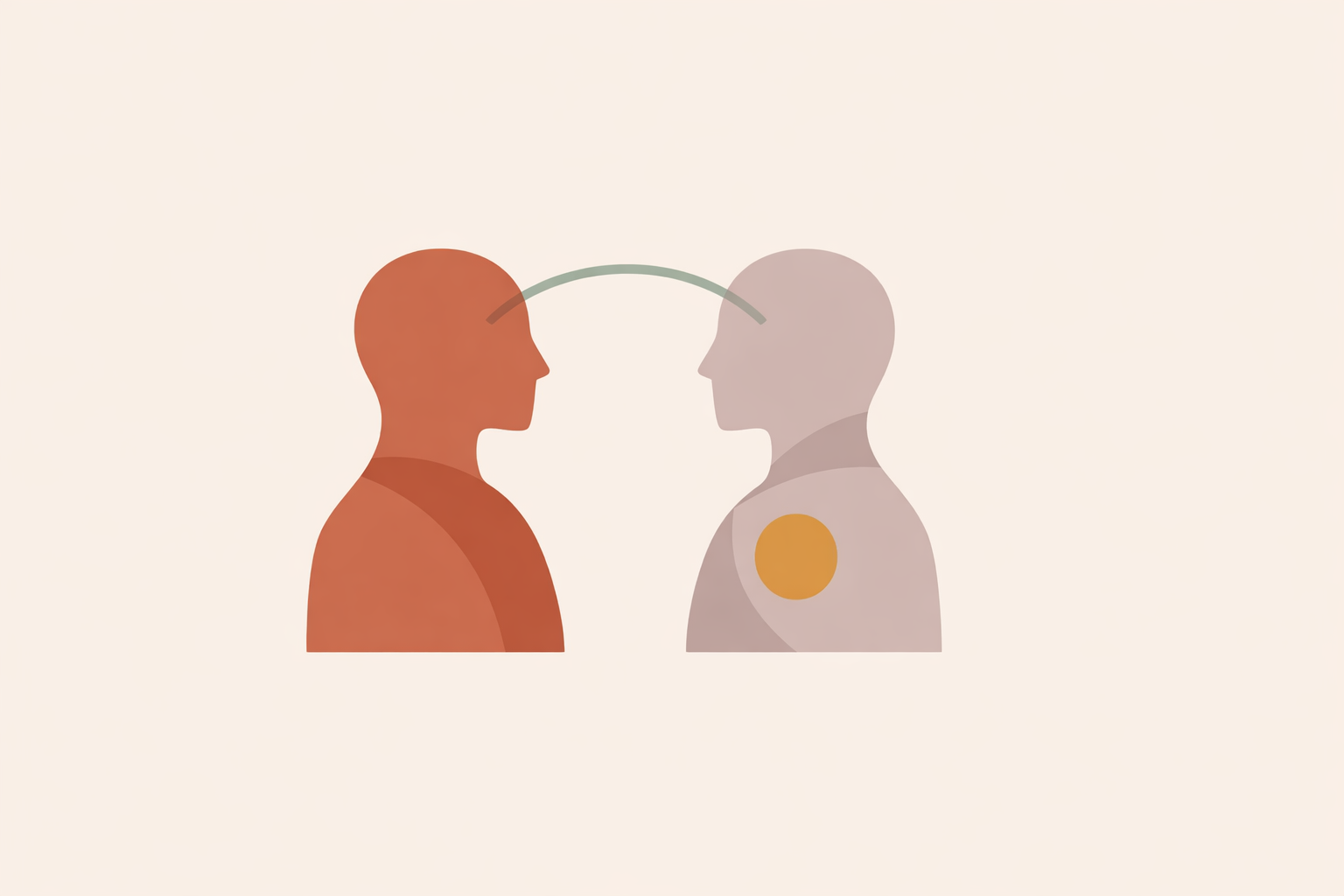
Many people settle more easily with another steady person than alone. Warm tone of voice, predictable rhythm, mutual attention, and shared quiet often make co-regulation a helpful starting point before self-regulation feels possible.
This can stay very simple:
- a brief voice note from someone trusted
- a check-in at the start of group practice
- a shared minute of silence
- a communal hum, prayer, or song when culturally appropriate
These forms are old, familiar, and deeply human. They don’t need elaborate justification. What matters is fit, consent, and whether the interaction leaves the person more resourced rather than more exposed.
Go beyond breath when breath is not the doorway
Breathwork supports many people, but it won’t be the best entry point for everyone, every day. When inner focus feels too activating, sensory or movement-based rituals can be a better doorway.
Orienting is often the easiest start: let the eyes move slowly around the room, notice three neutral or pleasant details, and feel the support under the body. Grounding can be just as direct: press the feet into the floor, hold a textured object, wrap in a blanket, sip something warm, or place a hand against a wall.
Glimmers matter as well. A patch of sunlight, birdsong, the color of leaves, a familiar scent, a kind text, a familiar melody—small moments of ease can restore contact with steadiness without pretending everything is fine.
Movement offers another strong route. Swaying, shaking out the hands, slow walking, light dancing, or gently pressing and releasing the body can help channel activation when talking or breathing doesn’t. Rhythm-based practices have served this role across cultures for generations because rhythm organizes attention, breath, and connection together.
A simple two-minute menu gives clients real choice:
- Orient: look for three colors in the room.
- Ground: notice ten points of contact.
- Glimmer: name one thing that felt 1% easier today.
- Move: sway for 20 seconds, pause, then repeat.
Make the ritual stick with cues and simple planning
Even a good practice fades when it has no landing place in the day. The most reliable approach is to attach the ritual to something already happening: after brushing teeth, before opening email, while waiting for tea, after closing the laptop, before sleep.
Habit cues are a practical support for consistency, reflected in habit-formation research. Another useful tool is implementation intentions: if-then planning strengthens follow-through by making the action visible and specific.
For example:
- After I sit at my desk, I will take three easy breaths.
- When the kettle starts, I will hum one long exhale.
- After I close my laptop, I will look out the window and soften my shoulders.
Offer a short version and a longer version. The short version protects continuity on hard days; the longer version is optional.
Keep pacing gentle and tracking respectful
When someone is easily overwhelmed, pacing matters as much as the technique. Gentle titration and pendulation can widen capacity without forcing it: touch the edge of activation briefly, then return to something neutral, resourcing, or familiar. The dose stays small enough to remain present.
Tracking also works best when it stays light. A few notes are usually enough:
- what I did
- how long I did it
- starting state
- ending state
- supportive, neutral, or uncomfortable
Two to four weeks of this kind of noticing often reveals patterns more clearly than any single “good” or “bad” day.
Wearables can serve curiosity, but they shouldn’t become judges. The most meaningful changes are often behavioral and relational: returning to tasks more easily, pausing before overwhelm, sleeping more consistently, recovering after interruptions, or asking for support sooner.
What matters most in daily vagal-tone rituals
The practices that matter most are the ones clients repeat. Slow breathing currently has stronger support for short-term increases in vagally mediated HRV than most generalized “vagus hacks,” so it often deserves pride of place. Traditional practice also carries real authority here, built through long human experience of what steadies the mind and reconnects the heart to community.
Traditional systems already understood the power of rhythm and repetition: breath, mantra, chanting, prayer, dance, and communal song have long supported emotional steadiness, attention, and belonging. Contemporary language may focus on state shifts and flexibility; older lineages often speak in terms of rhythm, spirit, and relationship. Both perspectives can sit side by side.
The aim isn’t a perfect protocol or a permanently calm state. It’s a modest, repeatable return toward contact: a few breaths, a hum, a glance around the room, a grounded pause, a shared moment with another person.
For safety and fit, keep practices gentle, especially with clients who are prone to dizziness, panic, or overwhelm. If breath or sound practices feel activating, switch to orienting, grounding, or movement, and choose supports that respect the client’s culture, consent, and lived reality. For practitioners building a broader foundation in trauma and emotional healing, these adjustments help keep regulation work usable and respectful.
Train in Polyvagal Therapy
Deepen your state-mapping and regulation skills with the Polyvagal Therapy Certification.
Explore Polyvagal Therapy →