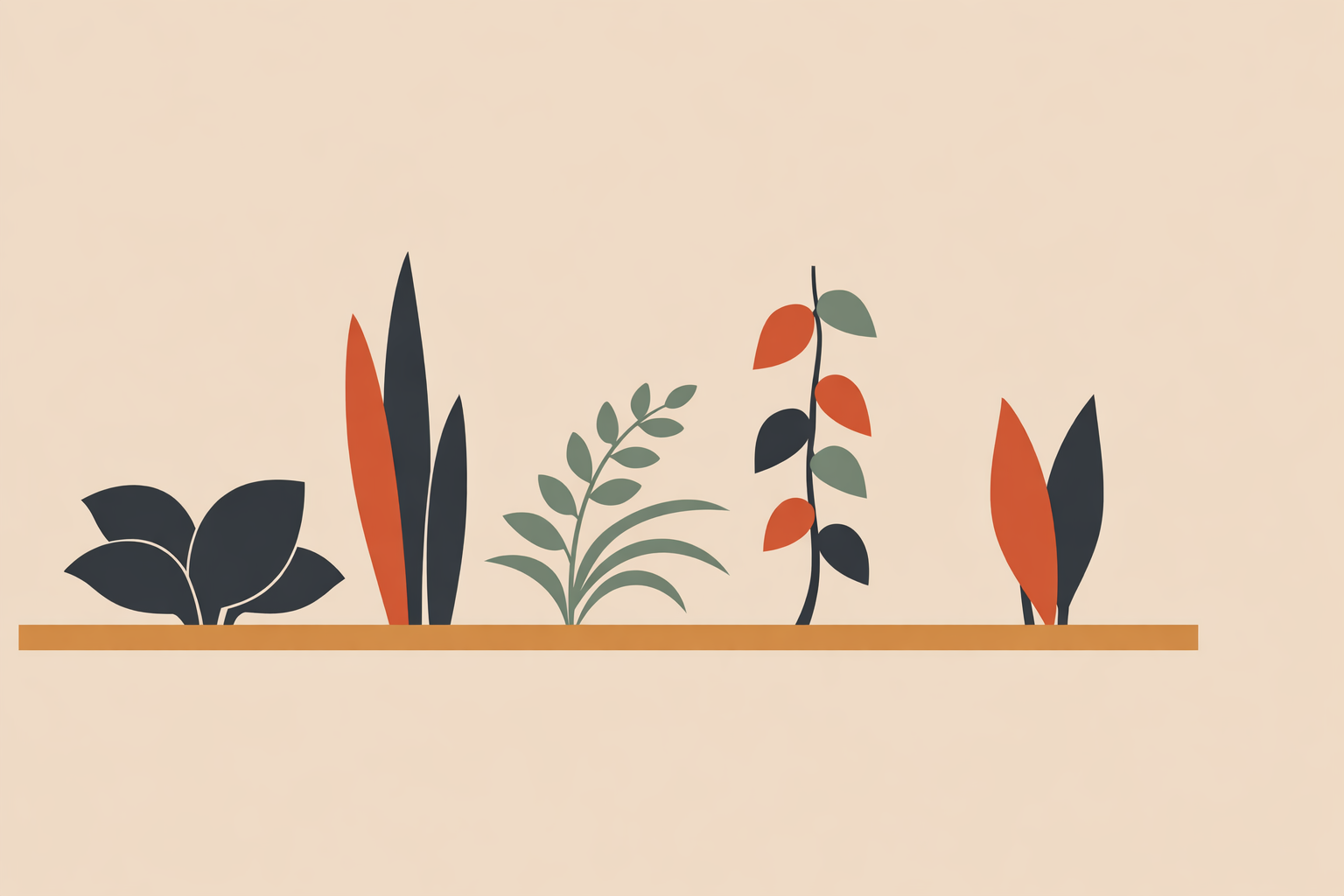
When sessions move indoors, the challenge stays the same: creating a space that feels steady, credible, and alive without turning plants into décor or asking them to do more than they can. The most reliable approach is to give each plant a clear job. Rather than scattering greenery around the edges, shape the room the way a grove shapes attention through understory, vertical structure, flow, and threshold.
Key Takeaway: Indoor sylvotherapy works best when plants are chosen for both atmosphere and dependable care, then placed with intention. Peace lily creates understory calm near a Sit Spot; snake plant brings upright structure for grounded rest; spider plant adds movement and participation; pothos gathers attention through vertical flow; and Ti plant marks the threshold with respectful symbolic presence. Used together, they form a simple, low-maintenance indoor grove that supports presence and relational care.
Peace Lily for Understory Calm
Start at the forest floor. Peace lily creates a soft, shaded feeling that helps people slow down, breathe more deeply, and settle. Its broad leaves hold light gently, so it’s ideal near a cushion, chair, or quiet corner where you want attention to land naturally.
It’s also a forgiving plant for busy practice rooms. Peace lily usually copes well with lower light, and its drooping leaves give clear feedback when it’s thirsty. A good watering often brings it back quickly, which keeps care simple and confidence high.
To use it as an anchor, place a mid-sized peace lily on a low stool beside the Sit Spot and let the gaze rest in the darker green beneath its canopy. You might open with: “Let the leaves be your forest floor—quiet, receptive, and already here.”
In practitioner terms, peace lily often holds the “undergrowth” role: the hush beneath thought, where the system softens before it shifts.
Care is straightforward:
- Keep the soil lightly and evenly moist.
- Give it bright, filtered light if possible, though it usually tolerates less.
- Wipe leaves weekly to clear dust and refresh the plant’s presence in the room.
Snake Plant for Upright Structure and Rest
Where peace lily offers understory, snake plant provides trunks. Its tall, clean lines quietly invite length through the spine and a grounded posture, making it especially useful anywhere you want a steady, uncluttered tone.
There’s also a botanical reason it’s often linked with nighttime spaces: CAM species absorb CO₂ at night. In most ventilated rooms the measurable impact is modest, but the plant’s real strength indoors is dependable structure you can feel at a glance.
Two snake plants near a chair, mat, or rest area can frame the space without heaviness. In groups, they also support a quick standing reset: feet grounded, spine long, shoulders soft, gaze steady. Even a couple of quiet minutes with that shape can shift the room’s tone.
Try a simple pre-rest ritual:
- Place one or two plants where they are easily visible.
- Follow the line of a leaf from soil to tip with your eyes.
- Inhale gently, pause, then exhale longer than you inhaled.
A useful line for this plant is: “As these trunks stand, let your thoughts stand down.”
Care is minimal:
- Give bright, indirect light when possible, though it copes well with less.
- Water sparingly, allowing the mix to dry between waterings.
- Dust the leaves now and then to keep the plant looking crisp and intentional.
Spider Plant for Playfulness and Participation
Not every plant in a practice room needs to feel solemn. Spider plant brings movement, generosity, and ease. Its arching leaves and dangling plantlets soften the atmosphere, which is especially helpful for classrooms, family spaces, and beginner groups.
Because it propagates readily, it naturally supports light, non-performative participation. In teaching spaces, it can become part of the room culture: someone waters, someone trims, someone starts a baby plant in water. Over time, these small acts often build belonging in a way people can actually feel.
Spider plant also helps gather scattered attention. A brief visual tracking practice, following one leaf from center to tip, can settle fidgety energy without singling anyone out.
It has a reputation for supporting indoor air quality in more structured plant setups, but in most practice rooms its clearest gift is the social and sensory field it creates.
Useful placements include:
- Hanging above a reading or reflection corner.
- On a high shelf where the leaves can arc freely.
- Near a family or group area where plantlets can be noticed and shared.
Care stays easy:
- Water when the top layer of soil feels dry.
- Give medium or bright indirect light.
- Trim brown tips if needed, but without fuss.
Golden Pothos for Vertical Flow and Gathered Attention
If peace lily settles the room and snake plant structures it, pothos ties the space together. Its trailing vines create visual pathways that guide the eye upward and across, helping the room feel coherent rather than split into separate corners.
Pothos is often chosen for engineered plant systems where pollutant reduction is a priority. In everyday rooms, its most dependable role is atmospheric: a trained vine around a shelf, trellis, or frame creates a gentle sense of containment that supports attention and connection work.
Many practitioners use pothos as a living frame behind or beside the main seat. The eye follows its line naturally, which can help someone arrive and settle when they feel overstimulated. A simple spiral on a jute support pairs beautifully with breath-led openings.
One easy setup:
- Train two vines in opposite spirals on a soft trellis.
- Follow one spiral with the eyes for three breaths.
- Reverse direction and repeat for three more.
This kind of visual-breath pairing often shifts the room from dispersed to coherent quickly.
Because the leaves are heart-shaped, pothos also carries a gentle symbolism of warmth and receptivity. The plant can do the speaking; guidance can stay minimal.
Care is uncomplicated:
- Give bright, indirect light if you want fuller growth.
- Water when the top of the mix dries.
- Trim and guide the vines regularly so the form stays intentional.
Ti Plant for Threshold Presence
Every practice room benefits from a clear threshold: a moment and a place that signals arrival into held space. Ti plant does this beautifully. Its broad, richly colored leaves bring presence before any guidance begins.
Across parts of the Pacific and Asia, Ti is widely regarded as a threshold plant with protective and ancestral associations. If you choose to reference that layer, do it with care: name cultural origins, avoid borrowing forms you’re not trained or permitted to use, and let the plant support personal boundary-setting rather than acting as a stand-in for traditions that aren’t yours.
In a studio or practice room, one Ti plant by the door is usually enough. It adds a sense of ceremony without heaviness. A pause, an exhale, and a quiet intention can carry the moment.
A simple threshold practice might be:
- Pause at the door beside the plant.
- Hover a hand near a leaf without touching.
- Exhale and name inwardly what you are setting down before entering.
This can be framed with a light line such as: “Cross with what serves; leave what does not.”
Care notes:
- Give bright light to keep the color vibrant.
- Water when the top layer begins to dry.
- Rotate the pot occasionally for even growth.
Bringing the Indoor Grove Together
When each plant has a distinct role, the room starts to feel like a whole environment. Peace lily softens and grounds. Snake plant steadies and lengthens. Spider plant relaxes the social field. Pothos gathers and connects. Ti marks the crossing into intentional space.
Together, they support a felt atmosphere of presence, steadiness, and care. In the right setups, plants can also contribute to air quality, and one classroom case study reported lower CO₂ with green plants present. The most satisfying results come from treating plants as part of the wider environment alongside ventilation, cleanliness, light, and the quality of attention you bring into the room.
A simple grove recipe for a small practice room might look like this within a broader nature and outdoor therapy approach:
- One peace lily near the Sit Spot.
- One or two snake plants to create upright structure.
- One hanging spider plant for movement and softness.
- One or two pothos vines on a trellis or shelf edge.
- One Ti plant at the threshold.
Upkeep can stay modest. A weekly 15–20 minute rhythm is usually enough: check soil, water what needs watering, wipe dusty leaves, rotate one pot, and do one small pruning or tidying adjustment.
You can also make tending relational. In shared spaces, students can take turns as leaf tenders. In a studio, a client might dust one leaf before leaving. These micro-contributions are small, but they help care feel shared and embodied.
Even without added aromatics or elaborate ritual, plants do quiet atmospheric work. They soften edges, hold attention, and offer something living to orient to.
When approached this way, indoor sylvotherapy becomes a living structure for attention that helps breath slow, senses open, and the room feel a little more like a grove.
Train in Sylvotherapy
Deepen this indoor grove approach with the Sylvotherapy Practitioner Certification.
Explore Sylvotherapy Certification →