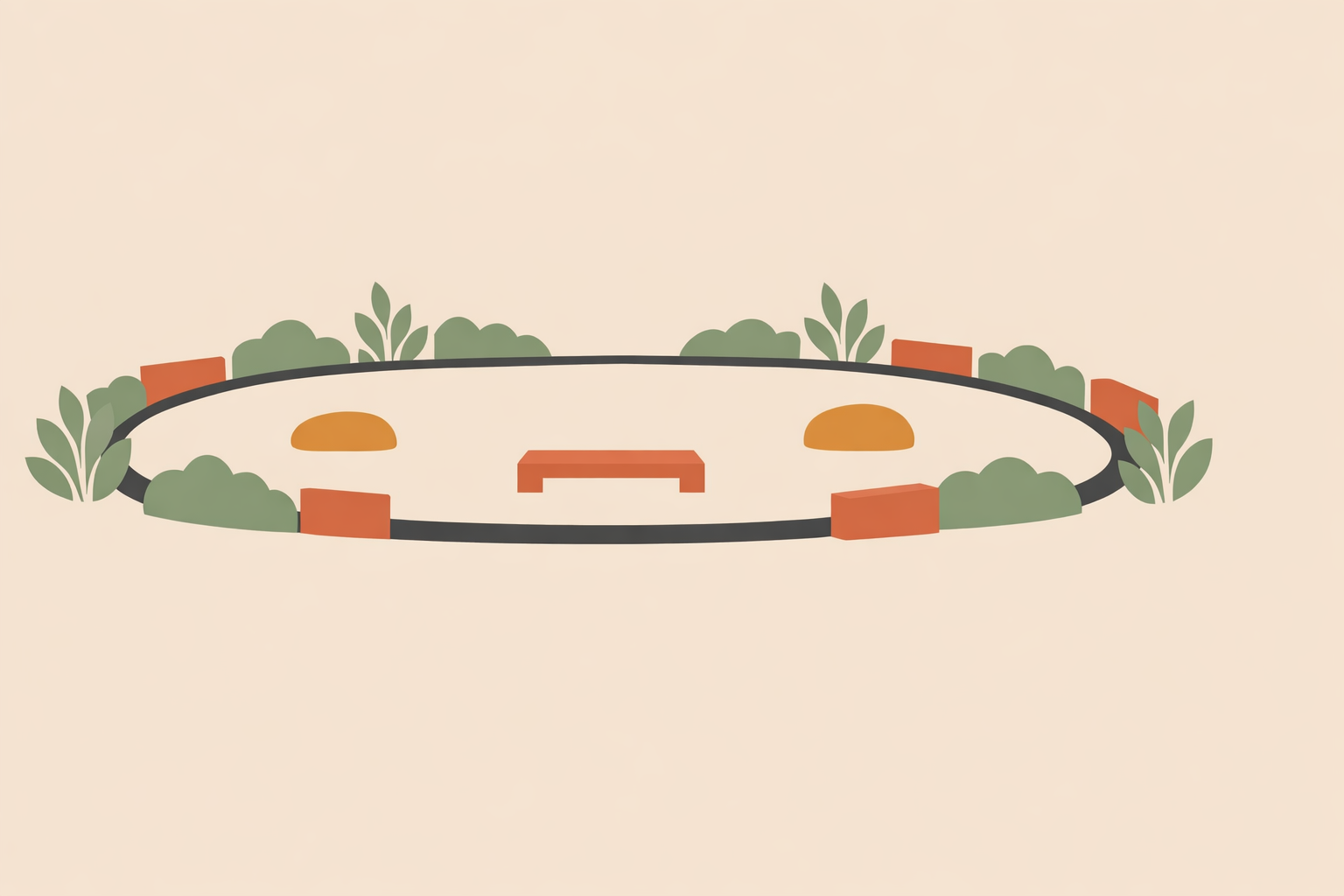
Many memory-support programs create a sensory garden, then discover the real work starts afterward: making daily use feel calm, consistent, and safe while preserving a genuine sense of freedom. A gate draws attention. A rough threshold disrupts confidence. A lifted paver stays invisible until someone catches a toe. Families want to know how wandering is supported. Teams do their best, but without a shared routine, decisions stay reactive.
Key Takeaway: Safer, more humane sensory gardens are sustained through five repeatable checks. First, shape boundaries and layout to welcome walking: enclosed but non-confining edges, discreet gates, continuous loops, clear sightlines, and recognizable landmarks. Second, reduce falls with firm non-slip paths, visual edge contrast, step-free routes, shaded rest points, and regular threshold-to-seat checks. Third, choose planting and sensory experiences carefully: non-toxic, safe-to-touch palettes, clear tasting protocols, allergy awareness, and manageable sensory density. Fourth, manage water, structures, tools, and weather with guarded features, secure storage, and routine environmental checks. Fifth, support the whole team with shared notes, consistent handovers, individual matching, and steady improvement over time.
Safety Check 1: Boundaries and Layout That Support Walking
The most supportive dementia-friendly gardens don’t feel restrictive. They feel easy to read and easy to move through, starting with a perimeter that protects without “shouting” about it.
In practice, enclosed edges work best when they blend into the garden experience. Softened boundaries can help people feel less confined, which is why climbers, espaliered fruit, and layered planting along walls are such dependable choices.
Gates deserve special care. Keep them secure and discreet, and avoid designs that visually announce an exit or invite climbing. Pretty arbors or decorative openings can unintentionally become a magnet for attention in spaces meant to feel settled.
Then let paths do the gentle guiding. Dementia garden guidance recommends continuous loops with no dead ends, so a person can keep walking and return naturally to something familiar.
Sightlines and landmarks add quiet confidence. Community dementia garden guidance recommends distinctive landmarks—a large pot, a birdbath, a recognizable feature—so it’s easier to know where you are without needing instructions.
A quick seasonal boundary audit prevents many repeat problems:
- Walk the full loop from the entrance and note any point where the route feels unclear.
- Check every latch for discreet placement and easy team use.
- Stand at the farthest point and confirm there’s still something orienting to see or hear.
- Look for growth that has blocked views or tightened corners.
Often the best fixes are small: adjust a latch, screen a fence, add a colored planter at a turn, or prune to reopen a line of sight.
Safety Check 2: Paths, Surfaces, and Rest Points That Reduce Falls
Once the layout invites movement, the ground has to earn trust. Falls are one of the biggest practical concerns in memory-support gardens, so this check starts underfoot.
Horticultural guidance for dementia settings highlights fall risk as a key issue, especially when disorientation is already part of the picture. Dementia garden guidance recommends non-slip materials and stable routes, which usually means firm, even, wet-safe surfaces and avoiding abrupt level changes.
Make the walking zone easy to read. The same guidance recommends contrasting edges so path starts and ends stand out from planting.
Accessibility supports safety. Planning guidance supports raised beds and shelter from sun and wind, which helps people stay comfortable enough to move steadily and take breaks when they need them.
Seating is part of circulation, not décor. Benches with backs and arms tend to work best because they support safer sitting and standing, and they get used more consistently.
There’s also a pattern many practitioners recognize: when the outdoor space feels reliable, people often move with less hesitation. One case study reported fewer falls during a period of supported gardening activity.
A strong weekly routine is the “door to first seat” walk:
- Check the threshold for lips, curling mats, or grates that break a smooth step.
- Inspect the first stretch for moss, slick patches, loose pavers, or subtle level changes.
- Confirm edges are still visible after wear, shade, or plant growth.
- Make sure the first rest point is easy to spot and shaded when it’s most used.
Most gardens become safer through frequent correction of these small friction points, not major redesign.
Safety Check 3: Planting and Sensory Design for Safe Curiosity
A memory-support garden should invite touch, scent, and recognition. The most effective planting plans are often restrained enough to feel soothing while still offering real interest.
Start with the assumption that people will touch what is within reach. In activity areas, prioritize non-toxic choices and plants that won’t easily injure skin.
Some familiar ornamentals bring avoidable risk in wander-and-touch spaces. Dementia community garden guidance flags hazardous plants including oleander, foxglove, rhododendron, azalea, euphorbia, and hydrangea as poor choices for accessible beds.
There are plenty of satisfying alternatives. Traditional herb gardens have long offered scent, texture, and gentle participation, and they translate beautifully here, especially within nature and outdoor therapy practice. Mint, thyme, sage, lemon balm, and seasonal edibles like strawberries can be wonderful when tasting is guided and clearly labeled.
Plan for skin comfort too. A toxicology reference notes allergic dermatitis linked with plants including chrysanthemums, ivy, and ragweed-family relatives such as chamomile. Keeping a short “watch list” of likely irritants helps teams make safer swaps during seasonal updates.
Finally, watch sensory density. Reviews of dementia environments suggest high stimulation can increase confusion or agitation for some people, especially when many strong cues compete in one view. Good sensory design gives the nervous system room to settle.
Helpful planting habits include:
- Group strong fragrances rather than scattering them across the whole loop.
- Repeat plant shapes and colors to build familiarity.
- Keep tasting plants clearly identified and separate from admire-only beds.
- Limit highly stimulating focal points within a single sightline.
Done well, the garden still feels generous; it just becomes easier to take in.
Safety Check 4: Water, Structures, Tools, and Weather
Many favorite garden elements also need the clearest boundaries. Water, sheds, greenhouses, loose tools, glare, wind, and temperature shifts all benefit from routine attention.
Water features are a good example. Keep the sensory value, but shape it responsibly. Open ponds and deep basins often add more risk than benefit where independent wandering is supported. Shallow, guarded, or grate-covered options can keep sound and movement while reducing hazards.
Structures should feel trustworthy. Check doors, thresholds, glazing, handrails, and fixings for smooth use and solid stability, and reduce any chance of accidental lock-ins.
Tool handling needs real discipline. Dementia horticultural guidance recommends keeping track of all tools at all times, with clear accountability from start to finish. Lightweight, easy-grip tools support calmer participation.
Weather can change a garden’s safety profile quickly. Research highlights particular vulnerability to heat and cold for older adults living with dementia, which reinforces the value of shade, sheltered seating, and easy indoor access.
A short weekly infrastructure check covers most recurring concerns:
- Inspect water features for depth, edge grip, cleanliness, and visibility.
- Test greenhouse and shed doors for sticking latches and lock-in risk.
- Count tools out and back in after every session.
- Check the week’s forecast and adjust seating, timing, and plans.
These simple habits keep the space predictable, and predictability is a major form of support.
Safety Check 5: Team Communication and a Living Safety Culture
Even the best garden depends on the people who steward it. Safety becomes steadier when everyone shares the same practical picture and keeps learning together.
Start with the individual. Walking habits, sensory preferences, outdoor confidence, and day-to-day energy shape what kind of support works best. Traditional practice has always been person-led: observe, adapt, and keep what genuinely helps.
Handovers are part of that care. A review found structured handovers such as SBAR are generally linked with stronger communication and consistency. The same structure works in garden settings without sounding clinical; it just makes key observations easy to pass on.
For example:
- Situation: South path open; wind stronger than expected.
- Background: One participant dislikes sudden sound and avoids the chime area.
- Assessment: That corner may feel too stimulating this afternoon.
- Recommendation: Use the west bench instead and keep the herb activity close to the door.
To keep improvements practical, work in small tests rather than sweeping changes. Quality-improvement guidance describes the PDSA cycle as a way to trial a change, observe results, and refine. In a garden, that could be moving a bench, adding a landmark, shifting a planting palette, or tightening a tasting protocol.
A simple learning rhythm can include:
- Brief observation notes after sessions.
- A quick comfort or orientation rating if your team already uses one.
- Comments from participants and family.
- A monthly review of patterns, near misses, and useful adaptations.
Finally, protect the emotional feel of the space. Clear explanations, consent, and a steady pace help people feel respected outdoors. When support is calm and choice-led, the garden becomes somewhere people can settle into, not something they have to manage.
Conclusion
A safe sensory garden isn’t created in a single installation. It’s maintained through small, repeated acts of attention: softening a boundary, relaying a paver, simplifying a bed, moving a bench into better shade, and improving how observations are shared.
Over time, these choices shape a space that feels trustworthy. Walking is welcomed. Plants invite curiosity without hidden hazards. Structures and tools are stewarded with care. Weather is anticipated rather than reacted to.
As with all traditional, place-based wellbeing practices, the garden teaches the team what works when people spend real time in it. Keep the five checks simple, consistent, and human. The result is a calmer outdoor experience that supports movement, recognition, and ease, and the wider craft of horticultural therapy.
Train in Horticultural Therapy
Build safer, person-led garden routines with the Horticultural Therapy Certification.
Explore Horticultural Therapy →