

Falls and near-falls can tell you a great deal. They often mark a shift in movement, attention, confidence, surroundings, or daily rhythm long before anyone can clearly name what has changed.
The most helpful response is rarely blanket restriction. A steadier approach is to notice patterns, translate them into clear observations, and adjust support in ways that protect both safety and autonomy.
Key Takeaway: Falls and near-falls are actionable signals. These seven checklists help turn them into safer routines by looking at movement, attention, behavior, vision, environment, and follow-up after an incident.
Checklist 1: When a Fall Becomes a Dementia Warning Sign
A fall or near-fall is information, not blame. It can reflect a change in abilities, routine, surroundings, or the kind of support that feels workable.
Start with one grounded question: what was different in the hour before? Lighting, rushing, fatigue, discomfort, distraction, or trying to juggle two tasks often sets the scene.
This keeps support respectful. Instead of “Why did you do that?” the better question is, “What made this moment harder than usual?”
- One-sentence note example: “Near-fall at 7:15 pm while reaching from standing; dim hallway light, no cane, rushing to answer door.”
- Supportive script: “Let’s pause and catch our breath. Then we can look at what would make that feel steadier next time.”
Checklist 2: Walking, Balance, and Strength Red Flags
Movement changes are often the clearest early clues. When someone seems “a bit slower” or “not quite themselves,” make the observation specific enough to act on.
Many older adults with cognitive change experience balance difficulties, so small shifts in standing, turning, or stepping are worth catching early.
Useful red flags include:
- Trouble rising from a chair without pushing hard through the arms.
- Shuffling, shorter steps, or a new foot drag.
- Wavering during turns, especially in narrow spaces such as bathrooms.
- Fatigue halfway through a familiar route.
- Holding onto furniture more than usual.
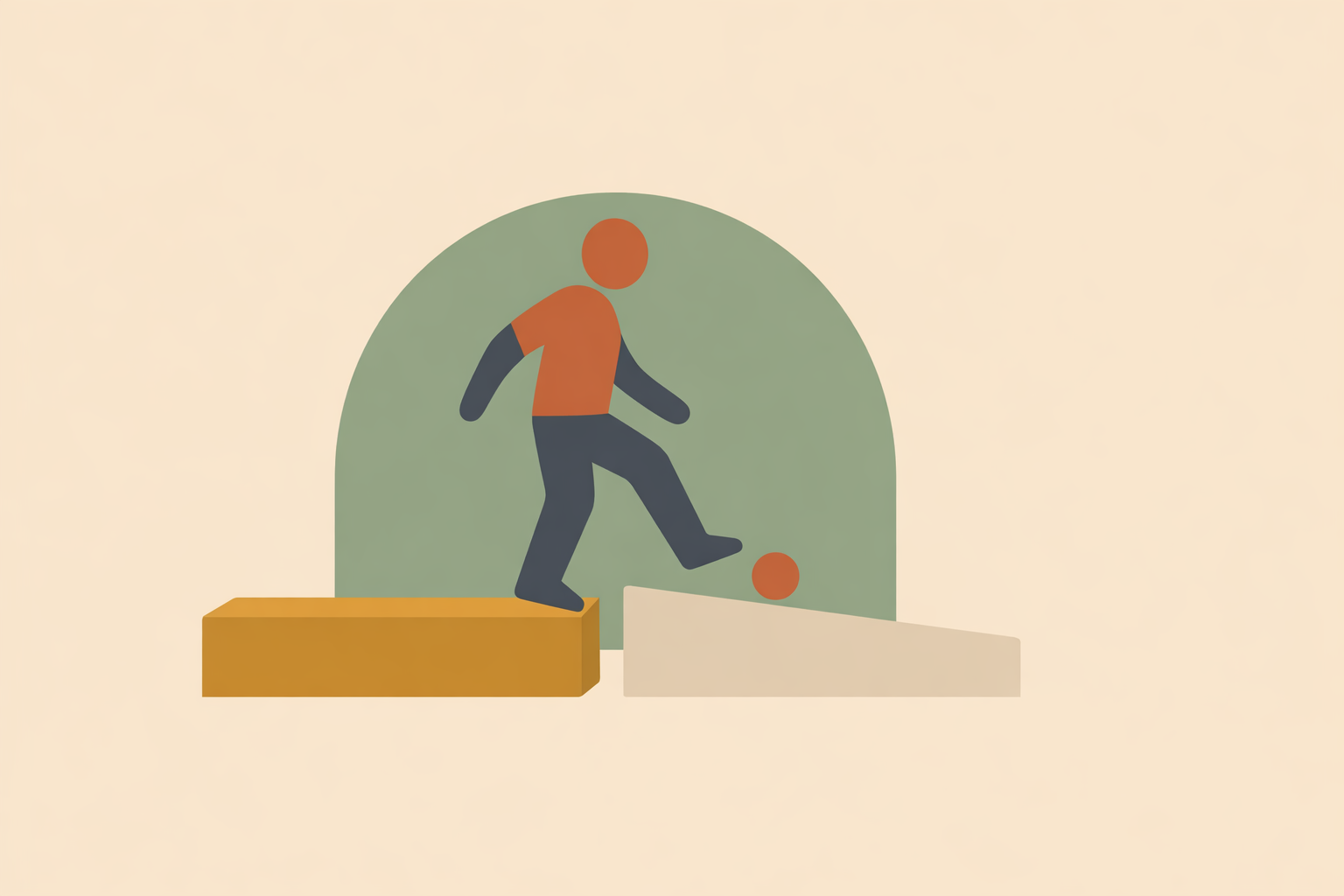
- Difficulty with curbs, thresholds, or stairs that used to feel manageable.
It’s natural to want to “do more” to keep someone safe, but too much help can quietly shrink confidence. Aim for support that fits the person and keeps movement familiar and achievable.
Tailored exercise sits at the center of fall prevention. That can be short supervised walks, simple strength-and-balance practice, or culturally familiar movement such as tai chi, qigong, or folk dance.
Keep notes concrete, because details guide better decisions. “Needed two attempts to stand from chair” is more useful than “weaker today.”
Checklist 3: Cognitive Slip-Ups That Raise Fall Risk
Fall risk doesn’t always begin in the legs. Attention, sequencing, and planning shape how safely someone gets through everyday tasks.
Routine actions like standing, turning, toileting, or carrying a cup can become higher-risk when functional movements and sequencing start to slip.
Watch for signs such as:
- Starting to stand before the chair or walker is in position.
- Reaching from an unstable stance.
- Leaving a mobility aid behind.
- Stopping midway through a familiar sequence and seeming unsure what comes next.
- Misjudging distance when sitting down or turning.
Dual-tasking is a common tipping point. In dementia, multitasking (like walking while talking) can make timing and balance less steady.
A quick real-world check: walk together to the kitchen while carrying a light object and having a simple conversation. If the person slows sharply, stops speaking, or loses track of the object, move to one task at a time for steadier outcomes.
- Environmental cue example: a bold marker on the chair arm with a short script such as, “Pause. Feel the chair. Reach back. Sit.”
- Documentation line: “Lost sequence standing from toilet at 3 pm; needed step-by-step verbal cueing.”
Checklist 4: Behavior and Mood Changes That Signal Risk
Behavior is often communication. Pacing, repeated standing, agitation, resistance, or sudden withdrawal can be the clearest sign that something in the moment isn’t working.
In traditional, person-centered support, the goal is to understand what the behavior expresses. Discomfort, noise, confusion, boredom, urgency, fatigue, and overstimulation can all increase fall risk.
Use an ABC note to spot patterns:
- Antecedent: what happened just before
- Behavior: what the person actually did
- Consequence: what happened next
This pairs well with individualized interventions, especially when needs change across the day.
When appropriate, start with gentle, non-drug responses: reassurance, a meaningful task, music, a movement break, fewer instructions, or a simpler routine. Song, storytelling, folding laundry, shelling peas, and other shared chores have long helped restore rhythm and reduce distress in everyday life.
Example: at 4:30 pm, someone begins pacing and repeatedly reaches for unstable furniture. Rather than correcting them sharply, offer a familiar task, reduce noise, and guide a short purposeful walk. The whole moment often settles.
- ABC example: “Before: TV loud, room crowded. Behavior: stood repeatedly, grabbed unstable side table. After: turned TV off, offered folding cloths, placed sturdy chair nearby; settled within 5 minutes.”
Checklist 5: Vision and Perception Changes in the Home
Sometimes the challenge is perception rather than strength. A space that looks straightforward to you can feel visually confusing to someone else.
Spatial-awareness problems can make previously safe rooms harder to navigate, and cognitive changes can magnify the impact of everyday visual difficulties.
Watch for signs such as:
- Misjudging where a chair is.
- Stepping around obstacles that are not there.
- Hesitating at shiny floors, shadows, or patterned rugs.
- Reaching past the stable surface they meant to hold.
Different dementia patterns can also look different at home. In practitioner experience, dementia with Lewy bodies often brings early falls, changes in gait, visuospatial difficulties, and fluctuations in alertness that can make one room feel different from one hour to the next.
Do a quick visual check: are glasses on and clean, are key objects easy to distinguish, and is the route from bed to bathroom softly and evenly lit?
Small changes can make a meaningful difference:
- Use contrast so the toilet seat, chair, or first stair stands out clearly.
- Reduce glare and deep shadows.
- Keep surfaces visually simple where possible.
- Add gentle night lighting on important routes.
Checklist 6: Environment, Routine, and Mobility Aids
The home or care setting can quietly raise risk even with the best intentions. Layout, clutter, timing, habits, and equipment all shape how steady movement feels.
Home modifications can reduce environmental hazards, especially when they’re chosen thoughtfully and introduced in a calm, step-by-step way.
Good places to start include:
- Removing loose rugs and trailing cords.
- Keeping key walking routes clear and familiar.
- Brightening the bed-to-bath path, kitchen, and entry.
- Adding stable resting points along longer routes.
- Reviewing the space after any furniture or equipment change.
Routine matters as much as layout. Unhurried toileting opportunities reduce rushing, and many people move more steadily at certain times of day, so schedule higher-demand activities for their best window.
Mobility aids need the same practical attention. Assistive devices lower risk when they’re familiar, well placed, and suited to the person; a poorly matched aid can create new problems in daily use.
Support works best when it’s shaped around the person. In fall prevention, individual tailoring is a consistent theme.
- Five-minute sweep: “Remove hall rug; place sturdy chair at midpoint; improve contrast at first step; keep cane by the door instead of in the bedroom corner.”
- Routine note: “Toileting prompts at 10 am, 1 pm, and 4 pm reduced rushing this week.”
Checklist 7: After a Fall or Near-Fall
After a fall, calm presence comes first. Protect privacy, pause, observe, and follow local procedures if urgent support is needed.
In everyday practice, don’t rush straight into lifting or pulling. Take in what happened, how the person seems, what they’re saying, and whether the environment contributed.
Then document what you actually saw. Specific notes beat broad labels every time.
- Time and place
- What the person was doing just before
- Footwear
- Lighting
- Any mobility aid in use
- Observed movement, attention, mood, and surroundings
For example: “Left foot caught rug edge during turn; reached to unstable side table; slid to knees.” That gives the next review somewhere real to begin.
Higher-risk situations often benefit from a multifactorial assessment involving the person, family or care partners, and relevant professionals. A shared review usually produces more workable next steps than focusing on one factor alone.
Care partners matter immensely here. Their day-to-day observations often reveal the pattern: time of day, fatigue, rushing, confusion, a changed route, a new pair of slippers, moved furniture, or a stressful event.
Close the loop with one owner and one review date so good observations turn into real follow-through.
- Supportive script: “I’m here with you. Let’s take a moment, then we’ll work out what would make this path feel easier.”
- Debrief prompt: “What felt different today? Any changes in sleep, footwear, furniture, pace, or routine?”
Bringing the Checklist Into Daily Practice
These seven checklists work best as one way of seeing. A fall is often the meeting point of movement, attention, mood, vision, environment, timing, and support style.
The aim isn’t to remove all risk by stripping away autonomy. It’s to support steadier choices, clearer routines, and respectful collaboration around what matters most to the person.
Traditional practices fit naturally here: gentle movement, music, storytelling, shared tasks, uncluttered spaces, and steady rhythm in the day. Combined with careful observation and practical adjustments, they help support feel safer and more humane.
Keep notes concrete, make changes small enough to sustain, and review patterns regularly. Over time, isolated incidents become dependable guidance for day-to-day well-being.
Explore the Dementia Certification Course
Build on these fall-risk checklists with deeper dementia care skills in the Dementia Certification Course.
Explore Dementia Course →