Practitioners who support students and professionals with persistent writing challenges often see the same moment: the cursor stalls, shoulders climb, and the writer insists they’re “just not motivated.” Pep talks, tighter deadlines, and accountability trackers can spark effort for a day or two, then the freeze returns as soon as the task gets longer. When pressure rises, the grip tightens, self-critique gets louder, and working memory can seem to drop out. That pattern points to overload, not resistance.
With dysgraphia and related differences, the mechanics, sequencing, and self-monitoring of writing can consume a disproportionate share of energy. Once the load climbs past capacity, shutdown often follows. The practical answer is better design: reduce strain, externalize planning, and widen the acceptable ways to produce language. A coach’s role is to lower cognitive and motor load so ideas can surface and keep moving, especially in neurodiversity and learning differences support.
Key Takeaway: Essay freezes usually reflect writing strain, not lack of motivation. The most useful support is to reduce load and protect capacity through body setup, pacing, initiation scaffolds, flexible output modes, and a simple staged writing rhythm.
Body setup: small changes that reduce writing strain fast
Before touching the keyboard or pen, stabilize the body. A few low-tech changes can reduce strain quickly and make longer sessions more workable.
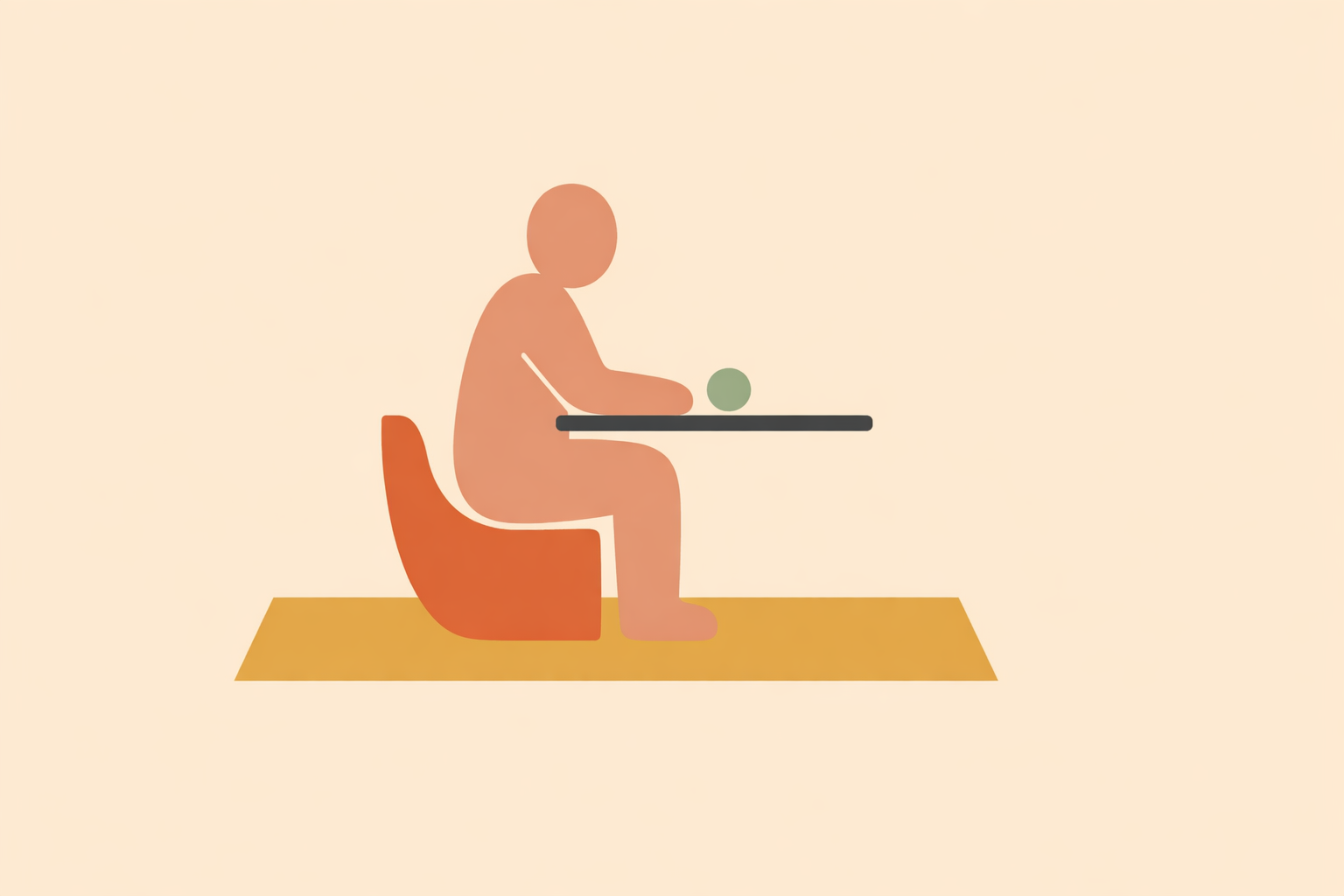
Start with the base: feet grounded, hips supported, and forearms resting comfortably. Keep wrists neutral and let shoulders drop rather than hover. These details often change the whole feel of a writing session.
Then fine-tune the tools. A thicker pen barrel, a lighter grip, a slight paper tilt, or raised-line paper can reduce the precision demands of handwriting. Many practitioners also find that encouraging whole-arm movement, rather than only finger movement, reduces tension.
If handwriting stays high-strain, move to typing without hesitation. Many adolescents with handwriting challenges can work longer with less discomfort on a keyboard.
5-minute setup ritual:
- Chair and feet: feet planted, hips slightly above knees if possible.
- Arms and wrists: forearms supported, wrists straight, shoulders released.
- Tools and page: thick pen, light grip, paper angled toward the writing hand.
- Lighting: reduce glare and keep the page easy to see.
A simple adjustment log can be surprisingly useful: chair raised, notebook shifted, pen changed, brightness lowered. Over time, those notes reveal patterns that make sessions more reliable.
Pacing and micro-breaks for longer writing sessions
When time feels tight, most people push harder. For many writers, the steadier move is to pause sooner. Writing tends to go better in pulses than in marathons.
Short work intervals paired with brief rests prevent cumulative writing strain. Effort stays more stable when it’s broken into manageable segments instead of one long push.
Even one minute of stretching or a short walk can help focus and motor control during writing. For screen-based work, the 20-20-20 rule can ease visual strain.
Micro-break rhythm to teach:
- Try 18 minutes writing, 2 minutes off.
- Repeat this three times, then take a longer reset.
- Pause before discomfort builds, not after.
Break menu:
- Stand and roll the shoulders
- Look out a window
- Take a few slower exhales
- Sip water
- Walk briefly across the room
One helpful coaching rule is simple: stop before strain spikes. That protects momentum better than pushing through and losing the rest of the session.
Initiation scaffolds that reduce blank-page freezing
Blank-page freezing often eases when the first step gets smaller. The aim at the start is motion, not polish.
Separate thinking from refining. Outlining, drafting, and editing use different kinds of attention, so they tend to work better when they’re not competing in the same moment.
A 5–10 minute freewrite can reduce blank-page freezing and help writers begin. Visual mapping can also support writers who lose the thread of structure once they start composing full sentences.
Another reliable lever is releasing the demand to write in order. Many writers can draft the middle or easiest section first and return to the introduction later.
Low-friction starters:
- Freewrite: “For 7 minutes, write everything you know in fragments. No editing.”
- Three-bubble map: main point, example, connection.
- Talk-first start: explain the idea aloud while someone captures bullet points.
- Sentence frame: “This matters because…”
- Permission slip: skip the introduction and begin where the energy is.
These scaffolds work because they lower the cost of starting. Once words are moving, clarity is easier to find.
Choose lower-strain writing modes
When one mode fights the body, switch the mode. Flexible output keeps ideas moving and reduces shutdown.
Build a menu: handwriting, typing, dictation, bullet points, slides, audio notes, or visual mapping. Different tasks fit different channels. Brainstorming often flows best by voice, shaping and editing often fit typing, and quick marks can still be useful by hand.
Mode-switching works best when the rules are agreed in advance and treated as skilled adaptation.
Mode-switching rules:
- If hand or shoulder strain rises and stays there: switch to typing.
- If the environment is too noisy for dictation: capture bullet points instead.
- Use voice for idea generation, typing for shaping, and handwriting only where it truly helps.
Removing hesitation around these switches matters. Writers do better when flexibility is framed as strategy, not failure.
A staged writing cycle clients can rely on
Individual tips become far more powerful when they’re organized into a repeatable rhythm. A simple cycle gives the writer something dependable to return to.
Think in stages: prepare, map, draft, pause, revise. Each stage has one job, which protects attention and makes progress easier to see.
A practical 60-minute cycle:
- Prepare: body setup, one-sentence goal, timer on.
- Map: bubbles or bullets only, no full sentences yet.
- Pause: brief movement and eye rest.
- Draft: turn bullets into rough sentences.
- Pause: longer reset with water, snack, or a short walk.
- Revise: improve clarity and order only.
- Log: note time on task, strain level, and one tweak for next time.
This cycle reduces all-or-nothing thinking. The writer isn’t asked for a polished piece all at once, only the next clear step.
Coach the context, not just the writing task
Good strategies fade quickly if the environment keeps working against them. Context coaching matters as much as writing coaching.
Start with shared, support-focused language: what makes writing harder, what helps, and what conditions protect follow-through. Keep notes simple enough that teachers, managers, or family members can use them.
Then look at the demand itself. Heavy handwriting, noisy rooms, long unbroken sessions, and unclear expectations can all raise strain. Support can include alternative formats, planned breaks, flexible drafting methods, and permission to change mode when needed, much like choosing the minimum effective support through quick-match accommodations.
Useful scripts:
- Student to teacher: “I show my ideas best when I outline by voice and type the draft.”
- Professional to manager: “I work best on long-form writing in shorter focused blocks with a brief pause.”
- Family to school: “Hand strain builds quickly, and a keyboard plus planned movement breaks helps maintain engagement.”
Environment checklist:
- Quiet corner or headset for dictation
- Writing frames and mind-map templates in one easy place
- Shared language such as “map first, draft second” and “pause before strain builds”
The more predictable the context becomes, the less energy the writer spends defending their capacity.
From quick strain relief to sustainable writing
Across ages and settings, the pattern is familiar: what looks like resistance is often writing strain. When strain is named clearly, the work shifts toward design and fit.
Stabilize the body, pace effort, lower initiation friction, allow mode changes, and shape the surrounding context. Freezes often soften, and writing starts to feel like a supported process rather than a battle, which is central to effective dysgraphia support coaching.
As with any coaching approach, stay attentive to the individual. If pain, intense distress, or persistent school/work barriers are part of the picture, it’s wise to broaden support and coordinate with the right professionals and accommodations while keeping the day-to-day writing system gentle and workable.
Advance Dysgraphia Support Coaching
Apply these strain-reducing strategies with confidence in the Dysgraphia Support Coach Certification.
Explore Dysgraphia Support Coach →