Most nutrition coaches try to improve meals by handing over a plan, swapping a recipe, or banning a technique. That can help briefly, but busy evenings, limited equipment, shifting budgets, and family preferences usually pull people back to what feels familiar. The steadier path is to coach the method behind the meal.
When cooking feels simpler and more repeatable, people are far more likely to do it again. Consistency matters more than a single “perfect” plate. In practice, supportive cooking is built from small skills: one easy vegetable method, one dependable way to build flavour, one starch approach that helps people feel steady, and one routine that works on an ordinary Wednesday.
Key Takeaway: Healthy cooking is best coached as a set of small, repeatable methods rather than a search for perfect meals. Gentle cooking, balanced browning, confident seasoning, and flexible meal structures make it easier for clients to cook at home more often, enjoy what they make, and stay consistent without moralising food or overcomplicating the process.
2. Gentle, low-water cooking makes everyday meals easier
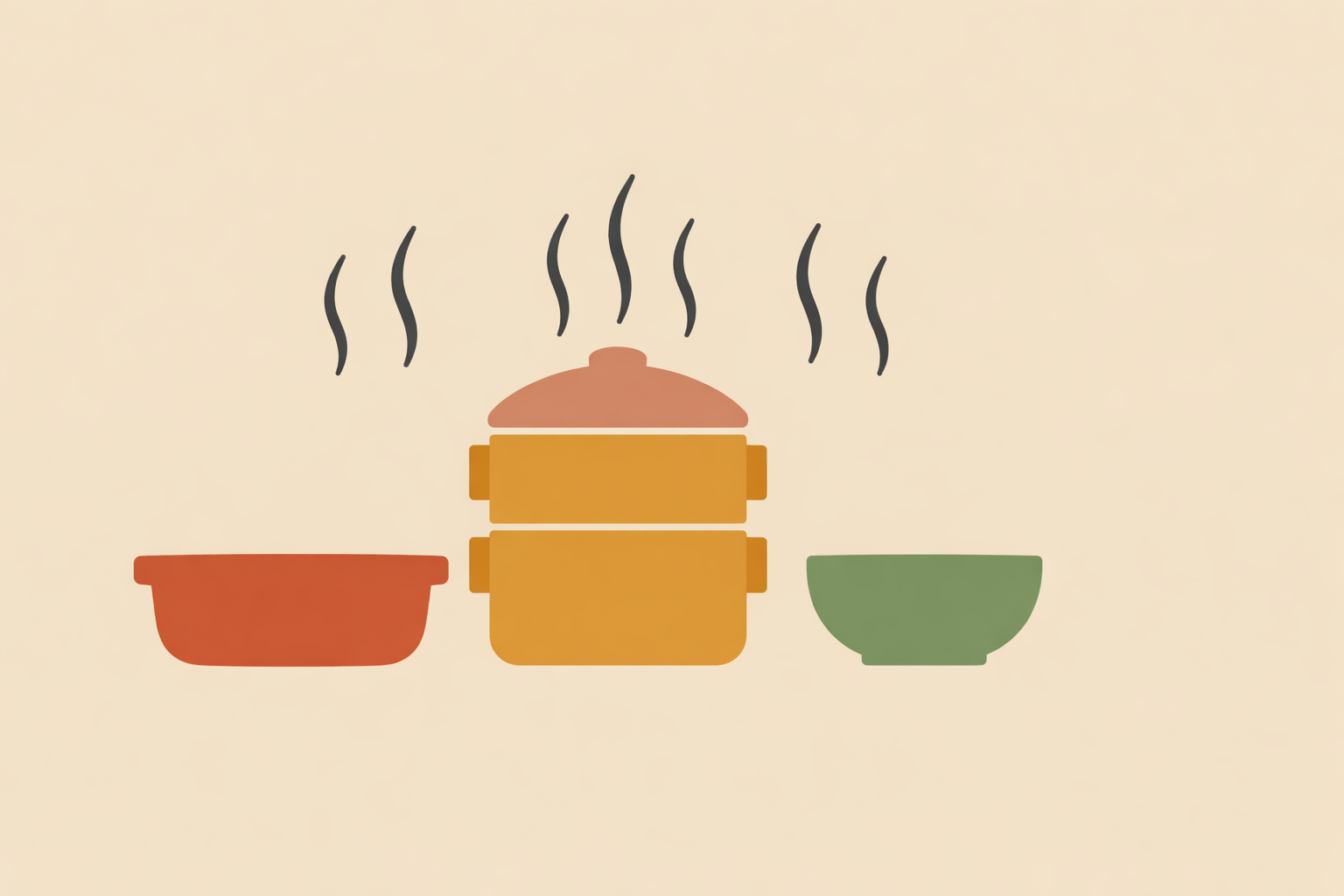
When a client gets home hungry with greens, broccoli, tofu, fish, or eggs, they need methods that work quickly and don’t create friction. Gentle, low-water cooking delivers that. Steaming, microwaving, and brief boiling move dinner forward with minimal cleanup and less decision fatigue.
Steaming is especially useful for vegetables, fish, dumplings, and tofu because it keeps texture tender and clean without needing much added fat. Microwaving belongs in the same family; with little water and a short cook time, it can help preserve nutrients while matching the pace of an ordinary evening.
Less water, less time, and less fuss often leads to better follow-through. When people know how to steam greens while rice cooks, or microwave broccoli in one covered bowl, vegetables show up more often.
Useful client-ready examples:
- Microwave broccoli: florets, a splash of water, covered bowl, 3 to 4 minutes. Finish with lemon and olive oil.
- Steam fish or tofu: 6 to 8 minutes over simmering water with ginger and scallion.
- Brief-boil green beans: 3 to 5 minutes, then cool and dress with zest, oil, or toasted seeds.
Even when boiling is the best fit, short cooking times protect texture. Guidance on everyday eating also encourages avoiding overcooking, which aligns with what experienced cooks already know: people eat more vegetables when they still taste alive.
3. Roasting, grilling, and pan-cooking build flavour people return to
Gentle methods keep things easy, and flavour depth keeps people coming back. Roasting, grilling, and pan-cooking create browned, savoury notes that make vegetables, tofu, legumes, and fish feel satisfying rather than dutiful.
Dry-heat cooking concentrates flavour and builds contrast in texture. It also helps clients reconnect with foods they’ve been forcing themselves to eat without enjoying. Often, a tray of roasted cauliflower and onions lands better than a bowl of limp vegetables, even when the ingredients are nearly the same.
Cooking can also change what the body can access from colourful produce. Some foods show greater carotenoid availability after cooking, which helps explain why tomatoes, carrots, pumpkin, and sweet potatoes hold such a valued place in many traditional cuisines.
Moderation is the key. Aim for golden colour rather than deep char, especially with starchy foods. It’s an easy cue that translates across potatoes, breads, tofu, and tray-baked vegetables.
Simple coaching formulas:
- Sheet-pan meal: one protein, two or three vegetables, a spoonful of oil, a spice blend, then roast until golden.
- Skillet vegetables: medium heat, a little oil, cook until lightly browned and just tender.
- Grilling cue: visible grill marks are enough; avoid blackening.
When clients love crunch, offer a practical bridge. Oven-baked coatings, air-fried vegetables, or shallow pan-cooking can keep the pleasure of texture while staying easy to repeat.
4. Better seasoning often matters more than stricter food rules
Many people don’t need more restriction in the kitchen. They need better flavour skills. When food tastes good, it usually takes less salt, less sugar, and less heaviness to feel complete.
Start with fats. For everyday use, unsaturated oils such as olive, rapeseed, sunflower, soybean, corn, and safflower are a practical choice, and broad guidance encourages unsaturated oils more often. Traditional fats like butter or ghee can still have a place; clients simply benefit from a lighter default for regular cooking.
Salt works best as a skill, not a lecture. Teach clients how to build fullness of flavour before they automatically add more salt. Onion, garlic, ginger, toasted spices, citrus, vinegar, herbs, chile, mustard, and fermented condiments all help. WHO guidance includes less than 5 g of salt per day, so flavour-building techniques become a practical support.
Small amounts of sweetness also belong in a confident kitchen. A little honey in a marinade, fruit in a slaw, or roasted onions alongside bitter greens can round a dish without turning it into dessert. That’s old kitchen wisdom, and it still works.
Practical ways to teach seasoning:
- season in layers instead of all at once
- finish roasted vegetables with lemon or vinegar
- use one familiar spice blend repeatedly through the week
- keep an herb sauce or flavoured oil ready in the fridge
If a client wants to use less salt, coach a gentle experiment. Pull salt down slightly, push herbs, acid, and umami up, and let the palate adjust over time.
5. Cooking starches and legumes differently can change how meals feel
Starches and legumes are where comfort, budget, satiety, and routine meet. They also respond strongly to cooking method, which gives coaches a lot to work with when clients want meals that feel steadier and more satisfying.
Pressure cooking makes pulses more accessible during the week because it can shorten cooking time considerably. Once legumes feel easy, many households use them more often.
Starches also shift with cooling and reheating. Research suggests that chilling then reheating can lead to a lower glycemic index compared with some freshly cooked versions of the same foods. Many traditional kitchens already do this in practice with leftover rice, potatoes, and pasta.
Food structure matters too. When foods keep more of their structure, some contexts show attenuated glucose responses. In day-to-day coaching terms, method and texture shape how a meal lands.
Fermented foods add another layer of tradition and appetite appeal. Yogurt, kefir, kimchi, sauerkraut, miso, and tempeh bring bold flavour and variety, which makes simple meals easier to enjoy again and again.
Try these kitchen experiments with clients:
- cook extra rice or pasta, chill part of it, and use it the next day
- batch-cook beans and freeze them in small portions
- pair a starch with legumes, vegetables, and a tangy fermented element
- notice how different textures feel, not just how they “look on paper”
The goal is to keep dinner practical. Help clients notice which methods leave them comfortably fed and willing to repeat the meal.
6. Turn cooking methods into simple meal routines clients can repeat
Once methods are clear, structure makes them stick. Busy or hesitant cooks do well with minimum-viable cooking: repeatable formulas, forgiving recipes, and flexible components that can carry several meals.
A simple plate model helps: vegetables or fruit, a protein, a fibre-rich carbohydrate, and a modest amount of fat. It stays flexible enough to honour culture, appetite, access, and household reality while giving people a reliable pattern that fits nutrition and diet coaching well.
Translate that pattern into routines:
- sheet-pan supper: protein, vegetables, oil, spice blend, roast
- skillet bowl: vegetables, protein, sauce, serve over grains
- soup pot: aromatics, legumes, vegetables, broth, simmer
- assembled lunch: cooked grain, beans or eggs, chopped vegetables, dressing
Convenience supports consistency. Frozen vegetables, canned beans, microwaveable grains, jarred sauces, baked tofu, or leftover roasted vegetables can hold up a week of simple meals. This is thoughtful kitchen design.
Reduce friction by shaping the environment:
- keep washed greens and visible produce within easy reach
- store cooked beans and grains in clear containers
- choose one house sauce for the week
- repeat the same two or three meal formats until they feel automatic
Useful coaching questions:
- What feels realistic enough to repeat twice this week?
- Which prep step makes tomorrow’s meal easier?
- What flavour base would you happily use three times?
Minimum-viable cooking lowers friction without lowering care. It gives clients something stable enough to practice until it becomes theirs.
Conclusion: coach methods people can live with
The lightest touch often travels farthest. One gentle cooking method, one stronger flavour habit, and one realistic routine can do more than a highly controlled plan that collapses under ordinary life.
Traditional kitchens have always understood this: daily repetition teaches. Food becomes supportive when it’s cooked in ways people enjoy, recognise, and can return to. Modern evidence supports parts of that picture, and the deeper lesson remains practical: methods shape what actually gets cooked.
End with one experiment a client can try this week. Steam vegetables while the rice cooks. Roast a tray and finish it with lemon. Cook extra pasta and see how tomorrow’s reheated version feels. Next comes the most valuable step: notice what worked, keep what helped, and build from there as part of nutrition coach certification style practice.
A few steady practices beat perfection every time. That’s how healthier cooking becomes real life.
Advance with Nutrition Coach Certification
Build practical, client-ready coaching skills like these inside the Nutrition Coach Certification.
Explore Nutrition Coach →