Longevity coaching can easily drift toward numbers. A client arrives with an age goal or a biological-age app, and the session narrows to macros, steps, or supplements. Yet what people cherish most is often practical independence: getting up from the floor, carrying groceries upstairs, walking to prayer with friends, or having the steadiness to show up for community life.
Key Takeaway: Strong longevity coaching focuses on function first. Start by mapping the gap between years lived and years lived with desired ability. Then build weekly foundations around food, movement, sleep, stress, purpose, social connection, and environment. Finally, track progress through everyday function—such as chair-rise ease, walking tolerance, balance, carrying capacity, and participation—so clients can see change where it counts.
Dashboard 1: Map Lifespan and Healthspan Around Daily Function
When a client says, “I want to live to 95,” the most useful follow-up is often: “What do you want to still be able to do at 90?” That shift brings the focus back to the life they want to live, not just the number of years.
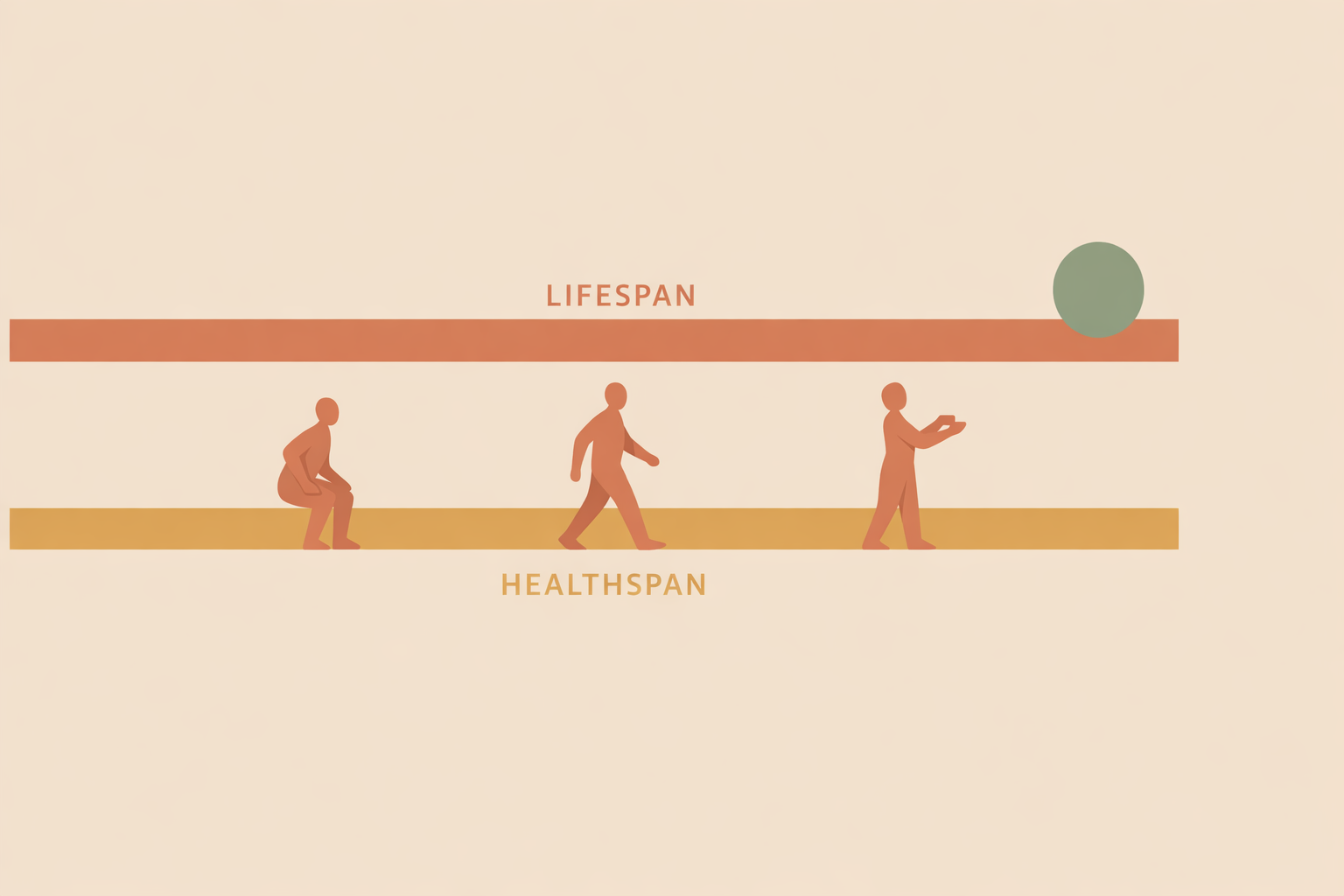
Lifespan is the full length of life, while healthspan is the portion lived in good health. Because healthspan is usually shorter than lifespan, coaching works best when it protects everyday ability for as long as possible.
Function makes a strong anchor because it’s personal and culturally grounded. A client may want to kneel to garden, climb stairs without hesitation, cook family meals with steady energy, or sit comfortably for prayer or meditation. These are meaningful targets, and they translate well into day-by-day coaching.
A simple session map keeps this practical. Sketch two lines: one for “years lived,” and one for “years of desired function.” Then fill in the details that give those years value.
- Current age
- Top three valued activities
- What feels easy now
- What feels limited now
- Supports already present
- One to three weekly behaviors that could narrow the gap
A client might choose goals like gardening on hands and knees for 45 minutes, carrying 10 kg of groceries two blocks, or sitting cross-legged for meditation. Barriers could be knee stiffness, low stamina on hills, or an irregular eating routine. Supports might be a walking neighbor, family meals on Sundays, or a market they can reach on foot.
From there, the work becomes clear and motivating. The client isn’t chasing “anti-aging” as an idea. They’re building strength for the garden, steadiness for daily routes, and nourishment that keeps them participating in life.
Dashboard 2: Build Healthspan Foundations from Everyday Habits
Once the map is clear, turn it into weekly rhythms the client can sustain. The aim is to create conditions that make supportive habits the easy choice more often than the hard one.
A solid foundations dashboard includes seven domains:
- Plant-forward eating
- Movement and strength
- Sleep and recovery
- Stress resilience
- Purpose
- Social connection
- Environment
These domains work best when they’re rooted in the client’s culture and real life. Traditional foodways, shared meals, walking as part of daily routines, devotional or reflective practices, and strong community ties have helped people stay well across generations. They also tend to be more sustainable than imported wellness rules.
Examples might include:
- Add beans or lentils to lunch on weekdays.
- Prepare two vegetable dishes at dinner several nights a week.
- Pair a short walk with an existing daily ritual.
- Use household tasks as strength practice: carrying laundry, watering plants, lifting shopping bags.
- Set a consistent screen-off time before bed.
- Schedule one standing call or visit each week with someone meaningful.
- Keep supportive foods visible and convenience snacks less visible.
Environment shapes what’s realistic. Access to recreational spaces is linked with higher physical activity, so a plan can look perfect and still fall apart if the surroundings make movement difficult.
Small environmental shifts can create outsized wins: shoes by the door, a walking route chosen in advance, beans ready in the fridge, a regular market trip on foot. Traditional households have long relied on this kind of structure because routine carries you when motivation fluctuates.
Social support also belongs in the foundations. Group participation helps movement habits stick for many older adults, whether that’s a weekly errand walk, shared food prep, or a simple neighborhood stretch routine.
Use a Simple Weekly Traffic-Light Check-In
To keep the dashboard usable, make it quick and visual. A weekly green, amber, or red check-in is often enough to guide the next session.
- Green: this felt workable and sustainable
- Amber: this happened inconsistently or needed adjustment
- Red: this was blocked and needs redesign or added support
A sample week might look like this:
- Plant-forward eating: Green
- Movement and strength: Amber
- Sleep and recovery: Amber
- Stress and purpose: Green
- Social connection: Green
- Environment: Red
This snapshot tells you where to coach right away. If environment is red because the route feels unsafe after dark, the response is redesign: shift to morning walks, choose an indoor option, or add a walking partner. If sleep is amber, explore practical levers such as earlier movement, a lighter evening meal, or a steadier wind-down routine.
Close the week by naming one lesson the client can reuse. Cooking once on Sunday made weekday lunches easy. Morning walks worked better than evening ones. Those small observations build a system the client trusts.
Dashboard 3: Track Functional Progress, Not Just Scores
The third dashboard asks a grounding question: is life getting easier to live?
Track real-world function that connects to the client’s goals and responsibilities. This keeps progress tangible and emotionally meaningful.
Useful options include:
- Ease of standing from a chair
- Comfort walking a familiar route
- Balance while turning or carrying items
- Carrying capacity for groceries or household loads
- Recovery after activity
- Steadiness of sleep and energy
- Willingness to join family or community activities
Among simple physical markers, gait speed and chair-rise ability are especially useful because they relate closely to everyday physical function.
Repeatable check-ins every four to six weeks are usually enough:
- Chair-rise: stand from a standard chair five times and note time and effort.
- Walking pace: walk a short set distance at a comfortable pace and observe ease.
- Balance: hold a tandem or narrow stance safely and note steadiness.
- Carry task: carry a manageable load for time or distance and note breathing, grip, and confidence.
Progress shows up in everyday life before it shows up in perfect measurements. Moving more easily, recovering faster, rejoining activities that were being avoided, and feeling more confident in daily tasks all count.
Balance training is worth revisiting regularly. Programs that include balance training are associated with fewer falls and better balance, strength, gait, and mobility. In coaching, that can mean gradually narrowing stance, adding controlled turns, and building complexity only when the basics feel steady.
Sleep belongs on this dashboard too. As movement patterns and daily routines settle in, many clients notice improved morning energy and a greater readiness to participate in the day.
When progress stalls, keep the response kind and practical. Reduce the load, shorten the walk, preserve the routine, and protect the social context. Consistency with a smaller action usually beats an ambitious plan that collapses under real life.
Use Biological-Age Data Lightly
Some clients will bring biological-age scores or app-based longevity metrics. These can be interesting, but they shouldn’t lead the coaching plan.
At present, there is no accepted gold standard for measuring biological aging. Treat these tools as context, then return to lived results.
If a score improves, note it and move on. If it worsens, don’t let it cancel the client’s real progress. Bring the focus back to function: getting up more easily, walking farther without stopping, sleeping more steadily, and re-entering community life with confidence.
Bring the Three Dashboards Together
Together, the dashboards create a clear arc. The first defines what matters. The second builds weekly conditions that support it. The third confirms whether those conditions are expanding real-life function.
This approach also respects how well-being is actually shaped: by surroundings, relationships, access, safety, time, and cultural fit. A red week isn’t a character flaw; it’s useful information.
That’s why equity belongs at the center of this work. When progress is inconsistent, look beyond effort and ask about housing, neighborhood safety, finances, family load, work hours, disability access, discrimination, and whether the plan truly fits the client’s daily life. Often the most skillful move is to make the plan more supported and more realistic.
In the end, longevity coaching is about helping clients keep the abilities, rituals, relationships, and roles that make the years feel fully theirs. And it’s wise to hold the usual care at the edges: encourage clients to choose safe movements, progress gradually, and seek individualized support when symptoms, falls, or major limitations are in the picture.
Coach Blue Zones Longevity
Build function-first plans with the Blue Zones–Inspired Anti-Aging Coach Certification for lasting healthspan habits.
Explore the Certification →