pMost equine programs eventually hit the same friction point: you’re tracking a participant’s emotional state while also reading a thousand-pound animal in a dynamic space. A teen shuts down as a gelding pins his ears—do you coach the breath or move the herd? Orientation can feel rushed, debriefs get squeezed, and your steadiest mare quietly carries too much of the load.
Families notice inconsistent boundaries at the gate. Volunteers look for cues that aren’t there. Landowners and insurers expect written roles, stop-rules, and documentation you can stand behind. If you’ve been holding meaning, managing risk, and protecting horses solo, you already know the cognitive load doesn’t scale.
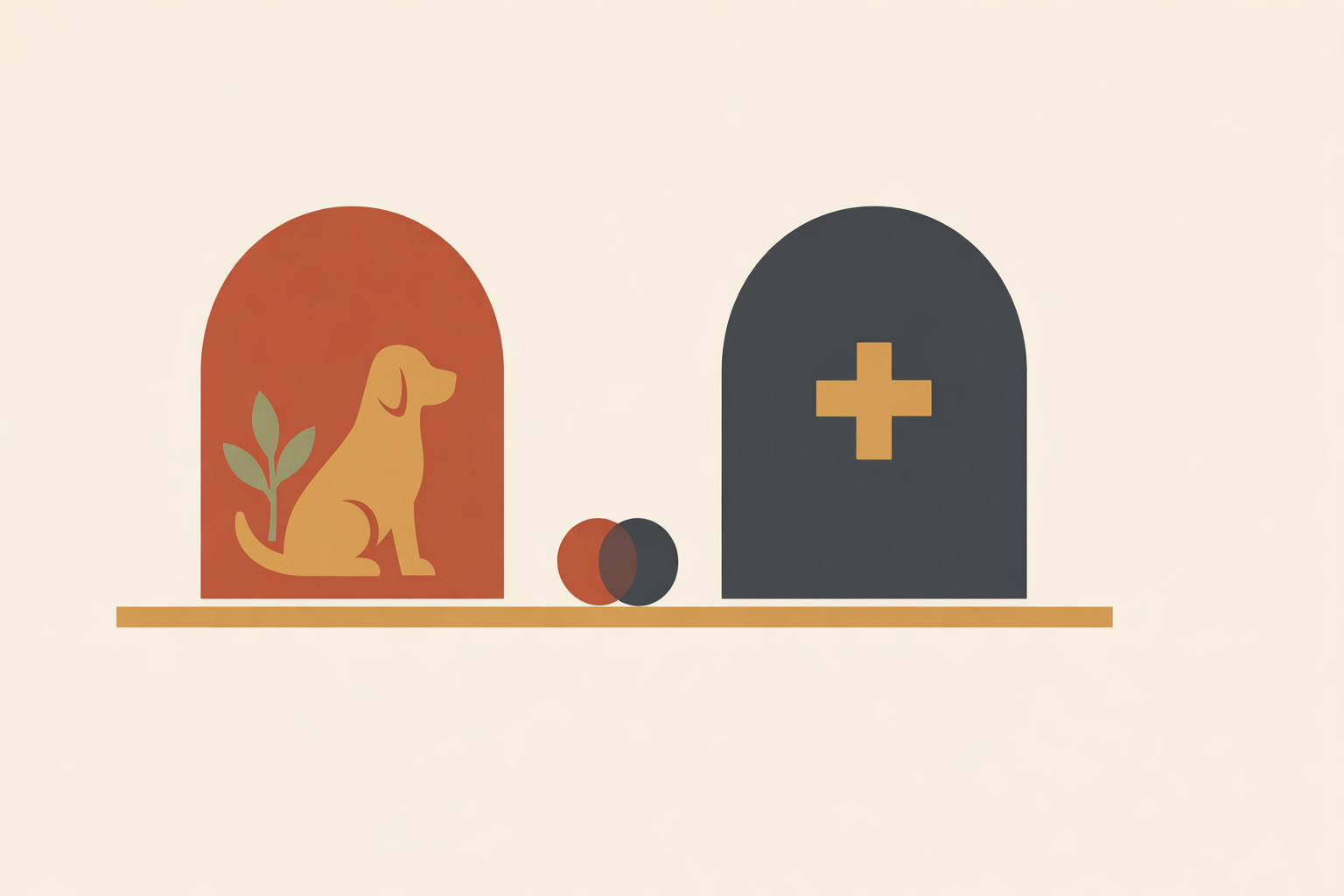
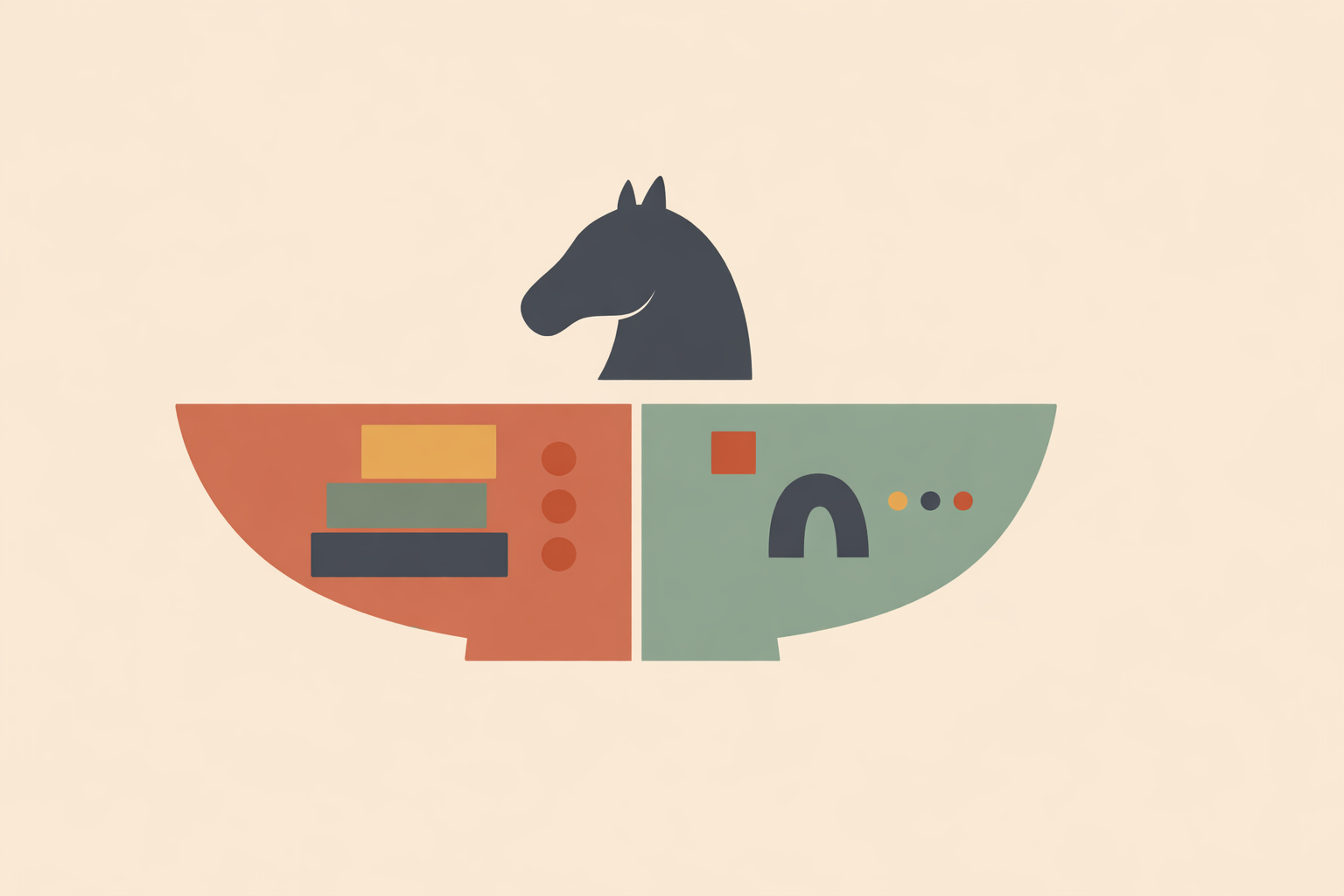
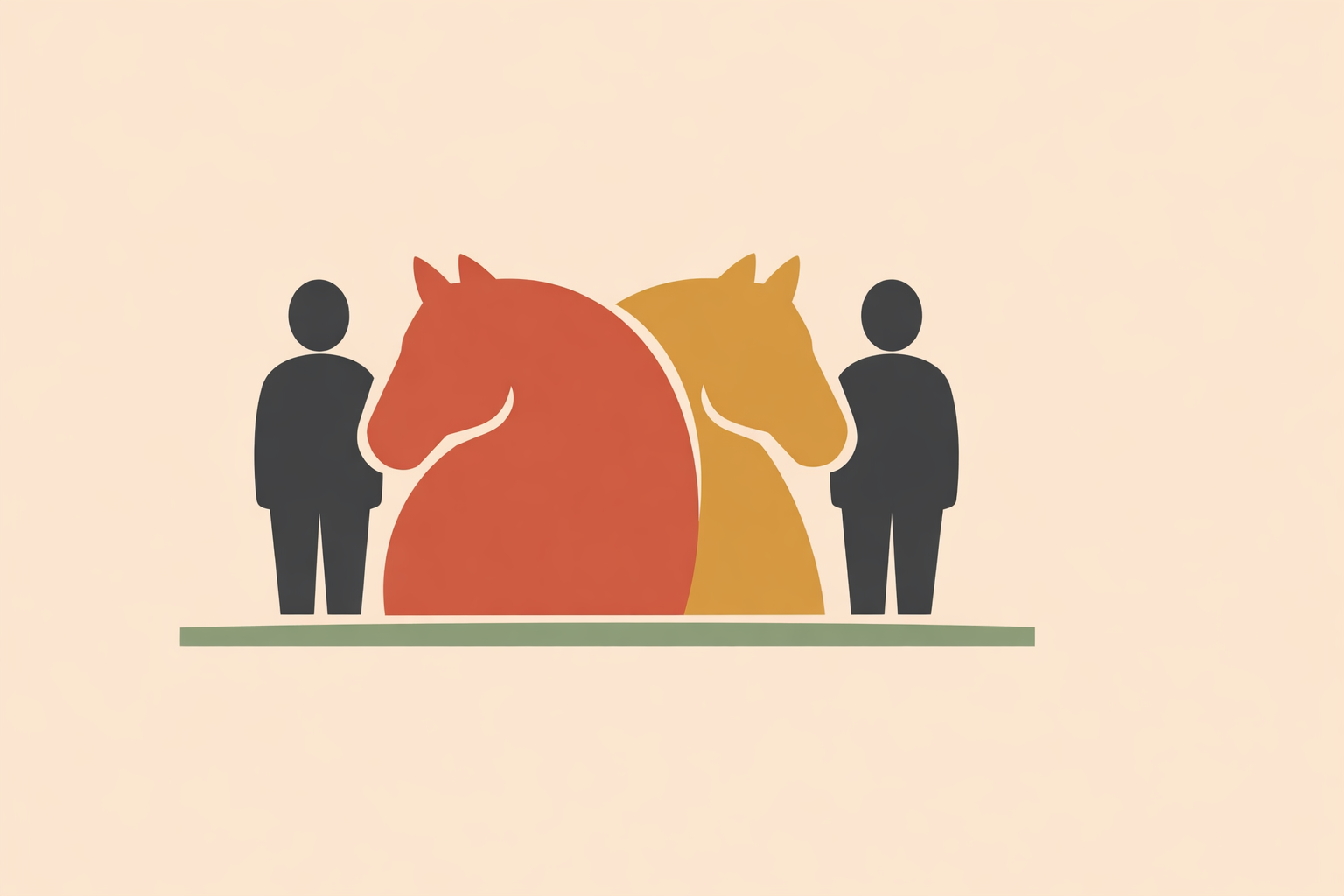
The most durable answer is a two-guide team: one guide stewarding intention, pacing, and reflection, and one equine specialist safeguarding horse welfare and shaping the activity design. That dual attention supports steadier sessions, richer learning, and horses who are genuinely advocated for as sentient partners.
Key Takeaway: Two-guide equine sessions work best when one guide holds participant safety, pacing, and reflection while the other actively advocates for the herd. Clear roles and shared stop-rules reduce mixed signals, protect horse welfare, and create more space for meaningful learning from arrival through closing.
Inside a Two-Guide Equine Session
A strong two-guide session follows a clear arc: arrival, orientation, grounding, observation, a core activity, reflection, and a simple close. You can adapt the details, but the rhythm is what keeps everyone—human and horse—more regulated.
1. Arrival and first contact
Arrival is often the most emotionally charged moment. Excitement and nerves walk in together, and horses are already reading the quality of what comes through the gate. This is where inconsistent boundaries show up fastest, so both guides stay visible, aligned, and calm.
Keep it simple:
- review gate and arena boundaries
- confirm practical safety basics
- teach stop-signals such as “pause” or “step back”
- let participants know what today’s pace will be
2. Grounding before engagement
Then slow things down. A breath practice, a hand on the heart, noticing sounds, or naming sensations in the body can make first contact steadier. Think of it like tuning an instrument before playing—horses often respond to that “tuning” before a participant can explain what shifted.
3. Herd observation
Before asking anything of a horse, many practitioners begin by watching. Who approaches? Who turns away? Who rests, stays alert, or keeps distance? Herd observation models consent and curiosity: notice before acting, and recognize the horses are already communicating.
4. Core activity
Now comes the central exercise: haltering with consent, leading through a pattern, boundary work at the gate, a liberty-based interaction, or a simple stop-and-breathe near a cone. The specific activity matters less than the fit—fit for the participant, fit for the horse, and fit for the energy of that day.
“Often, experiential therapies like working with horses can allow young people to share their thoughts in more comfortable ways.”
That observation aligns with program-based findings: structured equine sessions paired with reflection are associated with positive changes in young people’s behavior and adjustment.
5. Debrief and integration
After the activity, the human-process guide helps participants name what happened, what they noticed in themselves, and what they want to carry into daily life. Here’s why that matters: reflection is often the bridge between a meaningful moment and a usable learning outcome. Descriptions of equine-assisted work consistently emphasize processing as a key part of integration.
6. Closing ritual
Many sessions end with grounding and gratitude: a pause, a brush stroke, a thank-you, a final breath near the horse or herd. Over time, this closing can become the place where participants visibly soften—and leave with more dignity than they arrived with.
“I love coming here because when I’m with the horses I don’t do anything wrong.”
Role 1: The Human-Process Guide
The human-process guide protects the arc of the session. Their job is to hold intention, pacing, boundaries, and reflection so that horse time becomes clear insight—without forcing meaning that isn’t ready.
In practice, this guide:
- sets the tone and theme of the session
- tracks participant activation, shutdown, and readiness
- invites pauses when energy rises too quickly
- supports consent and clear communication
- leads reflection before, during, and after the activity
This role is especially valuable when participants are learning their own regulation patterns. Time with horses can support regulation, especially when a skilled guide translates the horse’s feedback into body awareness, boundaries, and practical next steps.
Common session themes include:
- boundaries
- communication
- trust
- frustration tolerance
- nervous-system awareness
At their best, human-process guides are expert noticers. They catch the moment someone drops their shoulders, asks more clearly, or realizes the horse stepped away when they rushed. Those “small” shifts are often where the real learning lives.
“Horses help us to learn about ourselves, and to overcome our fears and limitations.”
That understanding has deep roots. Long before modern frameworks named it, horse-human partnership was already teaching steadiness, responsibility, respect, and self-awareness—through lived experience, not theory alone.
Role 2: The Equine Guide
The equine guide is the herd’s advocate and the architect of the activity. They read the horses closely, protect consent, and shape each exercise around what the horses can honestly offer that day.
That includes:
- noticing micro-signals and pre-stress cues
- monitoring workload, rest, and social dynamics
- matching horses to participants thoughtfully
- adjusting or ending an activity when the horse says no
- protecting fairness in every ask
A good equine guide knows horses don’t contribute in identical ways. Some are social and curious. Some are perceptive but need more space. Some do well with young people; others prefer quieter adults. Matching matters—and so does the freedom to change the plan when the horse’s responses suggest a different path.
This is also where welfare becomes concrete. With two guides, it’s easier to distribute effort across the herd, rotate demands, and prevent one steady horse from becoming the default “carrier” of everyone’s emotional and physical load, especially in ground-based practice.
“Horses can help us to develop a sense of trust, empathy, and compassion.”
The equine guide protects the conditions that make those outcomes more likely: clarity, fairness, responsiveness, and respect for the horse’s say in the interaction.
Horses as Sentient Co-Facilitators
Horses aren’t props in this work. They co-create the session through sensitivity, presence, and immediate feedback.
As prey and herd animals, horses are finely tuned to breath, posture, gaze, tension, and intent. Practitioners see it daily: a participant braces and the horse hesitates; the breath softens and the horse approaches; the body gets clearer and the interaction changes.
Many guides describe this as real-time biofeedback—information you can feel, not just talk about. Essentially, the horse responds to congruence (when someone’s inner state matches their outward signals) and to confusion (when it doesn’t).
For some participants, that experience is deeply settling. Time with horses may help reduce stress, and equine-assisted sessions have also been linked to changes in stress markers such as heart rate and cortisol. Traditional horse people have long recognized the same shift in plain language: when the space is held well, people breathe differently around horses.
Structured equine work paired with reflection has also been associated with improved quality of life in some settings. Not every session will be life-changing, but when interaction, pacing, and reflection meet good horsemanship, the learning can genuinely stick.
“There are several life skills that a horse teaches better than a person.”
Whether or not you’d rank it that way, horses certainly teach in their own language: ask clearly, listen fully, respect boundaries, regulate before you push, and repair when things go off course.
How to Bring the Two-Guide Model Into Practice
To build a two-guide equine program well, start with clarity. Clear scope, clear roles, clear welfare standards, and clear communication will carry you further than charisma or improvisation.
Define the roles in writing
- Who leads participant orientation?
- Who tracks horse behavior moment to moment?
- Who can pause or stop the session?
- How are decisions made when energy spikes?
Create shared stop-rules
Both guides should use the same language for pausing, stepping back, ending an exercise, or changing horses. Participants should hear those signals early and often so they feel normal—like guardrails, not punishments.
Build a welfare plan for each horse
- workload limits
- rest rhythms
- preferred pairings
- signs of green, yellow, and red stress
- situations the horse tends to avoid or enjoy
Use repeatable session templates
Consistency helps everyone settle. A session template also reduces the chance that orientation gets rushed or debrief gets skipped when the day gets busy.
Debrief as a team after sessions
Ask:
- What supported the participant well?
- What did the horse communicate?
- What should change next time?
- Did the workload feel fair across the herd?
Honor scope and inclusion
Describe your offering plainly and keep claims grounded. Adapt thoughtfully for different needs and capacities. If the current environment, pairing, or format isn’t the right fit, change the setup rather than pushing through.
Keep learning
Strong equine work asks for ongoing development in both horsemanship and human support skills. It also asks for respect: for cultural roots of horsemanship, for horses as living partners, and for the real limits of what any one session can hold.
When these pieces are in place, the two-guide model becomes more than staffing. It becomes a practice standard rooted in steadiness, consent, craftsmanship, and care for both people and horses.
Conclusion
Two-guide equine work is simple wisdom in action: one guide holds the human side, one guide advocates for the horses, and both stay responsive to what the herd is showing in real time. That shared attention supports steadier sessions, deeper learning, and more honest horsemanship.
The invitation is straightforward: write the roles down, protect welfare actively, and build session rhythms you can rely on. Let traditional horsemanship and modern evidence inform each other without forcing either one to do all the work. As with any work involving animals and strong emotions, safety checks, clear stop-rules, and thoughtful documentation matter—so your care remains consistent for participants, guides, and horses.
Train Two-Guide Equine Skills
Build clearer roles, stop-rules, and horse advocacy with the Equine Therapy Practitioner course.
Explore Equine Therapy Practitioner →