Many people arrive in equine-assisted work the same way: someone asks for “equine therapy,” a barn is open to collaboration, and you have solid horse sense. Then the real questions land. What can you ethically offer without a regulated clinical title? How do you protect horses from being overworked or treated like tools? What training actually prepares you to facilitate safe, grounded sessions?
The most reliable path is also the most practical: get clear on your scope, build welfare-first horsemanship, strengthen your coaching and facilitation skills, and put solid session and business systems in place. When those pieces fit together, equine-assisted work becomes not just enjoyable, but structured, meaningful, and sustainable.
Key Takeaway: A sustainable, non-clinical equine-assisted practice depends on scope clarity, horse welfare, skilled facilitation, and strong systems. When your language, handling, session design, and operations align, you can support meaningful growth while protecting horses, staying ethical, and keeping safety and sustainability at the center.
Step 1: Define your equine-assisted pathway clearly
Clarity comes first. In most regions, coaching and learning roles in equine-assisted services are open to non-licensed practitioners, while clinical titles require regulated credentials.
That distinction matters because public language is often loose. People may say “equine therapist” as a catch-all, but in practice there’s a meaningful difference between roles focused on learning, coaching, personal development, and relational skills, and those that sit within regulated professions.
Using the broader term equine-assisted services helps. Reviews suggest these services may support self-regulation and social functioning, and many facilitators also see growth in communication, confidence, and resilience over time.
Equine-assisted work is often framed as experiential learning: the participant reflects on what’s happening with the horse and uses that real-time experience to explore patterns, choices, and next steps. Think of it like learning in three dimensions—your body, attention, and relationships are all part of the lesson.
If you’re pursuing a non-clinical path, let your language match it. Position your work around coaching, personal growth, emotional awareness, communication, boundaries, confidence, and well-being, using plain, honest wording.
Helpful practice: write a one-sentence scope statement for your website and intake forms. For example: “I offer equine-assisted learning and coaching to support personal growth, communication, and self-awareness.”
Step 2: Deepen horse skills before leading people
Before supporting people around horses, become deeply fluent in equine behavior, stress signals, and low-stress handling. This protects horses and strengthens safety for everyone. Welfare guidance for equine-assisted services emphasizes being able to recognize stress signals and handle horses in ways that safeguard both equine welfare and human safety.
This is where many horse-loving beginners make a crucial shift. Riding experience helps, but facilitation asks for wider awareness: herd dynamics, subtle changes in posture and breath, and the difference between a horse that’s curious, conflicted, shut down, or asking for space.
Focus on skills that shape moment-to-moment safety:
- herd relationships and social behavior
- signs of tension, curiosity, and relaxation
- leading, grooming, and everyday handling
- how environment, weather, workload, and routine affect horses
- when to pause, redirect, or end an interaction
The field is steadily moving away from dominance-based approaches and toward partnership, consent, and relationship-centered handling. Put simply: the horse’s “no” matters. When a horse has genuine choice—to approach, to step away, to pause—sessions tend to become more honest, and often safer.
There’s no substitute for time with different horses in different moods. Competence grows through repetition, variation, and humble observation.
“Horses help us to learn about ourselves and to overcome our fears and limitations.”
That learning starts with the practitioner. The more quiet, observant, and responsive you become, the more trustworthy your presence feels to both horse and human.
Step 3: Build strong coaching and human-support skills
Horse wisdom opens the door, but facilitation helps people make something meaningful from what happens. Strong equine skills alone don’t automatically translate into strong people skills.
In equine-assisted work, the essentials are simple—and that’s exactly why they take practice:
- active listening
- clear, non-judgmental communication
- attunement to pacing and overwhelm
- respect for consent and choice
- steady boundaries
- scope clarity
For non-clinical practitioners, a coaching orientation is often the best fit. It keeps the work collaborative and future-facing, helps you ask better questions, and supports insight without drifting outside your role.
Equine-assisted sessions can also bring up strong nervous-system responses—partly because horses are powerful, present animals, and that alone can amplify awe and activation. Reviews describe possible change pathways like attachment processes, emotional regulation, and experiential learning, with limited causal evidence but ongoing practitioner attention to how these elements may support growth over time.
Many facilitators notice that participants (especially young people) often share more comfortably when the focus stays “about the horse.” Essentially, the horse creates a softer entry point—less pressure, more room to be real.
As Temple Grandin notes, horses can help us cultivate “a sense of trust, empathy, and compassion.”
Field tip: when intensity rises, slow the pace rather than filling the space. A shared pause, a breath, or one simple observation about the horse often supports more change than pushing forward.
Step 4: Choose training that translates into real practice
A strong training program should prepare you for real facilitation, not just theory. The best training usually blends study with supervised practice around horses, because that’s where skill transfer becomes reliable.
Look for training that includes:
- equine behavior and welfare
- low-stress, relationship-focused handling
- scope and ethics
- session design
- risk awareness and operational basics
- supervised practice or observed facilitation
- feedback you can apply immediately
As the field matures, there’s growing emphasis on demonstrated competencies rather than simply logging hours. Many practitioners develop through an apprenticeship rhythm: observe first, then assist, then co-facilitate, and only later lead independently.
Pay close attention to how a program speaks about horses. Are they presented as responsive partners or as tools for producing an outcome? Is consent treated as real? Are refusals, pauses, and stress signals respected?
“Excellent and informative course… I especially appreciated the emphasis on ethics and welfare.”
That kind of feedback points to what matters: training that shapes not only what you know, but how you show up in the arena.
Step 5: Design sessions that create reflection and change
Strong equine-assisted sessions aren’t just activities with horses. They’re structured experiences designed to create insight—through observation, action, and integration.
Many facilitators build confidence in stages: observe, assist, co-facilitate, then lead. That progression helps you hold the moving parts—the participant, the horse, the environment, and your own presence—without rushing.
Structure matters because the horse offers real-time information. Evaluated programs are often described as immediate feedback-based experiences, where the horse’s responses help participants notice their own patterns in the moment. Here’s why that matters: horses respond to what’s happening now, not to what someone wishes were happening.
A simple ground-based session might include:
- arrival and orientation
- safety and consent check-in
- a warm-up activity on the ground
- a core exercise focused on boundaries, communication, or regulation
- quiet reflection and debrief
Core activities don’t need to be elaborate. Leading, pausing, approaching, grooming, obstacle work, or simply observing a horse at liberty can all be powerful when facilitation is thoughtful.
Integration afterward is what turns an “interesting experience” into something usable. Dedicated debrief time helps participants connect what happened in the arena to relationships, work, family life, or self-trust.
Facilitator note: when in doubt, slow down. Choice and pacing tend to support better outcomes for both horses and humans.
Step 6: Build a safe and sustainable practice
Strong sessions depend on strong systems. Screening, clear agreements, facility readiness, and realistic scheduling shape whether your practice stays grounded over time.
Start with a structured intake and straightforward communication. Be clear about what you offer, what you don’t offer, and what participation involves. Screen for practical needs such as mobility, comfort around horses, behavioral concerns, and whether the setting is a good fit.
Safety isn’t only about emergencies; it’s also about reducing strain before problems arise. Serious incidents are rare in well-run programs, but near-misses still happen, which is why calm protocols, good fencing, reliable footing, clear roles, and practiced contingency plans matter.
Access features deserve attention too. Ground-based options, stable surfaces, and adaptable arenas can support participation for a wider range of mobility needs while keeping sessions safer and more inclusive.
Operational basics worth putting in place early include:
- clear scope language on website and forms
- informed consent and participation agreements
- weather and cancellation policies
- incident and near-miss reporting
- barn agreements and liability coverage
- horse workload planning
Financial sustainability is part of ethics too. Price for preparation, horse care, arena upkeep, administration, and your facilitation skill—not only the visible session hour. Small-group formats and series offerings can help protect horses from overscheduling while keeping the practice viable.
“We were able to be outside, moving around, and connecting with the horses. We could process our grief together” in a way the office never allowed.
Experiences like that usually rest on unseen structure. Good systems create the conditions for authentic work.
Step 7: Stay committed to welfare, supervision, and ongoing development
Equine-assisted practice is never “finished.” It deepens through continued study, reflection, supervision, and careful attention to what the horses are communicating.
Welfare guidance highlights ongoing training, monitoring, and welfare-focused oversight for equines involved in equine-assisted services. Regular welfare reviews also protect horses by keeping focus on behavior and workload, along with body condition and other changes that may signal a need for rest, adjustment, or a different role.
A healthy practice usually includes:
- regular review of each horse’s condition, behavior, and workload
- continued learning in equine behavior, welfare, biomechanics, and pain recognition
- peer consultation or supervision for difficult situations
- refreshers in facilitation, boundaries, and ethics
- honest reflection on what is working and what is not
Traditional horsemanship wisdom remains essential here. Generations of lived knowledge teach timing, feel, and respect—things you can’t always “book learn.” Modern research also has its place, especially when used thoughtfully and without overstating what it proves. The strongest practitioners hold both with integrity.
Long view: when a model, schedule, or ambition conflicts with what your horse is showing you, choose the horse. That choice protects welfare and keeps the work honest.
Conclusion
Becoming an equine-assisted practitioner isn’t only about loving horses, though love certainly helps. It’s about choosing a role you can stand behind, putting equine welfare at the center, developing the facilitation skills that support growth responsibly, and building systems that make the work sustainable.
Done well, this work is spacious, practical, relational, and quietly transformative. It asks for patience, good boundaries, and a willingness to keep learning—especially from the horses, who are often the clearest teachers on the property.
As a final note, keep your scope language clean, your agreements clear, and your welfare standards uncompromising. When those foundations are in place, both people and horses tend to thrive in the work.
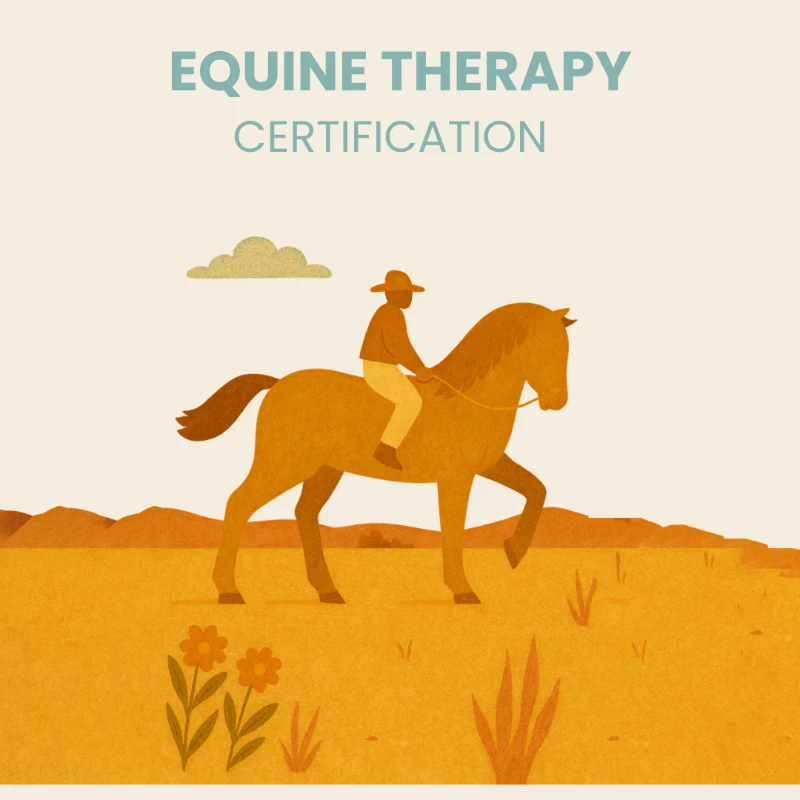
Train as an Equine Therapy Practitioner
Deepen your scope, welfare skills, and session structure with the Equine Therapy Practitioner course.
Explore Equine Therapy Practitioner →