Many coaches reach for thinking tools when emotions spike: ask why, reframe, add a strategy. With dyspraxic clients, those steps often work best after the body has settled. Many clients describe “nothing, then a flood,” with signals that swing from faint to blaring, plus long habits of pushing past the body to meet external demands. When analysis comes too early, it can deepen override and shame. Earlier signal detection in the body, paired with consent, cultural care, and concrete tools, gives clients a chance to act before overwhelm lands.
Key Takeaway: Effective coaching for dyspraxic clients often begins in the body. Interoception can support emotion regulation, practical choice, and steadier pacing when it is taught gently, linked to real-life context, and turned into usable tools such as body maps, regulation scales, calm maps, and micro-routines. The aim is not perfect self-awareness, but more choice, more self-trust, and more dignified participation in everyday life.
Why body-first coaching matters for dyspraxic clients
Start with the body because activation often shows up there first. For many dyspraxic clients, internal signals can feel like a radio with patchy reception: sometimes too faint to catch, sometimes suddenly overwhelming. Coaching attention toward those signals gives them shape, which makes regulation more possible.
Interoception is the perception of inner sensations such as breath, heartbeat, tension, temperature, hunger, pressure, or nausea. In practice, it sits at the meeting point between sensation and meaning-making and can support emotional clarity across contexts.
That link matters because low interoceptive sensitivity is commonly associated with alexithymia: the familiar experience of not being able to tell what one feels. Across many studies, alexithymia shows a small negative correlation with interoceptive awareness. When a client can feel and name what is happening in the body, their practical options usually widen.
Interoception also supports day-to-day functioning. Noticing “hungry,” “tense,” or “overheating” earlier makes planning and choosing easier. Research suggests decreased interoception may be associated with challenges in executive function, which helps explain why body-first work can support steadier pacing and follow-through.
This is especially relevant for neurodivergent clients with attention shifts and emotion spikes. In ADHD research, interoception appears reduced in some people and is linked with emotional dysregulation. In practice, many dyspraxic clients describe a similar pattern of fluctuating internal awareness.
In session, it can stay very simple. A quick check-in can be enough: “Place one hand on your chest and one on your belly. Notice what moves more with the breath. Give it a word: heavy, light, tight, floaty.” Small, repeatable body-first steps often build trust quickly.
A common shift in coaching sounds like this: “I don’t feel anything until it’s too late” becomes “When my jaw starts buzzing and my hands feel fizzy, I need a short break.” That move from blankness to pattern recognition is often where useful change begins.
Setting up safely: consent, pacing, and cultural care
Interoception work should be opt-in, collaborative, and paced. Many clients have learned to override body cues in order to keep up, stay agreeable, or meet external demands. When body awareness is pushed too fast, it can feel exposing rather than supportive.
Start by building a safe frame. Agree together that the client can slow down, stop, switch focus, change posture, look away, or move at any point. Clear permission protects agency and keeps the work dignity-centered.
Use concrete agreements early. A simple script works well: “If anything feels too much, say yellow to slow down or red to stop. You can change positions, switch topics, or focus on something outside the body at any time.” Offer choices like hands, feet, breath, sounds, or visual anchors instead of assuming inner sensation is always the best entry point.
Cultural care matters here too. Body-based practices exist across many traditional lineages, and those roots deserve respect. Ask, “Are there family, cultural, or personal practices that help you feel steady?” and let the client lead what belongs.
This wider lens also keeps coaching ecological. Regulation is shaped by environment, relationships, expectations, sensory load, and access. Body-first work lands best when inner noticing is paired with practical changes around the person, rather than placing the whole burden on them.
Building interoception vocabulary in early sessions
Many practitioners ask, “Why are you upset?” too soon. A steadier starting point is, “What is your body doing right now?” Language often grows from sensation.
Keep early noticing brief and non-fixing. A short scan from head to toe can help clients name warmth, tightness, buzzing, emptiness, heaviness, pressure, or fluttering. The aim is enough vocabulary that inner experience becomes less vague.
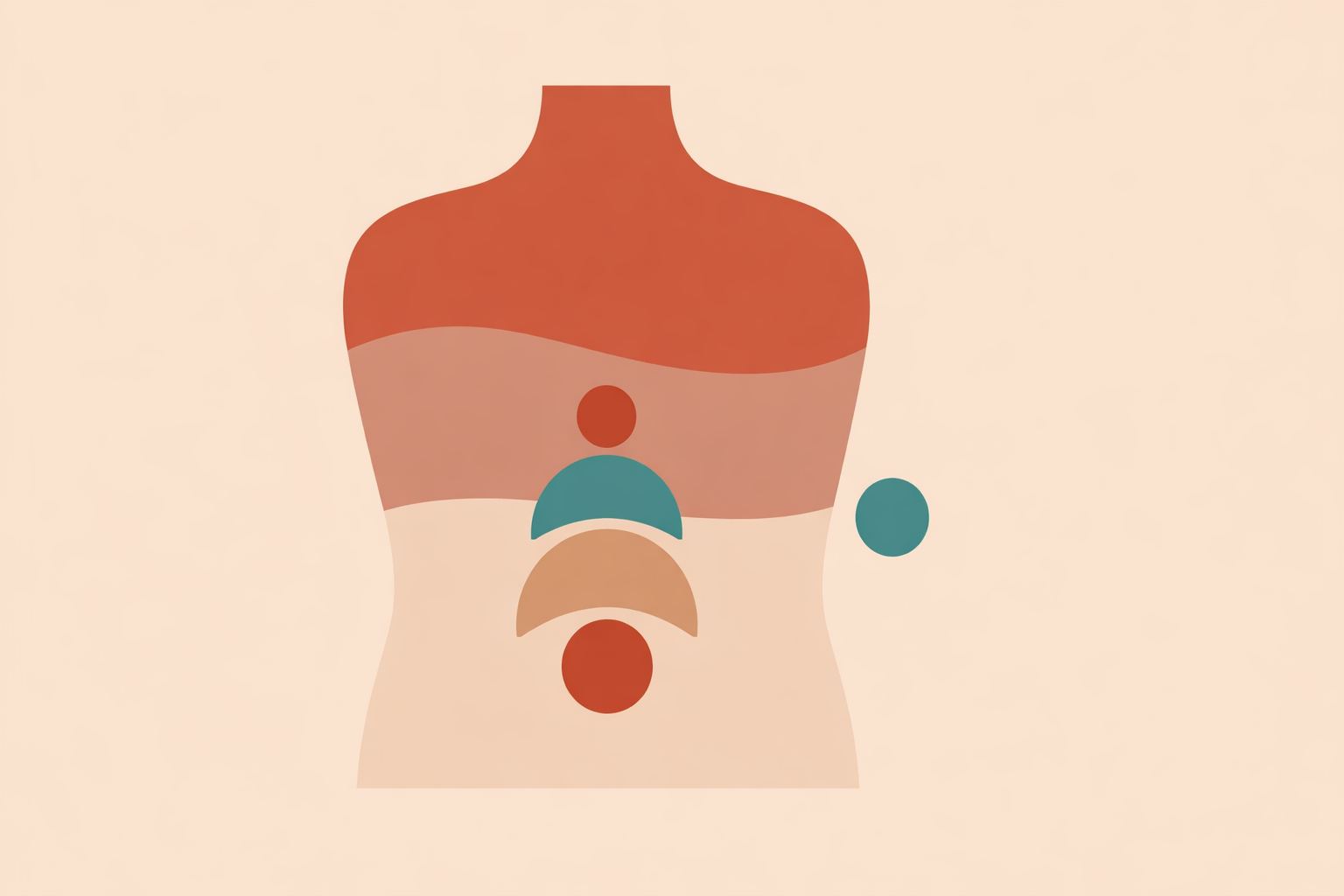
Visual supports can help considerably. Body outlines, stickers, color-coding, or simple drawings allow clients to externalize what is happening internally. For dyspraxic communicators who think spatially or prefer low-verbal tools, printable body maps can be especially effective.
It helps to keep the structure simple:
- Signal
- Meaning
- Need
- Action
For example: “Signal: chest tight and jaw buzz. Meaning: nearing overload. Need: less noise and slower pace. Action: headphones, five breaths, message to step out briefly.”
Alternative communication options matter too. Some clients will point to icons, use color scales, tap a word bank, or gesture rather than describe sensations in detail. A child might use thumbs-sideways for “weird belly.” An adult might circle “pressure” on a printed card. These are often more accessible and more accurate under stress.
Traditional body practices can sit naturally in this stage when invited with care. Breath, humming, swaying, touch, song, prayer, and time on the land have long helped people return attention to the body. The respectful move is to acknowledge those roots and adapt only what the client genuinely wants to use.
Linking sensations to emotion, meaning, and context
Sensations can feel like static. They become useful when clients link them to pattern, place, memory, and context. The task is to notice a sensation and learn what it usually signals.
This matters especially for clients who struggle to identify what they feel. Difficulty with internal signals often travels alongside lower emotional clarity and greater social strain. Slow, structured linking can support self-trust and relational ease.
Autistic adults commonly describe interoceptive awareness that stays muted until signals become extreme. One validation study reported that 74% of autistic adults experienced significant interoceptive confusion unless bodily signals were extreme. Many neurodivergent adults, including dyspraxic clients, describe the same swing between faint and overpowering signals.
Use supported meaning-making rather than interpreting on the client’s behalf. Instead of saying, “That means panic,” you might say, “Three times last week, tight chest and tunnel vision happened before class. What are three possible meanings? Which feels most accurate to you? What would you like to try next time?”
This style keeps agency with the client and leaves room for nuance. A hollow stomach and cold hands before a presentation might point to hunger, anticipation, sensory discomfort, or social fear. Once a pattern is tested, the response becomes clearer: warmth, food, movement, pressure, quieter space, or more preparation time.
Often the breakthrough is very plain language: “Jaw buzz means noise is too high.” “Eyes aching means the lighting needs changing.” “Shoulders up means I’m bracing.” These translations turn body data into usable choice.
Turning awareness into action: scales, calm maps, and regulation menus
Awareness becomes useful when it leads to action. Once clients can notice a few body cues, the next step is building tools they can actually use in daily life.
A personalized 1-to-5 regulation scale is a strong place to start. Co-define each level with the client’s own body cues and a short list of matching actions. For example:
- 1 = steady: relaxed shoulders, clear thinking, continue as planned
- 2 = slight strain: jaw tight, take a breath and reduce one demand
- 3 = building overload: chest tight, noise down and step away briefly
- 4 = flooded: sound too sharp, pause task and move to a lower-input space
- 5 = shutdown or overwhelm: minimal demands, warmth, pressure, quiet, recovery
A calm map can deepen this work. This is a visual record of places, rhythms, objects, people, and sensory conditions that help the client settle. Calm maps also make it easier to request small, context-fit supports such as changing lighting, moving location, or adjusting pace.
Regulation menus help most when they stay lean. Keep three to five options for common states, chosen by the client. Some people respond well to rhythmic movement or pressure; others prefer warmth, stillness, familiar sound, cool air, or a short practical task.
For example:
- Overwhelm menu: noise down, shoulder press, 90-second walk, cool water, “back in 5” message
- Shutdown menu: warmth layer, hand to chest, one familiar track, gentle sway, brief check-in with a trusted person
Keep sequences repeatable. Many clients do well with a short arc such as: dim lights, slow exhale, move to quieter space, send quick message, reassess. Predictability helps the body recognize support more quickly.
Sensory mapping strengthens all of this. When you map which inputs soothe, activate, or overwhelm, it becomes easier to match supports to specific body cues and reduce friction before things escalate.
Embedding interoception into real-life tasks and routines
Interoception skills carry over best when they are embedded in real tasks, not practiced only in isolation. The work becomes more useful when it is woven into the morning rush, a school transition, a work meeting, or the end-of-day wind-down.
Break demanding routines into micro-steps and add brief body check-ins at predictable points. This lowers cognitive load and steadies pacing. Instead of asking a client to “listen to your body all day,” anchor the check-in to moments that already happen: after getting dressed, before opening email, before walking into class, after finishing one paragraph, before leaving the house.
A simple routine plan might look like this:
- Goal: out the door by 8:10 with steadier energy
- Plan: lights low, dress seated, eat, pack bag, shoes at door
- Body prompts: after dressing notice breath; before shoes press shoulders for 10 seconds
- Check: if jaw buzz starts during packing, add a 30-second movement break and reduce choices
The task itself becomes the teaching tool. During writing, a client might press one palm to the desk every paragraph and check jaw and shoulders. During cooking, they might pause at the stove to notice heat and fatigue. During a commute, they might scan for breath pace and visual strain before arriving.
This is also where clients often begin asking for adjustments more confidently. Once they can name a pattern, requests become clearer: lower brightness, quieter seat, movement break, slower transition, reduced choices, warm layer, extra setup time. Body awareness turns into practical design.
For children and teens, this can support re-engagement with learning. Earlier signal detection often makes it easier to ask for small adjustments before things escalate.
Tailoring for dyspraxic profiles: sensory load, energy curves, and pacing
Dyspraxia is not only about motor planning. Many clients are also navigating proprioceptive differences, sensory sensitivities, executive variability, fluctuating energy, and identity-related strain in everyday participation. Body-first coaching works best when it reflects that broader picture, as it often does in neurodiversity and learning differences work.
A holistic lens keeps the work practical. Ask how body signals, task demands, sensory conditions, timing, expectations, and self-story interact.
Sensory mapping is often essential. A client who struggles in fluorescent light and echoing spaces might benefit from a brimmed hat, softer visual input, permission to stand to think, or more proprioceptive feedback through clothing, posture, or furniture. Small changes like these often make body cues easier to detect before overload builds.
Energy curves matter too. Many dyspraxic clients do better when demanding tasks land at times of day when coordination, focus, and tolerance are strongest. Track when capacity rises and falls, then place heavier demands where follow-through is more likely.
This can be as simple as noticing that mornings support planning but not conversation, or that late morning is best for fine-motor work, or that social tasks are easier after food and movement. Scheduling around these patterns improves consistency without asking the client to push harder.
An ecological approach keeps the burden realistic. Regulation plans work best when they include both inner skills and outer adjustments: quieter corners, movement breaks, visual simplification, flexible pacing, lower sensory load, and clearer transitions. The point is to build a better fit between the person and the setting.
Working at the edges: shutdown, overwhelm, masking, and boundaries
Interoception is not always soothing. For some clients, noticing sensations increases distress, especially when signals have been ignored for a long time or tend to arrive all at once. That variability is useful information about pacing.
Name that openly. Many neurodivergent adults experience internal signals as inconsistent, sometimes faint and sometimes overpowering. When clients hear that this fluctuation is common, shame often softens and pacing becomes more flexible.
Under stress, a body-first sequence usually works better than reframing straight away. Start with sensations and vocabulary, add grounding, then move into reflection, reappraisal, or values-based choice if the client wants to.
When interoception feels too intense, scale down. Shift to neutral or external anchors such as feet on the floor, the feel of fabric, the outline of objects in the room, or the sound of a fan. Reduce sensory input where possible, and allow posture changes, movement, shorter exercises, or a switch to practical planning.
Write edge protocols down before they are needed. A small card might say: “If eyes blur and sound feels sharp, stand up, press palms, move to quiet space, text ‘need 10,’ sip water, recheck shoulders.” In hard moments, pre-made choices protect agency.
Boundaries also need to stay clear. In a coaching role, the work is to help clients map patterns, build supports, and shape environments. If a client becomes highly distressed, pause the exercise, return to grounding, and support practical next steps within scope.
Conclusion
For many dyspraxic clients, interoception sits underneath emotion, pacing, communication, participation, and self-trust. When coaching starts with the body, small practices can create real stability: a short scan before a meeting, a name for jaw buzz, a calm map for a difficult classroom, a regulation scale that turns confusion into choice.
Traditional body-based practices and contemporary evidence can sit alongside each other well when they are client-led and context-fit. Breath, rhythm, touch, song, prayer, land, and quiet sensory adjustment all have a place when they are approached with cultural respect and real consent.
Keep the work usable and grounded in daily life. Help clients notice a little earlier, name things more clearly, and respond with supports that fit their world. Over time, that’s how body-first coaching supports steadier participation and a deeper sense of everyday dignity.
Train in Dyspraxia Support Coaching
Go deeper on body-first tools with the Dyspraxia Support Coach Certification.
Explore Dyspraxia Support Coach →