Many horticultural therapy practitioners finish a session with a quick line like “planted seeds with group” or “repotted basil.” It’s fast, but later it rarely tells you what supported participation, what needed adjusting, or what to try next.
Stronger notes connect the goal, the activity, the participant’s response, and a clear next step. They also keep safety, consent, and continuity visible on the page instead of relying on memory.
Key Takeaway: Strong horticultural therapy notes map goal, activity, response, progress, and next step—not just tasks completed. A simple, repeatable structure makes your records clearer, more person-centred, and easier to use for reflection, teamwork, and program continuity.
Why mapped horticultural therapy notes matter
A note like “planted seeds” records an event, but it doesn’t show whether the activity matched the aim, which supports helped, what the participant chose, or what changed since last time.
Mapped notes reflect the purposeful nature of horticultural therapy. They show why the activity was chosen, how it was adapted, how the person engaged, and what the practitioner learned for next session.
Compare these two records:
- “Participant planted seeds.”
- “Participant chose basil from three options, began pot filling after a visual cue, stayed engaged for 18 minutes, and needed one verbal prompt. Plan: reduce prompts next session and add a brief peer exchange.”
The second note gives you something to build on. It respects choice, preserves meaning, and supports continuity.
This approach aligns with expectations that planning and review link to documented assessment, goals, progress, and follow-through.
A simple framework for writing better session notes
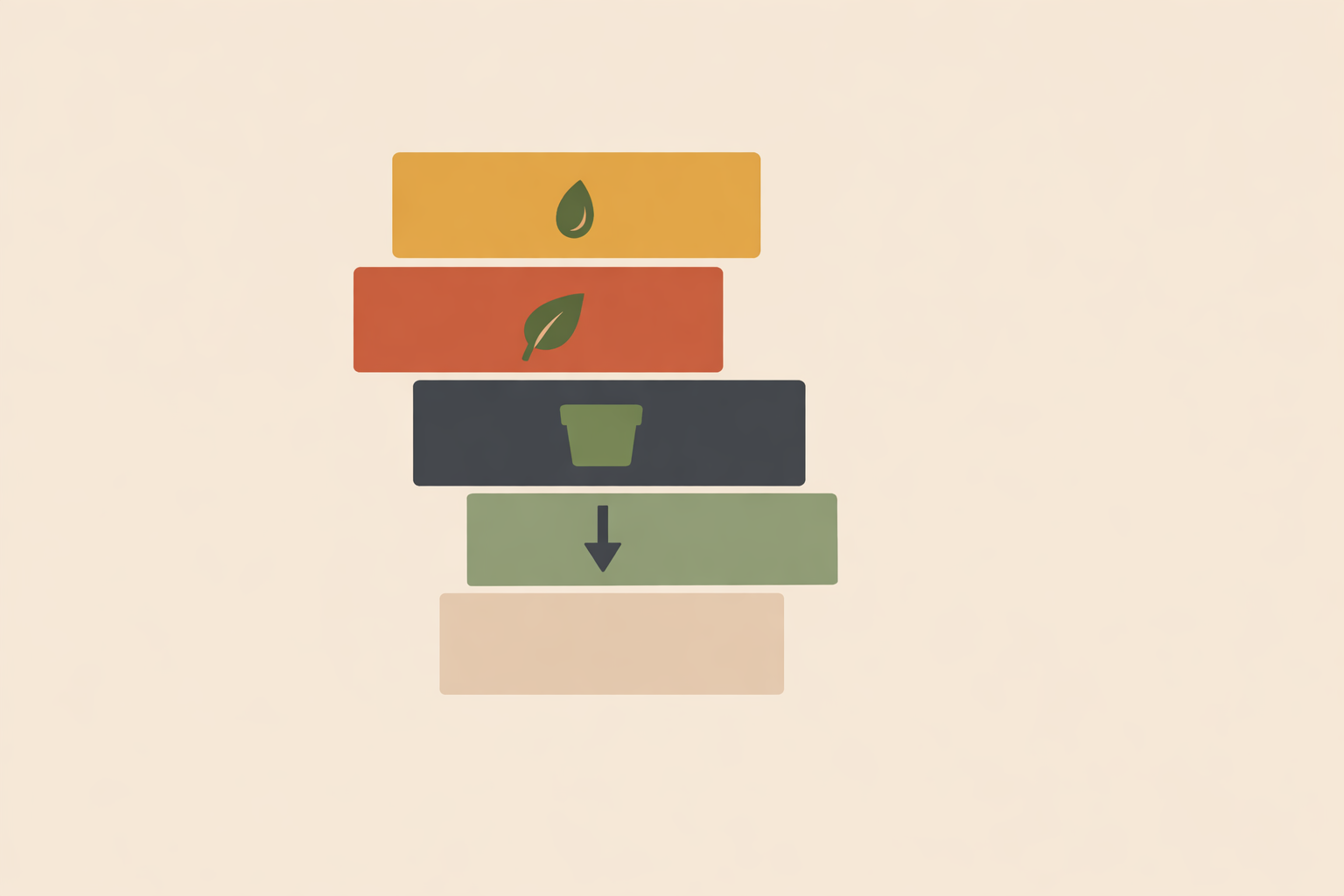
A reliable horticultural therapy note answers five questions:
- What was planned?
- What actually happened?
- How did the participant respond?
- What progress or barrier was observed?
- What is the next step?
Used consistently, these questions keep notes practical and stop them drifting into long descriptions that never reach a decision.
A helpful way to organise the writing is in three layers:
- Facts: activity, time, supports, steps completed, participant words
- Meaning: what the observations suggest in relation to the goal
- Action: what you will continue, adapt, fade, or add next time
For example:
“Planned: support two-step sequencing through potting. Happened: participant completed scoop-tap-plant with a visual strip. Response: smiled and said ‘I remember now.’ Progress: moved from hand-over-hand support last week to one gestural prompt today. Next: shorten visual strip and add a peer share at close.”
It’s brief, but the goal and the change stay visible. It also matches the expectation that goals are stated in observable terms.
What to include in a useful horticultural therapy note
You don’t need to record everything. You do need enough detail to show what was intended, what was offered, what the participant did, and what shifted.
A practical note often includes:
- Date, setting, facilitator, and duration
- Goal or objective in observable language
- Activity used and any key preparation
- Adaptations or accessibility supports
- Participation level, prompts, or assistance used
- Observable responses and relevant participant words
- Safety measures used when relevant
- Progress, barrier, or change from baseline
- Next session plan
Guidance in the field supports documenting participant responses, goals, behaviours, and progress over time, which is why systematic recording is so valuable.
A concise example might read:
“45-minute session; 22 active minutes in herb potting; raised bed and visual strip used; one verbal and one gestural prompt; completed four seedlings; gloves used due to skin sensitivity; engagement increased from baseline; next session to include peer labelling share.”
Designing a one-page template you will actually use
The best template is the one you’ll keep using. In practice, that usually means a one-page format with clear fields and just enough structure to guide your thinking.
Your template can include:
- Participant or group ID
- Date, time, place, and duration
- Goal or objective
- Activity and rationale
- Environment and materials
- Adaptations and accessibility supports
- Participation and response
- Safety measures
- Observed progress or barrier
- Communication needed
- Next plan
- Brief practitioner reflection
Keep the wording concrete. “Initiate two-step planting task” is clearer than “build confidence.” “Used seated station and enlarged labels” is more useful than “good adaptation.”
Good recordkeeping also depends on accuracy, clarity, security, and respect for the person being supported. Broader documentation guidance emphasises clear, accurate records and secure handling of information.
Individual session example
Imagine a one-to-one session with Amara. Her recent baseline is 8 to 10 minutes of sustained participation with two or three prompts. Today’s goal is to sustain 15 minutes with no more than one prompt while completing a two-step potting sequence.
A mapped note might look like this:
“Plan: repot four basil seedlings using a visual sequence strip, timer, seated option, and foam grip. Expected response: 12 to 15 minutes with one prompt. Do: Amara chose basil from three options, filled a small pot, planted four seedlings, smiled, said ‘I can do this,’ and asked to label the pot. She remained engaged for 18 minutes and needed one verbal prompt. Study: sequencing improved; prompts reduced from baseline; visual strip needed only at the start. Act: fade visual strip after first pot next session and add a two-minute peer share about plant care.”
This style works because it stays close to what was observed while still making the practitioner’s reasoning visible. It also supports the expectation that progress is documented regularly.
You can also add a short activity analysis in your reflection. For basil potting, you might note physical actions such as scooping and pinching, cognitive sequencing, sensory elements like soil texture and scent, emotional responses such as confidence, and optional social participation. That makes it easier to shape the next session around what genuinely helped.
Group and community documentation
Group notes need to capture the shared flow of the session and the individual differences that matter most. Start with the group outline, then add a few person-specific observations where choice, access, progress, or safety stood out.
For example:
“Six participants, 45 minutes, seed sowing. Demonstration at central table; seated and standing stations available. Two participants used enlarged labels, one used a glove for soil contact, three worked independently, and three used one or two prompts. Closing reflection included plant-preference sharing.”
Then add only the details you’ll want later:
- “Jae initiated a peer question for the first time; plan to invite label distribution next session.”
- “Mina paused due to scent sensitivity, chose mint instead of basil, and re-engaged for the final 10 minutes.”
In community settings, it can also help to note factors like transport, language access, volunteer roles, or take-home continuity plans. These often decide whether participation feels realistic and welcoming.
Across programs, common aims include social connection and cognitive engagement. A recent review found improvements in cognition and social function across varied horticultural therapy studies, although results were not identical in every setting.
Trauma-informed and culturally respectful note-writing
How a session is documented matters as much as what is documented. Notes should reflect dignity, choice, and respect for the person’s own meanings and pace.
A trauma-informed style keeps choice visible. Rather than recording only what was completed, note what was offered and what the participant selected or declined. For example: “Offered basil, mint, or chives; participant chose mint; requested seated station; took a short break after first pot; then rejoined.”
This language is often more accurate and more respectful than “refused” or “non-compliant.” It keeps attention on agency, preference, and context.
Cultural meaning belongs in the notes when the participant brings it forward. You might write: “Participant shared that basil is used in family blessings and asked to place it in the east bed.” That records meaning without assumptions or reducing tradition to a generic symbol.
Person-centred planning also starts before the session. In nature and outdoor therapy and horticultural therapy practice, activities are chosen after understanding interests, strengths, and wider needs. Formal standards reflect this by requiring assessment of abilities before developing goals and plans.
Keep privacy in mind as well. Notes should be secure, relevant, and free from unnecessary personal detail.
Using notes to track trends over time
A single note gives a snapshot. A set of notes reveals patterns, which is where documentation becomes especially useful for reflection, communication, and showing meaningful change.
Useful trend markers include:
- Engagement minutes
- Prompts or assistance used
- Steps completed
- Adaptations that supported participation
- Participant choices or initiative
- Carryover between sessions
Combining a few simple counts with brief observations often gives the clearest picture. Over four sessions, you might see engagement rise from 10 to 18 minutes while prompts reduce from three to one, alongside notes like “asked to label independently” or “invited peer to compare herbs.”
This kind of pattern is often more persuasive and more human than numbers alone.
Using research lightly and appropriately
Traditional plant-based practice stands on generations of lived knowledge and careful observation. Research can still be helpful for broad program planning and for communicating with mixed audiences.
For session timing, one broad review suggests 30–60 minutes may be favourable for many physiological outcomes. The same review also suggests 100–500 minutes of total exposure often supports benefits across physiological and psychological domains.
For mood-related outcomes, a recent synthesis of gardening programs reported improvements in depression and anxiety across varied formats, though certainty was limited and context still matters.
Use these findings as orientation points. The session in front of you still needs to be shaped by the person, the setting, and the purpose of the work.
Common documentation pitfalls to avoid
Most note-writing problems aren’t about motivation. They come from hurry, vagueness, or trying to reconstruct details later.
Common pitfalls include:
- Writing long after the session from memory
- Copying the same wording across multiple sessions
- Recording attendance but not progress
- Confusing enjoyment with movement toward the goal
- Leaving out declined activities or adaptations used
- Using abbreviations others may not understand
- Skipping relevant safety measures
Broader documentation guidance warns that delayed, unclear, incomplete, or inaccurate records weaken continuity and accountability, which is why timely documentation matters so much in practice.
Closing reflection
The garden offers moments of effort, choice, memory, connection, and surprise. Good notes make those moments usable, so you can see what supported participation, what created friction, and what deserves to happen next.
Before closing a session note, check that you captured:
- A clear goal
- The activity used
- The person’s response
- Any support or adaptation that mattered
- Observed progress or barrier
- A practical next step
Over time, that habit turns documentation into part of the practice itself rather than paperwork after the fact. The next seed you plant can also be a better note: clearer, kinder, and more useful for the path ahead.
Master Horticultural Therapy Documentation
Apply these note-writing frameworks in practice with the Horticultural Therapy Certification.
Explore Horticultural Therapy Certification →