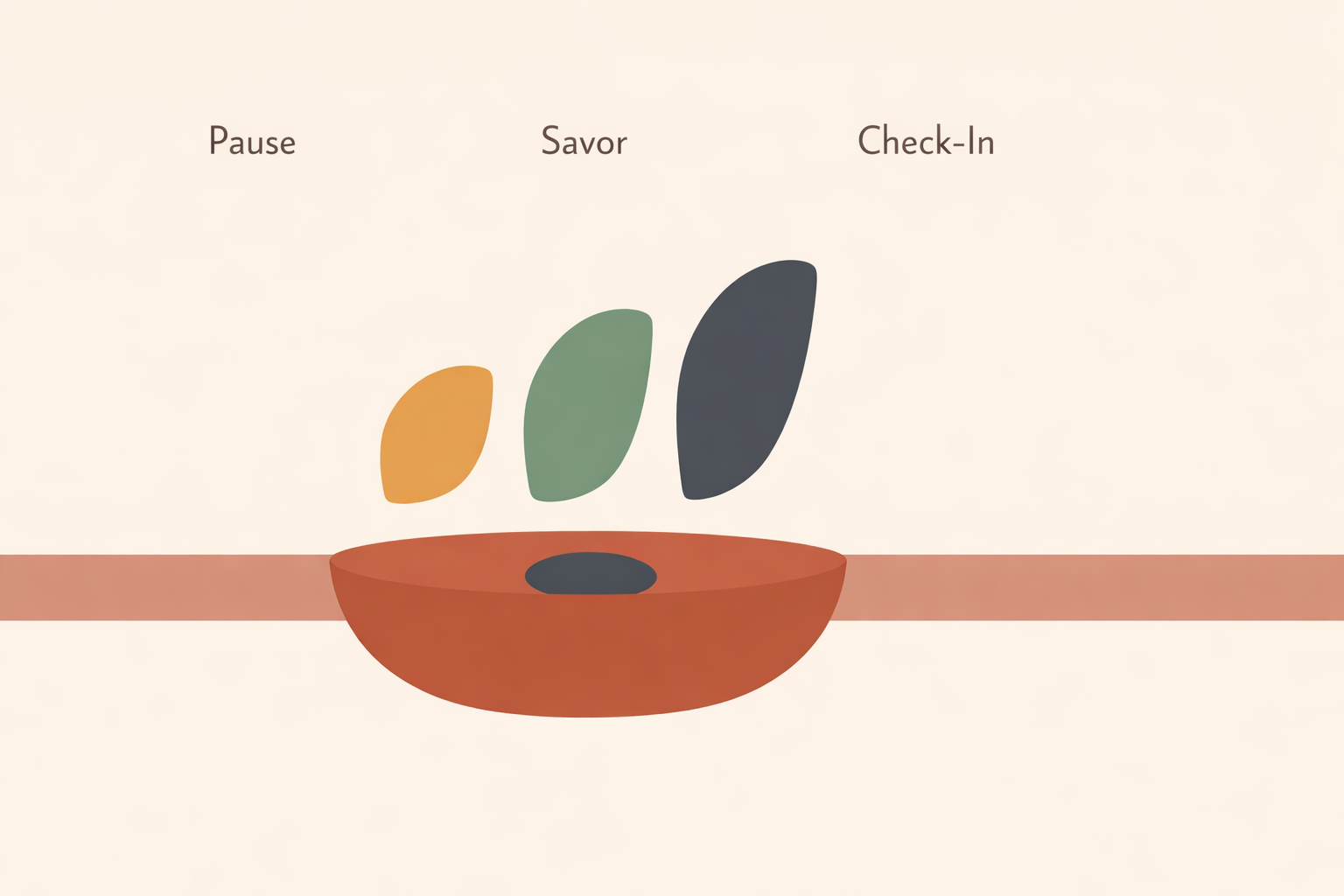
Many practitioners try to improve rushed, distracted meals with portion rules, calorie targets, or better prep. But when someone is eating on autopilot between meetings or in front of a screen, those plans rarely help in the moment. “Eat slower” sounds sensible, yet it is too vague to use at the table. What works better is a simple structure that creates a clear choice during the meal itself.
Three small drills do exactly that: a pause before eating, fuller attention to the first few bites, and a gentle check-in halfway through. Together, they slow the pace without turning meals into a rulebook, and they give coaches something practical to teach, observe, and adapt.
Key Takeaway: Slow eating becomes easier when it is broken into tiny, repeatable actions: pause before the meal, savor the first bites, and check in midway. These drills help clients notice hunger, satisfaction, and eating patterns with more clarity, making food choices feel steadier and more intentional.
Drill 1: The Three-Breath Pause Before Eating
Start before the first bite. When the fork is in your hand or the container opens, pause and take three steady breaths. This brief ritual softens urgency and brings attention back to the body.
The three-breath pause echoes ancestral meal customs such as giving thanks, touching the bowl to the forehead, or sitting quietly before eating. In modern life, it becomes a simple awareness practice that often creates enough space to notice hunger, emotion, and impulse before acting on autopilot.
The point is choice. A pause helps someone ask, “Am I physically hungry?” and “What else is here right now?” Hunger can be straightforward, but it can also blend with stress, boredom, celebration, loneliness, or simple habit.
Common hunger signals can include fatigue, irritability, foggy focus, headache, shakiness, or dizziness. Many people recognize at least one once they begin paying attention.
Two quick questions are enough:
- What is my hunger level from 0 to 10?
- What else am I feeling right now?
A person might notice, “I’m at a 6, and I’m also tense from that email.” That clarity often changes the next step: they may still eat, but more slowly, or choose to sit down instead of standing, or take one more breath before continuing.
In coaching, this is a small win worth valuing. Awareness plus a kind adjustment is meaningful progress.
Coaching the Three-Breath Pause as a Habit
Keep it tiny. A supportive agreement might be: “For the next week, I’ll practice the three-breath pause at one meal a day.” That scope is realistic and easier to sustain than trying to change every eating moment at once.
Anchor the pause to something concrete:
- when hands touch utensils
- when the plate reaches the table
- when the food container opens
- when sitting down to eat
A simple script can help:
- Inhale and feel the feet.
- Exhale and soften the shoulders.
- Repeat two more times.
- Ask: “Hunger 0 to 10? What else is here?”
Tracking can stay light. One line after the meal is enough:
- Pause: yes or no
- Hunger number
- One word for mood
If strong emotion shows up, the pause can be paired with a brief settling practice, such as a few rounds of tapping or a short guided breath. The aim is to create steadier ground before eating.
If someone forgets, they can pause mid-meal. This work is about remembering, not performing perfectly.
Drill 2: Savor the First Three Bites
Once the meal begins, narrow the focus. Rather than trying to eat the whole meal with full attention, pay close attention to the first three bites. This keeps the practice simple and consistently effective.
Savoring the first three bites naturally slows the opening pace of the meal and strengthens present-moment awareness. It also helps separate satisfaction from sheer quantity, which is useful for anyone who tends to eat quickly and only notice fullness later.
Here is the basic shape:
- Take one bite.
- Set the utensil down.
- Notice color, aroma, temperature, texture, and flavor.
- Repeat for the next two bites.
If judgmental thoughts appear, return to the senses. Instead of “good” or “bad,” notice “warm,” “crunchy,” “earthy,” “sweet,” or “bright.” The meal often becomes more vivid and more satisfying.
Mindful-eating approaches often emphasize sensory attention, while public health guidance also encourages people to savor bites. That pairing fits what many practitioners see: slowing the beginning of the meal often changes the tone of the whole experience.
This drill also interrupts distraction. Putting the utensil down and returning to taste, smell, and texture helps bring attention back from screens, planning, or worry. In many traditional meal settings, this unhurried noticing was built into the shared rhythm of eating, and the drill restores a little of that rhythm in everyday life.
A useful coaching question after the first few bites is: “How satisfied do you feel right now, from 0 to 10?” Sometimes satisfaction rises quickly with a few attentive bites, and that distinction can be powerful.
Coaching Sensory Attention Without Rigidity
Keep the practice flexible. The first-three-bites drill works with soup, rice dishes, sandwiches, salads, or dessert. It’s about noticing more fully, not eating “correctly,” and sits naturally within nutrition and diet coaching.
Helpful anchors include:
- placing the utensil down between bites
- taking a sip of water after the first bite
- touching the bowl or plate briefly before continuing
- using a simple cue card that says “First Three”
Encourage descriptive language over judgment. If someone says, “This is bad,” invite them to name three sensory qualities instead. This often softens all-or-nothing thinking around food.
A gentle script works well here: “We’re using the senses to increase enjoyment and clarity. If you forget, begin on bite two or three.” That keeps the drill approachable and free from pass-fail pressure.
Drill 3: The Halfway Meal Check-In
Midway through the meal, pause again. Put the utensil down, take one breath, and ask:
- How hungry am I now?
- How satisfied am I?
- What do I want next?
This halfway check-in turns the middle of the meal into a choice point. Instead of continuing by momentum alone, the eater reconnects with what body and mind are saying right now.
Going slower makes it easier for satisfaction to register. Public guidance on mindful eating notes that people who eat more slowly are more likely to recognize satisfaction and stop when they have had enough. In coaching terms, unhurried eating makes body signals easier to hear.
The next move can vary. Someone might keep eating with pleasure, decide they want a few more bites and then stop, or notice that stress, irritation, or distraction is pushing the meal forward more than hunger.
Patterns like clean-plate pressure, urgency, or emotion-driven eating often show themselves most clearly at the halfway point. Once they’re visible, there’s room for a different response: box the rest, pause for tea, stretch, or continue more slowly and consciously.
A client might notice: “Hunger is down to 3, satisfaction is at 6, and I’m actually upset from that text message.” Instead of pushing ahead automatically, they pause and choose what feels most aligned. That is the real purpose of the check-in.
Coaching Mid-Meal Choices and Triggers
Keep the check-in short and curious. A one-line reminder is often enough: “Halfway, I check hunger and satisfaction, then choose.”
Simple post-meal notes can reinforce learning:
- Hunger at halfway
- Satisfaction at halfway
- What choice was made next
If a predictable trigger tends to show up, name it before the meal. For example:
- “Tonight I may feel pressure to finish everything.”
- “I may keep eating because I’m distracted.”
- “I may rush because I’m tired.”
Then pair that insight with one small action:
- box part of the meal early
- move the plate away for one minute
- stand up and stretch briefly
- take two breaths before deciding
If family or social patterns are involved, a relationship-friendly phrase can help: “I’m enjoying this, and I’m pausing for a moment to see how I feel.” That protects autonomy without turning the meal into a debate.
A Gentle 7-Day Slow-Eating Practice
These three drills work best as a short experiment rather than a grand overhaul. A week is long enough to notice patterns, ease, and resistance while keeping the practice light.
A simple progression looks like this:
- Days 1-2: Practice the three-breath pause at one meal each day.
- Days 3-4: Keep the pause and add the first three bites.
- Days 5-6: Keep both and add the halfway check-in.
- Day 7: Use all three drills in one meal of your choice.
Keeping the scope to one meal per day is often more sustainable than trying to transform every meal at once. It also makes it easier to see what is actually changing.
What to Track During the Week
Choose measures that reflect awareness and behavior, not just outcomes.
- How many pauses were completed
- How present the person felt during the meal, from 0 to 10
- One trigger that was noticed
- One choice that was made differently
- How kindly the person responded if they forgot the practice
A few examples:
- Mon lunch: Pause yes. First three bites noticed lemon and crunch. Halfway check-in led to boxing the rest. Presence 7 out of 10.
- Wed dinner: Forgot the pause, remembered on bite two. Kept eating more slowly. Presence 5 out of 10. Self-response was kind rather than critical.
Over time, these small observations often matter more than strict compliance. They show whether meals are becoming more conscious, satisfying, and aligned with the person’s goals.
Why These Small Drills Matter
Mindful and intuitive eating approaches are linked with body image and other supportive well-being behaviors. That broader context matters, because slow eating is also about relationship: to food, to the body, and to the moment itself.
In practice, these three drills help people notice patterns earlier, experience meals more fully, and make choices with more steadiness. They’re simple enough for beginners, yet deep enough to keep revealing useful information over time.
As with any habit practice, results vary by person and season of life. If slowing down reliably brings up strong emotions or distress around eating, it may help to distinguish emotional hunger vs physical hunger and add support through nutrition and diet coaching. For most people, though, these small pauses restore rhythm and choice, and that is often where meaningful change begins.
Master Mindful Eating Coaching
Build on these drills with the Mindful eating Weight-Loss Coach Certification.
Explore Mindful Eating →