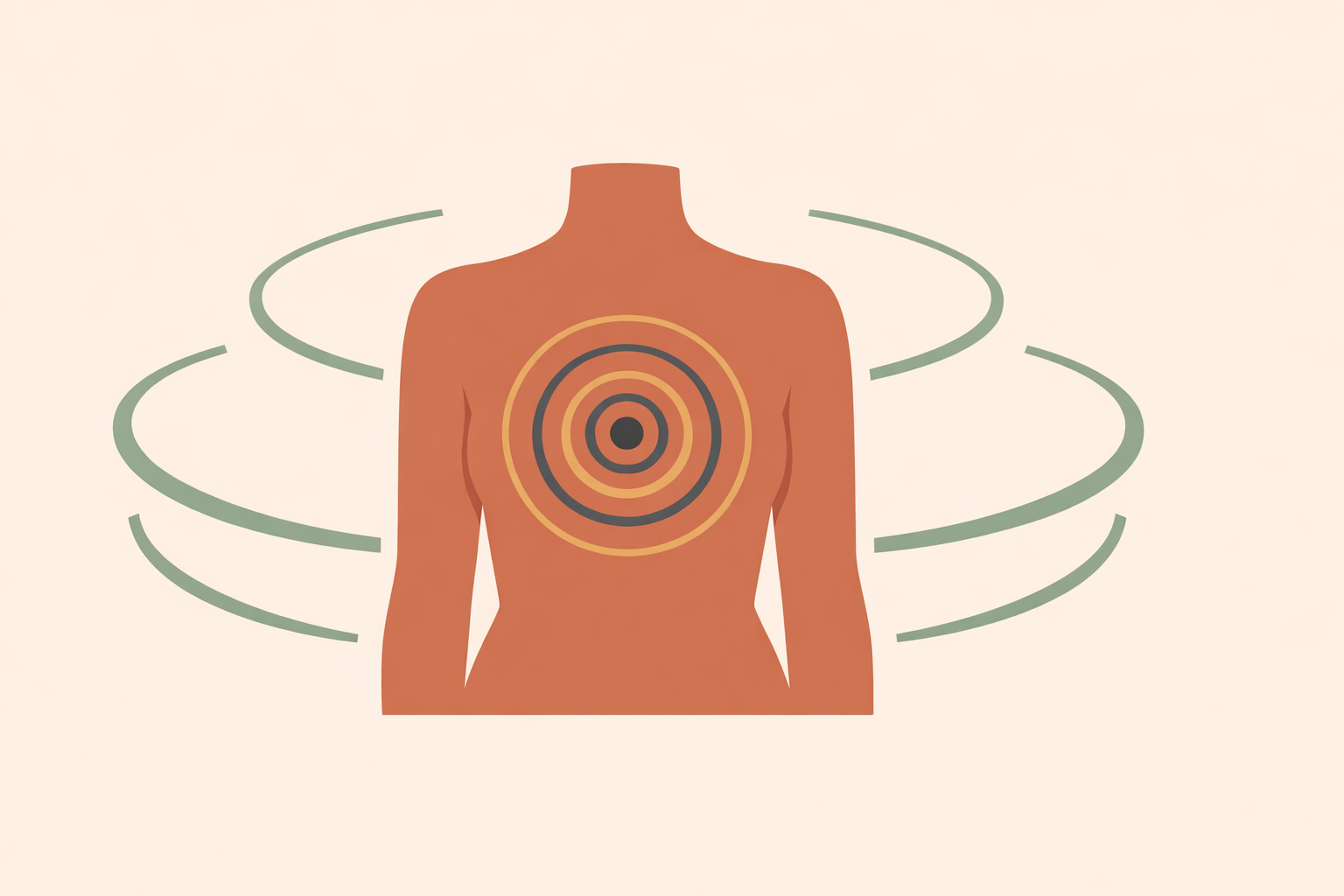
In many sessions, “go inside and take a deep breath” becomes the default move. For some people it helps. For others, it increases anxiety, flattens feeling, or turns the moment into a test they think they have to pass.
Trauma history, neurodivergence, culture, and personal timing all shape how inward attention lands. The real aim is not to make someone relax on command, but to help them work with body signals in ways that protect agency and fit everyday life.
Interoceptive awareness becomes most useful when it is approached as simple noticing, with consent, choice, and context built in. A steady path is to begin outside the skin, move inward in small optional doses, separate sensation from story, and track patterns over time so supportive options become clearer.
Key Takeaway: Interoceptive awareness is a trainable skill best introduced gradually. A practical approach starts with simple noticing, leads with consent and cultural humility, orients to the environment before moving inward, uses short body-based check-ins without pressure to change anything, and maps patterns over time so people can build supportive responses that actually fit their lives.
Step 1: Begin with interoceptive awareness as simple noticing
Interoceptive awareness starts with ordinary perception. It is how we sense the body’s internal state—breath, heartbeat, temperature, pressure, fullness, fluttering, ease, tension—and how we relate to those signals.
That relationship is never purely physical. What someone notices is shaped by history, belief, environment, and relationship. Research also describes interoception as shaped by social context, which aligns well with many traditional perspectives where sensing is inseparable from culture and lived experience.
In practice, the early win is familiarity, not accuracy. Subjective reports count even when they are uncertain or changing.
A gentle starting prompt might sound like this: “For ten seconds, notice your breath exactly as it is. Then notice your hands—temperature, weight, or contact. Then notice your belly—movement, pressure, or stillness. Nothing to fix.”
Short practices like this build capacity over time. One review found 64.5% of comparisons showed improved interoceptive outcomes in interoception-focused approaches, which is a helpful reminder that small, consistent reps can add up.
A clear note after practice might read: “Noticed cool hands, steady breath, mild flutter in belly, no urge to change anything.” That alone shows the skill is landing.
Step 2: Lead with consent, choice, and context
Before any inward exercise, establish choice. Internal attention can feel supportive, and it can also feel like too much. Trust grows when people know they can pause, redirect, or stop without being judged.
A simple opening script is often enough: “We can explore a few body cues today. You can pause, open your eyes, or look around anytime. If inward focus does not feel right, we can stay with sound, color, or the support under you.”
This matters because trauma-related patterns can make inner sensing complicated, including difficulty identifying and interpreting bodily and emotional states. The right response is pacing, options, and steadiness.
There is also a strong case for moving with care: safely reconnecting with bodily experience may support emotional regulation. Interoception works best when it is invitational rather than demanding.
Cultural humility belongs here too. Stillness may be attentive rather than shut down. Reduced eye contact may reflect respect rather than disconnection. Instead of assuming what ease should look like, ask: “What helps you feel more settled while we talk?” or “Are there practices from your family or community that you want honored here?”
When someone says, “My chest feels tight; I don’t like this,” a steady response might be: “Thank you for naming that. Let’s widen the frame. Notice three colors in the room and the support under your feet. Then tell me whether you want to continue inward or stay with the room.”
Step 3: Orient to the environment before going inward
For many people, the most reliable way into interoception is to start with the surroundings. Light, distance, sound, texture, temperature, and support help attention widen before it narrows.
You might say: “Let’s notice what is here. Color, shapes, the outline of the room. Where does your body meet support? Is there any sound that feels neutral or pleasant?” This keeps the work grounded and lowers the pressure.
From there, invite what many practitioners call glimmers: small cues of ease, interest, beauty, or simple okayness. A glimmer might be sunlight on the wall, the feel of fabric on skin, the steadiness of a chair, or birds outside. Glimmers are signs of available resource.
A simple progression often works well:
- Name three neutral or pleasant things you can see.
- Feel two points of support in the body.
- Notice one inner sensation briefly, without trying to change it.
- Choose whether to continue inward or return attention to the room.
This sequence is familiar to many traditional approaches that begin with place, environment, or relationship before deeper inner work. It also suits beginners, who often do better moving back and forth than staying inside too long.
A useful note here might be: “After orienting to light and chair support, noticed warmth in belly for a few seconds, then chose to look around again.” The choice is part of the skill.
Step 4: Use a brief body scan without making it a performance
Once the environment feels supportive enough, a short body scan can invite inward contact. The tone matters most: this is observation.
A simple script is: “We’ll move through a few areas of the body for about a minute. Notice pressure, temperature, movement, tightness, spaciousness, or numbness. There is nothing you need to change.”
Move slowly through a few regions rather than trying to cover everything. Feet, legs, belly, chest, shoulders, hands, jaw, and face are often enough.
Then separate raw sensation from the story attached to it. This distinction gives people more room to respond with clarity.
- Sensation: “My chest feels tight, like a band.”
- Emotion: “I feel worried.”
- Thought: “Something might go wrong.”
- Action urge: “I want to leave.”
- Need or preference: “I want more space and a slower pace.”
Keep dosage conservative, especially for beginners. Brief check-ins on one to three sensations, once daily or a few times per week, often build more confidence than long inward dives.
After the scan, return outward and ask: “What, if anything, shifted?” A practice note might read: “Short scan. Noticed cool jaw, heavy hand, flutter in belly. After labeling, urge to fidget eased.”
Step 5: Map patterns over time, not just moments
As people get more familiar with noticing, move from single sensations to patterns. This is where interoception becomes especially useful in everyday life.
Ask practical questions: Where is the sensation? Is it sharp or diffuse? Does it move? What changes it—posture, sound, breath, movement, hunger, screens, conversation, time of day? A simple 0–10 scale can track intensity without pretending to be objective.
Over time, these observations form a personal map. Someone may recognize cues of mobilization such as shallow breathing or restless legs, cues of settling such as fuller vision or a longer exhale, and cues of collapse such as heaviness, numbness, or disconnect. They may also notice cues of connection, like curiosity, easier speech, or more contact with the room.
Many people like having language for their workable range of contact with self, surroundings, and choice. You might call this a Window of Presence. The point is recognizing when there is enough capacity to stay engaged without overwhelm.
In real practice, the most meaningful outcomes are often reduced escalation, less avoidance, and quicker recovery. Precision is helpful, but usefulness comes first.
A concrete example: over two weeks, someone notices that by mid-afternoon their shoulders rise, breath gets shallow, and screen glare makes everything feel sharper. A short walk, lower light, and a minute of humming help them return to a more workable state, much like the small tools used in autonomic nervous system regulation. Once the pattern is visible, supportive choices become easier.
Step 6: Build a regulation menu that fits the person
Once patterns are clearer, turn insight into options. Instead of relying on one favored technique, co-create a menu that reflects the person’s rhythms, preferences, and cultural context.
A broad menu might include orienting, walking, stretching, shaking, humming, open-vowel sound, drawing, journaling, time outdoors, supportive conversation, or deliberate rest. Offer each one as an experiment rather than a rule.
With breath, stay gentle. First notice what is already happening. Then, if it feels supportive, try a slightly longer exhale or a little less effort. If breath focus increases distress, switch to another anchor.
Voice can also be useful. A minute or two of “mmm” or “ahh” gives sound, vibration, and a clear sensory reference point.
Rhythmic movement, swaying, or walking can serve a similar function, and they fit naturally within trauma and emotional healing work that stays practical and choice-led.
Titration and pendulation are worth teaching in plain language. Titration means touching a small amount of intensity and then returning to something steadier. Pendulation means moving attention between activation and a more neutral or pleasant area so the person learns they can hold contrast without getting pulled under.
It is also wise to keep trends in perspective. Cooling practices, strong breathwork, or intense sensory challenges work well for some people and poorly for others. The goal is finding support that stays voluntary and workable.
Traditional practices may belong in this menu too, when they are personally meaningful and respectfully held. Prayer, chant, rhythm, grounding rituals, and family-based forms of settling can be powerful because they carry familiarity, relationship, and meaning. They should never be lifted out of context or used as decoration.
- When activated: walk for three minutes, shake arms, hum softly.
- When flat or heavy: face the light, sway gently, name five colors.
- When overwhelmed: press hands into thighs, look around the room, use a familiar grounding phrase or prayer.
Step 7: Weave interoception into sessions and everyday rhythms
Interoceptive skill grows through repetition, but not mechanical repetition. It tends to deepen when practice is voluntary, meaningful, and connected to real life. That general principle fits well with what we know about neuroplasticity.
A simple session arc might look like this, similar to a nervous system regulation flow:
- Begin with consent, options, and outward orientation.
- Try one small interoceptive check-in.
- Track sensations, emotions, thoughts, and action urges.
- Integrate with movement, sound, or conversation.
- Close with one small practice to try between sessions.
Daily life matters just as much as formal sessions. Anchor the work to ordinary transitions: waking up, sitting down to work, before meals, after commuting, before sleep. These moments already exist, which makes practice easier to sustain.
A simple log can include context, surroundings, sensations, emotions, thoughts, impulses, what was tried, and what shifted. Over time, that record shows what supports agency and what does not.
Keep cultural humility active throughout. Ask how the person understands regulation, steadiness, and connection in their own life. If they use ritual, breath, prayer, energy mapping, music, or land-based practice, let those frameworks inform the work rather than forcing a single model.
And remember that inner awareness is shaped by environment, relationship, and social context. Pairing inward attention with outward orientation keeps the practice grounded.
Conclusion: Interoceptive awareness in real life
Interoceptive awareness does not need to be dramatic to be effective. Start with noticing. Build in consent and choice. Orient to the room before moving inward. Touch one sensation at a time. Separate sensation from story. Track patterns long enough to learn what supports recovery, clarity, and steadiness.
In practice, the quiet gains are often the most important: better pattern recognition, clearer communication of needs, less escalation, and more flexible responses under stress. This is not about perfect interpretation of every body signal.
Keep the work modest and repeatable, and let it be shaped by culture, context, and lived reality. If inward focus consistently ramps distress, strengthen outward orientation, choose shorter doses, and consider bringing in additional qualified support, including training in polyvagal therapy.
When approached this way, interoception becomes a way of listening—one small, grounded step at a time.
Train Polyvagal Therapy Skills
Deepen interoception and regulation skills with the Polyvagal Therapy Certification.
Explore Polyvagal Therapy →