Your program can be thoughtful, well-structured, and genuinely helpful—yet registrations still stall, cameras stay off, and early dropouts quietly drain momentum. Often, the issue isn’t your content. It’s whether people’s systems read your invitation and your group space as safe enough to approach.
Dropouts are often shaped more by perceived safety than by the curriculum itself. If the atmosphere feels too fast, too exposing, or too unfamiliar, interested people may hover at the edge rather than step in. From a practitioner lens, this is why “pushing harder” so rarely helps. What helps is designing for regulation, clarity, and real choice.
Key Takeaway: Group engagement rises when safety cues are built into your invitation and facilitation—not when you push harder. Predictable structure, slower pacing, simple rituals, clear onboarding, and multiple participation options help more people feel steady enough to join, stay, and participate in ways that work for their nervous systems.
Understanding the polyvagal ladder in group settings
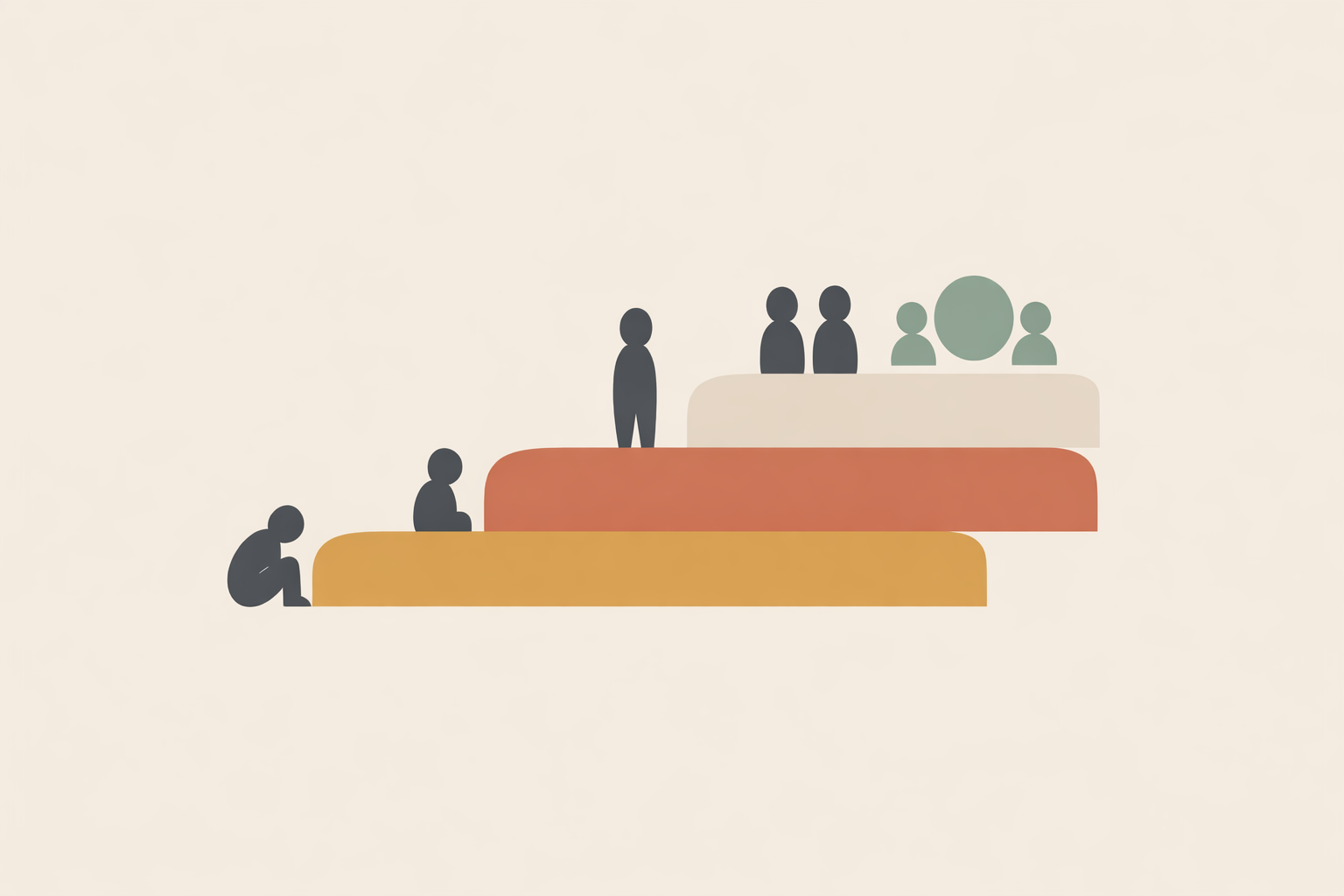
Polyvagal theory gives facilitators a practical map for reading group states. In everyday language, many people work with three broad patterns: ventral vagal, sympathetic, and dorsal vagal.
In ventral states, people tend to feel safe enough for connection, curiosity, and learning. In sympathetic states, they may look activated—urgent, skeptical, restless, or hyper-alert. In dorsal states, they may go quiet, foggy, flat, or absent-seeming. None of these states are “bad.” They’re adaptive responses.
Seen this way, behaviors become easier to interpret. Silent cameras and quiet exits after the first call often reflect protectiveness rather than disinterest, especially for trauma-exposed or neurodivergent people. Likewise, skeptical questioning in Q&A can be sympathetic scanning rather than simple resistance.
This perspective also aligns with longstanding communal wisdom. Many ancestral group practices organize around rhythm, repetition, attunement, and shared participation—because those elements help people settle together. Contemporary writing describes rhythmic vocalization and coordinated movement as supportive of collective regulation and social bonding.
Polyvagal work “advocates for working with the body, becoming aware of the body and connecting with the senses.”
- Ventral: warmth, curiosity, humor, reciprocity.
- Sympathetic: urgency, bracing, over-talking, scanning, skepticism.
- Dorsal: withdrawal, numbness, invisibility, low energy, quiet exits.
Design group spaces that feel safe to enter
Groups fill and grow more easily when the container supports regulation. You don’t need gimmicks. You need consistency, humane pacing, and genuine choice.
Groups grow when the container supports safety and connection. One of the clearest ways to do that is predictable structure: a repeatable flow, a simple agenda preview, and a consistent closing. Essentially, people settle faster when they don’t have to keep guessing what’s expected.
Slower pacing matters too, especially online. Clear transitions, gentle sequencing, and fewer sudden visibility demands reduce overwhelm. A simple line like “Here’s what we’re doing now, here’s what comes next, and you can participate in the way that works for you” can change the whole feel of the room.
Simple opening practices can also help participants orient toward steadiness. Practices such as orienting, humming, and mindful breathing are widely used to support parasympathetic settling. More specifically, 5–7 breaths per minute with a longer exhale is associated with increased heart rate variability and calmer engagement.
Then there’s choice: camera optional, chat welcome, pass anytime, listen-only counts. These aren’t “nice-to-haves”—they lower unnecessary threat so real engagement can emerge at its own pace.
- Open the same way each session.
- Preview the flow before asking for participation.
- Use slower transitions than you think you need.
- Offer multiple ways to be present.
Use ritual, rhythm, and repetition wisely
Ritual isn’t decoration. In group work, it’s often an organizing signal: we’re here, we’re together, and you don’t have to figure everything out from scratch each time.
This is why so many traditional group forms rely on rhythm and repetition. A consistent arrival practice, a shared breath, a familiar opening phrase, a brief hum, or a structured check-in can become cues of belonging. Many ancestral practices and modern facilitation meet here, because both recognize that connection is built through embodied, shared experience.
The key is respect. If you draw from songs, chants, or ritual forms, name lineages where appropriate and avoid extractive borrowing. Use what you can hold with integrity, not what simply sounds impressive.
- Orient people to the room or screen.
- Invite one to two minutes of longer-exhale breathing.
- Add a brief hum or soft vocalization if it suits the group.
- Close with the same grounding sequence each time.
State-first marketing invites people in without pushing
Invitations land better than demands. Many people arrive already activated, uncertain, or tired—so when your messaging skips straight to urgency, it can create distance instead of trust.
State-first marketing names what people often feel (wired, flat, cautious, overstimulated, hesitant) and responds with pacing and choice. Put simply: you reduce the sense of risk before you ask for a commitment. Scarcity-heavy countdown tactics can trigger panic or avoidance in sensitive communities, while permission-based language often helps people exhale and lean in.
It also helps to avoid visibility demands inside the invitation itself. Mandatory cameras, surprise hot seats, and rapid round robins tend to increase threat responses for neurodivergent and socially anxious people and can contribute to no-shows or early exits.
- “Come as you are. Camera optional, chat welcome, pass anytime.”
- “If groups usually feel like a lot, this space is designed with pacing and choice in mind.”
- “Join live or begin quietly with the replay if that feels easier.”
Onboarding is where belonging begins
Signing up isn’t the same as feeling ready. The time between enrollment and the first session is where many people decide whether they can actually follow through.
A polyvagal-informed onboarding approach helps sign-ups become steady engagement. Before the first call, share what to expect: who the space is for, how sessions usually flow, what participation options exist, and what someone can do if they feel shy or overwhelmed.
A short welcome video plus a clear written overview often helps people mentally rehearse the experience. Here’s why that matters: previews reduce ambiguity, and ambiguity is a common dropout trigger.
Early participation choices matter here as well. Participation choices such as camera on or off, chat or voice, and listen-only options can reduce anxiety and support engagement among anxious and neurodivergent members.
Your first session can reinforce the message quickly and kindly:
- Welcome people and state permissions clearly.
- Offer a brief orienting practice.
- Preview the agenda and transitions.
- Normalize quiet participation from the outset.
Over time, these consistencies become the group’s shared rhythm. People learn they can arrive without bracing.
Track regulation gently to improve retention
Tracking is most useful when it supports reflection, not judgment. In groups, that usually means noticing patterns in energy, participation, and what helps people settle.
A simple weekly state check-in can go a long way: which state felt most familiar, how intense it felt, and what supported a shift. Done lightly, these check-ins often reveal what strengthens facilitation and retention.
If your group is interested, optional wearable data can add another layer. Higher HRV is broadly associated with more flexible regulation and social engagement. More generally, body-based approaches can meaningfully support day-to-day well-being.
Keep the tone invitational. Share trends as “what we’re learning together,” not as verdicts. Steadier starts to the week, fewer quiet disappearances, or more willingness to use chat, voice, or reflection are all meaningful signs of a group becoming more workable.
“By working directly with the nervous system, Polyvagal Therapy helps clients move from survival mode to a state of safety and connection, enabling deep and lasting healing.”
Make your groups neurodiversity-affirming and culturally respectful
Safety cues aren’t universal. What helps one person settle may overwhelm another. Inclusive facilitation starts by letting “engagement” look like more than one thing.
Eye contact, for example, isn’t a reliable measure of presence. Some people engage best while looking away, typing in chat, or listening quietly. Sensory load matters too. Lowering sensory load—softer lighting, lower noise, fewer visual distractions—can increase comfort and support inclusion.
Touch deserves similar care. Touch less pleasant is commonly reported by autistic adults on average, so consent and opt-in choice matter. Likewise, Participation options can reduce masking pressure and support longer-term involvement.
Cultural humility is part of safety, too. If you bring in songs, chants, circle formats, or land-based practices, do so with respect for origins and context—rooted, not borrowed for effect.
“Perhaps our misunderstanding of the role of safety is based on an assumption that we think we know what safety means.”
- State clearly that camera use is optional.
- Offer spoken and written instructions.
- Reduce visual and auditory overload where possible.
- Use opt-in consent for touch or high-visibility activities.
- Respect the cultural roots of any ritual you include.
Lead groups that people want to stay in
When your invitation, onboarding, facilitation, and follow-through all signal belonging, steadiness, and self-paced participation, enrollment often rises more naturally. Retention improves too—not because people are being pushed, but because the group feels sustainable to join and to remain in.
Polyvagal theory is best held as a useful, evolving framework rather than a rigid doctrine. Still, it gives clear language for what experienced facilitators have long observed in practice: groups thrive when people feel safe enough to connect, contribute, and return.
Design for safety. Choose ritual over rush. Offer choice before intensity. Then keep listening—because real people will always teach you what safety looks like in your space.
Train in Polyvagal Therapy
Polyvagal Therapy Certification deepens your skills for creating safer, steadier group containers through nervous-system-informed facilitation.
Explore Polyvagal Therapy →