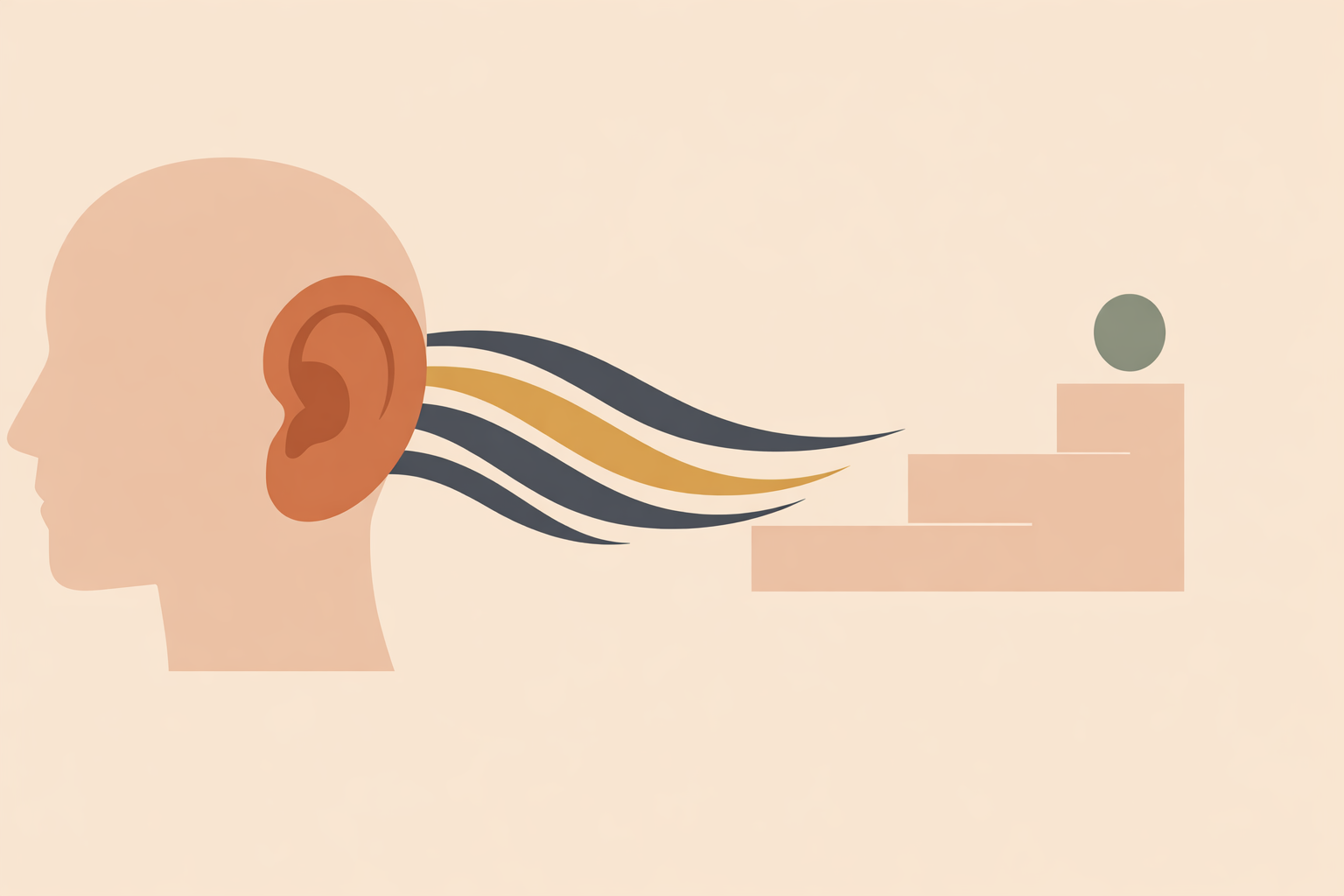
The default response to “I can’t follow verbal instructions” is often unhelpful: push harder, pay more attention, try to keep up. Another common move is to chase a label before mapping the pattern. In practice, many people can follow spoken directions well in one setting and struggle in another. They may lose the thread in a noisy office, then do perfectly well when the pace slows, the room quiets, or the steps are written down. That points to conditions, not character.
Key Takeaway: Trouble following verbal instructions is often best understood as a listening-load challenge within an ear–brain–environment system. When difficulty clearly changes with noise, distance, pace, echo, or the presence of visual support, APD-oriented coaching can be a practical, scope-safe way to improve access, reduce repetition, and build self-advocacy. The most useful supports are usually simple: cleaner listening conditions, written or visual pairing, shorter instruction units, and clearer repair strategies. Referral matters when the pattern does not improve across contexts or when broader hearing, language, memory, or overwhelm factors seem likely.
From “You Never Listen” to Listening Load
Hearing sound, following speech, and acting on instructions are different skills. A person can catch the words and still lose the sequence, miss a key detail, or need extra effort to translate speech into action.
Listening load is a practical way to name that effort: how much work it takes to attend, decode, hold, and use spoken information in a specific moment. In APD-related guidance, factors like rapid speech, long directions, unfamiliar terms, echoing rooms, and multiple speakers can make access harder.
Capacity also changes through the day. Sleep debt, hunger, sensory clutter, illness, or a demanding morning can noticeably reduce listening stamina. Traditional practice has long taken this kind of day-to-day variability seriously, and it shows up clearly in real-world coaching.
An ear–brain–environment lens keeps the focus where it belongs: on the conditions that made listening heavier in that moment, and the supports that can lighten it.
Common signs of a listening-load pattern include:
- asking for repetition
- missing the middle or end of a sentence
- confusing similar-sounding words in noise
- completing only the first part of a multi-step task
- doing much better when directions are shown or written
This strengths-based view matters. Many people who struggle with spoken instructions do very well when information is delivered in a way that fits how they take it in.
It also helps to keep roles clear. Formal identification sits with trained professionals. Coaching focuses on patterns, supports, communication habits, and follow-through in daily life.
When Verbal-Instruction Difficulty Fits APD-Oriented Coaching
APD-oriented coaching is a strong fit when spoken-instruction difficulty follows a clear, repeatable, context-dependent pattern.
The hallmark is consistency: things get harder with noise, distance, echo, competing talkers, or rapid delivery, and improve in quiet, with close proximity, or when speech is paired with written or visual support. This matches guidance that emphasizes reducing competing noise, improving acoustics, and pairing speech with visual or written information.
Effort often rises before accuracy drops. Someone can look “fine” in a meeting while spending a lot of energy just to keep up. In coaching, fatigue and recovery time are meaningful signals, not afterthoughts.
A simple example: in an open-plan office, Alex completes only the first two steps of a four-step request and asks for repeats. In a smaller room, with the speaker nearby and a short written summary, Alex completes all four steps the first time. That kind of contrast gives coaching something solid to work with.
Signs that support an APD-oriented coaching focus include:
- difficulty scales with noise, distance, pace, or echo
- spoken information becomes easier with slower delivery
- written steps or visuals improve follow-through
- meetings, classes, or group discussions leave the person drained
- the person is willing to try environmental shifts and communication scripts
In these cases, goals stay practical and scope-safe: fewer repeats, easier follow-through, less exhaustion, clearer self-advocacy, and better communication design around real routines, as in APD support at home and work.
When the Pattern Points Beyond APD-Oriented Coaching
Not every spoken-instruction challenge sits mainly in an APD frame. Sometimes the most respectful next step is to widen the lens and involve other forms of support.
Start with what you can observe: spoken-instruction difficulty, a listening-load pattern, or reduced access to verbal information. If formal identification is being considered, guidance emphasizes management grounded in appropriate assessment and aimed at improving participation and autonomy.
Referral may be appropriate when you notice patterns like these:
- Hearing-change pattern: the difficulty is new, worsening, fluctuating, noticeably uneven between ears, or comes with other ear-related concerns.
- Language-comprehension pattern: the person also struggles with written instructions, vocabulary, grammar, or complex concepts.
- Attention or memory load: the words seem heard, but the sequence can’t be held long enough to act.
- Overwhelm pattern: spoken instructions become especially hard during high-pressure moments, shutdown, or strong activation.
Screening conversations can guide next steps, but they are not the same as identification. Guidance is clear that checklists should not be used to identify APD on their own.
A scope-safe approach is to name the reality: the pattern looks broader than listening load alone, so it makes sense to involve the right professionals while still putting everyday supports in place.
How to Map a Listening-Load Pattern
Before choosing strategies, make the pattern concrete. “I can’t follow verbal instructions” becomes workable when you know where it happens, when it happens, and what changes the outcome.
Start with the task itself. Is the sticking point remembering a sequence, understanding the wording, picking one voice out from others, deciding what matters most, or initiating quickly enough?
Then compare contexts:
- quiet versus noisy spaces
- one speaker versus multiple speakers
- familiar voices versus unfamiliar voices
- short directions versus multi-step directions
- in-person versus online conversations
- morning versus late afternoon
Many practitioners track effort with a simple 0–10 scale before, during, and after listening-heavy situations. The point is pattern recognition, not labeling.
A weekly log might include:
- where the interaction happened
- how noisy or echoing the space felt
- whether steps were spoken only or also written
- how many repeats were needed
- effort during the interaction
- how long recovery took afterward
Body state matters, too. Many traditional lineages emphasize that breath, posture, and movement shape attention. In day-to-day coaching, people often notice that spoken instructions get harder when they’re tense, rushed, flat, or overloaded.
Small somatic and sensory supports can steady attention: a slower exhale before a briefing, both feet on the floor, a brief orienting pause, a sip of water, or choosing quieter seating.
Scheduling deserves respect as well. Some people reliably do better with multi-step verbal tasks earlier in the day, and that pattern is useful information for planning.
Turning Spoken Instructions into Practical Experiments
Once the pattern is clear, begin by improving access to the message. Effort is precious; make the signal easier to catch.
Environmental shifts are often the quickest win. Guidance consistently recommends strategic seating, reducing competing sounds, managing distance, and choosing spaces with better acoustics.
Next, pair spoken information with something visual or written. Guidance supports visual supports such as written follow-up, visual pairing, and email or other written summaries. In practice, this is one of the most consistently helpful shifts for verbal-instruction follow-through.
Useful examples include:
- written steps after a verbal explanation
- a quick sketch or diagram
- a shared agenda before a meeting
- a timeline on a whiteboard
- a short demonstration before expecting follow-through
- captions or transcription when helpful
Then shape the instructions themselves. Guidance supports chunked instructions with pauses, along with note-taking and organizers. Fewer steps at once, clearer sequencing, and a beat to absorb each part usually outperform “one long explanation.”
Self-advocacy belongs here too. Repair is a communication skill, and practicing it reduces stress quickly. Helpful scripts include:
- “Could you give me that one step at a time?”
- “Please pause between the steps.”
- “Could you write down the key points?”
- “Could we move somewhere quieter?”
- “I got the first two steps. What comes next?”
Keep it experimental. Compare a meeting with no written agenda to one with a written agenda and quieter seating. Track repeats, effort, follow-through, and recovery time. The strongest supports usually reveal themselves fast, especially in classroom support and similar instruction-heavy settings.
What APD-Oriented Coaching Can and Cannot Change
Good coaching can improve access, reduce fatigue, strengthen confidence, and reshape the environment around communication. It cannot promise to remove every listening challenge or make supports unnecessary.
The most meaningful outcomes are real-life ones: smoother participation, easier follow-through, less repetition, and greater autonomy. Formal guidance explicitly prioritizes real-world participation over narrow score changes.
Some direct auditory exercises are used in this field, but results vary. British guidance notes mixed results, so it’s important to present these exercises as optional experiments rather than guaranteed change.
Technology can also help, including captions, automatic transcription, and assistive listening tools. Fit matters: comfort, cost, maintenance, and social ease often determine whether a tool becomes part of daily life.
Universal-design habits support everyone: written agendas, clear action summaries, predictable structure, quieter options, captions, and explicit permission to ask for clarification.
The boundary is straightforward. Coaching does not identify APD, interpret specialist findings beyond one’s scope, or promise sweeping transformation. It supports access, skillful experimentation, and better listening conditions.
Conclusion: A Practical Lens for Verbal-Instruction Difficulty
Verbal-instruction difficulty fits APD-oriented coaching when there is a clear day-to-day goal, a visible context pattern, and room to improve communication design. It’s a poor fit when someone wants a label confirmed, expects certainty when the picture is broader, or needs support beyond the coaching role.
A concise intake can keep the work grounded:
- What happens when instructions are spoken?
- Where is it easiest, and where is it hardest?
- What changes when the room, pace, or format changes?
- What do you notice in your body during those moments?
- What supports already help, even a little?
- What would meaningful progress look like in daily life?
From there, the path is clear: map the pattern, reduce the load, pair speech with visuals, practice repair, and track participation over time. When broader factors are in play, involve the right support while continuing to build practical access around everyday communication.
This is the heart of scope-safe, respectful neurodiversity and learning differences coaching: less blame, more pattern recognition; less pressure to “try harder,” more attention to the conditions that allow people to function with less strain and more choice.
Explore APD Coach Certification
Build scope-safe strategies from this article in the Auditory Processing Disorder Coach Certification.
Explore APD Certification →