New-client CBD consults often drift straight into product talk: what someone is taking, how many milligrams, and whether it “works.” That can feel efficient, yet it overlooks the organ that most often decides whether CBD use stays smooth or becomes complicated: the liver.
A liver-aware intake gives the conversation better guardrails from the start. It helps you set expectations, spot likely interaction risks, confirm what a product is actually delivering, and know when support can stay simple and when it’s time to bring in outside input.
Key Takeaway: Safer CBD support starts with a liver-aware intake before any product advice. In practice, that means clarifying intentions, mapping liver history and current warning signs, reviewing medicines and alcohol, checking product quality and dose accuracy, setting clear boundaries, and planning a conservative follow-up.
Why a CBD intake should start with the liver
Traditional cannabis use was often occasional and connected to whole-plant preparation. Many people today arrive with concentrated oils, gummies, and capsules that create different exposure than whole-plant use, and that shift matters for how the body handles it.
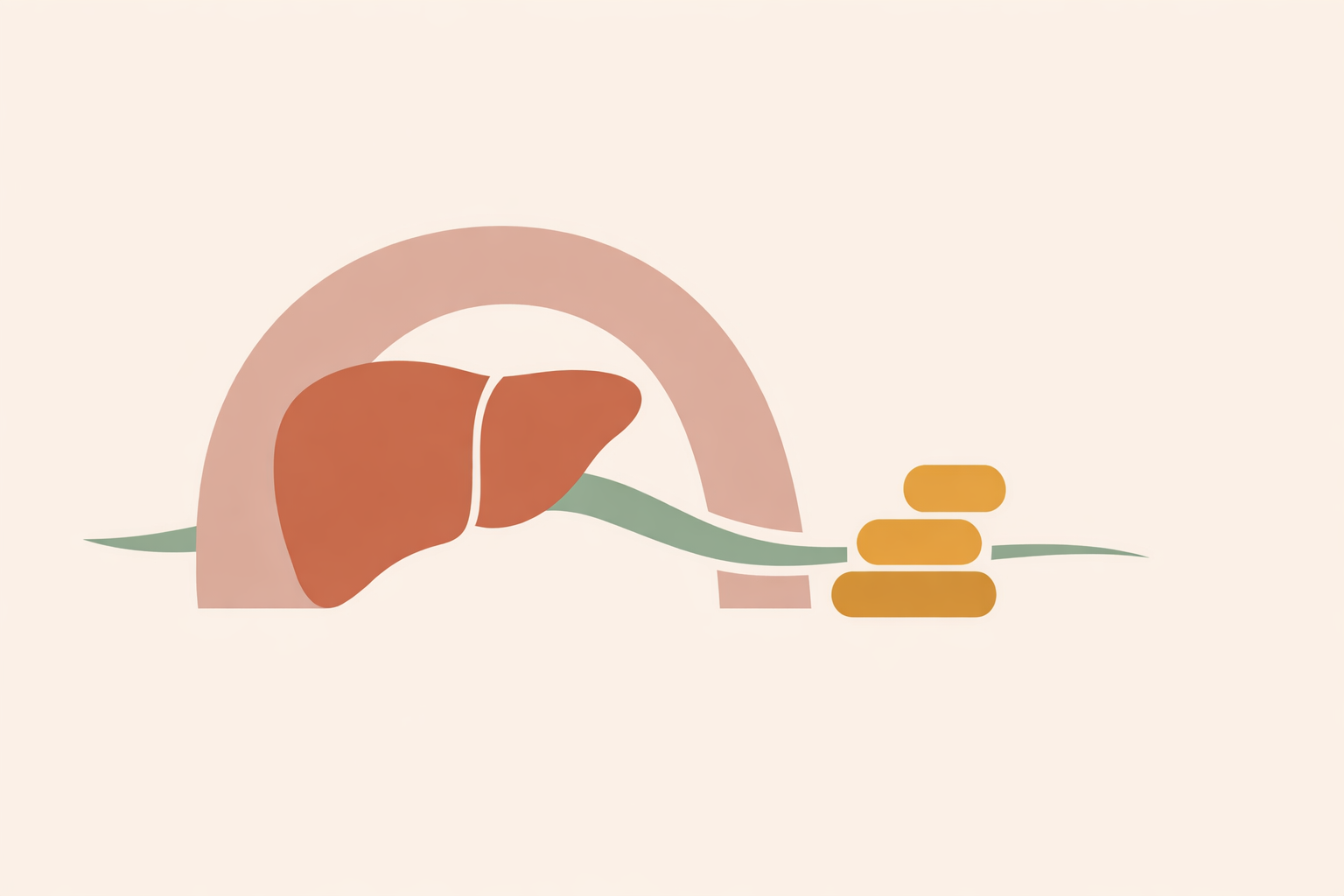
Oral CBD passes through the liver before reaching wider circulation, so the liver strongly shapes how tolerable (or inconsistent) a product feels. When someone reports that CBD feels “too heavy,” unpredictable, or harder to recover from the next day, the liver is often part of the story.
That’s why brand and flavor are never the best starting point. First understand the person’s body context, daily habits, and what else is in the mix, then decide whether CBD still fits and how cautiously to proceed.
A respectful opening line is: “Because CBD goes through the liver, I ask everyone a few liver-health questions before we talk about products. Is that okay?”
Step 1: Clarify intentions and frame the conversation well
Start with the person, not the bottle. Are they looking for calmer evenings, easier sleep, less background tension, or support around discomfort? This keeps the process grounded and practical.
Traditional use has long included cannabis for easing the edges of pain, restlessness, or stress. That lineage deserves respect, and it pairs naturally with a careful, conservative approach in a modern marketplace.
A simple bridge sounds like this: “Thank you for sharing that. Before we talk about whether CBD fits, I want to understand how to approach it safely and conservatively for you.”
It also helps to say out loud that “CBD” on a label doesn’t guarantee a consistent experience. Over-the-counter oils and gummies can vary widely in composition, dose, and effects.
Define success in everyday terms: “What would ‘better’ look like in three or four weeks?” Then plan around the smallest useful exposure, one change at a time, with a clear review date.
Step 2: Map liver history, current signs, and lifestyle context
Once the goal is clear, shift to liver context using plain language. Many people have never been asked these questions in a wellness setting, so clarity builds comfort.
Ask whether they’ve ever been told they had abnormal liver enzymes, fatty liver, viral hepatitis, alcohol-related liver concerns, autoimmune liver conditions, cirrhosis, or a past reaction to a substance that affected the liver. If they’re unsure, that’s still helpful to know.
Then screen for current warning signs:
- yellowing of the eyes or skin
- dark urine
- pale stools
- persistent itching
- unusual fatigue
- nausea or vomiting
- new abdominal discomfort
- appetite changes
- swelling
- confusion
If these are present, it’s typically best to pause the CBD conversation and encourage timely support from a qualified health professional. That keeps your scope clean and the person well-supported.
Next, take a quick lifestyle snapshot. Alcohol frequency, metabolic strain, supplement habits, and reproductive context all influence whether CBD use stays straightforward or becomes layered. Pregnancy or breastfeeding is one of the clearest reasons to consult first before proceeding.
A clean prompt is: “Could we map your current alcohol, supplement, and cannabis use so I understand the full picture before we decide anything?”
Step 3: Review medicines, supplements, alcohol, and cannabis together
CBD rarely arrives alone. It lands in an existing routine that may include prescribed products, “as needed” sleep aids, calming herbs, performance supplements, social alcohol use, and sometimes other cannabis products. This is where many avoidable problems begin.
Take a full inventory of everything used daily, weekly, or occasionally, including items people often forget to mention unless asked directly.
Discuss alcohol neutrally and practically. Alcohol plus moderate to high oral CBD can increase sedation, which makes it harder to interpret new fatigue, nausea, or other changes.
Sedative stacking matters too. CBD can cause drowsiness or changes in alertness, so combining it with other calming substances can produce a stronger-than-expected response.
If someone uses clobazam or valproate, proceed with extra care. With clobazam, sedation can intensify, and valproate raises separate concerns around liver burden. Strong CYP3A4 inducers or inhibitors can also shift exposure even when the CBD dose stays the same.
When someone has substantial medication use or a complex mix of supplements and medicines, encourage them to review CBD and drug interactions and consult a qualified professional before moving ahead. In a wellness setting, that’s not stepping back; it’s protecting the person and the work.
Step 4: Verify the CBD product, actual dose, and batch quality
Once the person’s context is mapped, then move to the product. Two bottles that look similar can deliver very different real-world exposure.
Document:
- product name
- brand or manufacturer
- route of use
- batch or lot number
- CBD per serving
- total CBD per container
- other cannabinoids listed
- intended frequency of use
Ask for a batch-specific Certificate of Analysis (COA). It should match the product and batch, show cannabinoid content per unit, and include contaminant screening.
This matters because product quality can vary meaningfully. In tested unregulated products, 37 products out of 80 differed from labeled CBD concentrations by at least 10%.
Do the dose math together whenever possible. If a 30 mL bottle contains 1000 mg total CBD, that’s about 33 mg per mL. If the dropper holds 0.5 mL, a practical serving is roughly 16–17 mg. This alone often clears up confusion.
Clarify route as well. Oral drops, gummies, capsules, and beverages contribute to systemic exposure, and sublingual use counts too. Topicals generally contribute minimally to whole-body exposure unless used very broadly or combined with penetration enhancers.
Red flags include vague labels such as “hemp extract” without specific cannabinoid amounts, missing batch details, unclear COAs, or unexpected THC content. Suggesting a cleaner, verifiable option is thoughtful practice, especially when comparing CBD extraction methods or broader herbalism and plant medicine product quality questions.
Step 5: Set boundaries, name uncertainties, and know when to pause
Now bring the conversation back to informed choice. This is the moment to be warm, clear, and specific.
You might say: “CBD can be useful for some people, but it can also create drowsiness, interact with other substances, and become harder to gauge when products are inconsistent. My role is to help you approach it carefully and know when added support is needed.”
It’s wise to pause or seek outside input when someone has:
- active liver-related warning signs
- known significant liver concerns
- unexplained abnormal enzymes
- substantial medication use
- complex poly-supplement use
- pregnancy or breastfeeding
This is also where you can gently correct the common impulse to “just try more.” When the picture is layered, increasing dose adds noise and risk rather than clarity.
Keep the tone adult and steady: “We don’t need to force a decision today. We can slow this down, clarify the picture, and proceed only if it still makes sense.”
Step 6: Plan a conservative follow-up and simple observation process
If the shared decision is to proceed, keep the plan straightforward: minimal effective exposure, one change at a time, and the same product used consistently long enough to observe its pattern.
Consistency makes outcomes easier to read. When fewer variables change at once, it becomes much clearer what the person is actually responding to.
A basic tracking template can include:
- date
- product and batch
- amount and timing
- perceived benefits
- unwanted effects
- alcohol or other substance use that day
- any action taken
Be explicit about what should trigger a pause. If unusual fatigue, persistent nausea, deeper-than-expected sedation, yellowing of the eyes or skin, dark urine, or new abdominal discomfort appears, stop and seek guidance through the appropriate channel.
Severe reactions such as trouble breathing or facial swelling also warrant urgent support.
A sample note might read: “Week 1: 10 mg oral CBD one hour before bed. Hold steady. No dose changes on alcohol nights. Revisit at day 21 before any increase.”
This kind of plan is easy to follow and easy to learn from. It also reflects a traditional principle many practitioners value deeply: start low, observe carefully, and let the body’s response set the pace.
Conclusion: A steadier, liver-aware CBD intake
A strong CBD intake doesn’t need to be complicated. It just needs to be organized around what matters most: intention, liver context, co-use, product clarity, honest boundaries, and follow-up.
Working this way respects traditional plant knowledge while meeting the realities of modern products and mixed routines. It also protects the quality of your support and the trust placed in your practice, whether your wider focus is herbalism and plant medicine or more specialized medicinal CBD work.
Documentation can stay concise: goal, current product, estimated actual dose, batch status, liver history, co-use pattern, present warning signs, boundaries discussed, and review date. That isn’t bureaucracy; it’s care made visible.
As your practice evolves, keep refining the checklist. Hold onto what improves clarity, drop what doesn’t, and stay rooted in careful observation. That’s how plant work becomes both grounded and reliable.
Train in Medicinal CBD
Build liver-aware CBD screening skills with the Medicinal CBD Certification.
Explore Medicinal CBD →