Many practitioners are taught to treat “writing” as one single challenge. The usual response is to stack the same supports—more practice, neatness targets, generic spelling lists, extra reading—whether the learner struggles to form letters or to access print. Effort goes up, and communication still feels stuck.
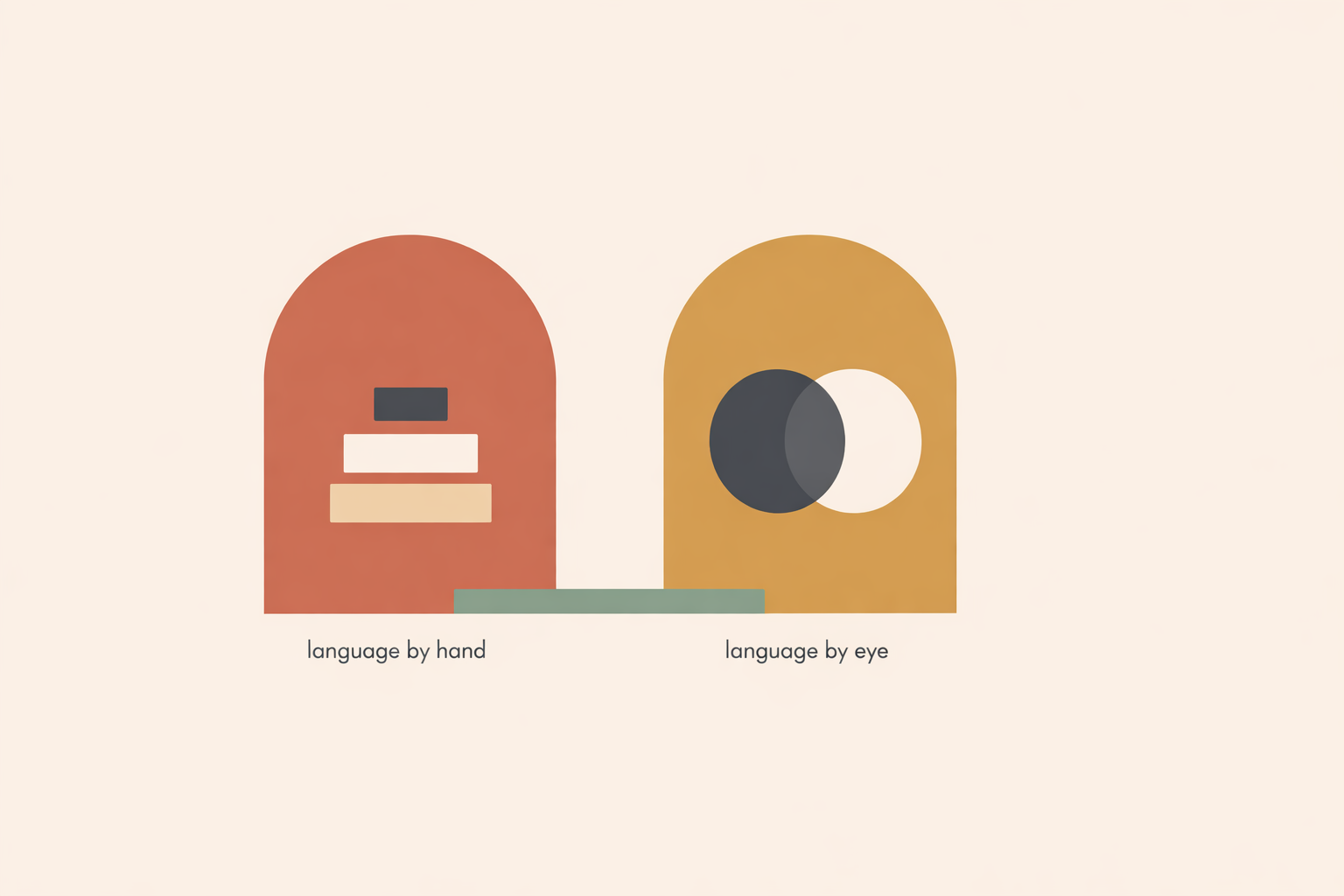
A kinder, more effective starting point is to identify the first bottleneck: language by hand or language by eye. When handwriting strain leads, sessions work best when they prioritize body setup, tools, pacing, and alternative ways to get ideas out. When reading and spelling friction leads, sessions usually improve when they focus on text access, vocabulary, and clear language scaffolds.
Key Takeaway: Effective planning starts by identifying whether the first bottleneck is “language by hand” (dysgraphia-leaning) or “language by eye” (dyslexia-leaning), then matching supports to that entry point. From there, build a functional profile, choose supports that reduce overload, and use a repeatable session rhythm that protects energy, confidence, and communication.
Build a functional profile instead of chasing labels
Labels can point you in a direction, but a functional profile tells you where support will actually help.
Before choosing tools, locate the moment friction appears. Does it show up when reading begins, when handwriting begins, when spelling has to happen fast, or when several steps must be held in mind at once?
This matters because co-occurrence is common. A learner may have both handwriting strain and reading friction, with executive overload on top. Broad assumptions about “poor writing” rarely stay accurate for long.
Keep the profile descriptive and scope-appropriate. You are tracking patterns in function, not trying to force a fixed identity.
- Reading load gets hard when…
- Handwriting strain shows up after…
- Spelling slips when…
- I lose track of steps when…
- The easiest tools or formats are…
A quick profile might look like this:
- Reading: easier with audio
- Handwriting: cramps after three minutes
- Spelling: stronger with a word bank
- Ideas: strong in conversation
- Sequencing: easier with a three-step checklist
Once you can see where the load gathers, support becomes targeted and calmer.
When writing strain leads, start with body, tools, and setup
When the hand is the bottleneck, the first support is often physical and environmental before it’s linguistic.
Handwriting relies heavily on motor planning and execution, so posture, grip, page angle, and comfort can shape output in a big way. In practice, small setup changes can make the page feel far more reachable.
This matches older craft wisdom, too. Across writing traditions, scribes and calligraphers emphasized posture, breathing, and rhythm as part of the work, not an optional extra.
When handwriting strain shows up, start with conditions:
- Support feet and forearms
- Adjust table and chair height
- Experiment with pencil grips or softer-writing tools
- Try slant boards, raised-line paper, or graph paper for spacing
- Shorten writing bursts before fatigue builds
Pacing helps many learners: write briefly, pause, reset, then continue. An eight-minute write with a two-minute reset is one workable option. The exact timing matters less than stopping before strain turns into shutdown.
Tool choice matters. If the goal is capturing ideas, typing or dictation can be the wisest first path. If the goal is letter formation practice, keep handwriting brief and specific so the hand is practicing one skill, not carrying the entire task.
For many learners, a shift in ease after changing setup or input method can be rapid.
A simple script: “Let’s set up your seat and page first, then capture your ideas in the easiest format. After that, we can choose one small piece to handwrite.”
When reading and spelling lead, center text access and language scaffolds
When print is the first source of friction, begin by reducing decoding load and making the language pathway clearer.
The aim is not to lower expectations. It’s to remove drag so energy can go toward meaning, expression, and structure.
working-memory demands often ease with supports like outlines, graphic organizers, pre-taught vocabulary, and text-to-speech. These supports protect attention for comprehension instead of spending it all on access.
In session design, that can look like:
- Providing a short summary before a longer text
- Pre-teaching key vocabulary
- Using audio or text-to-speech for dense reading
- Offering word banks and sentence starters
- Building from discussion into short typed responses
Multisensory structure is also a longstanding best practice in dyslexia-leaning support, and multisensory approaches remain widely recommended in teacher preparation and learning support.
Many learners also show their understanding more fully through conversation, projects, or demonstrations than through print-heavy tasks alone. Those pathways often reveal competence that was there all along.
A useful script: “Let’s make the text easier to enter first. We’ll listen, mark the big ideas, and then build a short response from there.”
When both show up, blend supports without piling them on
Many learners need support in both directions: some hand strain, some reading strain, plus executive load in the middle. The goal is not to stack every tool. The goal is to let each tool carry one part of the task.
Start by externalizing ideas. graphic organizers like mind maps and storyboards can reduce working-memory load and clarify structure before drafting begins.
Then separate the stages of writing. distinct phases such as planning, drafting, revising, and formatting reduce multitasking strain because the learner can focus on one demand at a time.
This often creates a gentler workflow:
- Plan visually
- Draft by voice or typing
- Revise one idea at a time
- Check only a few spellings
- Format at the end
Match the support to the specific pinch point. Speech-to-text can carry a draft when ideas come quickly but the hand tires fast. Text-to-speech can carry reading and proofreading when dense print steals meaning. For others, typing is the most accessible bridge between thought and expression.
A sample sequence: five minutes to sketch a map, seven minutes of dictation for a rough draft, then a few minutes to tidy three chosen spellings and add headings.
Protect identity as carefully as you support output
Writing difficulty is rarely only about output. Over time, repeated strain can reshape how a learner sees themselves.
avoidance and low self-efficacy often grow when feedback repeatedly centers neatness, spelling, or visible errors over meaning. Support works best when it protects dignity as well as performance.
Keep communication at the center:
- Emphasize ideas, not just mechanics
- Name strengths alongside supports
- Reduce unnecessary volume when quality is the true goal
- Invite the learner to choose the tools that help most
Predictable routines matter here too. predictable routines and gentle feedback can reduce stress and help sessions feel safer and more workable, especially for learners carrying fear around writing tasks.
Language matters. Instead of “fix your writing,” try “let’s support how your ideas travel.” Instead of “you need to try harder,” try “let’s change the conditions so this takes less effort.”
A simple closing reflection can reinforce the shift: two wins and one wish.
- Win: voice-typed a full paragraph without hand strain
- Win: chose a sentence starter that made the draft easier
- Wish: try larger-spaced paper next time
Over time, this often shifts identity from “I’m bad at writing” to “I know which conditions help me communicate.”
A simple session arc you can repeat
Once the hand-vs-eye distinction is clear, a consistent structure makes support easier to repeat across home, school, and work contexts, including broader child and adolescent development support.
- Arrival: check energy, settle, and name the main bottleneck for today.
- Clarify the task: define success in one short sentence.
- Plan visually: use a quick web, timeline, or boxes-and-arrows sketch.
- Choose supports: pick one or two tools only.
- Work in stages: plan, draft, revise, and format separately.
- Add micro-scaffolds: offer a word bank, sentence starter, or audio support only where needed.
- Show the learning: allow a typed response, audio note, or labeled diagram when appropriate.
- Reflect and track: note comfort, clarity, and what helped most.
Progress tracking can stay simple. monitoring progress can strengthen learner agency because it helps people recognize which supports they can actively choose and reuse.
A practical session note might read:
- Hand strain high today
- Used slant board and voice-typing
- Visual map with five points
- Drafted 90 words
- Kept word bank, dropped small-ruled paper
The value of a steady arc is that sessions stay calm. You’re not reinventing the process each time; you’re refining it.
Closing perspective
Planning through language by hand versus language by eye changes the first move, and the first move shapes everything that follows. When the hand leads the strain, prioritize setup, tools, pacing, and alternative output. When the eye leads the strain, prioritize access, vocabulary, and comprehension pathways first.
From there, build a functional profile, protect identity, and choose supports that reduce overload rather than adding more. This keeps coaching practical, affirming, and genuinely useful in real life, including in dysgraphia support.
As always, tailor supports to the person in front of you, keep tools respectful and consent-based, and adjust when fatigue or frustration rises. The next session can feel lighter: map the bottleneck, set the conditions, choose one or two strong supports, and let ideas move.
Train in Dysgraphia Support
Apply these “language by hand” supports with confidence in the Dysgraphia Support Coach Certification.
Explore Dysgraphia Support Coach →